14 years in Shenzhen building connectivity hardware — from RF coax & custom cable assemblies to industrial connectors.
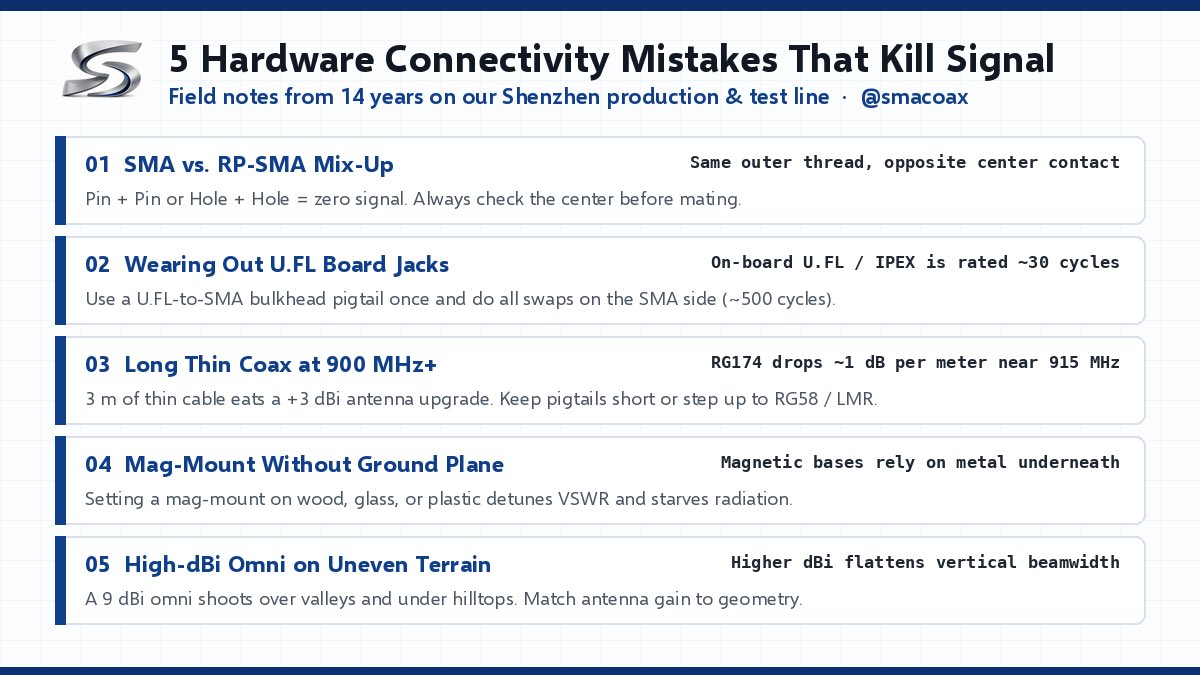
These 5 connection mistakes cause most "bad antenna" complaints we see on the test bench.
On this account, we share practical wiring pitfalls, spec breakdowns, and the gear coming off our line.
Current store: https://t.co/ETvsY9SOeg
Need custom lengths or OEM/bulk? DM is open.
A 90-degree banana plug redirects the wire; it does not establish cabinet clearance. For this listed 4mm part, check space beside the binding post as well as behind it, using the actual plug and cable. Diagram is illustrative.
Outdoor coax tip: leave a drip loop below the connector so rain running down the cable drips off before reaching the joint. It doesn't replace proper connector weatherproofing. Inspect the seal and cable jacket after storms.
@BG7WZJ Congratulations on the first IO-86 contact. Before changing antennas, it could be useful to compare a higher-elevation pass and note signal strength, pointing and polarization. At 4.2°, the low-elevation path alone makes it hard to isolate the antenna as the cause.
@Stanton_Werks The wall mesh could be contributing, though a comparison would help confirm it. Could you test the same node outdoors at a similar height? That would help separate building attenuation from antenna or feedline issues
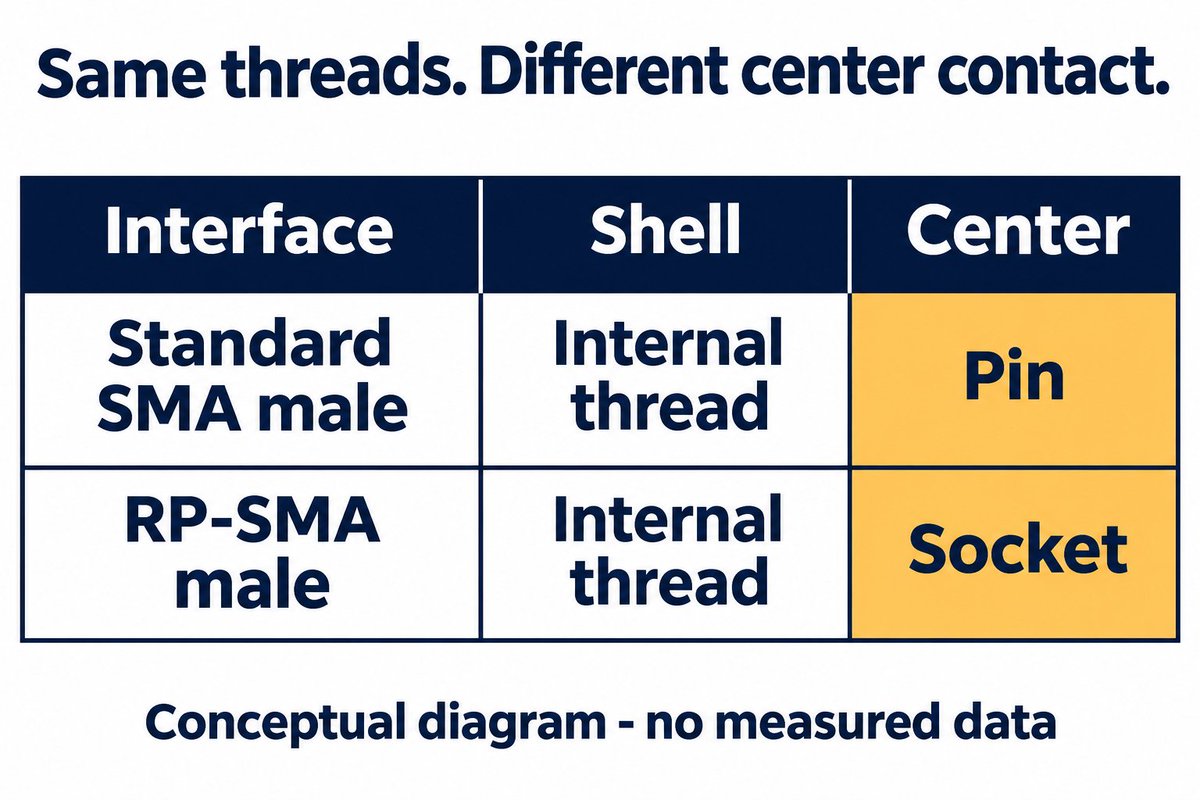
Internal threads alone cannot identify an SMA end: standard SMA male has a pin; RP-SMA male has a socket. For an SMA-to-SMB adapter, match the contact as well as the shell. The diagram is conceptual.
On repeaters: they help with terrain, but a single-radio relay on one channel must receive, then retransmit, so each hop roughly halves throughput. Rough for video. At 100 km the bigger wins are height and clear line of sight at both ends, then antenna gain and low feedline loss.
@seeedstudio Range and battery are covered, so one more: test the stock antenna against a known reference antenna, same spot, same height. That shows how much range comes from the radio vs the antenna. If it has an external port, check the connector after a few dozen swaps too.
Label both ends of every coax run: type, length, date installed.
Six months later when something drifts, you'll know which run is oldest and exactly what you're swapping. Tape and a marker beat guessing every time.
What do you write on yours?
Weak signal after a change? Isolate before you replace anything.
1. Swap in a short, known-good jumper
2. Try the antenna directly on the radio
3. Then check connectors, then the long run
Start with the last thing you touched. What's the oddest fault you've traced?
@John_W4DPZ Congrats on logging Barbados for the first time! A rewired antenna proving itself on a new one is the best kind of test. What did you change in the rewiring?
@Ready4Sushi 11,171 NEC2 runs plus printable bending jigs is a serious amount of work, and the honest "simulated, no guarantee" note is appreciated. Have you built any of them yet to compare measured SWR with the model?
@NodeSystems BBS-style store and forward on a solar node is a nice fit for MeshCore. How has the panel held up on cloudy days so far? Curious how much battery margin you planned for.
@KF4LMT Over 100 nodes from Charleston down to Daytona is a fun first look at how far the mesh reaches. If you get a chance, try the node higher up or by a window and compare how many direct neighbors you hear. Height tends to change more than settings.
Coax often fails at the connector, not mid-run.
A sharp bend right behind the plug strains the joint as the cable moves.
- Leave a gentle curve before the first bend
- Check the cable maker's minimum bend radius
- Support the cable so the connector doesn't carry its weight
@9k2gv Good checklist. One more for operating under trees: keep connectors off damp ground and cover them if it rains, since a wet joint can show up later as rising SWR.
@freedombird1010 New masts are a good moment to plan the coax runs too: a drip loop before each entry point and a little spare cable at the base make later antenna swaps much easier. Good luck with the concrete.