Institutional Research https://t.co/zF8UE9i99J
This chart was included in this morning's institutional report. The (S&P Technology Select Sector SPDR) is displaying topping characteristics. It has gapped lower this morning, creating an Island Reversal pattern..
Hot jobs print today further validates.
The labor market is ripping again and so is inflation. Rate hikes are coming, assuming we can’t get the strait open anytime soon.
BREAKING: The US technology sector has rallied +42% over the last 2 months, the largest 2-month gain in 24 years.
This also marks the 2nd-strongest rally this century, surpassing even the +40% gain seen during the 2000 Dot-Com Bubble.
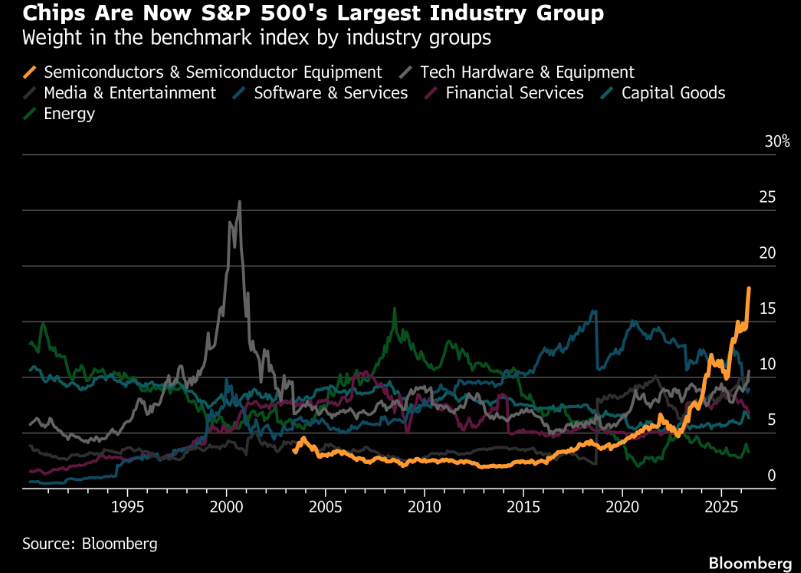
The surge has been largely fueled by chip stocks, with the Semiconductor Index, $SOX, rising +66% over the same period.
By comparison, the S&P 500 is up +16% while the Dow is up +10% over the same time period.
Meanwhile, the S&P 500 is up +20% since the March 30th low, with the top 10 stocks contributing ~65% of the index's gains.
Half of the top 10 contributors were semiconductor stocks.
The AI trade is hotter than ever.
The government has tracked the Personal Savings Rate since the 1950s. It's the percentage of disposable income that Americans save, invest, or use to purchase real assets.
Today's reading was a terrifying 2.6%
Want to know all the times in the history of this stat it was this low?
▶ The 2.5 years running up to the Great Recession
▶ The first 3 quarters of the Great Recession
▶ The middle of 2022 (the 3rd worst year for markets in 50 years)
▶ Right now
Cyclical Stocks 101: Final highs don’t come at high P/Es. They come when earnings are peaking and P/Es look deceptively “cheap.” Semis—especially MU—are classic: they screen undervalued right before the cycle turns.
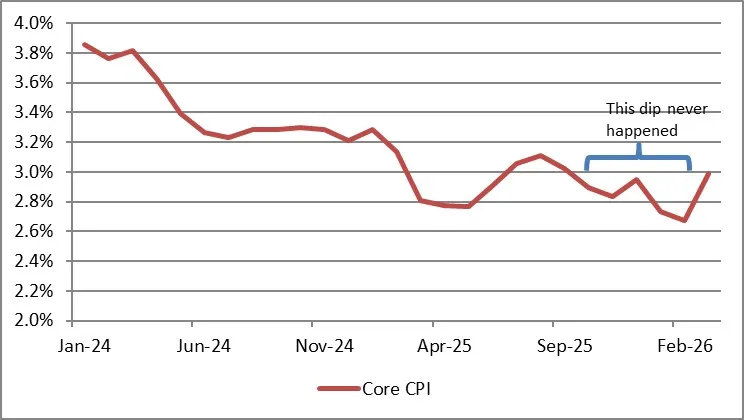
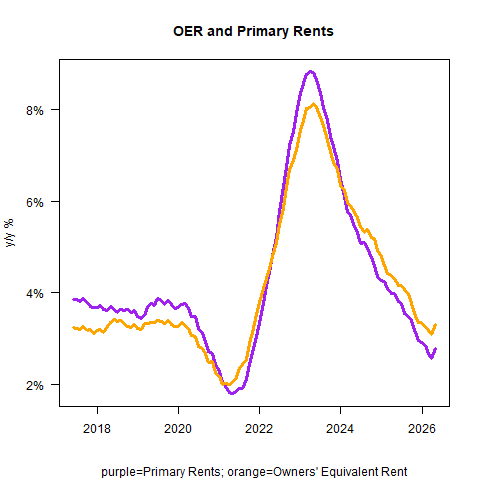
Today's CPI is messy. I would characterize it in two ways:
1) core CPI was artificially low over the last few months because of the government shutdown marking some data as a 0. Now that those numbers have rolled off, we see an OER print in the other direction that offset those lower numbers. We are now back to a "clean" number again - but the trend is not good. As discussed in the roundup a few weeks ago, the disinflationary tailwind of rents is done and now poised to head back higher.
2) energy-driven headline inflation - obviously what caused much of the surge this month. It's difficult for policymakers to decide on what to do here since it's shock-driven and highly volatile.
On net, obviously a hawkish print and its clear inflation is accelerating. With the labor market showing signs of strength and stability, the Fed has strong footing to solely focus on inflation right now. With that in mind, SOFR beginning to price in hikes feels warranted.
As always, charts from @inflation_guy
Global policymakers are staring down the barrel of an uncontrollable situation. They are simultaneously attempting to devalue the dollar, suppress bond yields and manipulate commodity prices lower. They have succeeded in the short-term and it has felt like crack cocaine for global equity markets. The stock market strength has masqueraded behind the "AI singularity" narrative as there has been no other obvious reason for such a large equity move amidst the background of such a worsening supply chain backdrop. This is leaving most market participants unaware of what is really going on under the hood.
Why it is about to become uncontrollable, however, is due to the nature of the beast. All of the government interventionist tactics I listed above are economically stimulative and financial condition loosening.
1. Suppressing the dollar eases global liquidity (on top of already ~$500B in ongoing Fed QE disguised as 'RMPs') and sends stocks higher, creating a positive wealth effect, reinforcing growth and inflation.
2. Suppressing bond yields makes financing costs cheaper all else equal for businesses and consumers, reinforcing growth and inflation.
3. Manipulating commodity prices lower provides stimulus for businesses and consumers, avoiding the higher prices required to force demand destruction and bring on more production, reinforcing growth and inflation.
All of this is occurring during a man made commodity supply shock. This is like putting your car into cruise control at 100 mph into a brick wall and has justifiable comparisons to COVID. The incredible amount they are 'pushing on a string' has become so extreme that it would not surprise me to see escalation in the war very soon as a means to reintroduce economic uncertainty and ensure physical commodity shortages in an attempt to dampen economic demand to try to stymie growth and inflation in the short-term.
For all of the criticisms this administration has laid upon predecessors, they are setting new records for market intervention, manipulation and suppression of free market forces, particularly a a time when the economy is consistently growing >5% nominal GDP and asset prices make new all-time highs. They are purposefully and knowingly blowing a massive financial market bubble in an attempt to smooth over cracks elsewhere in geopolitical and approval/ratings problems.
This is extremely dangerous and inappropriate behavior and policy that will come back to bite much harder than it would if they took the pain now. It is such a nuanced corner of the economy and markets that even most investors, traders and participants will either 1) not know what I'm talking about or 2) dismiss it, however that should not stop people from speaking up about what is happening.
Global policymakers need to either 1) stop recklessly juicing liquidity and stimulating markets, manipulating the cost of capital and suppressing free market commodity prices or 2) face a 1970s style inflation resurgence. This is exactly what was done in 2020/2021 so it should be a surprise to no one when the 2022 repercussions present themselves again. We are on the precipice of a new and highly eventful chapter of economic history.
Earnings have been stellar (not a surprise really). 90% of S&P 500 stocks so far have beaten earnings estimates.
However, when I see charts like $ARM, $AMD, $MRVL, $INTC I can't help but view this as pure euphoria now.
Gamma squeeze + panic buying + lockout rally + sector bubble growing.
Both incredible and totally insane.
Amal Khalil was alive for hours. She phoned her family and the Lebanese military for help. People followed in horror as her colleagues updated the world on what was happening. And yet Israel blocked the Red Cross from reaching her for seven hours. That is stone cold murder.