As seen by a concerned motorist in Congressman @VernBuchanan district.
Limiting consumer is one way to mandate E15. This is a problem for boaters and small engine users. @therealnmma@MRFlegislative
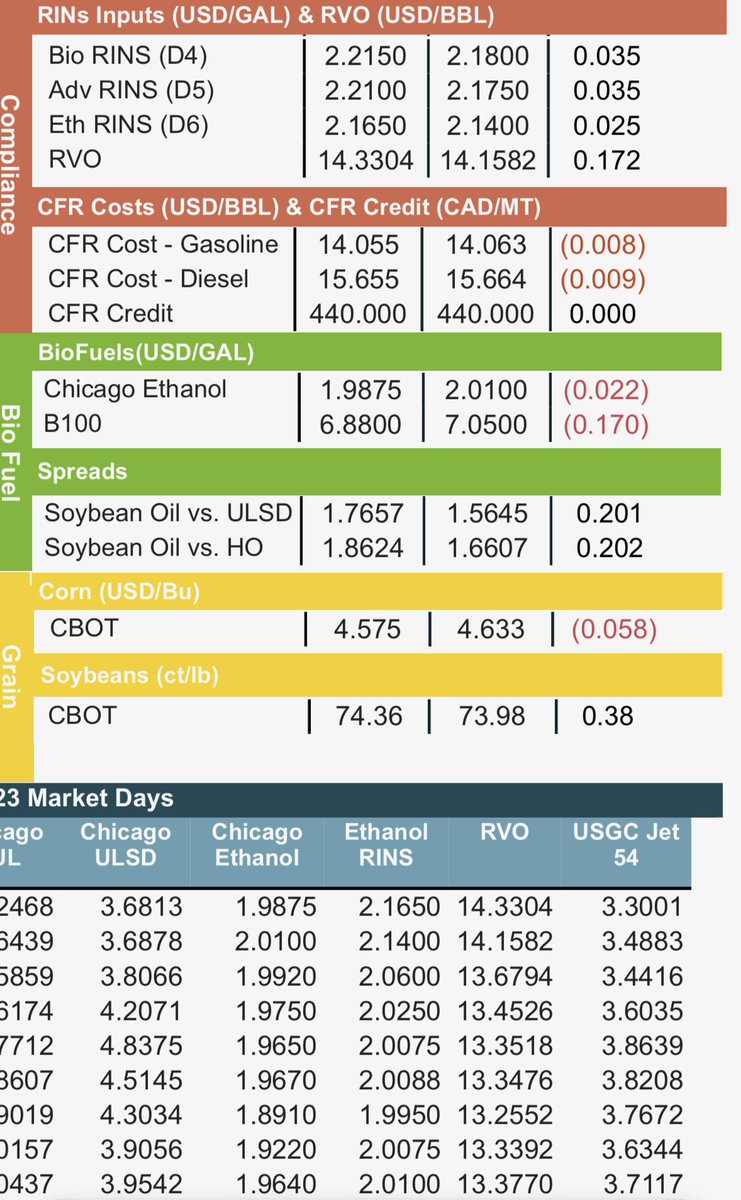
1. D4 RIN prices have been setting all-time highs on an almost daily basis recently. Yesterday (5/27/2026), 2026 vintage D4s hit a price of $2.26 per gallon. The main reason that D4 RIN prices are so high is the sheer magnitude of 2026 and 2027 biomass-based diesel RVOs finalized by the EPA at the end of March. What may be less well understood is that D4 prices would have been even higher if not for the Iran conflict.
Ethanol industry endorses California fuel policies that have created the highest gas prices in America, led to 2 refinery closures, and the loss of thousands of high paying union jobs.
But, it's good for the ethanol industry. CC: @APIenergy
Historic price increases for RINs/RVO coincide with Renewable Fuels Month. The RVO cost has shot in $1 in a matter of days, costing $14.33 per barrel of refined product.
This is good for ethanol producers that get the subsidy from the #RFS.
It is NOT good for consumers who pay more at the pump to subsidize the ethanol industry. Follow @OilandGibbs for more market analysis.
"But outside of re-opening the Strait, the most impactful thing the Administration and Congress can do would be to revisit the biofuel mandates under the Renewable Fuel Standard. That law, alone, is adding more than 30-cents per gallon to the cost of supplying the domestic market with gasoline and diesel."
Preach.
#RFS
https://t.co/qpVElnNUSV
Now Congress is considering a bill - #HR1346 - that will lead to more refinery closures. This so-called E15 legislation prohibits EPA from granting regulatory relief to small refineries… something that Congress rightly built into the RFS mandates b/c small refineries face disproportionate costs of federal ethanol mandates. It will lead to small refineries shutting down.
Of all groups, API is leading the charge on these provisions! @APIenergy - anti petroleum institute.
Protect Small Refineries!
@GrowthEnergy 35 cents in "savings" in Minnesota thanks to the 36 cents in subsidies that consumers are paying because of the increasing costs of RINs and the RVO.
Chairman John Boozman tells @Brownfield the Senate will largely use the House farm bill as a template but leave out nationwide year-round E15, Prop 12 repeal, and EPA labeling language due to bipartisan support concerns. #FarmBill#AgPolicy#E15 (AUDIO🎙️)
https://t.co/XoakKwraGY
@GasBuddyGuy It could go even higher because of the major draw downs in the RIN bank. @OilandGibbs provides good analysis.
How can more liquidity be added to the RIN market?
@farmdocDaily@ScottIrwinUI@fox32news@ScottIrwinUI - you do a good job of explaining some of these complex issues. One thing people need to know is that E15 may be 15 cents cheaper per gallon, but consumers are paying 36 cents per gallon because ethanol is in the gas (RFS compliance costs due to ethanol mandate).
This legislation could lead to dozens of small refineries being closed. The Small Refineries Coalition's concerns were absolutely ignored in #HR1346. Eliminating EPA's authority to provide relief will harm America's energy security. Ethanol will not replace 1.4 million barrels per day of refining capacity.
If you haven't been following the Set2 D4 squeeze, it's time to wake up.
@EPA has a real problem on their hands.
What was an ambitious RVO to begin with has burned through over 2/3 of its SRE-driven RIN bank in 4 months that needed to last 2 years.
2027 is a PROBLEM. Set3 2028+ is looking to need the first D4 reduction in history (or atleast shifting into D5).
@sab__RIN__a lays out our RIN model scenario and its implications brilliantly in our April RIN generation note ⬇️
Should the Senate strip the small refinery provisions from the "E15 bill?"
Nearly every trade and labor union that works in America's refineries opposes this bill because it forces small refineries to absorb more costs from the ethanol mandate by stopping EPA from granting relief to small refineries. Eliminating regulatory relief could mean refinery closures and union job losses.
Wait till America sees what happens if #HR1346 passes and small refineries are forced to close because they can't even apply for regulatory relief from EPA. Some small refineries spend as much as $100million to comply with the federal ethanol mandate, and they can apply for relief from EPA - unless HR 1346 passes and eliminates that protection.