Rick Rubin’s House on the Mountain test:
Create according to your own taste, not for applause, critics, algorithms, or market demand.
“Imagine going to live on a mountaintop by yourself, forever. You build a home that no one will ever visit. Still, you invest the time and effort to shape the space in which you’ll spend your days. The wood, the plates, the pillows—all magnificent. Curated to your taste.”
“This is the essence of great art. We create our art so we may inhabit it ourselves.”
“I'm willing to go to extremes to make the thing that I want to inhabit and it's not for anyone else. it's just for me.”
I think you're going to see it's all going to converge back to screens and data and panels and buttons.
People don't want to ask the same question over and over. They'll ask something, it'll be set up to show something, and that thing will be saved as something they can always look at. Stable pre-defined glances, not blank slates each time. Common questions will become buttons and panels again.
Most people ask the same kinds of questions about what they work on most of the time. Having to start from scratch with the questions every time seems like a step backwards.
Another way to put this: Questions are wonderful for a deeper dive, but not a daily drive.
Not sure you're suggesting questions always, but the comparison screenshots looked that way.
An agent that's fluent in Figma and purpose-built for design. On the canvas, where your team works and design context lives... rolling out in beta starting today!
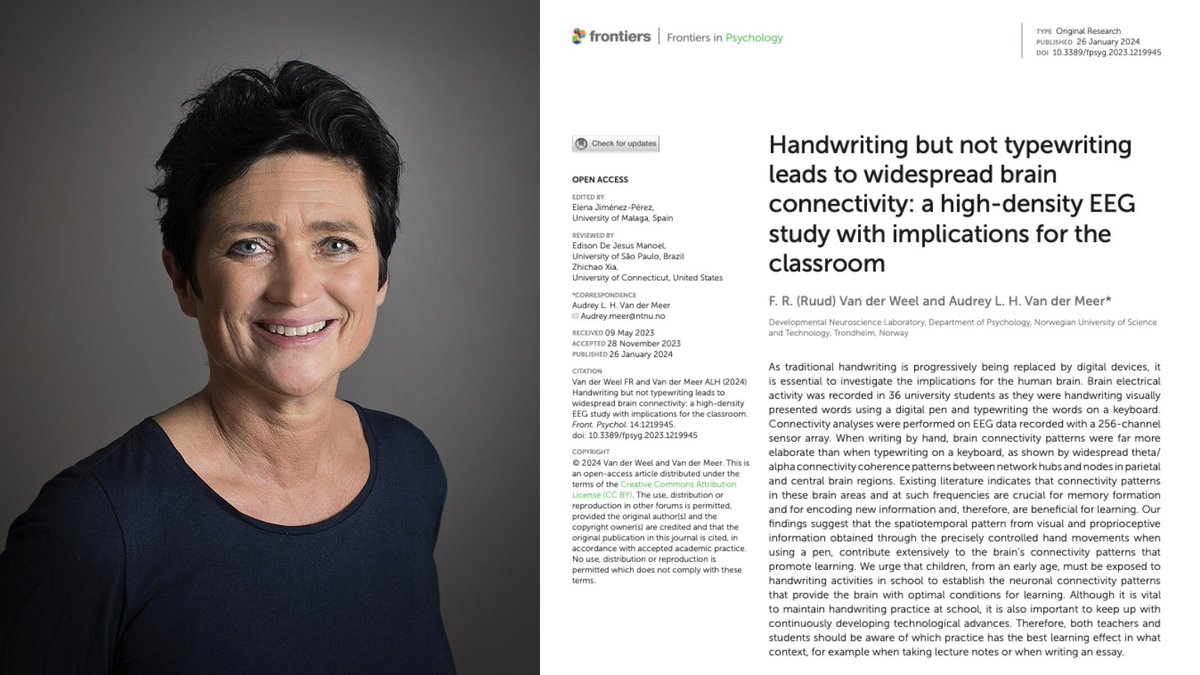
A Norwegian neuroscientist spent 20 years proving that the act of writing by hand changes the human brain in ways typing physically cannot, and almost nobody outside her field has read the paper.
Her name is Audrey van der Meer.
She runs a brain research lab in Trondheim, and the paper that closed the argument was published in 2024 in a journal called Frontiers in Psychology. The finding is brutal enough that it should have changed every classroom on Earth.
The experiment was simple. She recruited 36 university students and put each one in a cap with 256 sensors pressed against their scalp to record brain activity. Words flashed on a screen one at a time.
Sometimes the students wrote the word by hand on a touchscreen using a digital pen, and sometimes they typed the same word on a keyboard. Every neural response was recorded for the full five seconds the word stayed on screen.
Then her team looked at the part of the data most researchers had ignored for years, which is how different parts of the brain were communicating with each other during the task.
When the students wrote by hand, the brain lit up everywhere at once.
The regions responsible for memory, sensory integration, and the encoding of new information were all firing together in a coordinated pattern that spread across the entire cortex. The whole network was awake and connected.
When the same students typed the same word, that pattern collapsed almost completely.
Most of the brain went quiet, and the connections between regions that had been alive seconds earlier were nowhere to be found on the EEG.
Same word, same brain, same person, and two completely different neurological events.
The reason turned out to be something nobody had really paid attention to before her work. Writing by hand is not one motion but a sequence of thousands of tiny micro-movements coordinated with your eyes in real time, where each letter is a different shape that requires the brain to solve a slightly different spatial problem.
Your fingers, wrist, vision, and the parts of your brain that track position in space are all working together to produce one letter, then the next, then the next.
Typing throws all of that away. Every key on a keyboard requires the exact same finger motion regardless of which letter you are pressing, which means the brain has almost nothing to integrate and almost no problem to solve.
Van der Meer said it plainly in her interviews.
Pressing the same key with the same finger over and over does not stimulate the brain in any meaningful way, and she pointed out something that should scare every parent who handed their kid an iPad.
Children who learn to read and write on tablets often cannot tell letters like b and d apart, because they have never physically felt with their bodies what it takes to actually produce those letters on a page.
A decade before her, two researchers at Princeton ran the same fight using a completely different method and ended up at the same answer. Pam Mueller and Daniel Oppenheimer tested 327 students across three experiments, where half took notes on laptops with the internet disabled and half took notes by hand, before testing everyone on what they actually understood from the lectures they had watched.
The handwriting group won by a wide margin on every question that required real understanding rather than surface recall.
The reason was hiding in the transcripts of what the two groups had actually written down.
The laptop students typed almost word for word, capturing more total content but processing almost none of it as they went, while the handwriting students physically could not write fast enough to transcribe a lecture in real time, which forced them to listen carefully, decide what actually mattered, and put it in their own words on the page.
That single act of choosing what to keep was the learning itself, and the keyboard had quietly skipped the choosing and skipped the learning along with it.
Two studies. Two countries. Same answer.
Handwriting makes the brain work. Typing lets it coast.
Every note you have ever typed instead of written went into your brain through a thinner pipe. Every meeting, every book highlight, every idea you captured on your phone instead of on paper was processed at half depth.
You did not forget those things because your memory is bad. You forgot them because typing never woke the part of the brain that would have made them stick.
The fix is the thing your grandmother already knew.
Pick up a pen. Write the thing down. The slower road is the faster one.
this mac app is insanely good for databases
> free
> open source
> beautiful
> super fast
handy for viewing local codex threads in sqlite too
I’m not saying “no design.” I’m saying most apps can get away with just nailing the fundamentals.
Not every app needs layers of “visual expression,” motion, personality, or over-design-engineering in pursuit of delight.
What really matters when you want to get work done are: speed, obvious UX, good defaults, clear behavior. That works every time.
The interface design should stay out of the way.
I’m arguing for “design is how it works.” Do this first.
I don’t want to notice your UI. I want to see my content.
If you believe free speech is for you but not your political opponents, you're illiberal.
If no contrary evidence could change your beliefs, you're a fundamentalist.
If you believe the state should punish those with contrary views, you're a totalitarian.
If you believe political opponents should be punished with violence or death, you're a terrorist.
Since I don’t have the final font file yet, I still wanted to keep playing with it a bit more. So I created this playground to see how it behaves, spot the issues more quickly, and move forward from there.
@JoshDaws Same. I’m sticking to MD for now for most stuff. Also, I no longer presume all those MDs are for me to read. They’re for the LLM to document plans, progress, and decisions. When I want a summary out of that, I ask for it.
this one of the best way to show pricing plans on mobile
built by @watermelonui
npx shadcn add https://registry .watermelon.sh/r/changeable-pricing-section.json
In this letter, the CEO of Coinbase talks about non-technical teams shipping production code. Honestly, I don’t think he knows what he’s talking about.
Using AI agents makes it possible for teams who are not deeply technical in the syntax of a language to ship production code. But that team had better be very deeply technical in managing the structure and quality of the code that is produced.
What the agents give us is the ability to disengage from deep syntax. But they do not give us the ability to disengage from modular design and architecture. You still need to be deeply technical in those topics in order to produce good production quality code.
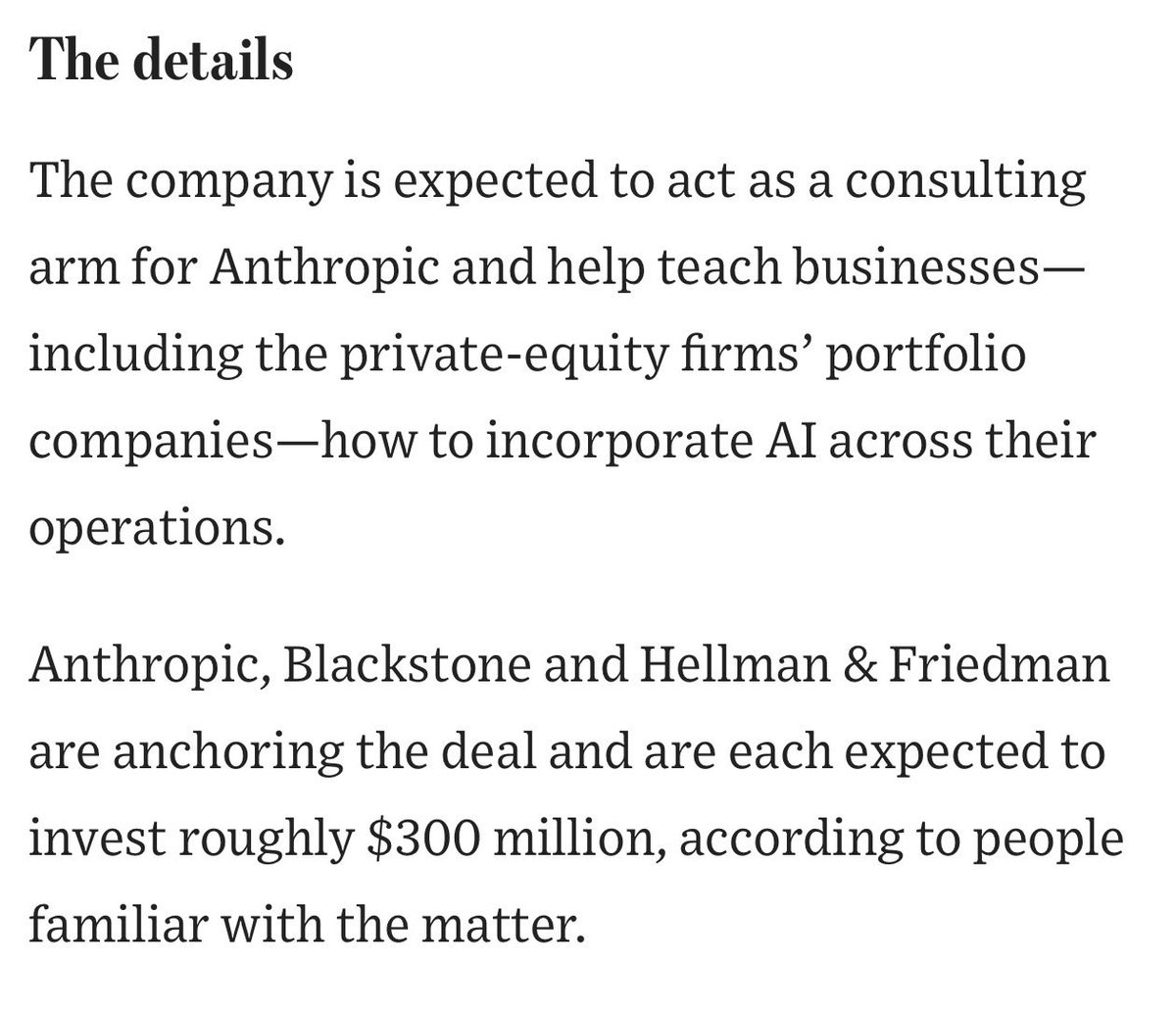
Both Anthropic and OpenAI have new initiatives to help enterprises deploy AI agents within their organizations. This is a trend that’s early but going to get very big fast.
As agents enter knowledge work beyond coding, there is very real work to upgrade IT systems, get agents the context they need, modernize the workflows to work with agents, figure out the human-agent relationship in the workflow, drive adoption and do change management, and much more.
While AI models have an incredible amount of capability packed into them, there’s no shortcut to getting that intelligence applied to a business process in a stable way. This is creating tons of opportunities across the market for new jobs and firms, and the labs are equally recognizing the criticality here.