Özellikle "Odyssey filmine gideceğim ama hikâyeyi hiç bilmiyorum" diyenler için iyi bir başlangıç videosu: Odysseus'un çileli hikâyesinin baştan sona felsefi derinliğiyle birlikte anlatımı, Luc Ferry'den.
Çok eskiden yayınladığım bu videonun çevirisini bugün tekrar elden geçirdim. Yeni versiyonu daha derli toplu oldu.
İyi seyirler :)
Paul Samuelson was the first American to win the Nobel Prize in Economics. He spent his career proving that ordinary people should not try to beat the market. He also quietly beat the market himself for 60 years. His last full-length interview explains how. Almost nobody has watched it.
Samuelson taught at MIT for 65 years, from 1940 until he died in 2009. His textbook "Economics" sold roughly four million copies. He rewrote the field. Every finance professional working today learned economics from a book he wrote or a book written by his students.
He also ran his own money quietly. His returns reportedly outpaced most active managers of his era, and he was an early investor in Warren Buffett's Berkshire Hathaway. He never advertised the numbers. He said the opposite in public. His most famous line about investing:
"Investing should be more like watching paint dry or watching grass grow. If you want excitement, take $800 and go to Las Vegas."
He was one of the earliest advocates for index funds. He believed almost nobody could beat the market and almost nobody should try. His nephew Larry Summers became Treasury Secretary. His students founded half the modern economics profession. He was invited into every important economic policy debate of his lifetime.
His view on personal finance was unusually blunt for a Nobel laureate. In one of his final interviews, near the end of his life, he explained his framework in three sentences. Personal finance is not a science. It is a set of common-sense decisions repeated for decades. Save more than you spend. Diversify. Do not chase excitement. Do not trust anyone who promises certainty. He said these things thousands of times over 70 years and the industry ignored him every year.
The full interview covers his childhood, his years at Chicago and Harvard, his rise at MIT, his Nobel, and his philosophy on money. He was 94 years old at the time. His voice is thin and his answers are direct. He does not soften anything. He treats the interviewer like a graduate student who happens to be holding a camera.
The more sophisticated a market becomes, the more valuable the boring advice becomes. Every investor who ignored Samuelson's rules is a receipt for how right he was. Every quant who read his mathematics and skipped his common sense missed the point.
Samuelson died December 2009. He was 94. His textbook is still in print. The interview is free.
The CEO of Palantir - a $400 BILLION company that builds AI for Western militaries - sat down in Germany and said the quiet part out loud about AI, the far right, and why Europe is unraveling.
- he has a PhD in philosophy and runs one of the most powerful defense companies on Earth
63-min of Alex Karp saying things no other tech CEO will say on camera
bookmark & watch - the most unfiltered take on AI and power right now
Every person living in a western nation needs to listen to every word of this
Katherine Berbalsingh went to the University of Oxford and is Headmaster at Michaela Community School in London, UK
She PERFECTLY explains the mass indoctrination into the narrative of oppressor and oppressed, and of hating White People
I will write only some of this out because it’s very important, however you should listen to it so you can hear the passion:
“The culture shift comes from what children learn at school and online. Ask any young person what history they learned at school, and they’ll tell you, Hitler. Ask them what else? Slavery. Ask them what else? American civil rights.
In fact, what little they know of history will be all about Black and brown people fighting for equality against the white man, women fighting men for the vote, gay and trans people fighting for various rights. Our young people have been taught that history is simply one long story about various groups struggling under the oppressive dead white man.
— History is taught through an oppressor lens. The triangular slave trade, white men held the power. What about Britain ending the slave trade? More than a quick mention, if at all? Mm, no.
What of the Arab slave trade that lasted 3 times as long as the triangular slave trade? Mm, no.
Okay, so GCSE history in Britain is often taught as migration through time, so the idea that Britain has always been a land of immigrants is embedded in our children’s heads. Most schools would prefer to concentrate learning about the tiny number of Black people who existed in Tudor England over a thorough analysis of England’s break from Rome.
— Not to mention weeks on King Mansa Musa of Mali because he was a Black Muslim. His bearing on British institutions, laws, and faith is nonexistent. And the fact that he is said to have been the richest man in history, thanks in part to his massive slave-owning society, is a detail somehow that teachers rarely ever teach.
But it isn’t just our schools. It’s our general culture too. Take your kids to a museum or an art gallery in any Western country, and you’ll find the same narrative.
As an example, when learning about aviation in London’s Science Museum and the extraordinary feat that is man making massive machines move in the sky, a write-up on the wall explains that women and Black people were historically barred from aviation schools and the military. Similarly, James Watt, the man who invented the steam engine and is considered the founder of the Industrial Revolution, has a write-up on the wall explaining that his early career involved slave trafficking, with a bonus analysis of the whole of Britain’s complicity in the slave trade.
They flatten the entire human story and all of its complexities into the narrative of oppressor and oppressed, leaving young people unable to see the world in any other terms.”
We have to end the mass indoctrination
Muchas gracias @DTuEconomia por la entrevista sobre mi libro #elliderazgodeladhormigas 👇
"El mayor peligro no es la IA, sino la falta de liderazgo humano" https://t.co/fYD5xkurBE
In collaboration with @munkschool, I am sharing a ten-lecture course I taught at @UofT this past year. The course is called “Hitler and Stalin Today.”
Watch the first lecture here: https://t.co/ry7GSIspXv
Polish PM dropping truth bombs:
'How can 500 million Europeans ask 300 million Americans to protect them from 140 million Russians...?
But I’ll tell you something even more astonishing — there are 2 billion Muslims asking the world to protect them from 7 million Jews...!?'"
The numbers say it all.
The same crowd that can’t win a single war, builds tunnels instead of schools, and turns every territory they control into a dumpster fire is convinced the tiny Jewish state is an existential threat to them.
It’s not about land. It’s not about 'occupation.' It’s pure Jew-hatred on an industrial scale.
One side contributes to humanity. The other side contributes body counts and conspiracy theories.
Thanks for the reality check, Poland. 🇮🇱
La Universidad de Chicago acaba de decir en voz alta lo que muchas facultades de Derecho todavía no quieren aceptar: la inteligencia artificial ya rompió el modelo tradicional de enseñanza jurídica. Hoy un alumno puede entregar una demanda, un ensayo o una investigación impecables sin haber leído, razonado ni comprendido realmente el problema. El riesgo no es solo el plagio. Es algo mucho más grave: simular que alguien sabe Derecho cuando en realidad solo aprendió a pedirle respuestas a una máquina.
La respuesta de Chicago no es prohibir la IA ni rendirse ante ella. Es formar abogados capaces de pensar sin tecnología, trabajar con ella y, sobre todo, cuestionarla. Por eso vuelve al aula sin pantallas, fortalece el método socrático, exige exámenes presenciales y obliga a los estudiantes a defender oralmente sus trabajos. La lógica es brutalmente sencilla: si no puedes explicar, sostener y corregir lo que entregaste, entonces probablemente nunca fue realmente tuyo.
La inteligencia artificial no va a acabar con los abogados. Va a acabar con una forma mediocre de ejercer el Derecho: memorizar, copiar formatos, repetir jurisprudencia y producir documentos sin criterio. El abogado que sobreviva no será el que escriba más rápido que una máquina, sino el que sepa detectar cuándo la máquina se equivoca, entender lo que está en juego, tomar decisiones difíciles y responder por sus consecuencias. El futuro de la abogacía no está en producir más texto. Está en tener más juicio.
https://t.co/jOi6yohnra
this rendition of A Different Corner is beyond flawless. it's definitely the greatest version of this gem❤️
from the perfect George Michael's vocals to the instrumentals & the talented backing singers everything about it is PERFECT
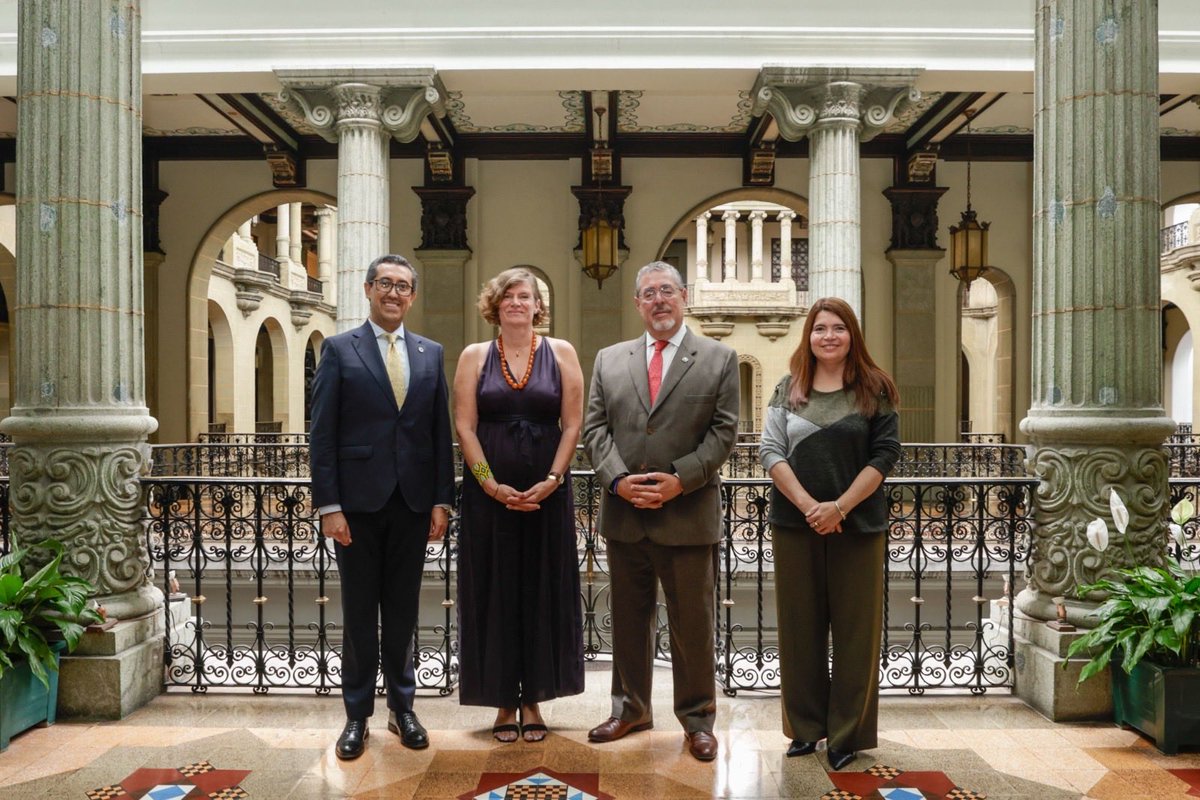
Good to meet President Bernardo Arévalo, Finance Minister Jonathan Menkos and Ana Glenda Tager, Private Secretary to the President, in Guatemala City. We discussed how the state can shape investment rather than simply attract it, and why capable public institutions are the precondition for growth that is inclusive and lasting.
Unos amigos bebiendo cerveza mientras juegan una partida de billar, y de repente suena "Can't Take My Eyes Off You". De las mejores escenas de la historia del 7° Arte, una OBRA MAESTRA
Ahir a les 16.01, després d’haver-se identificat la pressurització de la cambra superior de l’actuador d’una de les vàlvules d’aïllament de vapor principal, es procedí a aturar manualment el reactor nuclear Vandellòs—2 i a desconnctar-lo de la xarxa elèctrica. 1/6 …
Japonlar 100 yaşını devirip hala sabahları 5'te dinç uyanırken, biz neden sürekli tükenmiş hissediyoruz? Adamların sırrı genetiklerinde değil; hayatı resmen bir hile kodu gibi yaşamalarını sağlayan yüzyıllık sistemlerinde saklı.
İşte hayatınızı kökten değiştirecek 5 sarsılmaz Japon felsefesi:
1. Kaizen (Sürekli Gelişim): Hayatını bir günde değiştirmeye çalışma. Her gün sadece %1 daha iyi olmaya odaklan. 1 yılın sonunda %37 daha iyi bir insan olursun.
2. Ikigai (Varoluş Amacı): Sabahları seni yataktan çıkaran o şeyi bul. Sevdiğin, iyi olduğun, dünyanın ihtiyaç duyduğu ve para kazanabileceğin şeyin kesişim noktası senin Ikigai'ndir.
3. Oubaitori (Kıyaslama Zehri): Kiraz, erik ve şeftali ağaçları farklı zamanlarda çiçek açar ve hiçbiri diğerini kıskanmaz. Kendi zaman çizelgene odaklan, başkalarının saatiyle yaşama.
4. Wabi-Sabi (Kusurlu Güzellik): Mükemmeliyetçilik bir hastalıktır. Hatalarını ve kusurlarını saklama, onları tecrübe olarak gör. Kırık bir vazo, altınla yapıştırıldığında eskisinden daha değerlidir.
5. Hara Hachi Bu (Yüzde 80 Kuralı): Masadan tamamen doyarak değil, %80 doyduğunda kalk. Bu kural sadece miden için değil; enerjin, arzuların ve hırsların için de geçerlidir. Kendine her zaman bir nefes alma payı bırak.
Coğrafya kader olabilir ama zihniyet tamamen senin seçimidir. Kendi sistemini kur.
DOCUMENTAL COMPLETO | Jorge Luis Borges
¿Quién fue Borges realmente? Ciego, erudito, provocador… y uno de los escritores más influyentes del siglo XX. En este documental profundo y revelador, exploramos la vida oculta de Borges: desde su infancia entre bibliotecas hasta su legado eterno, pasando por la ceguera que transformó su escritura, el Nobel que nunca recibió… y los misterios que dejó sin resolver.
#literatura #escritores #documental #borges
DOCUMENTAL COMPLETO | Charles Bukowski fue muchas cosas: cartero, borracho, provocador… y también uno de los escritores más influyentes del siglo XX. Su vida estuvo marcada por la pobreza, el alcohol, la soledad y una brutal honestidad que terminó convirtiéndose en literatura.
En este documental exploramos la verdadera historia de Bukowski: desde su dura infancia y sus años de trabajos miserables, hasta el momento en que su voz cruda y sin filtros conquistó a millones de lectores en todo el mundo.
¿Cómo un hombre que parecía destinado al fracaso terminó convirtiéndose en un autor de culto? ¿Qué había detrás del mito del escritor salvaje que vivía entre bares y noches interminables? Bukowski no intentaba parecer virtuoso.
Escribía sobre la derrota, el deseo, el caos y la belleza oculta en los márgenes de la sociedad. Y quizá por eso su voz sigue resonando hoy con tanta fuerza. Este documental es un viaje por la vida, los excesos y el legado de uno de los escritores más controvertidos de la literatura moderna.