Aave is increasingly looking less like a lending protocol and more like a credit layer.
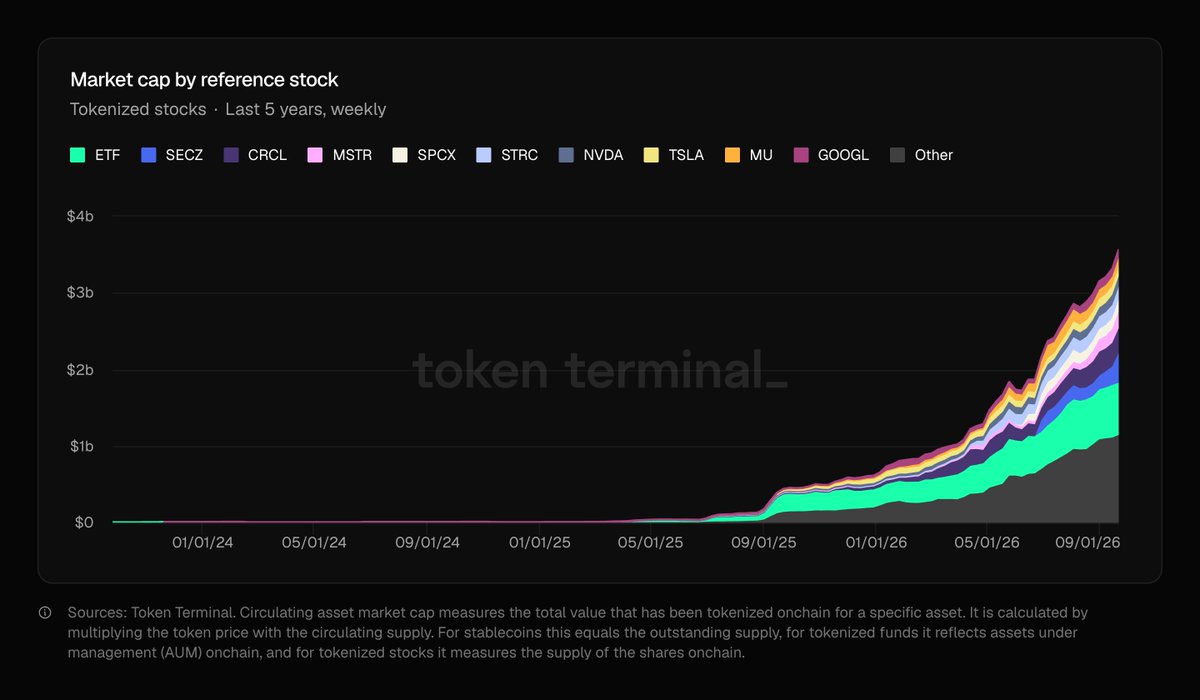
With the market cap for tokenized stocks crossing $3.5B and Coinbase tokenized stocks becoming productive collateral on @Aave, all eyes are on this specific topic.
However, stocks, tokenized funds, custodied BTC and ETH, RWAs, crypto collateral: all of these are increasingly becoming collateral for credit originated through Aave.
And on the other side, the borrower doesn't necessarily need to be a DeFi user anymore either.
> Coinbase users can borrow against tokenized equities.
> Institutions can access stablecoin credit against assets held with qualified custodians.
> Fintechs can embed Aave liquidity directly into their products.
> Soon enough, we may even see banks launching their own frontends for the Aave App (Aave underneath)
V4 makes the market structure flexible enough to accommodate each of these without forcing them into the same risk environment.
The addressable market for Aave is starting to look a lot more like credit than simply DeFi lending. The thesis is becoming increasingly obvious.
Data by @tokenterminal.
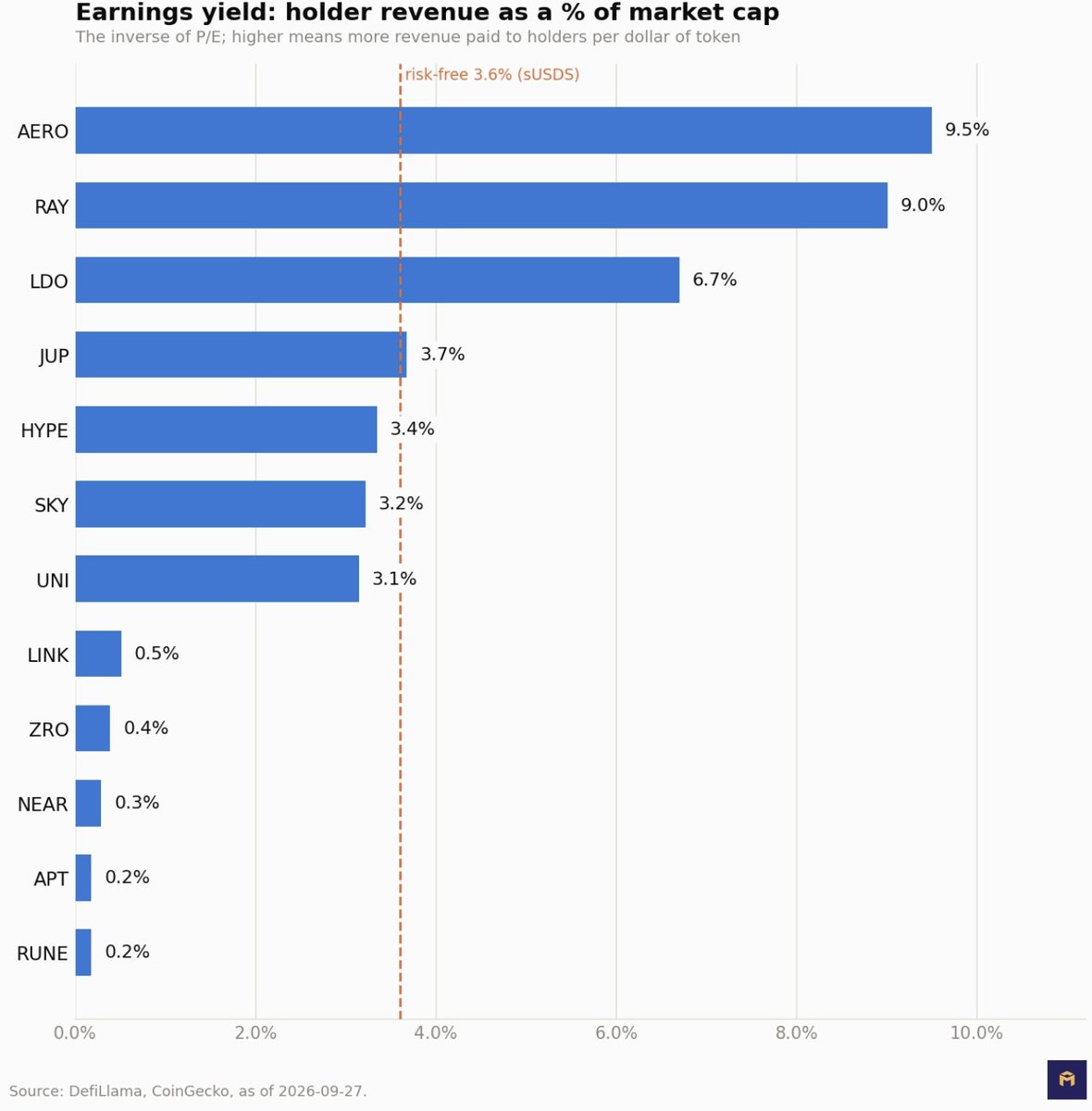
for a select number of tokens where enough revenue reaches holders to calculate a yield, only four pay more than the 3.6% you can earn in sUSDS.
AERO pays the most.
holders receive about 9.5% of its market cap in revenue (annualized), 2.6 times the "risk-free rate", at a ~10.5x P/E, and that revenue grew about 45% on the prior month. RAY (9.0%) and LDO (6.7%) come next, and most of the other tokens are below 1%.
note: fees go only to holders who lock their AERO as veAERO to vote. new AERO issued each week dilutes holders, and the yield does not subtract it. with only about half the supply circulating, the P/E on FDV is about 21x with liquidity as the tradeoff.
for a select number of tokens where enough revenue reaches holders to calculate a yield, only four pay more than the 3.6% you can earn in sUSDS.
AERO pays the most.
holders receive about 9.5% of its market cap in revenue (annualized), 2.6 times the "risk-free rate", at a ~10.5x P/E, and that revenue grew about 45% on the prior month. RAY (9.0%) and LDO (6.7%) come next, and most of the other tokens are below 1%.
note: fees go only to holders who lock their AERO as veAERO to vote. new AERO issued each week dilutes holders, and the yield does not subtract it. with only about half the supply circulating, the P/E on FDV is about 21x with liquidity as the tradeoff.