Congrats @Accenture on acquiring the amazing NeuraFlash! This bold step for Agentforce capability adds 500+ professionals and 2,000+ Salesforce certifications, strengthening AI, Salesforce, and Data Cloud implementations! ❤️🤖
https://t.co/tTDocdzA0V
Exciting panel today at the @AgentsMIB#Factor2024 conf where ML/AI is being applied to fight osteosarcoma. Models are being trained on imaging, research data, text, etc that will help speed time to clinical trial and eventually to patients.
#osteosarcoma#makeitbetter
A 100% disaster migration from First Republic Bank to @Chase. And the customer service to get help is completely worthless and cannot help. Worst migration I’ve ever seen and I’ve seen a lot.
Former First Republic Bank customers are having issues getting their money after @jpmorgan@Chase took over for the failed bank. Some products won't transition to JPMorgan Chase systems until later this year, leaving many unable to access their accounts. https://t.co/MQXWdE85Ww
Really enjoyed the conversation with @rodnitzky on his @agenticshift podcast. Great discussion on investing in tech services and agencies. https://t.co/jOw6Bq52t2
@sstaffordtweet@KirkHerbstreit@rosebowlgame UCLA grad, been to dozens, was there yesterday so I get the Rose Bowl is gorgeous & nostalgic on the outside, but the inside is old, tired, crowd logistics are horrible if not dangerous, restrooms old, small… and the tiny stadium TVs? Embarrassing for being the “grand daddy”
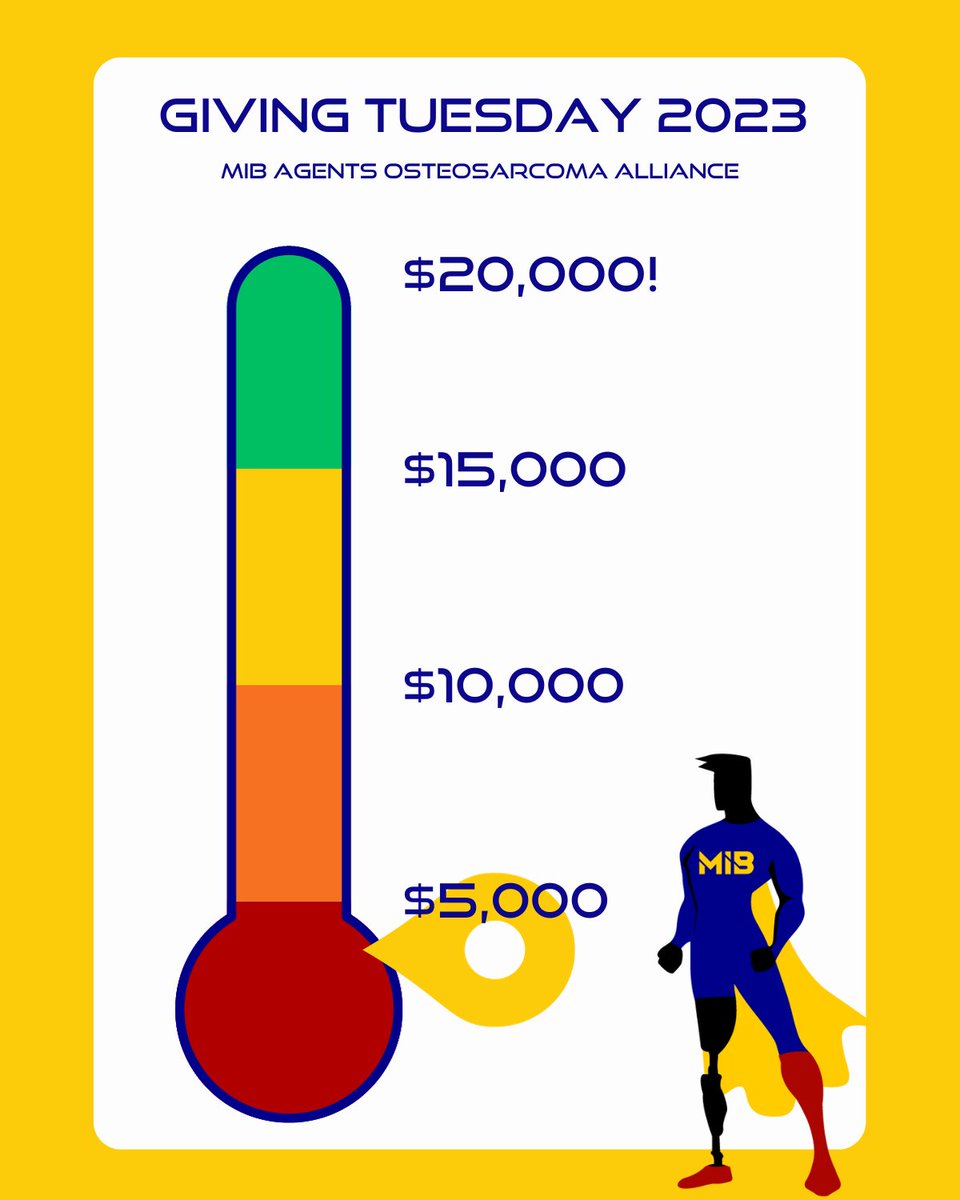
In the next 24 hours, we need your support to reach our Giving Tuesday goal of $20,000!
Be the “I” in Make It Better with a donation today!
Visit https://t.co/65KMwGPYRE for more details.
We thank you for using your powers for good on this global day of generosity!
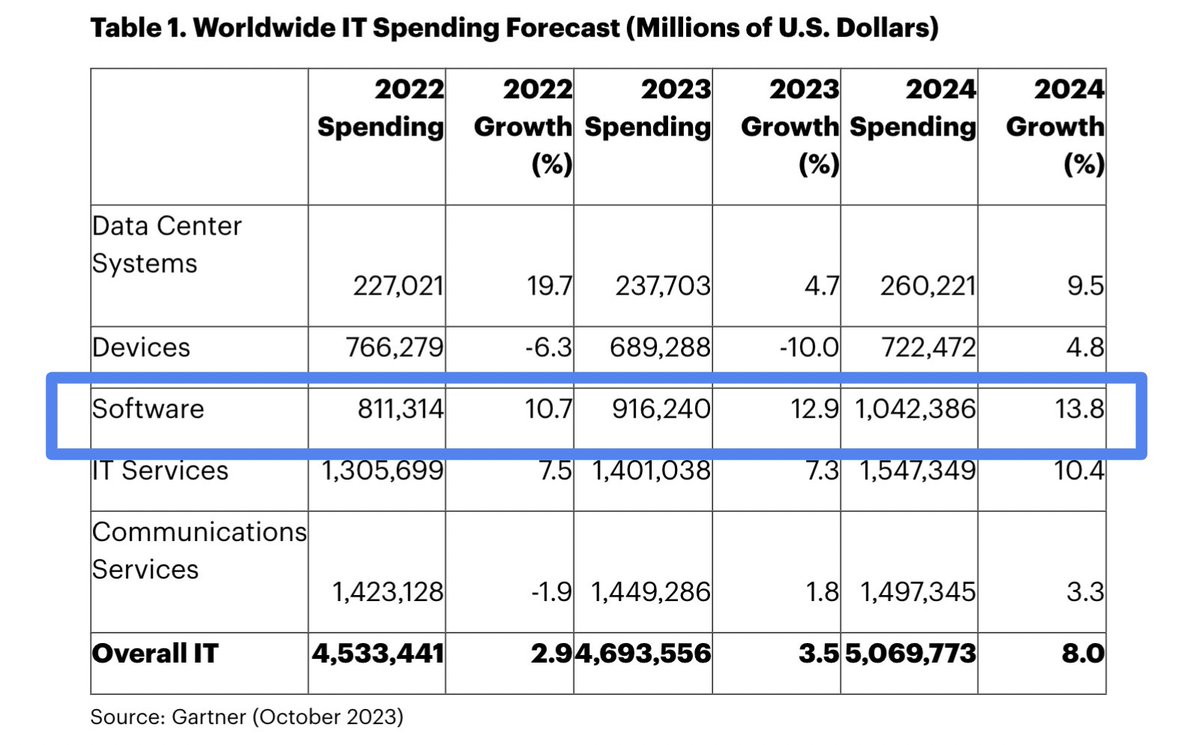
What will 2024 look like? Per Gartner:
Good News:
▶️ Global IT software spend will grow +13.8% (!) and
▶️ Cross $1 Trillion (!) for first time
Less Good News for Startups:
▶️ Public Cloud spend (+20.4% in 2024) and
▶️ Price increases and more utilization at existing vendors taking biggest share
▶️ Change management fatigue by CIOs across board
So the money is there. One trillion of software spend in 2024 for the first time. It's just harder than it was to get it.
Add even more value to break through.
In 2009, Stanford business professor Tina Seelig split her class into groups and issued a challenge:
Each group had $5 and 2 hours to make the highest return on the initial money.
At the end, they'd give a short presentation on their strategy.
The results were fascinating...
Most of the groups followed a basic approach:
• Use the $5 to buy a few items.
• Barter or resell those items.
• Repeat
• Sell final items for (hopefully) more than $5.
These groups made a modest return on their initial $5.
A few groups ignored the $5.
They thought up ways to make the most money in the 2 hours of allotted time:
• Made and sold reservations at hot restaurants.
• Refilled bike tires on campus for $1 each.
These groups made a better return on their initial $5.
The winning group took an entirely different approach.
They had three core realizations:
1. The $5 was nothing more than a distraction.
2. The 2 hours of time was not enough to make an attractive, outsized return with a mini-business (like selling restaurant reservations or filling bike tires).
3. The most valuable "asset" was actually the presentation time in front of a class of Stanford students.
Realizing the value of this hidden asset, they offered the presentation time to companies looking to recruit Stanford students.
They struck a deal to sell the time slot for $650, netting a monstrous return on the $5 of initial capital.
The losing groups thought in linear, logical terms and achieved a linear, logical outcome.
The winning group thought differently.
So, what can we learn from this story?
There are two types of problems:
1. Low-Stakes: Lower potential, linear rewards. Decisions are easily reversible.
2. High-Stakes: Higher potential, asymmetric rewards. Decisions are not easily reversible.
With low-stakes problems, given the reward potential is low and the decisions are easily reversible, we can use shortcuts and heuristics to choose our path. We can take a logical, linear approach.
With high-stakes problems, the high, asymmetric reward potential means we need to think differently. We want to take a creative, non-linear approach.
Three steps to start thinking differently:
Step 1: Avoid the Distraction
There will always be an "obvious" solution that is simple, clear, and entirely wrong.
In the challenge, the $5 was nothing more than a distraction. It was a trap.
To find the best path, you have to avoid the distraction.
Step 2: Ask Foundational Questions
Ask and answer questions that expose and vet underlying assumptions and logic.
• What's the real problem you are trying to solve?
• What's your hypothesis? Why?
• What are your core assumptions? Why?
• What evidence do you have?
• What are your core options?
• What alternatives exist?
This takes time, but it's an essential exercise when facing a problem with the potential for non-linear rewards.
Step 3: Select the High Leverage Approach
Slow down and evaluate the options on the table.
Select the path most likely to generate the asymmetric, attractive risk-adjusted returns.
If the story teaches us one thing, it's this:
Creative, non-linear, asymmetric thinking generates creative, non-linear, asymmetric outcomes.
If you enjoyed this or learned something, follow me @SahilBloom for more in future.
Childhood Cancer Awareness Month. Kicking off the month with the Cycle for Charlotte ride tmrw to raise money for Charlotte's FF at @AgentsMIB
Grateful and humbled to have blown through ou goal for this ride! Thank you!
https://t.co/h6BZSQugEU
#childhoodcancer#osteosarcoma
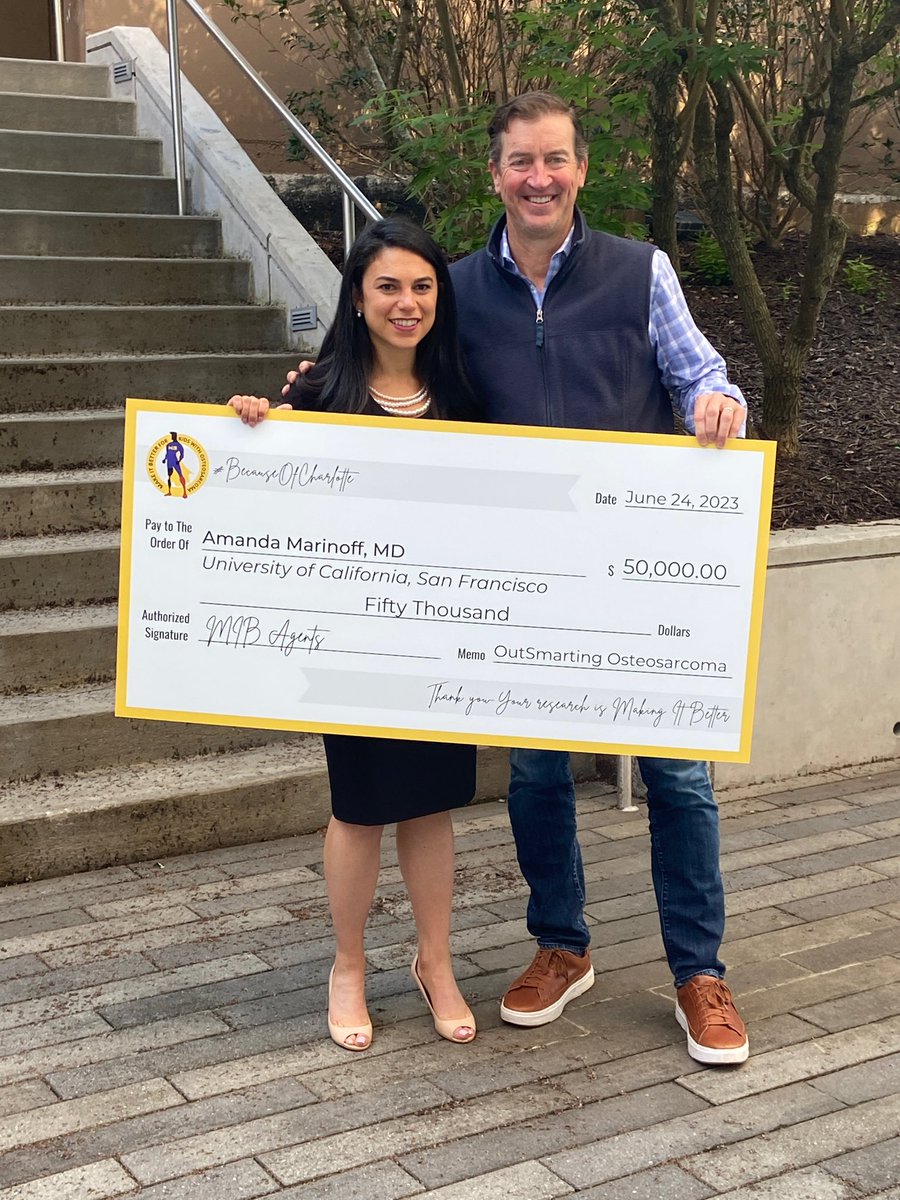
Just completed some amazing days at the @AgentsMIB#FACTOR23 conference in Atlanta! We are grateful to fund Young Investigator Dr. Amanda Marinoff at @UCSFChildrens all #becauseofCharlotte. We are excited to hear more about your research in the coming months and years!
Congrats to 2 great Young Investigators from the UCSF @SweetCorderoLab! Looking forward to presenting the award to Amanda Marinoff at the @AgentsMIB FACTOR conference this weekend #becauseofCharlotte
Investigators at the @SweetCorderoLab Amanda Marinoff and Marta Roman Moreno were each awarded a $50,000 Young Investigator grant from pediatric osteosarcoma nonprofit @AgentsMIB to move osteosarcoma cancer research forward! https://t.co/dcVtbJygKb
BIG NEWS!
Read more here: https://t.co/DKGC2gsxlA
🎗Thank you ALL for making it better! We couldn't do
this without you!
#MIBAgents#makeitbetter#osteosarcoma#OutSmarting#Research
REMINDER: FACTOR 2023 Atlanta registration is open
NOW!
Michael & April Egge, Osteosarcoma Collaborative, Battle Osteosarcoma, @CureSearch, and The Zach Sobiech Osteosarcoma Fund of @childrenscancer have come together w/ St. Baldrick’s to fund The Fight Osteosarcoma Together Super Grant! Learn more: https://t.co/r1cyqiwhjs