🚨Brain frailty is associated with worse outcomes after EVT for stroke. Here, we examine sex differences in the assoc of brain frailty with stroke outcomes in the ESCAPE-NA1 trial: https://t.co/nw4C4o1I6M @joachimfladt@mihill68@mayank_G0@DCNSNeuro@HotchkissBrain@OBrien_IPH
In a mixed method study, the investigators found that physicians encounter profound, multifaceted uncertainty in determining goals of care for patients with disability or dementia after #stroke. https://t.co/Th329wN4aI
🚨In this intl mixed-methods study led by postdoc Bogna Drozdowska, we found physicians encounter multifaceted uncertainty in determining Goals of Care for ppl with disability or dementia, which may contribute to adverse variability in stroke care @WilliamBetzner@RamkumarRaksha
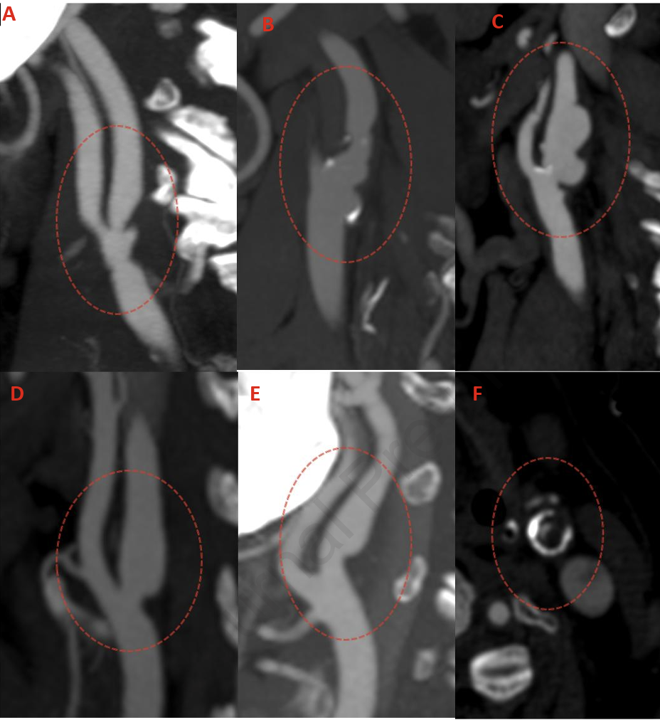
🚨Cerebrovascular fibromuscular dysplasia (cFMD) is sometimes seen in patients with stroke/TIA - implications for future risk are unclear. In this cohort study, we found that cFMD was rare but assoc with substantial rates of recurrent stroke & mortality: https://t.co/uIX11DGViq
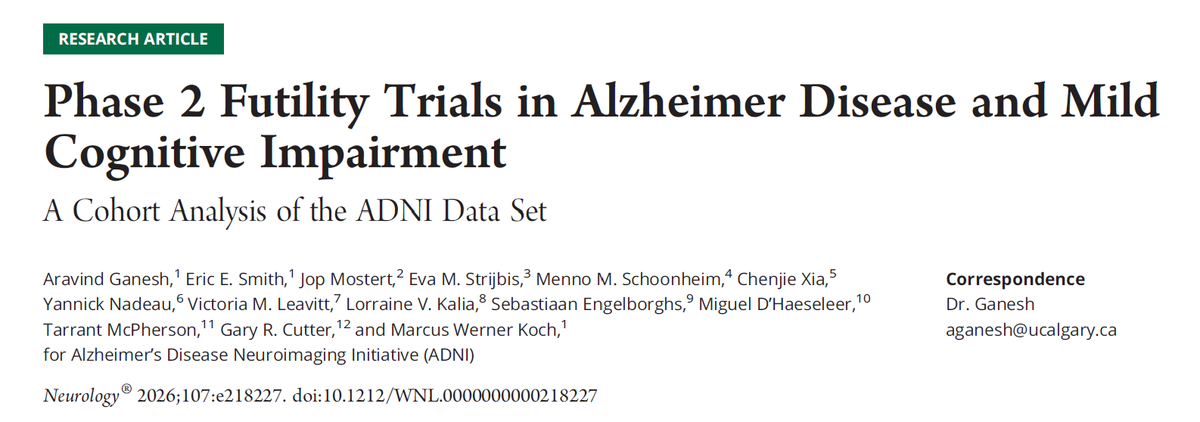
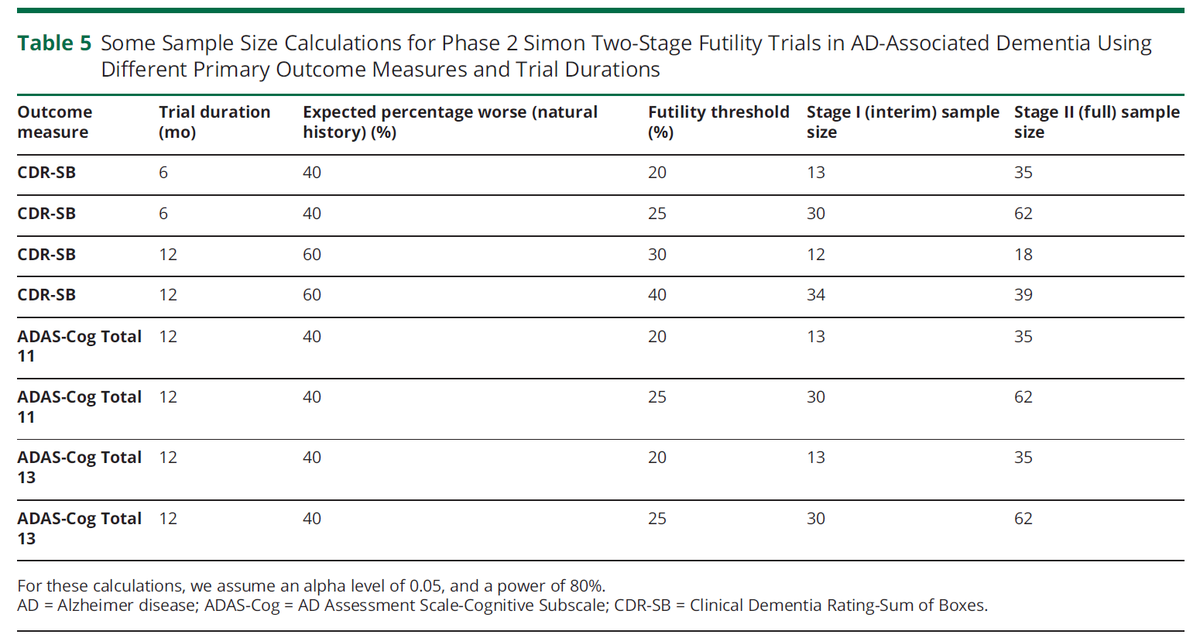
🚨The cost & complexity of phase 2 RCTs hinder development of promising AD treatments. We show that futility trials seem feasible in AD dementia, offering a faster cost-effective alternative to traditional ph2 RCTs. CDR-SB may be an optimal primary outcome https://t.co/AtuZVuijFg
🚨In this detailed analysis of imaging features of small vessel disease (CSVD) in the national COMPASS-ND cohort, we show how CSVD burden contributes to poorer cognition across neurodegenerative conditions and cognitive profiles https://t.co/8fH1wEcKaG @alzdemjournals@ccna_ccnv
🚨In the current landscape of mixed results from MeVO RCTs, we discuss how consideration of occlusion location, vessel size, and stroke severity can inform MeVO treatment decision-making in practice: https://t.co/Nl3EMKpZb0 @mayank_G0@rondalun1@johanna_ospel@SVINJournal
Kudos to grad students @kadenlam8@rahulnair320 and Anjana Menon @HotchkissBrain for representing our lab at the 2026 @VAST_training conference with their work on small vessel disease and vascular contributions to dementia!
🚨In this study of nonstenotic carotid disease in Manitoba, we show the role of plaque thickness+ ulceration in⏫risk of recurrent stroke. Kudos to @nishita_singh3 for building this team from the ground up & to med student Kamran on the paper! @NimaKashani https://t.co/AnlNzFHhiO
The April episode of the #StrokeAlert Podcast is now available. In this episode, host @NAsdaghi highlights articles in the April issue of #Stroke and interviews @draravindganesh & @dyavagal.
https://t.co/amc9YsV3V2
Proud to share our latest in @JournalCJNS 🧠
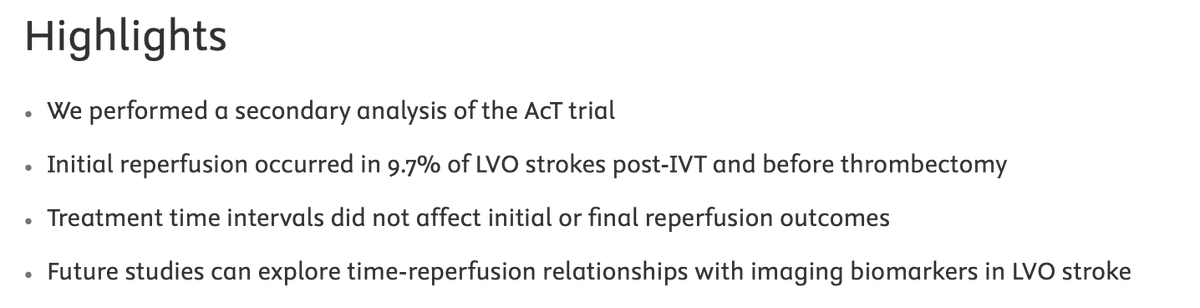
Secondary analysis of the large phase 3 AcT Trial shows:
➡️Patients treated at PSCs achieve outcomes comparable to CSCs
➡️Despite longer DNTs times,
➡️Tenecteplase may facilitate faster transfer workflows in EVT candidate
OA link👇
Faster Thrombolysis, Sharper Minds: Early Alteplase or Tenecteplase Linked to Better Poststroke Cognition
In this #BloggingStroke post, Anel Karisik discusses #Stroke article by Sujanthan et al. https://t.co/VRnsNUJy6L
🚨Our meta-analysis on trials of remote ischemic conditioning for mitigation of postoperative cognitive dysfunction and delirium, led by @kadenlam8, is now officially out in press in @journal_aps! @DCNSNeuro@HotchkissBrain
🧠Can RIC really protect the brain? New meta-analysis just dropped!
📊15 RCTs, ~3000 patients:
❌No reduction in POD
❌No reduction in POCD
⚠️Slight improvement in global cognition (MMSE/MoCA ↑)
🤔 Neuroprotection ≠ clinical benefit?
https://t.co/fRk6xtvX4R
#POCD#Delirium
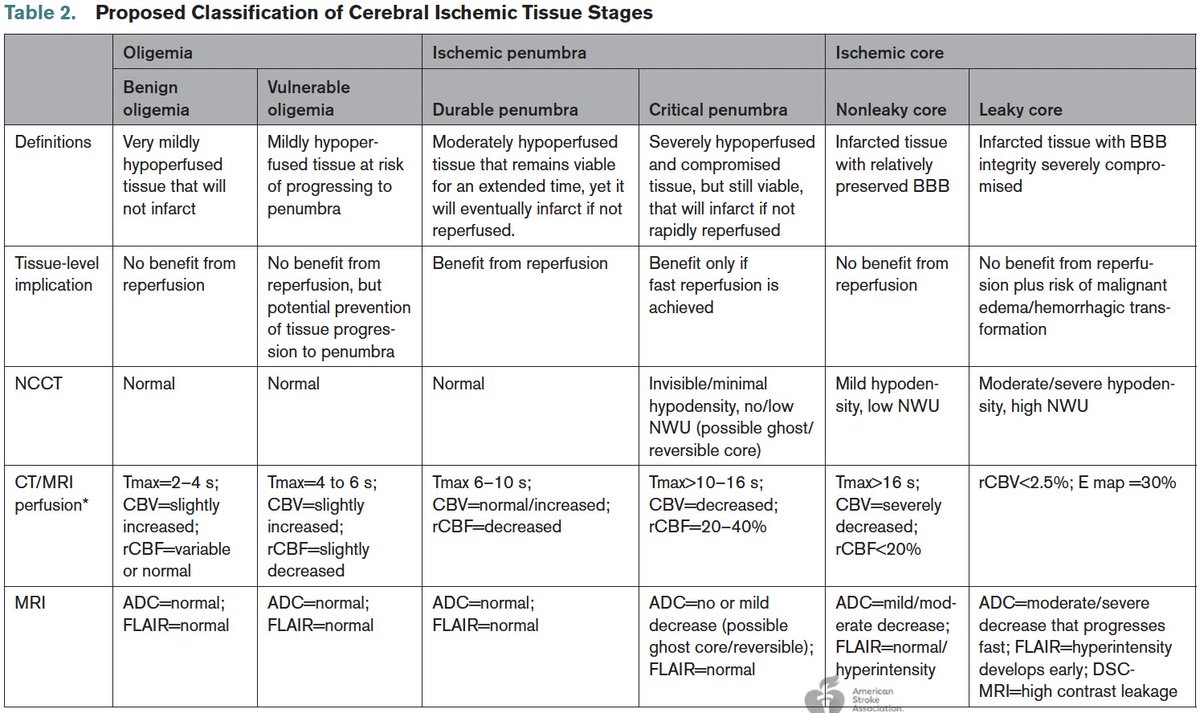
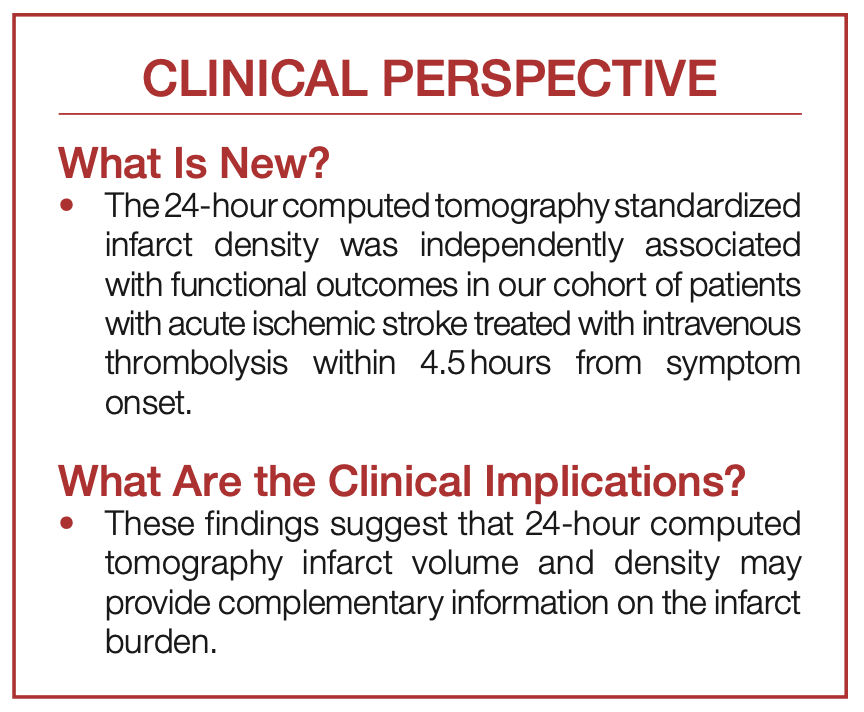
🚨Infarct density on follow-up imaging determines stroke outcomes independent of infarct volume, as we show in this analysis of @ActRrct, co-led with @UPensato@nishita_singh3: https://t.co/ujzHW0F1FJ. We can automatically determine density standardized across the infarct extent!