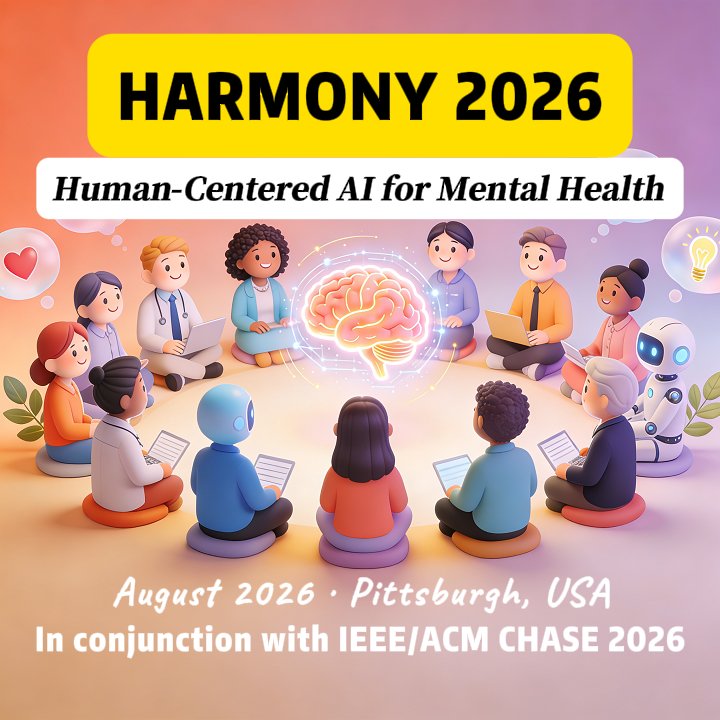
🧠 𝗖𝗮𝗹𝗹𝗶𝗻𝗴 𝗠𝗲𝗻𝘁𝗮𝗹 𝗛𝗲𝗮𝗹𝘁𝗵 𝗘𝘅𝗽𝗲𝗿𝘁𝘀 to join the HARMONY 2026 Program Committee! This is a wonderful networking opportunity if you're a mental health expert wanting to meet more AI and computing collaborators. 🤝
HARMONY 2026 (Human-Centered AI for Mental Health) aims to drive meaningful progress at the intersection of #AI and #MentalHealth. To do so, we are intentionally expanding beyond our core IEEE/ACM CHASE community of computing and AI experts to bring broader mental health expertise into the conversation.
If you have extensive experience in mental health — clinical, research, community-based, funding, or policy — and believe in our mission, we'd love to have you join our 𝗶𝗻𝘁𝗲𝗿𝗱𝗶𝘀𝗰𝗶𝗽𝗹𝗶𝗻𝗮𝗿�� 𝗣𝗿𝗼𝗴𝗿𝗮𝗺 𝗖𝗼𝗺𝗺𝗶𝘁𝘁𝗲𝗲!
📌 𝗔𝗽𝗽𝗹𝗶𝗰𝗮𝘁𝗶𝗼𝗻 𝗗𝗲𝗮𝗱𝗹𝗶𝗻𝗲: March 10, 2026
📅 𝗥𝗲𝘃𝗶𝗲𝘄 𝗣𝗲𝗿𝗶𝗼𝗱: mid-late March to mid-late April
📄 𝗟𝗶𝗴𝗵𝘁 𝗿𝗲𝘃𝗶𝗲𝘄 𝗹𝗼𝗮𝗱: ~3 papers (1, 3, or 6 pages each)
𝗔𝗽𝗽𝗹𝘆 𝗵𝗲𝗿𝗲: https://t.co/2KAl2PKEcG
𝗟𝗲𝗮𝗿𝗻 𝗺𝗼𝗿𝗲 𝗮𝗯𝗼𝘂𝘁 𝗛𝗔𝗥𝗠𝗢𝗡𝗬: https://t.co/h2lf9fVCpF
We look forward to welcoming more perspectives to our community!
@ProfEmilyOster outline the most important priority of physical activity research "People are more likely to stick with an exercise program that is tailored to their preferences and lifestyle." It doesn’t really matter which exercise people do (🏃🚶🏊♀️) — they just need to do it.
One of my bold dreams just came true!! 🎉
Together with Yi Ding @counterfac, Amir Ghasemian @Amir_Ghasemian, Rafal Kocielnik @RKocielnik, we proudly present
𝗛𝗔𝗥𝗠𝗢𝗡𝗬 2026 on #AI × #MentalHealth, in conjunction with IEEE/ACM CHASE 2026 in Pittsburgh.
Paper & Abstract deadline: 𝗠𝗮𝗿𝗰𝗵 𝟭𝟲, 𝟮𝟬𝟮𝟲.
It’s truly one of a kind with an ambitious goal: 🚀
Solve one of our biggest pains — difficulty in finding collaborators with complementary expertise & resources to tackle the impactful, HARD problems.
There are no workarounds if we want to solve the most important problems. We must step out of our comfort zones and break down disciplinary silos to enable groundbreaking discoveries and innovative solutions. 🤝
✨ This is why we created 𝗛𝗔𝗥𝗠𝗢𝗡𝗬 (Human-centered AI Research for Mental Health, an Open Networking Symposium)— a venue that is 𝗶𝗻𝘁𝗲𝗿𝗱𝗶𝘀𝗰𝗶𝗽𝗹𝗶𝗻𝗮𝗿𝘆 𝗯𝘆 𝗱𝗲𝘀𝗶𝗴𝗻 and treats 𝗻𝗲𝘁𝘄𝗼𝗿𝗸𝗶𝗻𝗴 & 𝗰𝗼𝗹𝗹𝗮𝗯𝗼𝗿𝗮𝘁𝗶𝗼𝗻 as the first-class citizen.
𝗦𝗲𝗲 𝗱𝗲𝘁𝗮𝗶𝗹𝘀 𝗼𝗻 𝗛𝗔𝗥𝗠𝗢𝗡𝗬'𝘀 𝘄𝗲𝗯𝘀𝗶𝘁𝗲 ⤵️
https://t.co/mNIO3eH3sd
𝗙𝘂𝗻 𝗳𝗮𝗰𝘁:
Our organizing team is entirely #CIFellows supported by National Science Foundation (@NSF), Computing Research Association (CRA), and Computing Community Consortium (CCC). 🙌
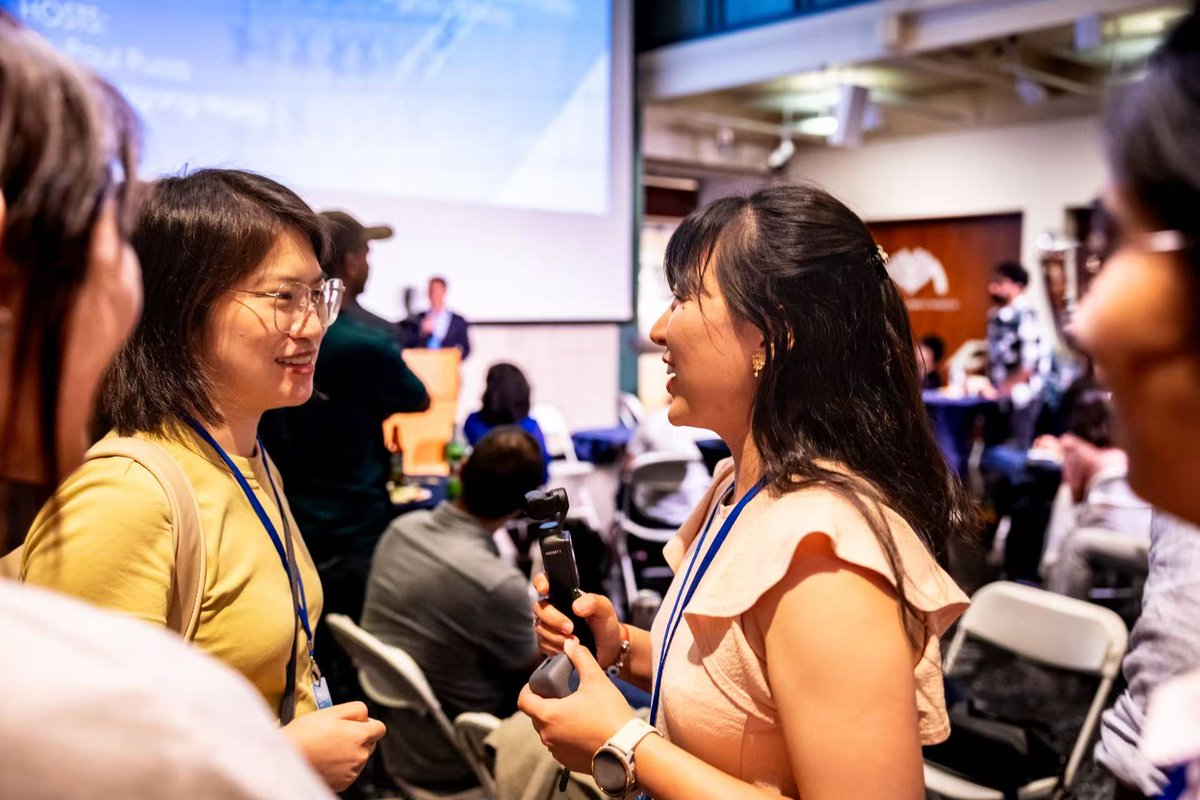
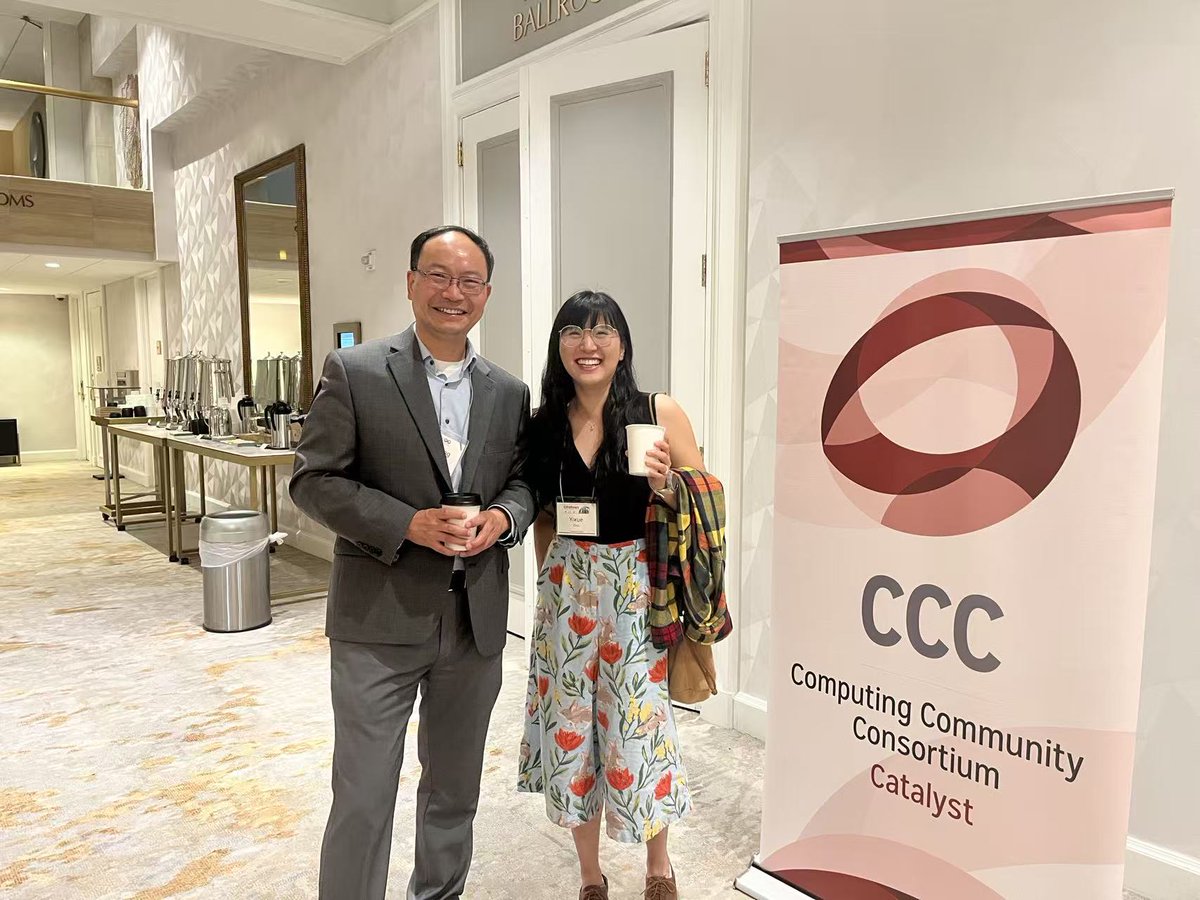
We actually started simmering the HARMONY idea at last year’s CCC Future Computing Symposium (we have picture proof! 😄). Special shoutout to Weisong Shi (@shiweisong) for all the amazing advice and guidance to make it happen. 🙏 I’m so happy to see it finally came to fruition!! 🌸 Deep gratitude to NSF, CRA, and CCC for such an invaluable CIFellow program filled with precious long-term relationships and so many fun memories. 🌱🌳✨
𝗚𝗿𝗲𝗮𝘁 𝗻𝗲𝘄𝘀 𝗳𝗼𝗿 𝘆𝗼𝘂:
We have a fantastic 𝗶𝗻𝘁𝗲𝗿𝗱𝗶𝘀𝗰𝗶𝗽𝗹𝗶𝗻𝗮𝗿𝘆 & 𝗰𝗿𝗼𝘀𝘀-𝘀𝗲𝗰𝘁𝗼𝗿 𝗣𝗿𝗼𝗴𝗿𝗮𝗺 𝗖𝗼𝗺𝗺𝗶𝘁𝘁𝗲𝗲 (still expanding!). If I were you, I wouldn't want to miss this wonderful opportunity to receive high-quality feedback on your work. 😉 Looking forward to your submissions and see you in Pittsburgh! It will be super fun and productive 🥳
Thank you HARMONY team! Kudos to you all for making it a reality 🌈✨
Organizing Committee:
Yixue Zhao (@yixue_zhao), Yi Ding (@counterfac), Amir Ghasemian (@Amir_Ghasemian), Rafal Kocielnik (@RKocielnik)
Program Committee:
Bhaskar Krishnamachari (@bhaskark_la), Puneet Kumar, Duc Minh Le, Randye Semple, Xipeng Shen, Michael Sobolev (@sobolevmic), Zhu Sun, Vali Tawosi (@vtawosi), Winson Yang (@winsonfzyang).
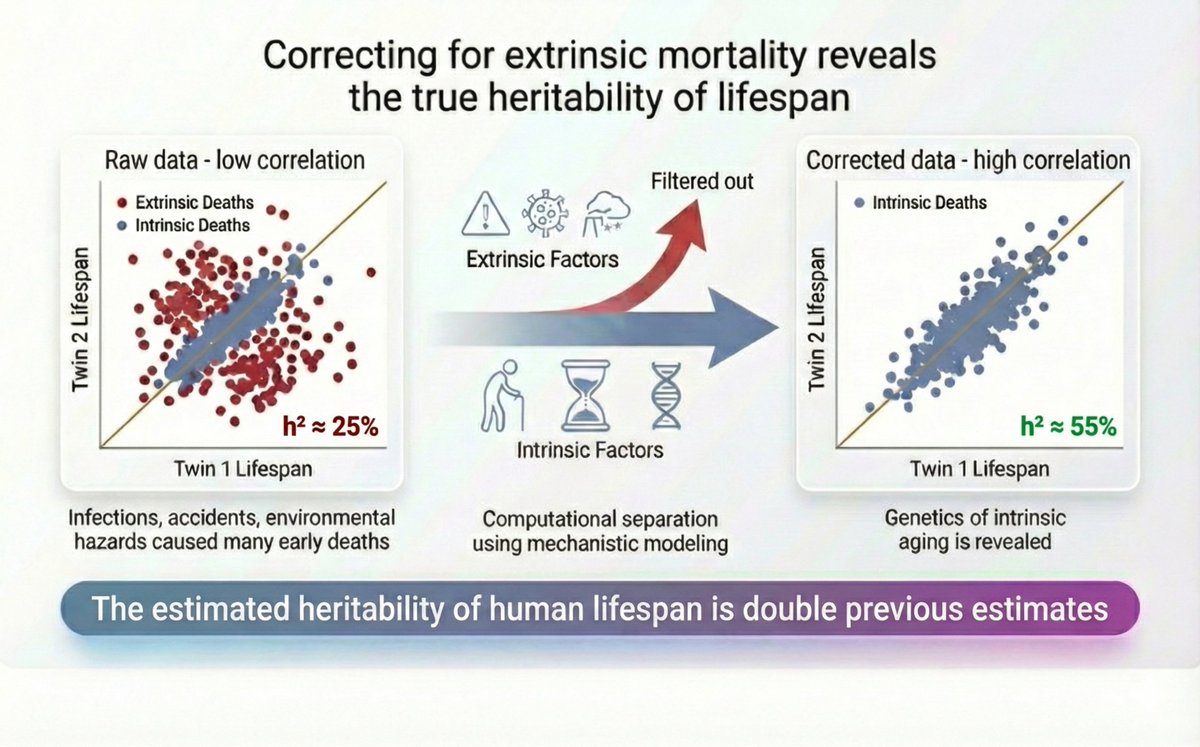
Our new paper on reassessing the heritability of human lifespan is out in @ScienceMagazine! 🧬
For decades, the consensus has been that genetics explains just 20–25% of lifespan differences. We found that after accounting for extrinsic mortality, that number jumps to ~50%.
A ���
Most Americans are wary of relying entirely on AI to make a diagnosis, but they're more optimistic about its potential to help clinicians detect cancer.
USC Schaeffer's @sobolevmic discusses his new research on patient trust in AI with @MedEconomics. https://t.co/vHHONOrwGC
Major preprint just out!
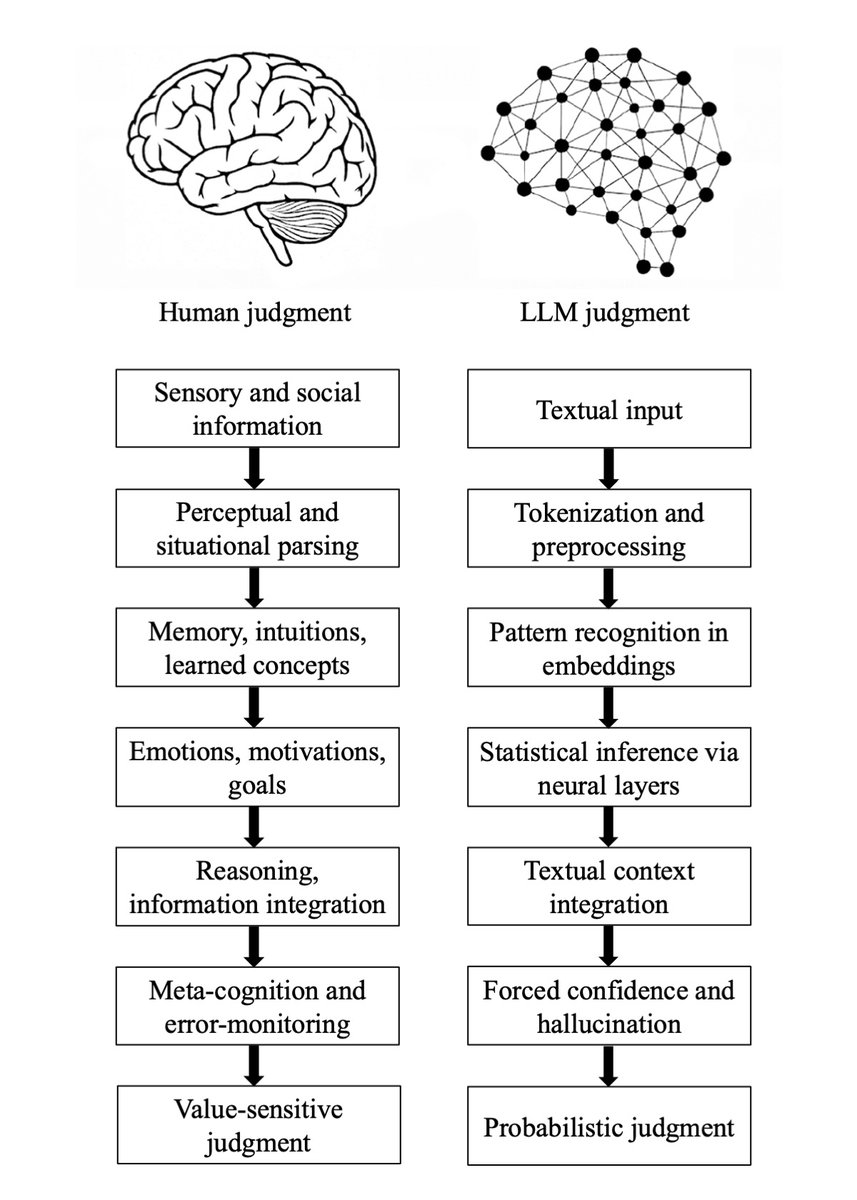
We compare how humans and LLMs form judgments across seven epistemological stages.
We highlight seven fault lines, points at which humans and LLMs fundamentally diverge:
The Grounding fault: Humans anchor judgment in perceptual, embodied, and social experience, whereas LLMs begin from text alone, reconstructing meaning indirectly from symbols.
The Parsing fault: Humans parse situations through integrated perceptual and conceptual processes; LLMs perform mechanical tokenization that yields a structurally convenient but semantically thin representation.
The Experience fault: Humans rely on episodic memory, intuitive physics and psychology, and learned concepts; LLMs rely solely on statistical associations encoded in embeddings.
The Motivation fault: Human judgment is guided by emotions, goals, values, and evolutionarily shaped motivations; LLMs have no intrinsic preferences, aims, or affective significance.
The Causality fault: Humans reason using causal models, counterfactuals, and principled evaluation; LLMs integrate textual context without constructing causal explanations, depending instead on surface correlations.
The Metacognitive fault: Humans monitor uncertainty, detect errors, and can suspend judgment; LLMs lack metacognition and must always produce an output, making hallucinations structurally unavoidable.
The Value fault: Human judgments reflect identity, morality, and real-world stakes; LLM "judgments" are probabilistic next-token predictions without intrinsic valuation or accountability.
Despite these fault lines, humans systematically over-believe LLM outputs, because fluent and confident language produce a credibility bias.
We argue that this creates a structural condition, Epistemia:
linguistic plausibility substitutes for epistemic evaluation, producing the feeling of knowing without actually knowing.
To address Epistemia, we propose three complementary strategies: epistemic evaluation, epistemic governance, and epistemic literacy.
Full paper in the first reply.
Joint with @Walter4C & @matjazperc
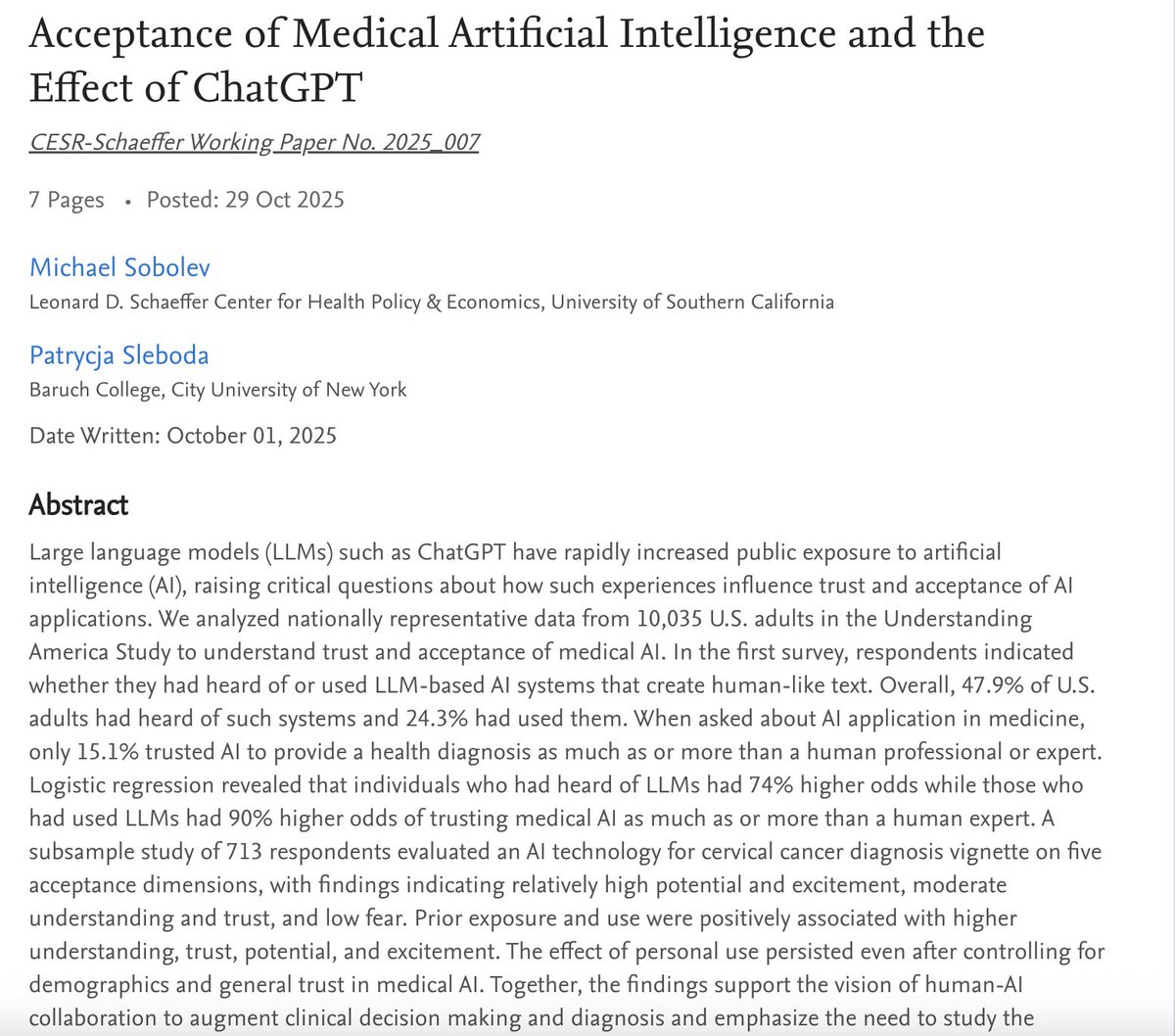
🎉 New preprint “Acceptance of Medical Artificial Intelligence and the Effect of ChatGPT”. Nearly half of U.S. adults had heard of ChatGPT, and about 25% used it. When it comes to trusting AI for medical diagnosis as much as or more than��a human expert? Only 15% said yes
Would love to hear from you. If you’re working at the intersection of AI, healthcare, and patient trust and acceptance — let’s connect! We'd love to hear your take.
BIG ANNOUNCEMENT📣: I haven’t been this excited to be part of something new in 15 years… Thrilled to reveal the passion project I’ve been working on for the past year and a half!🙀🥳 It started from my frustration with the depressing effect that the current publishing system has on the well-being of myself, my team, and pretty much every scientist I know (maybe you’ve noticed from my stupid jokes… :) I was exhausted of dealing with the huge delays, reviewers that can be abusive, and how arbitrary it all is. Unfortunately, the most important factors are often WHO your reviewers are and who YOU are... It’s clear we need alternatives or at least ways to improve the situation. So, together with a really special and talented team we worked to develop this idea into “qed” a platform where you can get CONSTRUCTIVE feedback on your own work or CRITICALLY assess other people’s papers. It can be a real difference maker if many of you join us (thousands have tried it already, but today we release a NEW and much stronger version ;) Let’s harness qed to put the power back in the scientists’ hands, to do, to read & to publish science on our own terms. I’m dying for you to TRY IT, and it’s very simple - just drop a paper (the link to the website is in the replies👇) - it’s completely secure, private, and free, and you get results fast. Please show your support, SHARE, tell your friends, and let’s be the revolution 🫵!
In 2016 Geoffrey Hinton said “we should stop training radiologists now" since AI would soon be better at their jobs.
He was right: models have outperformed radiologists on benchmarks for ~a decade.
Yet radiology jobs are at record highs, with an average salary of $520k.
Why?