scifi 2, our new headstage from @ScienceCorp_ . if your work involves recording or stimulating brains, i bet it will make you more productive! only $2k for academics.
Science CEO @maxhodak_ spoke at TECH by @handelsblatt about the PRIMA implant for blindness caused by AMD/GA – and the landmark clinical trial published in The @NEJM.
Germany has been a key partner in this work from the beginning. Several PRIMA clinical trial centers were based there, and we expect it to be the first market where PRIMA is commercially available later this year.
Excited to launch a new podcast dedicated to conversations on the future of neurotech, computing, intelligence, and more.
First guest: @maxhodak_ founder & CEO of @ScienceCorp_, which is building PRIMA, a retinal prosthetic that’s restoring meaningful vision for patients with blindness caused by age-related macular degeneration.
Science is also developing a biohybrid brain implant that grows living neurons directly onto a silicon chip, then interfaces that system with the cortex. The possibility space here is vast and new. Imagine growing new areas of the brain.
Sections
00:00 What counts as neurotech?
01:45 History of brain-computer interfaces and the smartphone dividend
07:25 PRIMA - How Science is restoring vision in blind patients
10:10 Why stimulating bipolar cells works when the optic nerve doesn't
30:30 Are we bottlenecked by biology or engineering?
32:40 Expanding the brain's bandwidth beyond 10 bits per second
37:00 Can we add new areas to the brain?
37:46 Biohybrid BCIs: neurons growing on a chip
39:20 What could neural augmentation look like?
01:13:20 How Science drives Fast R&D
01:44:00 How founders learn and level up
This is the kind of discussion I’m excited to explore on this podcast. Enjoy!
Full Episode 1 here and in links below.
Science Chief Scientific Officer and Co-Founder @mardinly answers the question “What if we could restore vision, communicate directly with the brain, and even extend human life with living, engineered biology?”
Click the link in the comments to watch the full episode.
Geographic atrophy due to age-related macular degeneration (AMD) is the leading cause of irreversible blindness and affects more than 5 million persons worldwide. No therapies to restore vision in such persons currently exist.
NEJM Editorial Fellow Katerina Lin, MD, explains a clinical trial in which the photovoltaic retina implant microarray (PRIMA) system restored central vision and led to a significant improvement in visual acuity. Read the full PRIMAvera trial results: https://t.co/9O3OHLxEbK
#Ophthalmology
As we accelerate the development of our Biohybrid BCI program, we are thrilled to welcome Dr. Murat Günel as Science's new Medical Director for Brain-Computer Interfaces. Dr. Günel is Chair of Neurosurgery at Yale School of Medicine, Neurosurgeon-in-Chief of Yale New Haven Health System, and a Member of the National Academy of Medicine.
Read the blog post in the comments.
"People use [AI] every day, but it is still underestimated the degree to which it is going to change everybody’s lives over the next decade. We’re really now starting to see that. [AI agents] are no longer just a curiosity. They’re now having economic impacts that are going to accelerate."
Science CEO, Max Hodak, joined @POLITICO for 5 Questions: https://t.co/p7Yr762qmm
“It’s the first time that any attempt at vision restoration has achieved such results in a large number of patients… This is really something we couldn’t have dreamt of when we started on this journey more than two decades ago.”
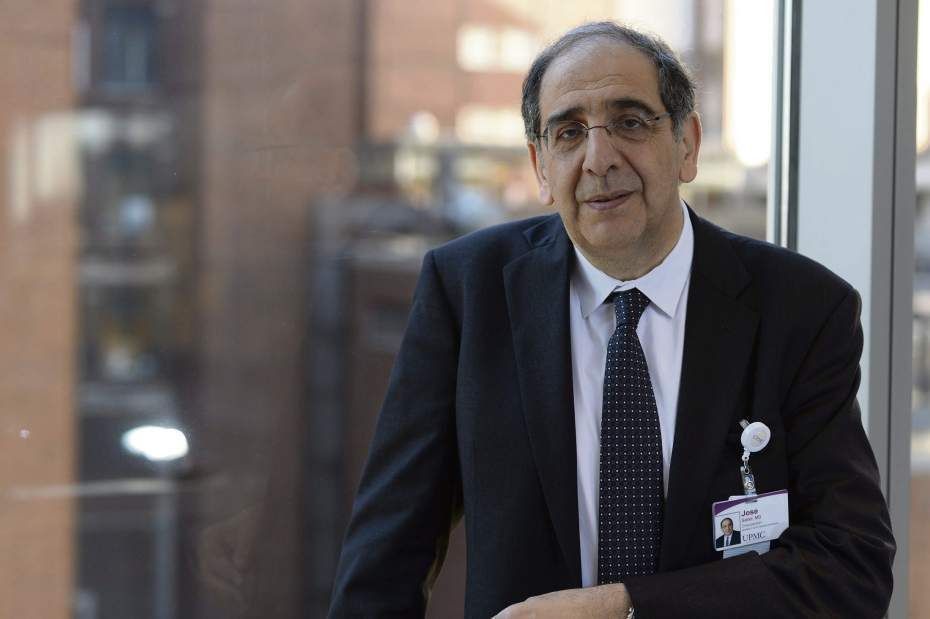
In a new interview, José-Alain Sahel, MD, a senior author of the PRIMA clinical trial now published in @NEJM, shares his opinion on the resilience required to turn a decades-old concept into clinical reality.
excited to announce that we've raised a $230 million series c to get our retinal prosthesis to market and our biohybrid and vessel technologies into the clinic!
We’ve closed a $230 million Series C financing. The deal was oversubscribed with demand in excess of our capital needs, and brings the total capital invested into the company to approximately $490 million since our founding in 2021.
We have partnered with @NeurosoftBio, a neural data company developing ultra-soft, flexible neural probes to achieve full cortical coverage powering foundation AI models of the brain, to grant Neurosoft access to Science’s world-class clinical-grade neural engineering capabilities known as the Science Ecosystem.