Our library of integrations is growing.
Now you can connect your team's Bitbucket workspace to the https://t.co/LIEgjj2Nqe platform.
Learn more in the @Atlassian marketplace 👇
https://t.co/OgRmzPPeIi
"A few weeks back, I had an epiphany: my code time, and active code time, had a whopping 2 hours difference when working for 4 hours."
👉 Top 7 Things That Kill Developer Productivity by @surajondev#DEVCommunity
https://t.co/mRAMbHCC1H
What does the next version of the software developer look like?
I wrote about how AI will almost certainly replace developer tasks over time as tools get better and faster, but opens the door to even more things to build.
https://t.co/asU5SBsPZ7
ICYMI: @BrettMStevens and @TheGeoffStevens were featured in @TechCrunch.
They outline why AI, though a powerful tool productivity aid, is not a productivity panacea for software developers https://t.co/PQSoTlxfwI
"AI is not a panacea for software development."
Our team members @thegeoffstevens and @brettmstevens share their perspective with @TechCrunch.
Read the article here 👇
The popular perception of developers has been that of brainy and somewhat introverted types. But research suggests today's software professionals are actually extraverted, preferring to work as actively as possible within broad teams. AI will help. https://t.co/UptjnYuXCr @ZDNET
“Software developers have said that having time blocked out in their workday to complete work in solitude would lead to greater collaboration throughout their teams.”
https://t.co/p9zgg02gma
A recent @Gartner_inc report reveals that return-to-office mandates negatively impacts retention, performance and DEI, which may lead employees to seek jobs elsewhere. https://t.co/n02VzujH2R #jobs
Neat summary from @TechRepublic of the importance of measuring software development teams’ productivity, and some of the flawed attempts to do so.
TLDR: You can’t manage what you can’t measure.
https://t.co/ROMbYLOtIR
AI tools are transforming the way software developers work. But increasing lines of code produced per hour is a blunt tool for measuring productivity; a more nuanced, holistic view into the whole workflow is required.
https://t.co/1WLfSrUE0b
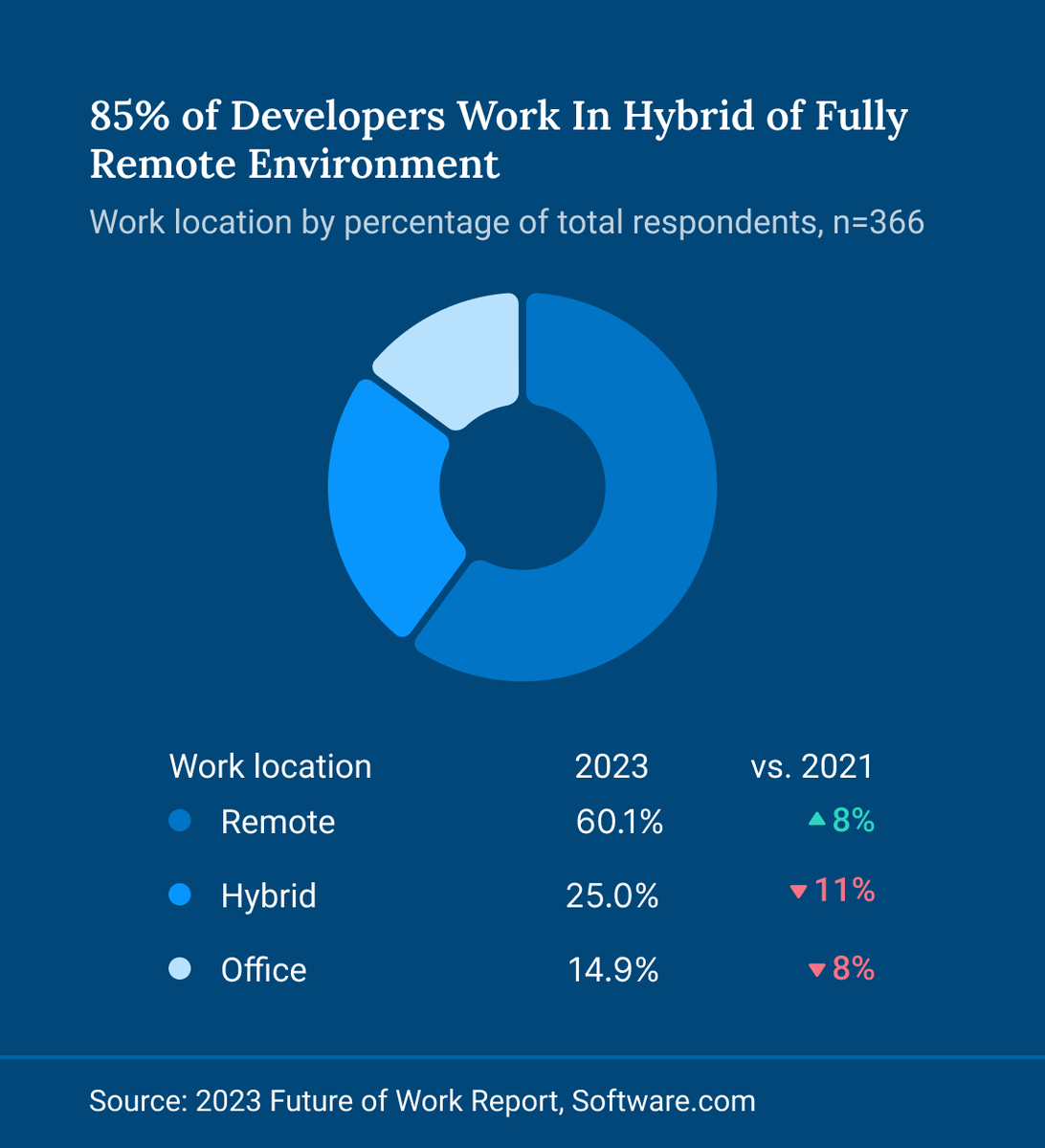
The vast majority of developers work from home at least some of the time. Most want it to stay that way.
Are you able to work where you work best?
👉 https://t.co/l9b4eMg567
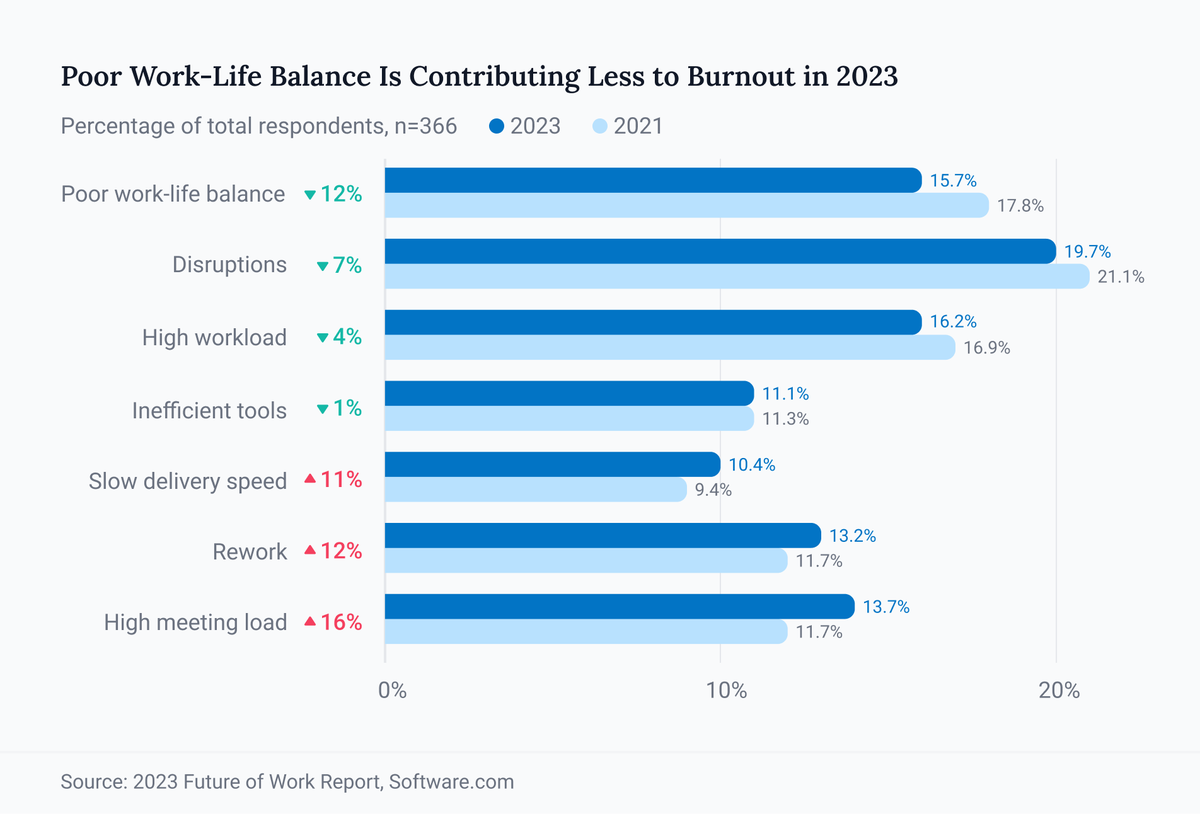
Burnout, however, is still an ongoing challenge for many within the development community.
Will recent improvements last, or reverse course?
💭 https://t.co/l9b4eMg567
Our new report shows that developers are feeling less burnt out than they were a few years ago.
It’s a trend that coincides with other improvements to the developer experience: a better work-life balance, fewer disruptions, and more focus time.
Even so, concerns still remain about the long-term impact of AI tools on code quality. Generative AI also raises unresolved issues regarding licensing and plagiarism.
Companies will need to balance the tradeoffs: https://t.co/l9b4eMgCVF
We’ve entered a new era for developer productivity with many unknowns. AI-powered tools like @github Copilot have the potential to change the way development teams work.
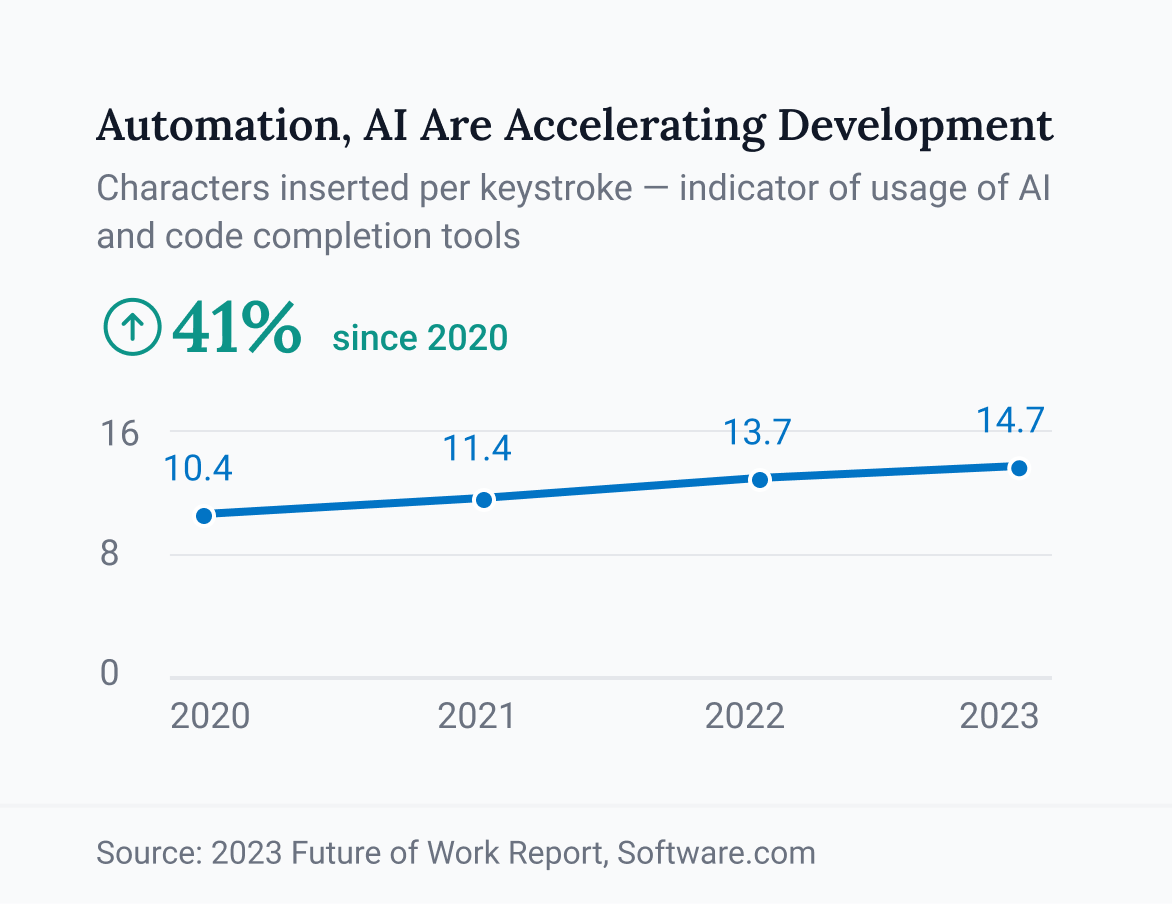
Our research shows increasing use of AI and automation, enabling developers to achieve more in less time.
On a global scale, our research shows there has not been a large, quantifiable impact supporting either side of the productivity paradox — that remote work has both improved and impaired productivity, depending on whether you ask employees or their bosses: https://t.co/CjTliiJndP
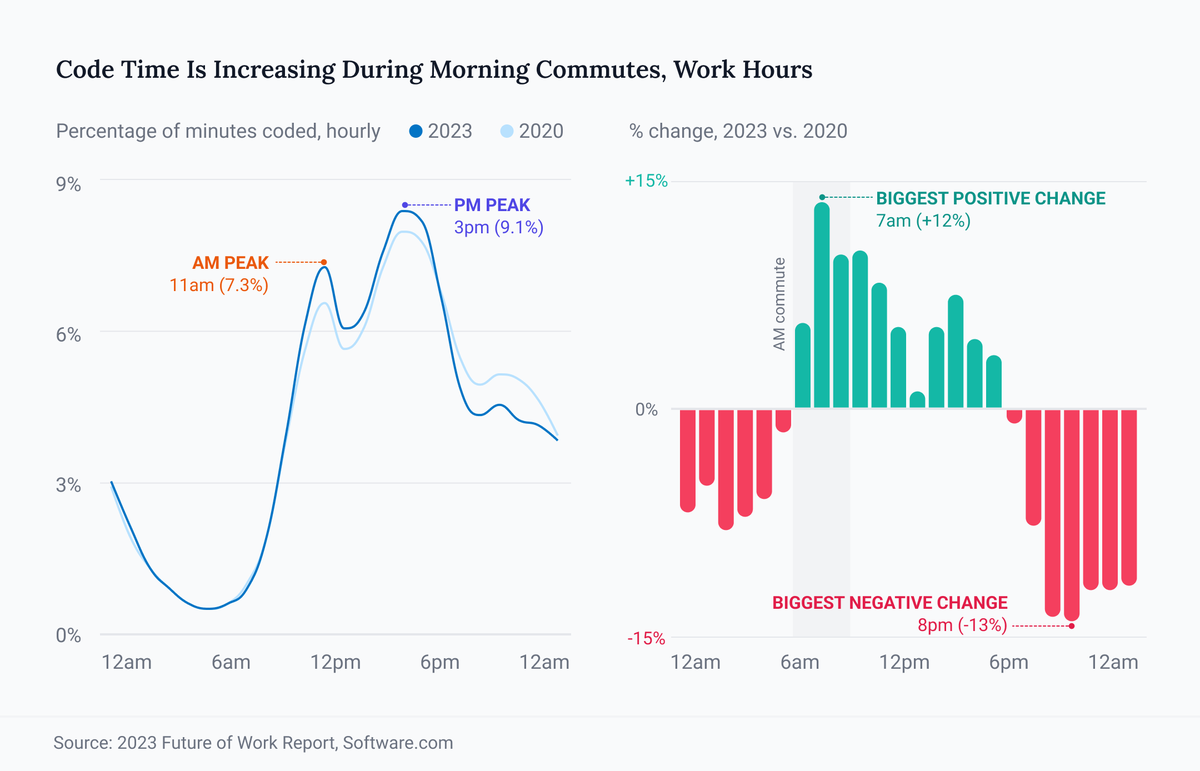
Another upside of a flexible work schedule is less time spent commuting.
Developers are taking advantage of time saved from morning commutes, coding 9% more between 6am and 9am.
🛣️ https://t.co/l9b4eMgCVF
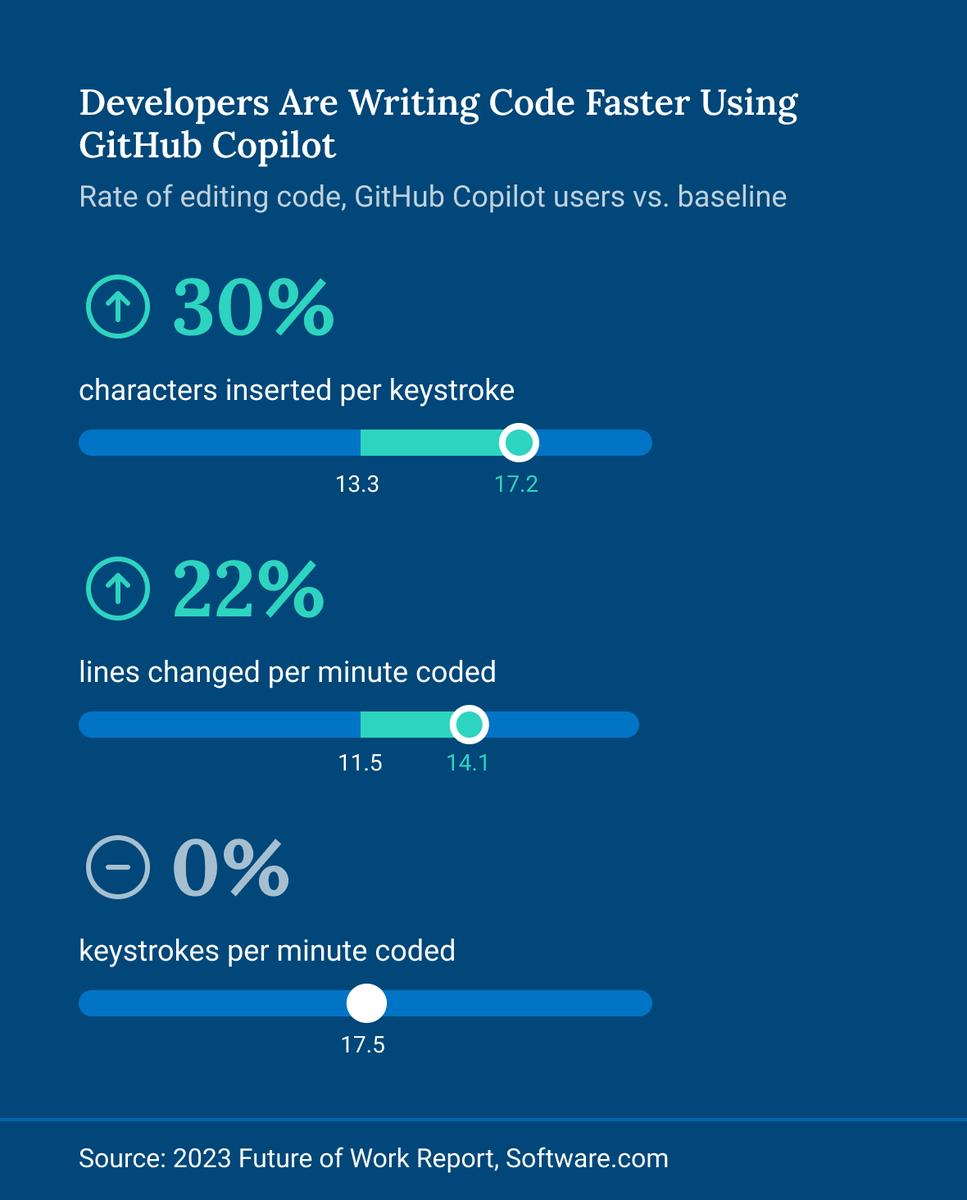
A growing suite of developer tools in code editors and IDEs are helping teams write and rewrite their code more efficiently. Another likely cause is that they’re making use of new AI-powered tools, like @github Copilot.
See more data: https://t.co/l9b4eMgCVF
With the rapid adoption of AI and automation tools, software developers are writing and editing code at a faster rate than ever before. So what’s driving this megatrend?