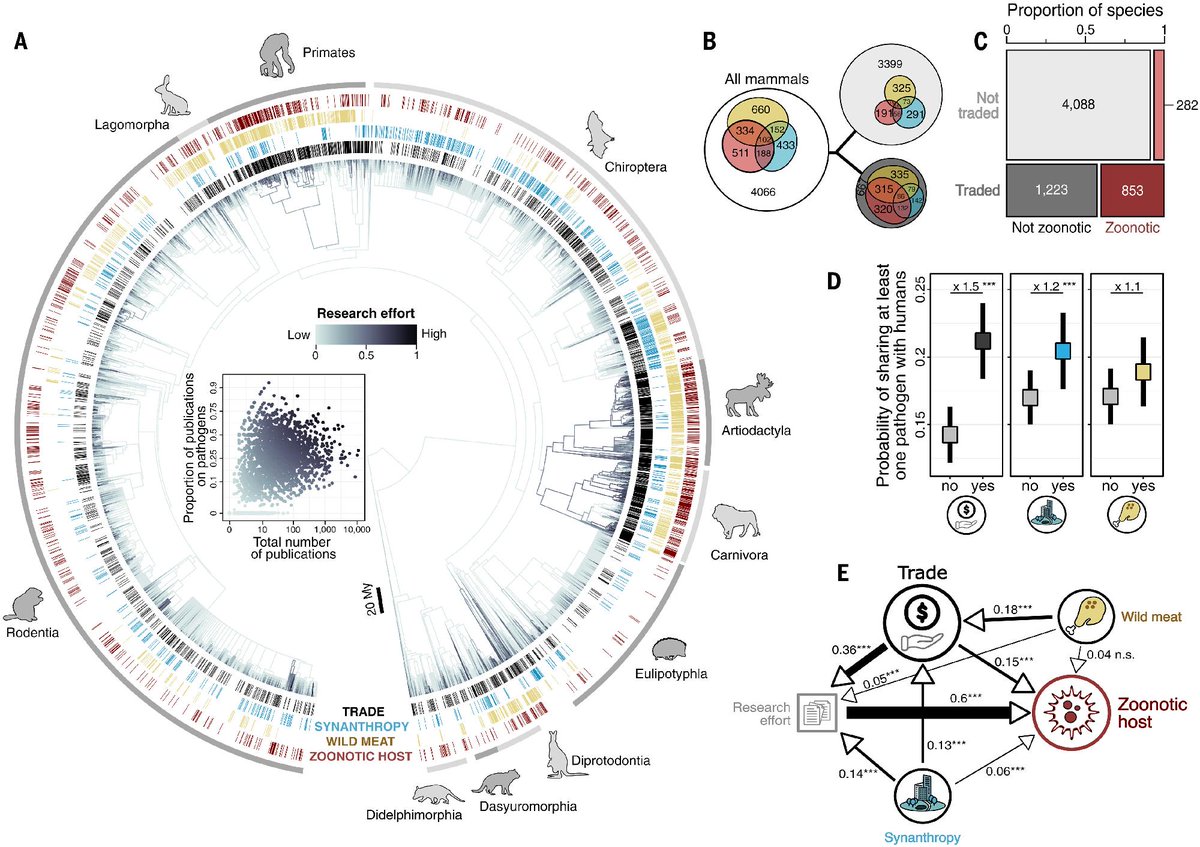
The global wildlife trade—especially in illegal and live-animal markets—is fueling the spread of diseases from animals to humans, according to a new study in Science.
The findings show that traded mammals are more than 40% more likely to harbor human-infecting pathogens, with species accumulating more shared pathogens the longer they remain in the trade.
Learn more: https://t.co/9GsERoW0We
A newly discovered fossil ape from northern Egypt is reshaping the understanding of early hominoid evolution, researchers report in Science.
The fossil finding suggests that the closest ancestors to modern apes may have emerged in northern Africa, outside the traditionally studied regions of East Africa. https://t.co/n3wo0iBuLb
According to a new genomic study of Australia’s koala populations, rapid demographic rebound may be able to restore once-lost genetic variation and drive recombination in ways that re-establish long-term evolutionary potential in previously bottlenecked populations.
Learn more in Science: https://t.co/qZZDCg4kmV
Big effort, exciting results - our paper on the constraints of thermal limits in tropical insects is now out in @Nature! 🦋🐝🪰🪲🦗 @ANDIV1234
https://t.co/aWoyktD1ci
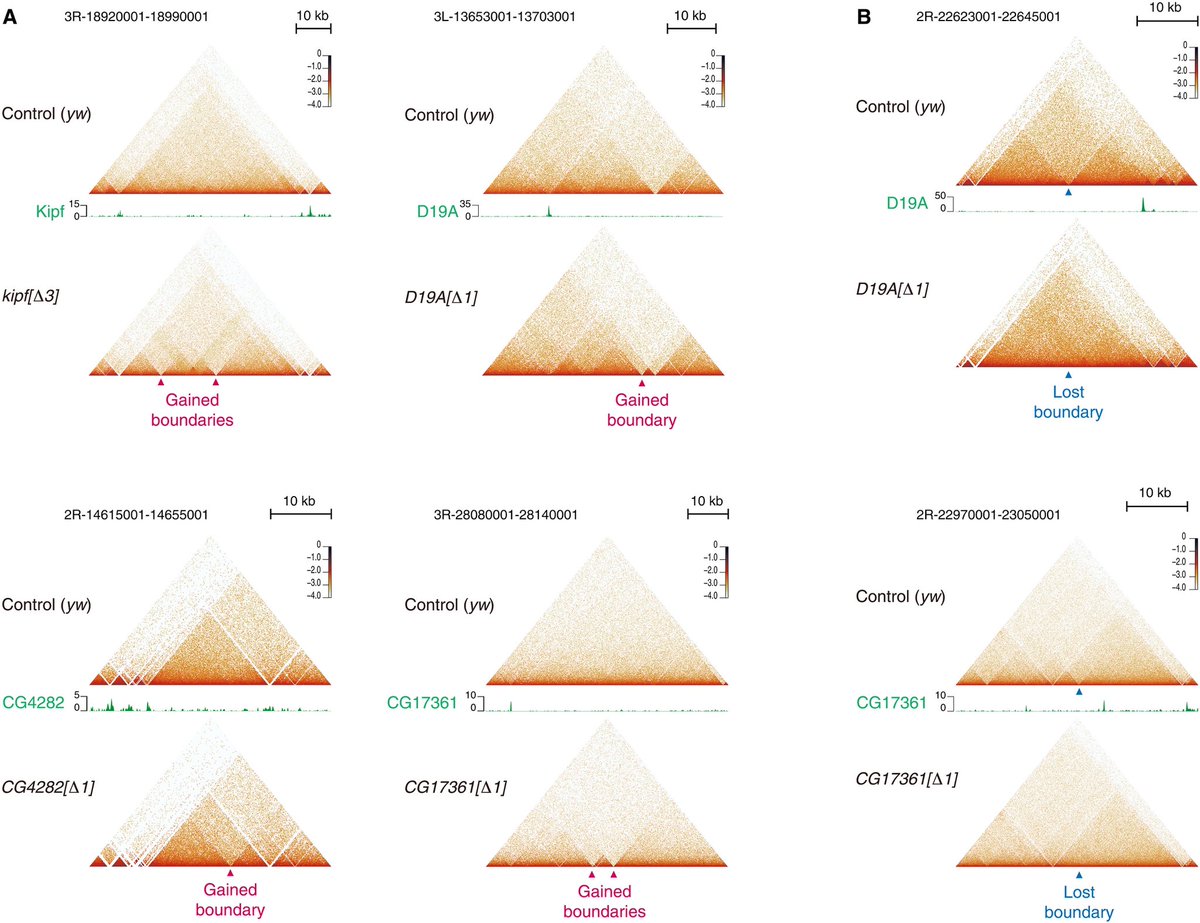
Diving into evolutionary biology! What is the origin of the most abundant class of insect transcription factors, ZAD-ZnFs? We suggest that they evolved from ancestral insulator-binding proteins. https://t.co/Ek1cNRtHy4
Excited to see our research featured in PBS! A look into the biodiversity, resilience, and vulnerability of the Gulf. Grateful to work with such an amazing team. https://t.co/26SCHnWJOC @uricels@URIGSO
OrthoSNAP v1.5.0 is here with big speed and usability upgrades. Extracting single-copy ortholog subtrees from larger, multi-copy gene families and with automated plotting
What's new:
- Visualize inferred SNAP-OGs directly on the full gene tree
- Runs about 27 times (1/3)
Genome size and phenotypic change: insights on contemporary evolution across biological groups.
New analysis of the PROCEED database in J Evol Biol.
Led by Lucas Gorne with @photopidge & F Pelletier
Scientists have uncovered a surprising genetic shift that may explain how animals with backbones—from fish and frogs to humans—became so complex.
https://t.co/t46jraovAd
#fossils#paleontology
🐠 Thanks to @NSF support & a partnership between @uprm and Scripps Oceanography, thousands of marine specimens were saved, conserved & integrated into a world-class research collection, fueling discoveries in evolution, biogeography & conservation. 🔬
https://t.co/GIxt0d6RDh