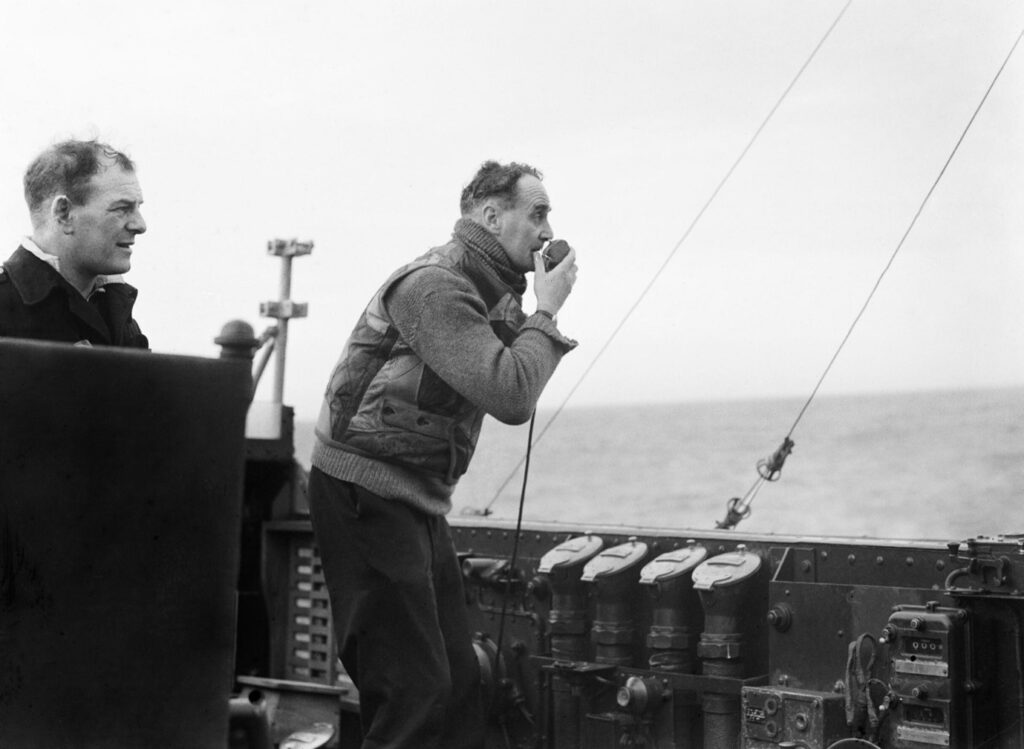
There was a Royal Navy captain in WW2 whose real name was Johnnie Walker.
In 1939 the Navy had given up on him. Passed over for promotion, marked down by his own superiors, quietly being pushed toward early retirement. His career was a dead end.
Then the Atlantic turned into a graveyard. German U-boats were sinking Allied ships faster than they could be built, sailors were drowning in the thousands, and Britain was months from being starved into surrender. Suddenly the Navy remembered the one man who had spent years obsessing over exactly how to kill a submarine.
They finally gave him a ship. He became the deadliest U-boat hunter who has ever lived.
He didn't wait for U-boats to attack. He invented tactics to go get them. His "creeping attack" had one ship silently guide another over the target so the submarine crew couldn't hear death coming until the depth charges were already sinking toward them.
When he charged into battle he blasted "A-Hunting We Will Go" over the loudspeakers. He revived "General Chase," an attack signal so old it hadn't been flown since Nelson's day. And when depth charges weren't enough, he simply drove his ship straight over a surfaced U-boat and rammed it under.
His group once sank 6 U-boats in a single patrol. He helped clear the English Channel so the entire D-Day invasion fleet could cross safely. He was decorated four times, one of the most honored officers in the Royal Navy.
And he carried all of it while broken with grief. In 1943 his own son, a young submariner, was killed when his sub was lost in the Mediterranean. Walker got the news and went straight back to sea to keep hunting.
In the end the war didn't kill him. The work did. Years of standing on that bridge in every storm, refusing to rest, burned him out completely. He collapsed from a stroke and died at 48. The doctors called it exhaustion.
They carried his coffin through the streets of Liverpool while a thousand people stood in silence. Then a warship took him out past the harbor and buried him in the same Atlantic he had spent his life defending.
Uncounted thousands of sailors made it home because of him. His statue still stands on the Liverpool waterfront today, facing the sea, watching for submarines that will never come again.
His name was Johnnie Walker. Don't ever forget it.
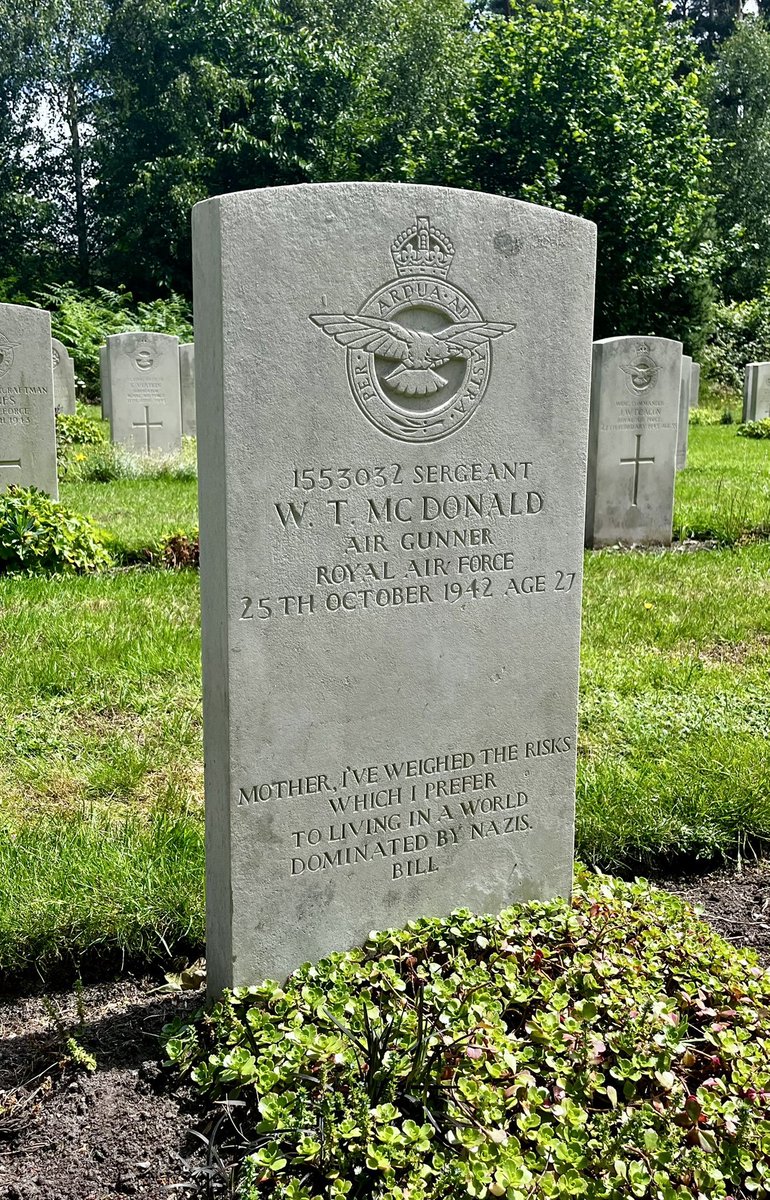
'Mother, I've weighted the risks, which I prefer to living in a world dominated by Nazis. Bill"
Sergeant Bill McDonald, air gunner, RAF. Died 25th October 1942, aged 27.
What a generation.
Freed From Desire is one of the great 90s dance tunes, but it’s definitely been improved by becoming a football anthem. ‘Your defence is terrified’ is a much better line than ‘Mind and senses purified’.
In 1997, Brazilian soccer player Roberto Carlos took a free kick from 35 meters against France that seemed to defy the laws of physics as it curved around a wall of defenders at an angle that seemed impossible.
This “miracle goal” led a team of French physicists to publish a study in the journal New Journal of Physics, in which they explained that the extreme spin and speed created a “spinning spiral of the ball” that overcame gravity and air resistance.
24 May 1941, in Battle of Atlantic, German Battleship Bismarck sunk HMS Hood, killing all but 3 of her 1,418 crew. Launched in 1918, she was named after 1st Viscount Hood (1724-1816), First Sea Lord. In inter-war years, ship was iconic figure for Royal Navy, UK & the Empire. #WW2
Yet another Belgian war cemetery has been vandalised this one at Houthulst around 135 have been vandalised with what looks as though the bronze plaques have been ripped off & stolen, along with headstones being smashed in the process. This is so heartbreaking to see happening here in Flanders, very sad.
📸 Jeroen Vandromme
"There are new voting systems in Scotland and Wales" says Laura Kuenssberg. 100% wrong. There is a new electoral system in Wales. The Scottish Parliament has the same PR electoral system it has had since 1999. Basic stuff & sadly typical of Londoncentric media. #bbclaurak
19 April 1943. Warsaw Ghetto Uprising against Nazi rule began when residents of the Jewish ghetto in German Nazi-occupied Warsaw staged an armed revolt to prevent deportations to German-run extermination camps. The Jewish defenders held out until 16 May 1943.
World Cup in Spain 1982
David Narey scored this great goal and @ScotlandNT were in front against Brazil within the opening 20 minutes.
John Motson & Jimmy Hill on BBC duty.
#Scotland
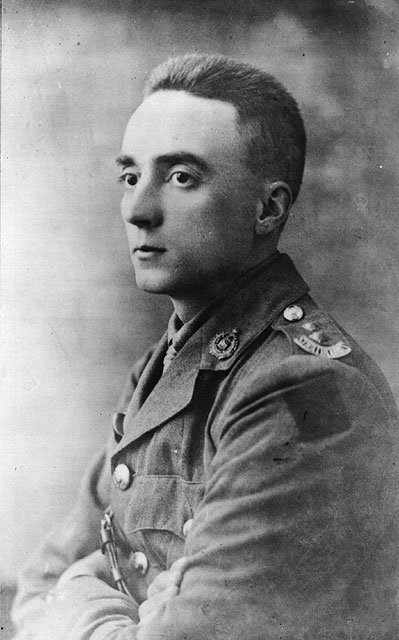
Remembering Lieutenant Gordon Muriel Flowerdew VC 🙏🇬🇧 🇨🇦
He was born in Billingford, Norfolk, one of fourteen children of Arthur John Blomfield Flowerdew & Hannah Flowerdew (nee Symonds). He was educated at Framlingham College in Suffolk. At the age of 18, after a bout of pleurisy, he emigrated to British Columbia, where he took up ranching, settling in Walhachin, a community known locally as "little England".
When the First World War broke out in September 1914, he enlisted as a private in Lord Strathcona's Horse. He rose quickly through the ranks & was commissioned as an officer in 1916. By January 1918, Flowerdew was given command of C Squadron of Lord Strathcona's Horse.
For most of the war, the Canadian Cavalry Brigade was not involved in much direct fighting, because of the static nature of the trench warfare on the Western Front. However, when the Germans launched Operation Michael & began a rapid advance in the spring of 1918, cavalry again became an important factor. In late March, as the Germans approached Moreuil & threatened to cross the L'Avre River, the last natural barrier before Amiens, the Canadian Cavalry Corps was assigned the task of stopping them. As the Germans began to enter Moreuil Wood from the east, Lieutenant Flowerdew's squadron rode around the wood & approached the Germans' flank from the north. Flowerdew's commanding officer, Brigadier General Jack Seely, had ordered a cavalry charge.
Riding into the fire of five infantry companies & an artillery battery, the squadron suffered atrocious casualties (more than half of the men in C Squadron were killed), & Flowerdew himself was fatally wounded. However, the cavalry charge so unnerved the Germans that they did not go on to capture Moreuil Wood, & their advance turned into a retreat in early April. His actions in "The Last Great Cavalry Charge" led to the award of the Victoria Cross. Flowerdew lived long enough to be made aware of the success of the charge. Seely wrote to Flowerdew's sister, referring to "when your brave young brother met his death at the moment of victory to which he had contributed the largest share".
Victoria Cross Citation
'For most conspicuous bravery & dash when in command of a squadron detailed for special services of a very important nature. On reaching his first objective, Lieutenant Flowerdew saw two lines of enemy, each about sixty strong, with machine guns in the centre & flanks; one line being about two hundred yards behind the other. Realizing the critical nature of the operation & how much depended on it, Lieut. Flowerdew ordered a troop under Lieut. Harvey, VC, to dismount & carry out a special movement, while he led the remaining three troops to the charge. The squadron (less one troop) passed over both lines, killing many of the enemy with the sword; & wheeling about galloping on them again. Although the squadron had then lost about 70 per cent of its members, killed & wounded from rifle & machine gun fire directed on it from the front & both flanks, the enemy broke £ retired. The survivors of the squadron then established themselves in a position where they were joined, after much hand-to-hand fighting, by Lieut. Harvey's part. Lieut. Flowerdew was dangerously wounded through both thighs during the operation, but continued to cheer his men. There can be no doubt that this officer's great valour was the prime factor in the capture of the position.'
Flowerdew's VC was one of twenty awarded during the battles of the German & Allied offensives in the Amiens area in 1918.
Flowerdew is buried at Namps-au-Val Cemetery in France located 11 miles south-east of Amiens (plot I, row H. grave 1).
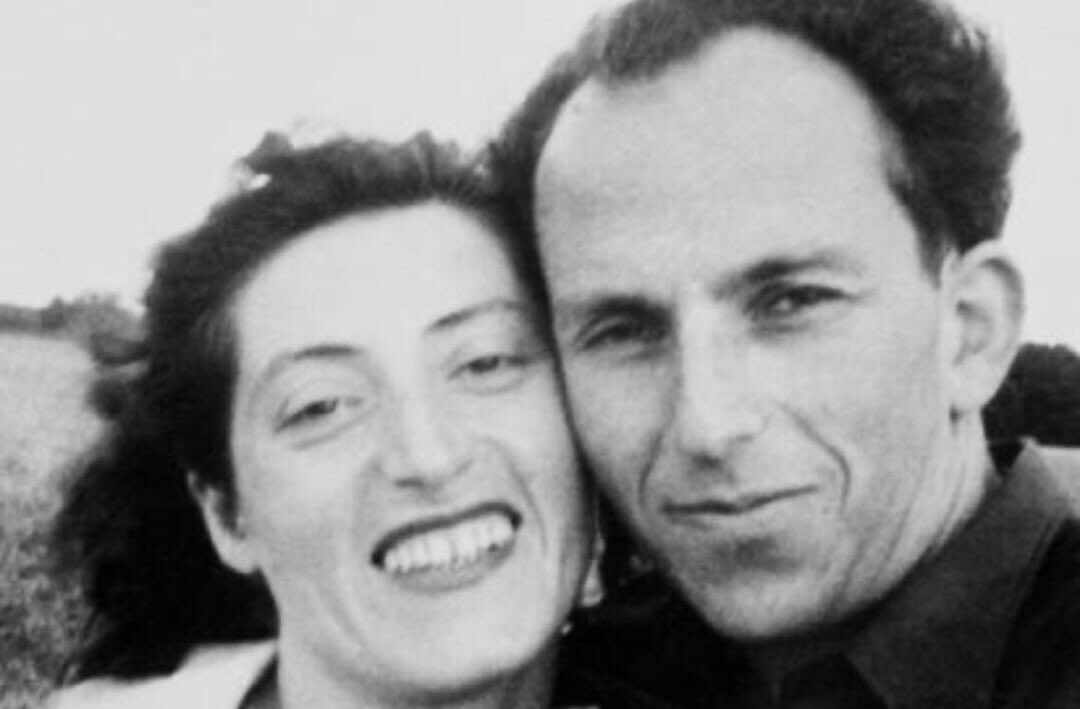
In 1943, French Resistance fighter Raymond Aubrac was captured and sentenced to death by the Nazis. His wife Lucie then personally led a commando raid to rescue him, killing 6 Gestapo herself. Following the war, they remained married until Lucie’s death in 2007.
We have have identified human remains recovered in Loos-en-Gohelle, France, as those of Private Albert Henry Detmold. His identity was confirmed through historical, genealogical, anthropological, archaeological, and DNA analysis. 1/5