First-year PhD Student at Tri-I Computational Biology and Medicine program (Weill Cornell, Memorial Sloan Kettering Cancer Center, Rockefeller University)
Happy to share that the paper on enhancer interactions led by @zrcjessica and I from my time in the @GrahamMcVicker lab is now published in Cell Genomics!
https://t.co/dfAbONwjTu
A thread on some of the new analyses below: (1/n)
Does every enhancer work with every promoter?
With @jengreitz and @WJGreenleaf, we revisit this long-debated question and resolve an outstanding contradiction in the field.
A tour 🧵👇
https://t.co/iFzqPqKzhN
How do you connect genetic and environmental perturbations of cells in a dish to disease risk across tens of thousands of people?
New preprint: a "dish-to-biobank" framework using the plasma proteome as the bridge — applied to Type 2 Diabetes 🧵 #GWAS
https://t.co/uyRdWquWms
[SAVE THE DATE] MLCB 2026 will be held Nov 16–17 at the New York Genome Center in NYC!
Submission deadline is July 1 AOE
• 8-page full papers: oral or poster, with optional proceedings
• 2-page work-in-progress papers: posters
Spread the word! RT!
https://t.co/BTmQMzLN4d
Pittsburgh Zoo has agreed to trade 7-year-old male gorilla, Frankie, to Boston in exchange for 33-year-old silverback gorilla, Little Joe
Both trades were designed to 'provide a healthy, genetically diverse population of critically endangered gorillas in human care' 💯
(Via @PghZoo, @zoonewengland)
Autonomous science promises to augment scientific discovery, but current LLMs tend to mode collapse into low-diversity generations. We introduce “Unlocking LLM Creativity in Science through Analogical Reasoning”, which uses analogies to generate better candidate solutions! [1/N]
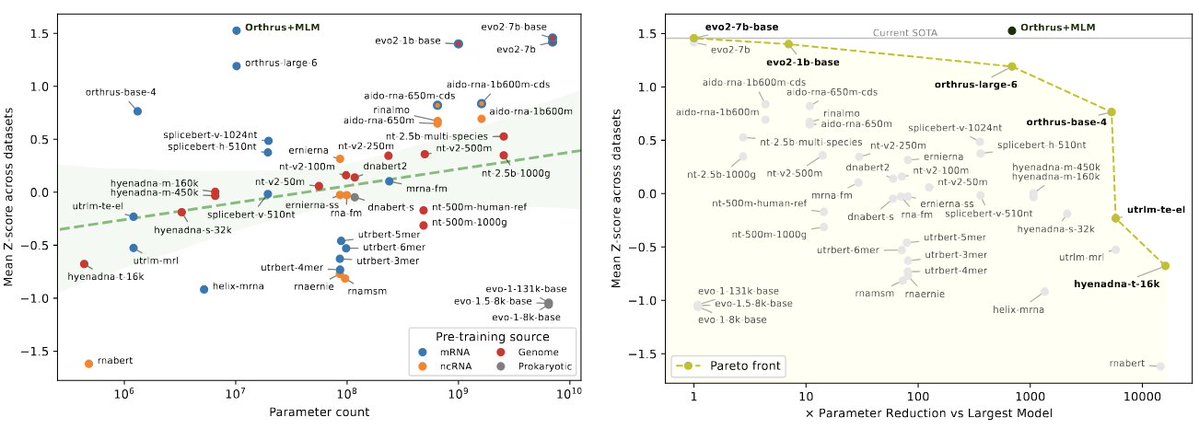
Thrilled to announce that our paper on Orthrus, a state-of-the-art mRNA foundation model, was published in Nature Methods! 🎉
Huge congrats to my co-first authors @phil_fradkin and @ianshi3 - this has been a long time coming!
Paper: https://t.co/5CBjX2JYYr
A thread 👇🏼
Excited to share our preprint on "tagging" effects in enhancer-gene links from single-cell multiome data!🧬 We show that correlated ATAC peaks can induce non-causal peak-gene links (similar to LD in GWAS), affecting regulatory architecture interpretation.
https://t.co/OazX1hz1oR
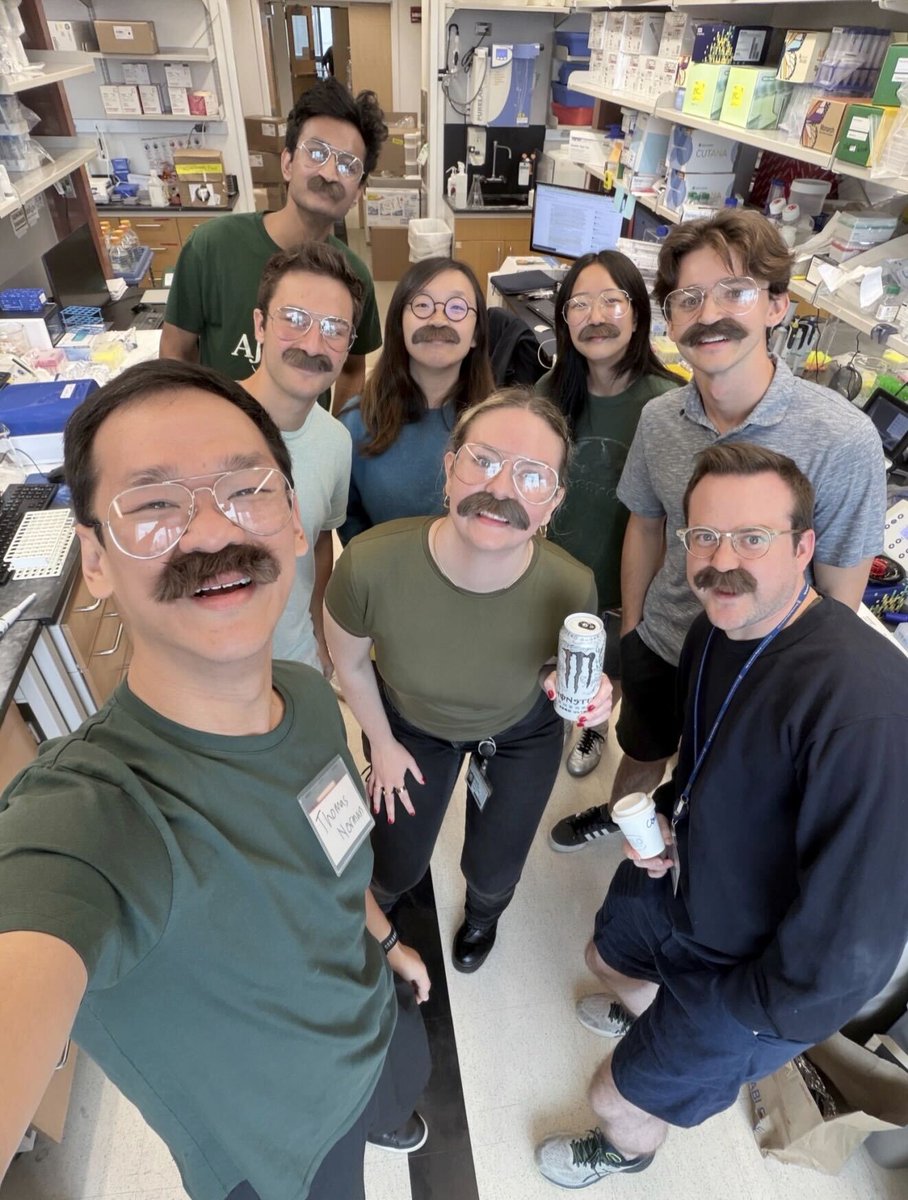
My lab at MSKCC in New York is hiring for two positions. Join us at the frontier of functional genomics, studying fibroblast state transitions, combinatorial genetics, and ECM in disease. Please share with anyone who might be a good fit! (Mustache not required.)
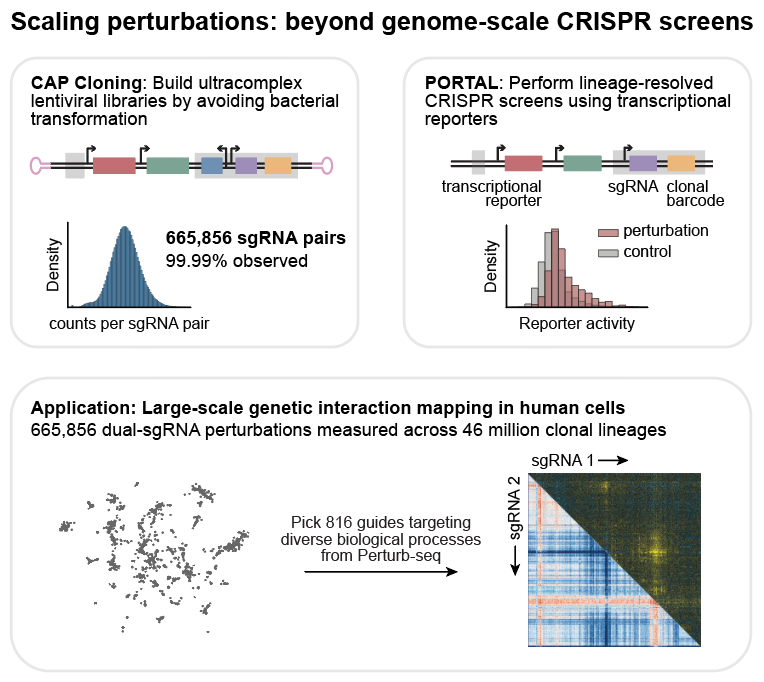
New preprint on technologies to scale up CRISPR screens.
We use them to map 665,856 pairwise genetic perturbations and outline a path to comprehensive interaction mapping in human cells.
We also introduce an approach for cloning lentiviral libraries with billions of elements.
Very excited to share this preprint with @arthurwchow and @CalebLareau where we asked whether we could use advances in protein generative models to rationally design and optimize CAR-T cells! The short answer is Yes but there are much more to unpack in this awesome tweetorial!
Which mutations rewire function of regulatory DNA?
Excited to share SEAM: Systematic Explanation of Attribtuion-based Mechanisms. SEAM is an explainable AI method that dissects cis-regulatory mechanisms learned by seq2fun genomic deep learning models.
Led by @EESetiz
1/N 🧵👇
Can AI develop methods like a seasoned statistical geneticist? 🤔
In 8 hrs, our new method TusoAI improve two popular tools in genetics: scDRS (+40% power) & pgBoost (+11% enrichment).
Preprint: https://t.co/edeHSNpqng
Great work by @AlistairTurcan with @KexinHuang5@lileics
Introducing Spacelink, a unified framework for identifying and prioritizing spatially variable gene programs at tissue and cell type resolution and linking them to disease GWAS studies. Led by Hanbyul Lee & Haochen Sun https://t.co/lbojyv6zKG
Latest genomic AI models report near-perfect prediction of pathogenic variants (e.g. AUROC>0.97 for Evo2). We ran extensive independent evals and found these figures are true, but very misleading.
A breakdown of our new preprint: 🧵
Our paper is now out in final form at Nature Genetics! For those who missed the preprint, we used large-scale Perturb-seq targeting transcription factors to push primary fibroblasts into diverse transcriptional states, including those observed in cell atlas studies.
Our work on "Evaluating the representational power of pre-trained DNA language models for regulatory genomics" led by @AmberZqt with help from @NiraliSomia & @stevenyuyy is finally published in Genome Biology! Check it out!
https://t.co/AFBC9Qu4x3
I am excited to introduce mRNABench, a comprehensive benchmarking suite that we used to evaluate the representational capabilities of 18 families of nucleotide foundation models on mature mRNA specific tasks.
Paper: https://t.co/ewnxPLYYWT
Code: https://t.co/I2mgDA4Cjs
A 🧵
We're excited to release 𝐦𝐑𝐍𝐀𝐁𝐞𝐧𝐜𝐡, a new benchmark suite for mRNA biology containing 10 diverse datasets with 59 prediction tasks, evaluating 18 foundation model families.
Paper: https://t.co/Ky7p0PSeuI
GitHub: https://t.co/adwICuUdIV
Blog: https://t.co/tP46HtoszV


![andrew7shen's tweet photo. Autonomous science promises to augment scientific discovery, but current LLMs tend to mode collapse into low-diversity generations. We introduce “Unlocking LLM Creativity in Science through Analogical Reasoning”, which uses analogies to generate better candidate solutions! [1/N] https://t.co/KzlXZ7cQdW](https://pbs.twimg.com/media/HINzIQyaMAITdtk.jpg)