If you’ve dropped precautions now’s an extra-great time to resume. Please 🙏🏻
& if you need k/n95s or half face respirators & can’t afford or need help figuring out what’ll work for your face my DMs are open!
Remember, Japan has been surging for 17 consecutive weeks. It will be far worse here.
“For the second week in a row, the number of people being admitted to the hospital with COVID-19 rose significantly, by more than 12%.” https://t.co/oZ8xAcY4MS
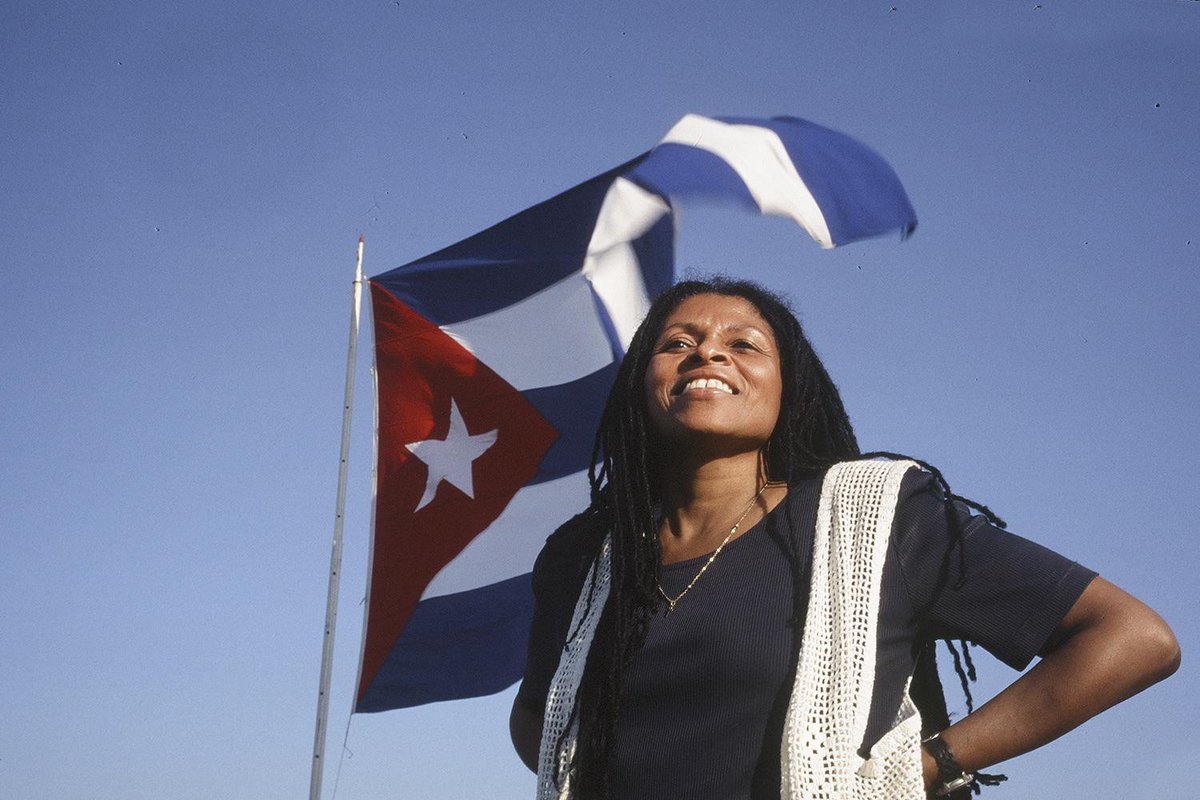
Assata Shakur Speaks from Exile: Excerpts from an Interview by Sociologist Christian Parenti (Cuba, 1997)
Parenti: How did you arrive in Cuba?
Assata Shakur: Well, I couldn’t, you know, just write a letter and say, “Dear Fidel, I’d like to come to your country.” So I had to hoof it–come and wait for the Cubans to respond. Luckily, they had some idea who I was, they’d seen some of the briefs and U.N. petitions from when I was a political prisoner. So they were somewhat familiar with my case and they gave me the status of being a political refugee. That means I am here in exile as a political person.
Parenti: How did you feel when you got here?
Shakur: I was really overwhelmed. Even though I considered myself a socialist, I had these insane, silly notions about Cuba. I mean, I grew up in the 1950s when little kids were hiding under their desks, because “the communists were coming.” So even though I was very supportive of the revolution, I expected everyone to go around in green fatigues looking like Fidel, speaking in a very stereotypical way, “the revolution must continue, Companero. Let us triumph, Comrade.” When I got here people were just people, doing what they had where I came from. It’s a country with a strong sense of community. Unlike the U.S., folks aren’t so isolated. People are really into other people. Also, I didn’t know there were all these black people here and that there was this whole Afro-Cuban culture. My image of Cuba was Che Guevara and Fidel Castro. I hadn’t heard of Antonio Maceo (a hero of the Cuban war of independence) and other Africans who had played a role in Cuban history.The lack of brand names and consumerism also really hit me. You go into a store and there would be a bag of “rice.” It undermined what I had taken for granted in the absurd zone where people are like, “Hey, I only eat uncle so and so’s brand of rice.”
Parenti: So, how were you greeted by the Cuban state?
Shakur: They’ve treated me very well. It was different from what I expected; I thought they might be pushy. But they were more interested in what I wanted to do, in my projects. I told them that the most important things were to unite with my daughter and to write a book. They said, “What do you need to do that?” They were also interested in my vision of the struggle of African people in the United States. I was so impressed by that. Because I grew up–so to speak–in the movement dealing with white leftists who were very bossy and wanted to tell us what to do and thought they knew everything. The Cuban attitude was one of solidarity with respect. It was a profound lesson in cooperation.
Parenti: Did they introduce you to people or guide you around for a while?
Shakur: They gave me a dictionary, an apartment, took me to some historical places, and then I was pretty much on my own. My daughter came down, after prolonged harassment and being denied a passport, and she became my number one priority. We discovered Cuban schools together, we did the sixth grade together, explored parks, and the beach.
Parenti: She was taken from you at birth, right?
Shakur: Yeah. It’s not like Cuba where you get to breast feed in prison and where they work closely with the family. Some mothers in the U.S. never get to see their newborns. I was with my daughter for a week before they sent me back to prison. That was one of the most difficult periods of my life, that separation. It’s only been recently that I’ve been able to talk about it. I had to just block it out, otherwise I think I might have gone insane. In 1979, when I escaped, she was only five years old.
Parenti: You came to Cuba how soon after?
Shakur: Five years later, in 1984.
"Everyone with #LongCovid.. is grieving. We’re all mourning something, whether.. our old body or brain, our ability to work or socialize, our financial stability & housing, relationships that are now broken or strained, or simply the person we used to be." https://t.co/ua1Bi73CzC
ppl like to ask the question "what radicalized you?", but imo it's never a stationary concept. ppl slip from radical thought & action into liberalism all the time, consciously or unconsciously. to me it's a constant process of analysis. you don't just sharpen a knife once.
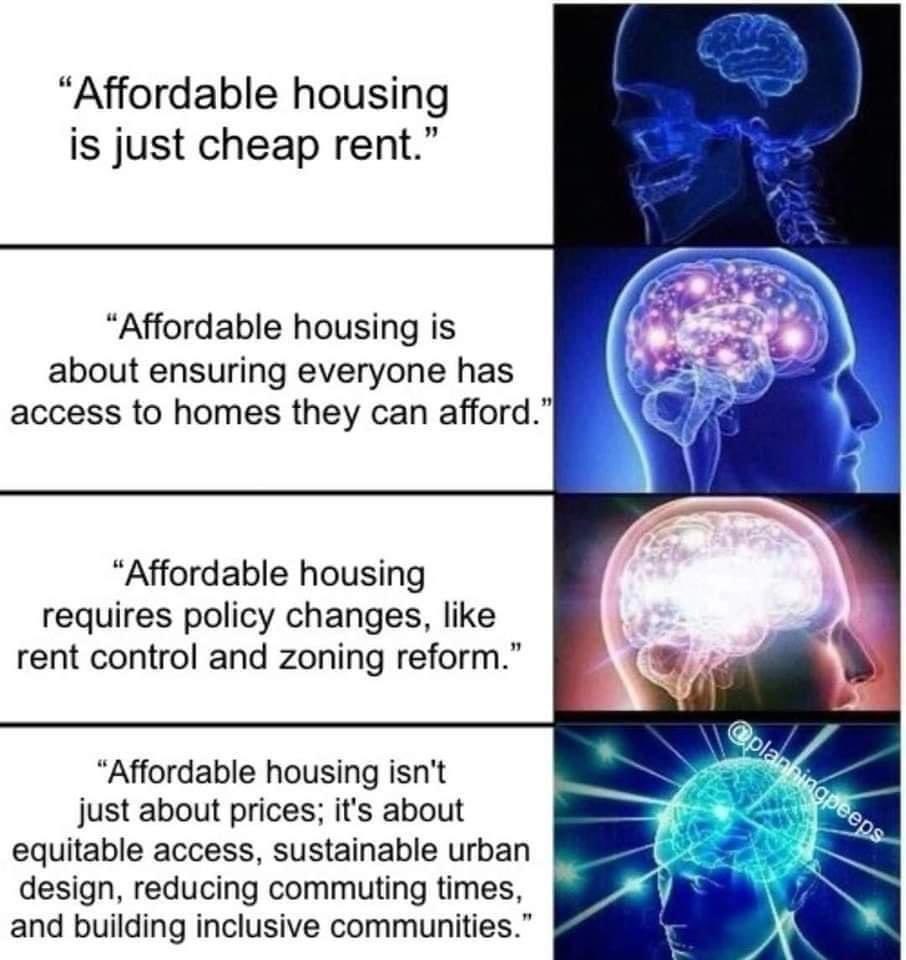
Join us this Wed 11/20 at 6pm to for a Building Tenant Power workshop about how renters can engage with their neighbors and decision makers about how to achieve ✨truly✨ affordable housing!
Register: https://t.co/uDIhZ2Kl6I
"But the silent story for most of us is that we “decided to get better” but couldn’t; started doing a little more each day but had a relapse; tried yet another treatment and found it wanting; and then, having lost everything, built the best life we could from the ruins" 🎯💙#pwME
a big theme from opening sessions at @bowmansschool is the importance of paying attention to your feelings
a few people have said they don't have access to them, so i thought i'd write a few quick notes on hacks i've used as a formerly severely dissociated person:
Flagship stores must have flags. Brick and mortar stores must have masonry construction. It is mandatory for pop up shops to have at least one vertical hydraulic element.
if you guys think this is bizarre and deeply unsettling, this is the same reason people aren't wearing face masks for covid anymore.
"we were at a safe distance where no masks were needed" who told them that? who has manufactured consent to chemical poisoning? to disease?