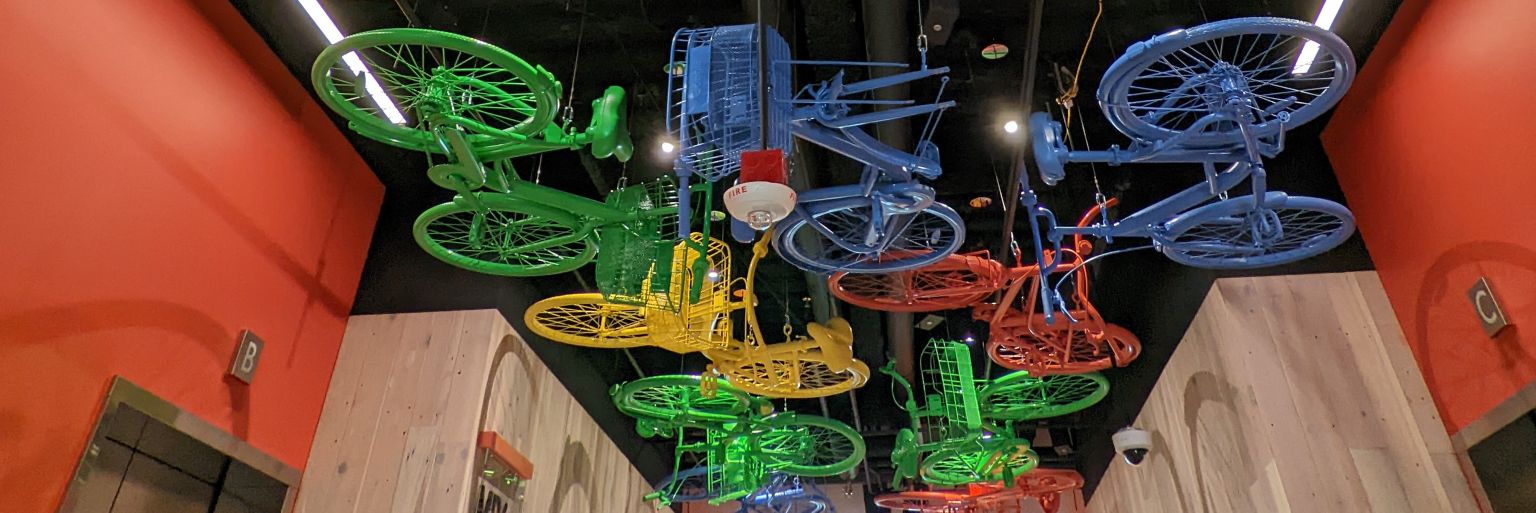
If you are a #Pixel lucky owner, you can now upgrade to Android 17 (codename Cinnamon Bun).
#AndroidDev make sure you test your app especially on Tablets.
We just open sourced the AppFunctions Testing Agent!
🧪 Manual deterministic testing & LLM-based agent evaluation
📱 Clean multi-module refactor of ChatApp with Wear OS support!
Grab your API keys and check it out.
#AndroidDev#AI#FridayDeploy
https://t.co/LOGvrMr1MT
🚨Wow! the US government is banning #Fable 5 and #Mythos to non-US citizens (both in and out the USA). @AnthropicAI
Would need to implement KYC and verify each user. In addition, it is very difficult to implement this for company -plan.
#Ai#security#ban https://t.co/r3KMNe6h2F
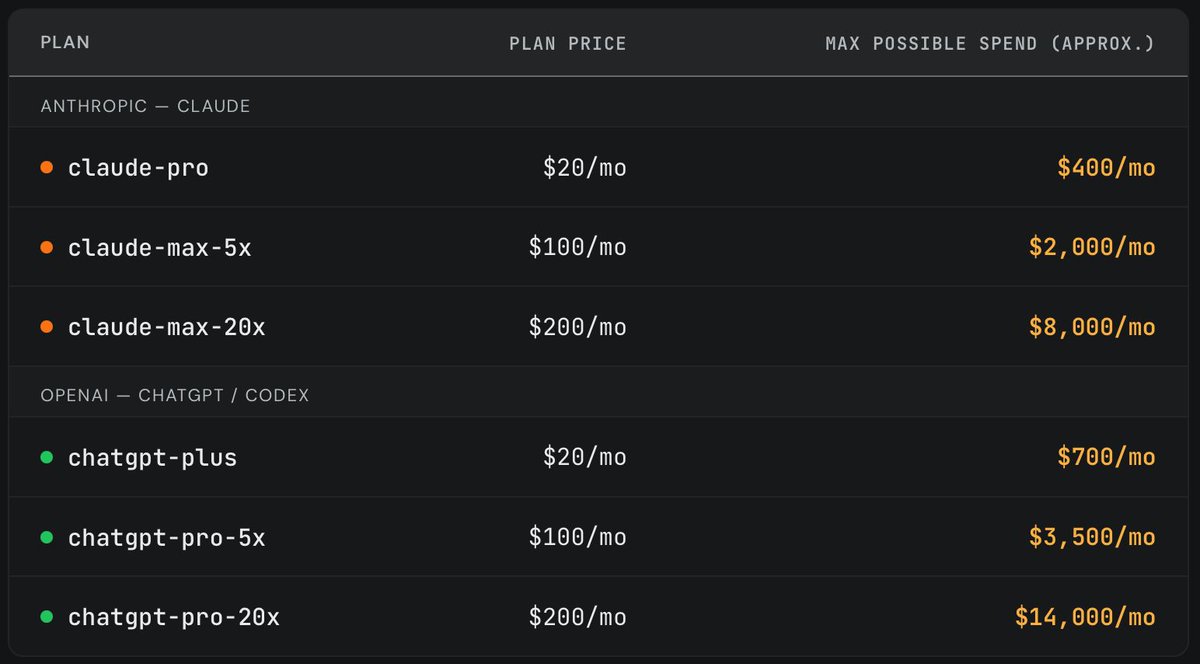
Recently, we purchased one of each Anthropic/OpenAI subscription plan and randomly ran long horizon coding tasks until we exhausted the weekly limit. It's widely believed that a $200/month plan maxes out at ~$2000/month worth of tokens (assuming API pricing). However, we found that the subscriptions are actually far more generous. (2/4)
Meet DiffusionGemma!
An experimental open model that explores a fast approach to text generation, released under an Apache 2.0 license.
Moving beyond sequential, token-by-token processes to generate entire blocks of text simultaneously. Here’s what’s new with DiffusionGemma: 👇
Devs who has integrated a rich text editor knows the classic dilemma: pick a Cloud-hosted setup for instant deployment and no maintenance, or self-host to keep control over security and uptime.
This article breakdown pits Cloud vs. Self-hosted editors side-by-side to help you figure out which trade-offs actually make sense for your stack
#AndroidDev #Froala #Webdev #Webview
https://t.co/nVIfokFwC8
Today @AnthropicAI released Claude Fable 5, the best model from Claude series. Reasoning, verification and testing are baked into the model (it can lead to extra token). The model performed well on benchmark.
How ever the price per Mtok doubled!
#Ai#SotA
https://t.co/YGD5HaF4ll
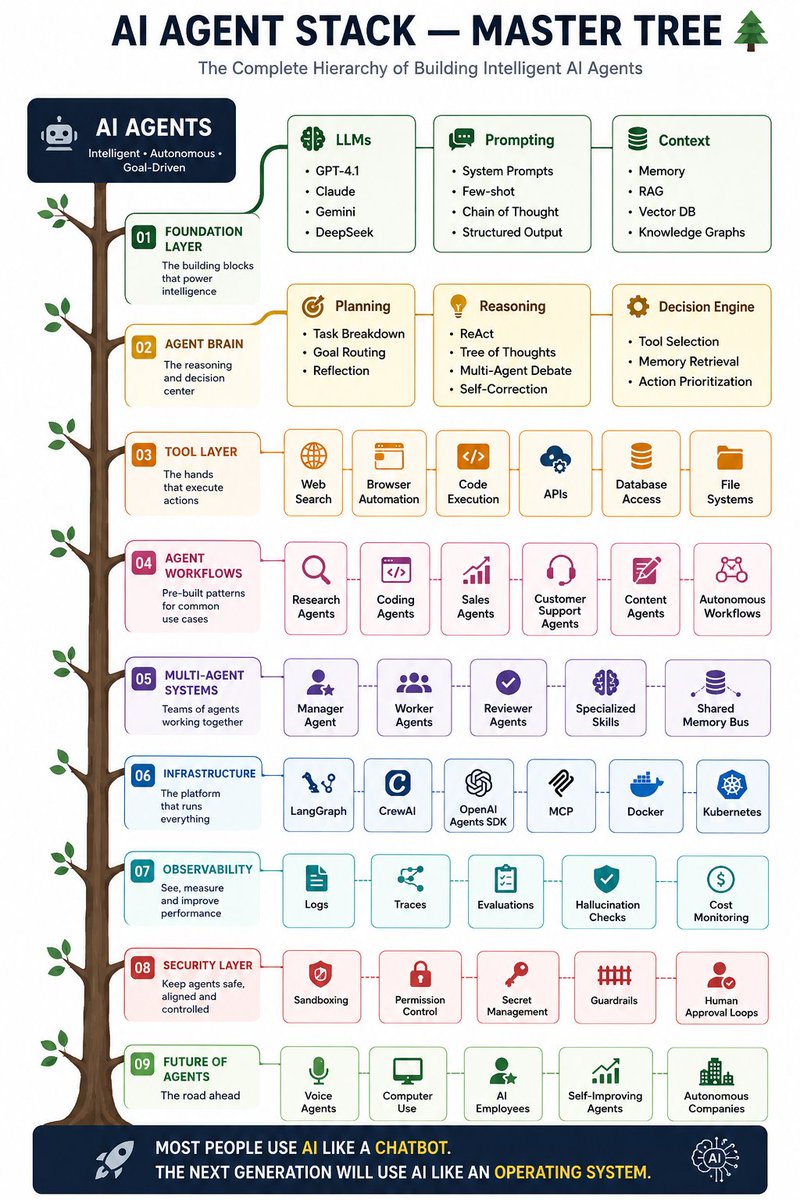
for anyone asking where to learn this stuff:
• RAG → https://t.co/4bzbUIwV5g
• Agentic RAG → https://t.co/IotOiGmV1Y
• AI Agents → https://t.co/nEeMnVJQbk
• Multi-Agent Systems → https://t.co/pavDPVJEFj
• LangGraph → https://t.co/3miEqqFzF0
• LangGraph (code) → https://t.co/v7kxHZXqba
• MCP → https://t.co/lKawRb4etX
• Memory Systems → https://t.co/LSaT2UaPAS
• Evals → https://t.co/vxChxa1kqQ
• Context Engineering → search "Context Engineering Survey" on arXiv
and please skip the "build an ai agent in 10 minutes" videos
build something, watch it fail, then figure out why.
SHIPPED. Mistral Vibe is now the AI agent for long-horizon productivity and coding, and the home for Work mode, Code mode, the CLI, and a brand new VS Code extension. Let's go... 🧵
Great conversation with Jake Wharton at #KotlinConf26! He dove into the evolution of #Kotlin, the power of community-driven development, and the value of building in the open to foster professional growth and create reusable engineering solutions. #Ai
https://t.co/mnycx6TpaW
@hamen Thanks, I've been using it and it is great. I was wondering how do you measure improvement/ regression. I *feel* newer versions have been better but I wonder how I can actually measure 🤔
Shipped v2.1.0 of my Compose Audit Skill. Added focus management coverage, KMP/CMP boundaries, refined the 0-100 scoring. Works with Claude Code, Cursor, any agent that loads the Anthropic skill format. Open source, MIT: https://t.co/pknE5pDsZR
Microsoft built a Fitbit for AI.
they just open-sourced AI Engineer Coach.
a VS Code extension (also works in Cursor and Antigravity) that analyzes how you actually use AI coding agents.
it reads local session logs from GitHub Copilot, Claude Code, Codex CLI, OpenCode, and Xcode. one dashboard across every harness you use.
it scores your workflow across five categories: prompt quality, session hygiene, code review, tool mastery, and context management.
it ships with 45 anti-pattern detection rules. things like prompts with no file context, mega sessions that drift off-topic, auto-approving terminal commands without a devcontainer, and burning premium tokens on trivial questions.
each finding shows what went wrong, how to fix it, and a real example from your own sessions.
the rule engine is the interesting part. every detector is a markdown file with a small expression language, so you can tune thresholds, write new rules, or describe one in plain English and let Copilot scaffold it.
there's also a Skill Finder that spots repeated prompt patterns and turns them into reusable skills.
everything runs locally. read-only by design, zero telemetry.
we've spent two years making AI agents faster. almost nobody is measuring how effectively developers actually work with them.
AI Engineer Coach treats your AI workflow the way observability tools treat production systems.
MIT licensed, fully open-source. link in the next tweet.