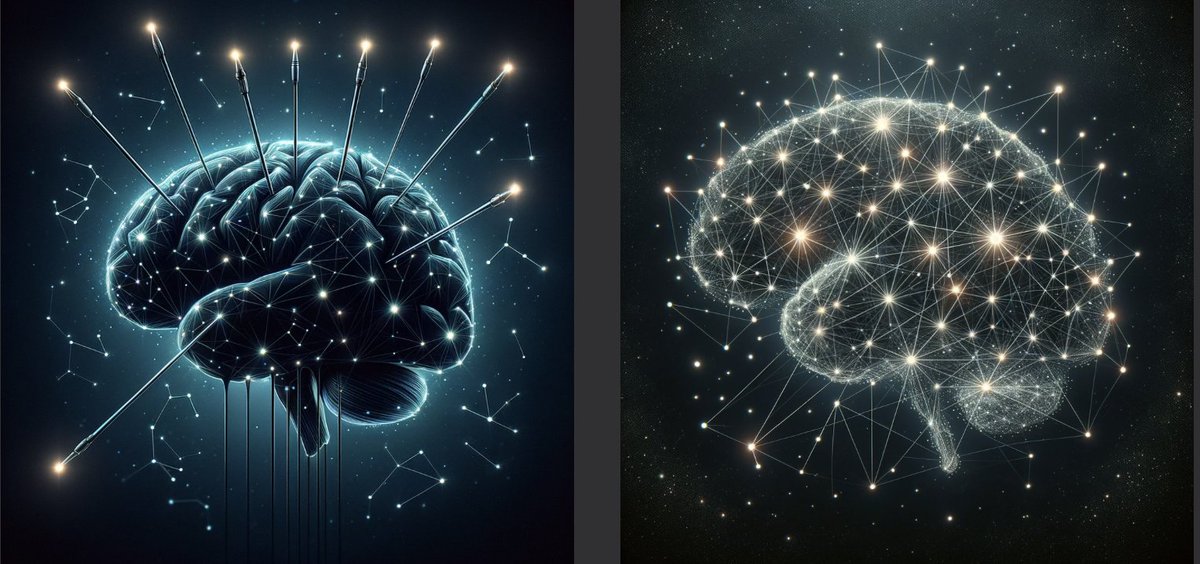
Continuous-time RNNs are used in neuroscience to model neural dynamics. CNNs are used in vision neuroscience for image processing. So what's the right architecture to model the biological visual system? We propose a hybrid. (#NeurIPS2024 spotlight!)
https://t.co/IJV5H1NVuW
Excited to share our latest preprint with @CamilloPadoaSch and @xjwanglab! We present a biologically plausible framework showing how neural circuits compute & compare value to drive flexible economic decision making. https://t.co/ZuVeQvfPVA
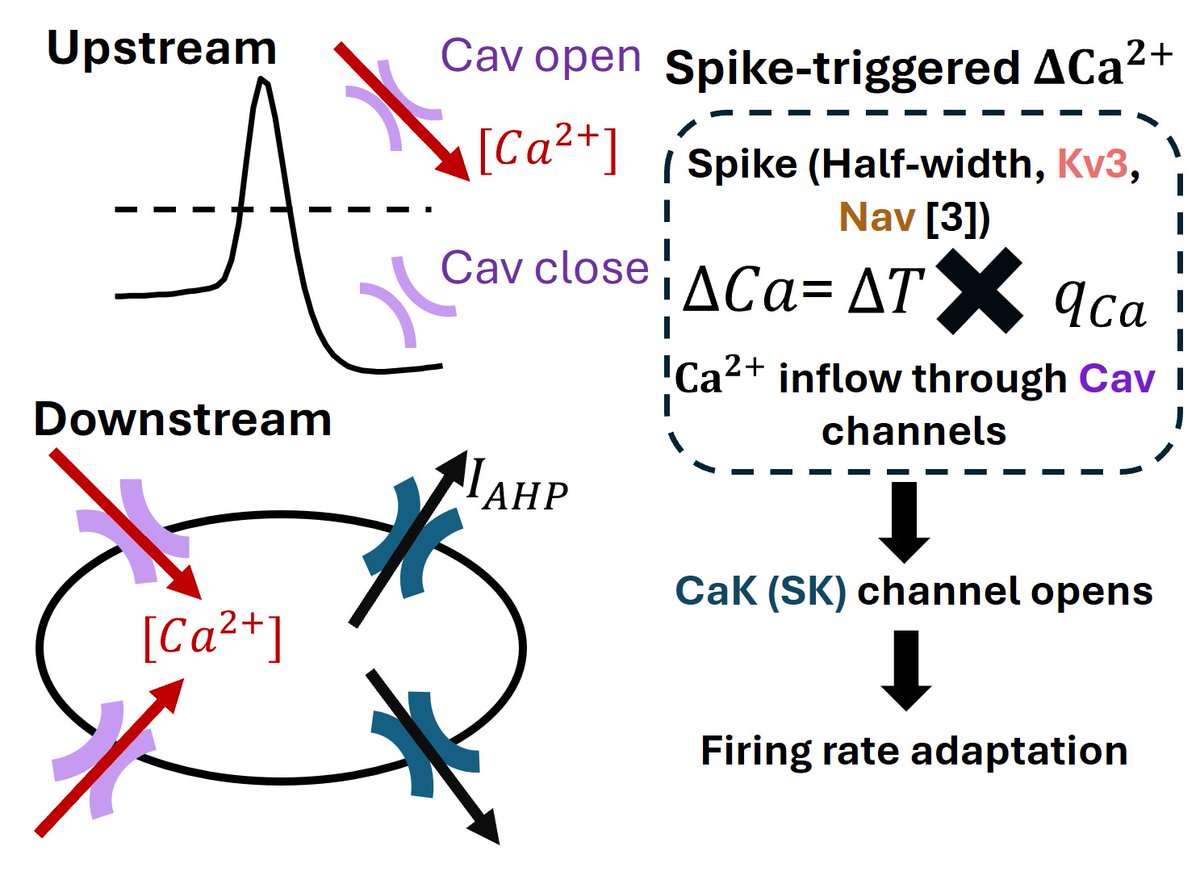
"In Search of Transcriptomic Correlates of Neuronal Firing-Rate Adaptation across Subtypes, Regions, and Species: A Patch-seq Analysis" https://t.co/wiLHRPkzf5
A new paper from our team! This work was completed in Wang's lab in collaboration with Yijie Kang and others.
What is the neural code and statistical structure of neural states characterizing stress?
Our new work out in Nature answers these questions and more. Thanks to my amazing co-first @_fxia, and @StefanoFusi2 and @mazen_kheirbek for invaluable guidance🧵👇
https://t.co/cYMOsaEqaV
Continuous-time RNNs are used in neuroscience to model neural dynamics. CNNs are used in vision neuroscience for image processing. So what's the right architecture to model the biological visual system? We propose a hybrid. (#NeurIPS2024 spotlight!)
https://t.co/IJV5H1NVuW
There are many potential applications for CordsNets in neuroscience. You can use them as the front-end for tasked-optimized multi-area RNNs, or analyze them with similarity metrics like vision Brain-Score on CNNs. More examples in our paper!
Our new study on the role of Purkinje Cells in learning reinforcement-based visuomotor associations is out! Thanks to Anna Ipata, @StefanoFusi2 , Chris I. De Zeeuw, Naveen Sendhilnathan , and Michael E. Goldberg!
https://t.co/qoBO4MkW5C
👇🧵...
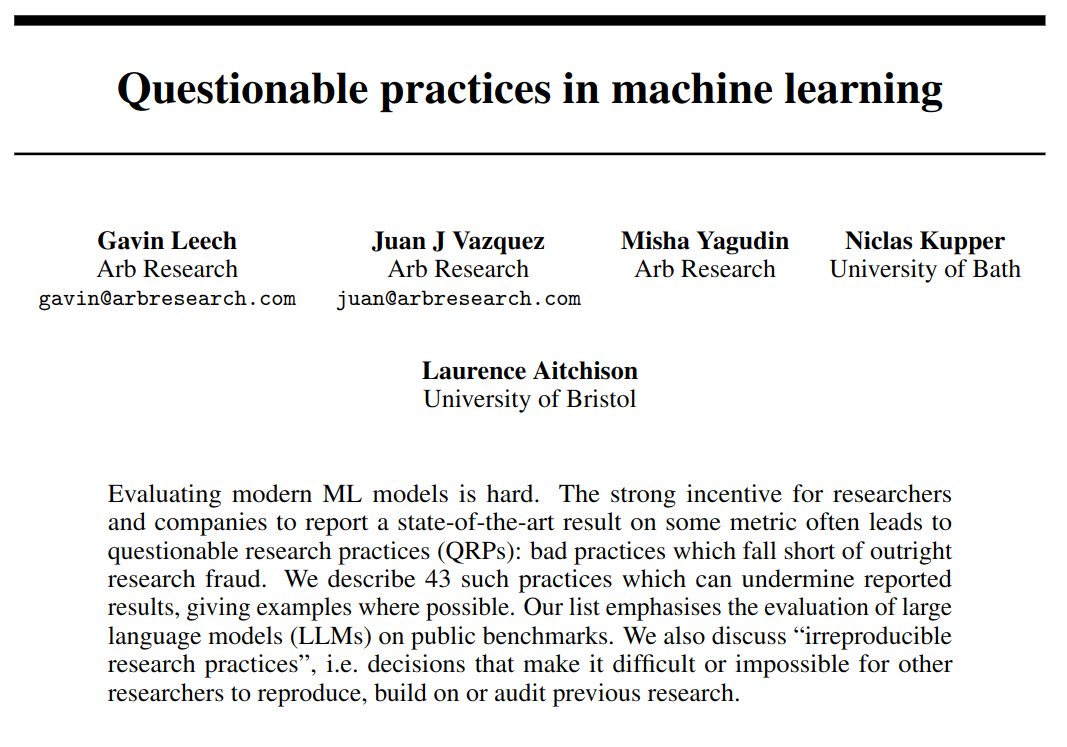
New paper, listing 43 ways ML evaluations can be misleading or actively deceptive.
Following the good critics of psychological science we call these "questionable research practices" (QRPs). (The working title was "How To Lie In Machine Learning")
We have released the recordings for our (@aldo_battista@EngelTatiana) 2024 @CosyneMeeting workshop on brain-wide modeling (large scale recordings and multi-omics)! Check them out here:
https://t.co/YrkHaKk2T7
How do we integrate brain-wide neural dynamics, connectomes, and transcriptomes into insightful models of brain function? Come and get inspired by an impressive lineup of speakers in our workshop at @CosyneMeeting 2024: https://t.co/u6lphrAUAB
Neuroscientists can now record neural activity at an unprecedented scale, and have mapped out connectomes and transcriptomes at single-cell resolution. How do we incorporate them into brain-wide models? Check out our @CosyneMeeting @Cosyne2024 workshop:
https://t.co/A9vskowr4S
Standard neural coding approaches (think GLM) model how firing rates depend on stimuli. But how do we capture the widely observed phenomenon that the variability of spike trains is also stimulus-dependent? Our new #NeurIPS2023 paper has the solution: https://t.co/wVxRzWf5e1
1/10
"Resilient or susceptible? Stressed or not stressed? That's the question, and we can answer with high accuracy. Honored to share this massive work with my incredible co-author @_fxia, @mazen_kheirbek, and @StefanoFusi2 .
Check it out here! 👇🧵https://t.co/2l5jNqia25
Recurrent neural networks are powerful tools for modeling cognitive behavior, but currently they 1) lack biological details and 2) are hard to interpret
In this preprint, we address these problems by training and analyzing modular RNNs with cell types to perform the WCST task.
In addition to amazing coauthors, I would like to thank @NYU_CNS and @MBLScience for making this collaboration possible. My deepest gratitude also extends to my home institution @Cambridge_Uni and PhD supervisor @lengyel_m for their support. 8/8
It is challenging to train continuous-time biological RNN models to learn long-term dependencies. In our latest paper (in #NeurIPS2023) with @NeuroGoudar@xjwanglab, we propose several solutions. 1/8
https://t.co/YHMlJsMhRR