We announced a positive resolution of our arbitration with Beam Therapeutics, confirming our right to develop and commercialize PM647, our investigational Prime Editing program for AATD, a disease with no approved disease-modifying or curative treatments.
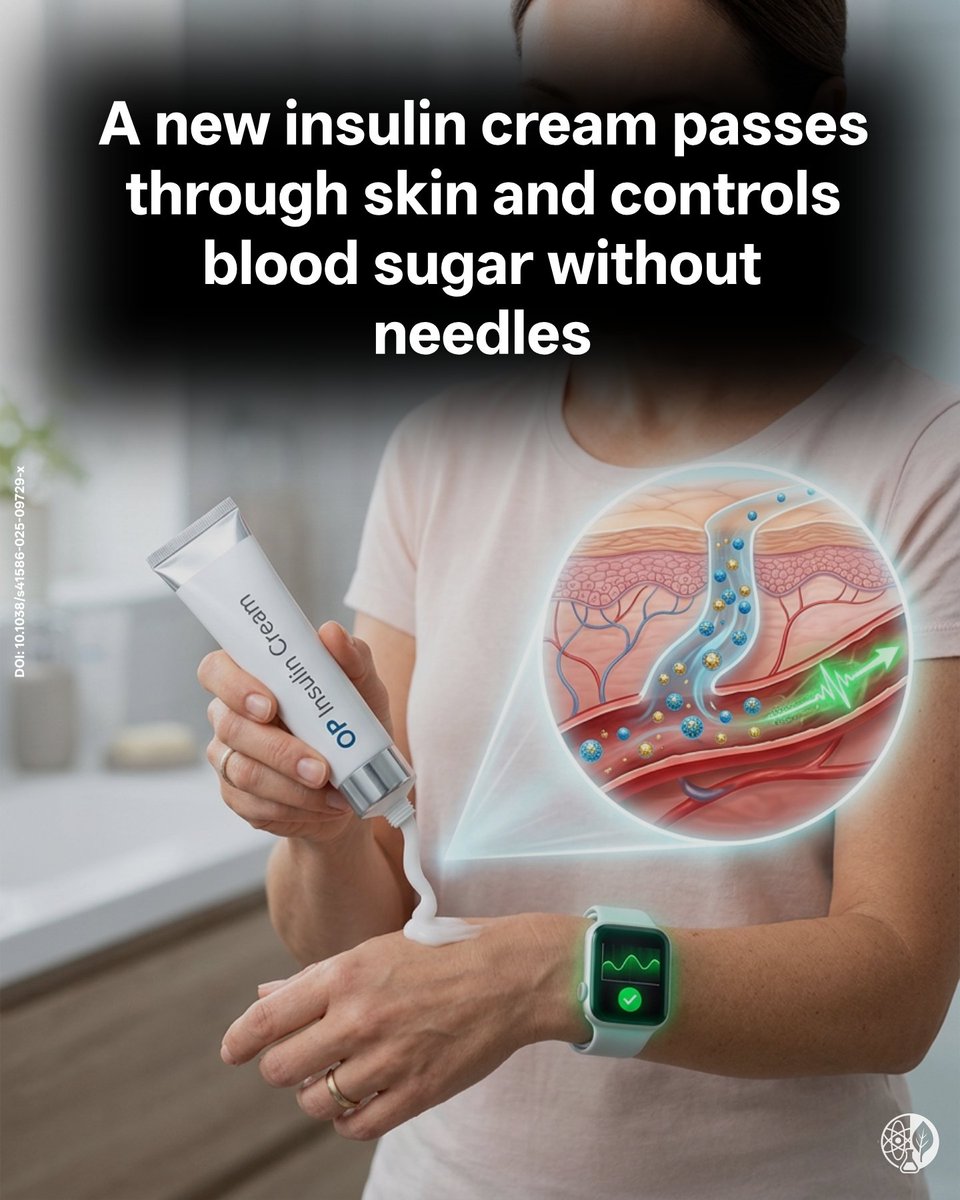
For decades, managing diabetes has meant living with the daily discomfort of needle injections. Because human skin is a tough natural shield designed to keep outside substances away, rubbing a large molecule like insulin onto the body was always considered impossible.
Now, a groundbreaking medical discovery is changing the rules of how we deliver life-saving treatments.
Scientists have engineered a remarkable new smart lotion that successfully carries insulin straight through the skin. The secret is a specialized microscopic vehicle that acts like a microscopic delivery truck. On the surface, it easily bonds with the skin's outer layer. As it sinks deeper, it cleverly alters its chemical makeup to slip right past the body's natural defenses, delivering its crucial insulin cargo directly into the bloodstream without a single scratch.
The practical results observed in laboratory testing are nothing short of incredible. Applying this cream balanced blood sugar levels in just over an hour, matching the speed of a traditional injection. Even better, it provided a steady and controlled release of medication that lasted up to twelve hours, which is a much smoother process than a sudden spike from a shot.
While researchers prepare for the next vital phase of human trials, this breakthrough points to a future where managing complex health conditions is completely pain-free. The era of injection fatigue and needle anxiety may soon be behind us, replaced by a simple, stress-free morning routine.
Journal Paper: Wei, Q., He, Z., Li, Z. et al. A skin-permeable polymer for non-invasive transdermal insulin delivery. Nature 648, 459–467 (2025). DOI: 10.1038/s41586-025-09729-x
We're excited to share results from the ALERT trial, conducted in collaboration with @Medtronic. The study found that automated electronic clinician notifications (ECNs) integrated into the electronic health record (EHR) significantly improve the timely evaluation and treatment of patients with significant aortic stenosis (AS) and mitral regurgitation (MR).
Learn more: https://t.co/GXz3G6oz5s
A pig kidney just survived 271 days inside a human body. The longest xenotransplant in history.
The patient, Rick Slayman’s successor at Massachusetts General Hospital, received a kidney from a pig with 69 genetic edits. Retroviruses removed. Immune rejection pathways silenced. Human-compatible genes inserted.
271 days of function. No dialysis. No human donor needed.
There are 89,000 Americans on the kidney transplant waitlist right now. 12 die every day waiting. The median wait is 3-5 years.
The science isn’t theoretical anymore. eGenesis has a pipeline of gene-edited pig organs for hearts, livers, and lungs. Three other companies are in clinical trials.
We went from “pig organs will never work in humans” to 271 days of proven function in under two years.
The organ shortage kills more people than most cancers. The fix might come from a 10-pound pig.
Excited to share our updated BEAM-302 data!
This is now a robust, industry-leading data set with over 29 total patients treated.
https://t.co/THwIsfxvQG
$TGTX secures an additional $500 Million in non-dilutive capital from Blue Owl and expands share repurchase program to $300 Million. Details here: https://t.co/ZvMUeDqmE8 #FearlessforPatients
Today, we announced a multi-year strategic collaboration with @Merck.
“We are thrilled to be working with Merck as our newest strategic partner, joining others that have committed to long-term data licenses, including AZ, GSK, and BMS. Together, we share a dedication to bringing the benefits of AI to drug discovery and development." - Tempus CEO and Founder, @lefkofsky
Read on: https://t.co/mQF2nHqaeA
We’re excited to announce the launch of Tempus HRD-RNA, an AI-driven, 1,660-gene logistic regression model designed to identify patients likely to respond to platinum-based chemotherapy or PARP inhibitors.
HRD-RNA is currently available for research use only in the detection of HRD status within solid tumor patient populations and for the identification of patients likely to respond to platinum regimens or PARP inhibitor therapy. Clinical availability is expected later this year.
Learn more: https://t.co/2jJTe0wPPZ
“Is God willing to prevent evil, but not able? Then he is not omnipotent.
Is he able, but not willing? Then he is malevolent.
Is he both able and willing? Then whence cometh evil?
Is he neither able nor willing? Then why call him God?”
— The Epicurean Paradox