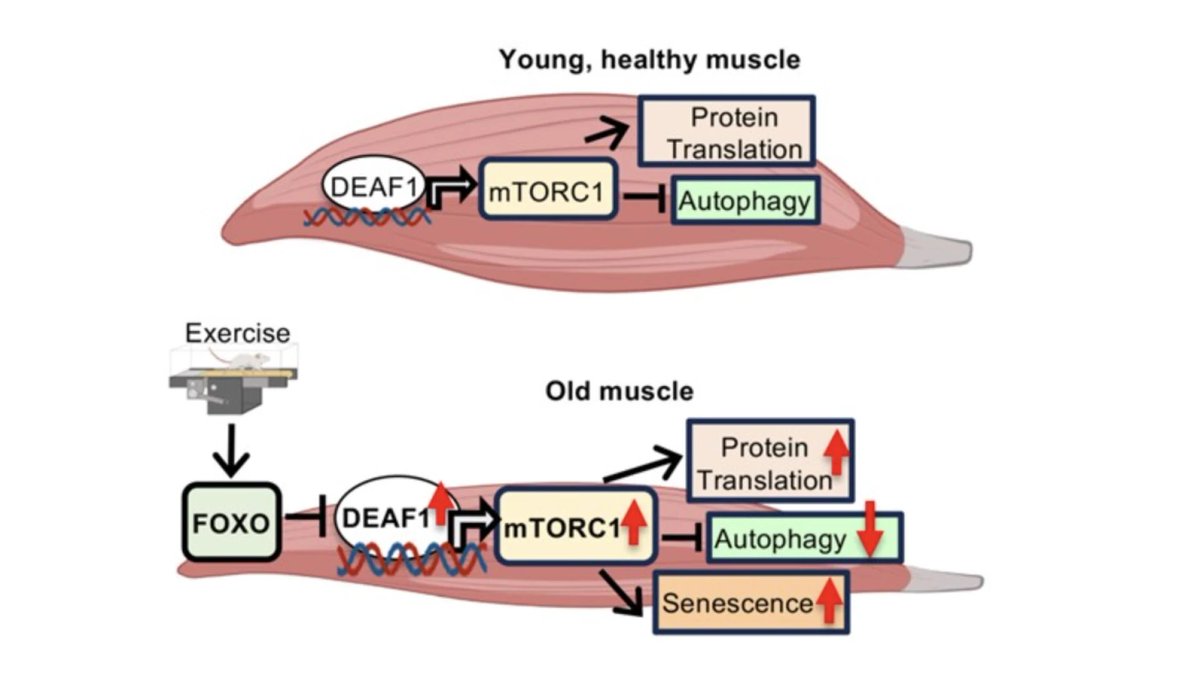
New research shows how exercise protects aging muscle by rebalancing mTORC1.
In young muscle, mTORC1 is carefully regulated, allowing protein building while still clearing out damaged components. With aging, this balance breaks down. A transcription factor called DEAF1 becomes overactive, driving mTORC1 too hard, impairing cellular cleanup (autophagy), and accelerating muscle loss (sarcopenia).
Exercise reduces DEAF1 activity, restoring this balance and improving muscle repair and strength. Animal studies confirm the mechanism: lower DEAF1 improves power, while excess DEAF1 causes weakness.
The findings help explain why exercise benefits vary with age and point to DEAF1 as a potential target for therapies that support healthy muscle aging.
https://t.co/0S1TSA1yYH
The hormone adrenomedullin disrupts insulin signaling in blood vessel cells, contributing to systemic insulin resistance in obesity-associated type 2 diabetes, according to a Science study from earlier this year in mice.
The results suggest a potential new target for treating obesity-related metabolic disease. https://t.co/F3JkkCx0kj
Excited to announce I've been appointed the inaugural Editor-in-Chief of a NEW nature portfolio journal - Exercise Medicine and Health: https://t.co/RmSJgbPAqq
Please contact me if you have questions about potential submissions or an interest in serving on the editorial board.