Check out @HJLChem and I’s recent report on using VHPO enzymes to prepare oxindoles and spiro-oxindoles! Excited to see this work out and help eliminate the need for hazardous halogenating reagents and harsh oxidants. Go team VHPO!
KFB Lab Alert: Our general biocatalytic platform for the oxidative rearrangement of indoles is now online at @ChemRxiv! Congratulations to @HJLChem and @sp3intermediate for leading this work with Sergio, Raina, Ana, Sophie, and John!
https://t.co/7PMBifdyjJ
Viresh H. Rawal先生。新規有機ビスマス試薬を用いたインドール合成法の開発。
#学ぶの論文紹介
Regiocontrolled One-Step
Indole Synthesis from Carbonyl
Compounds via Organobismuth Chemistry https://t.co/nGBG4BBOwm
This was a rewarding collab. with the Alexanian lab at UNC and Abbvie on making ncAAs: https://t.co/CWy0SkoruL. Very surprised by the generality of the strategy, which allowed us to make many unusual ncAAs
Congrats to the team led by my postdoc Yi for the development of a new-to-nature enzymatic hydrophosphorylation (https://t.co/JBiVIXiGUb). See a related news release at https://t.co/w2Eyidk8CS.
Primary amines do not have to remain nucleophiles.
Our direct amine-umpolung chemistry is now out in JACS (OA): one-step conversion to electrophilic aminating agents for complex-fragment coupling, including chiral hydrazines from amino-acid derivatives. https://t.co/gcmjzg1D6j
Excited to announce that the preliminary program for the 2027 Gordon Research Conference on Heterocyclic Compounds, June 20–25 in Newport, RI, is online!
https://t.co/NnW86efApu
We have an outstanding lineup of academic and industry scientists. Hope to see many of you there!
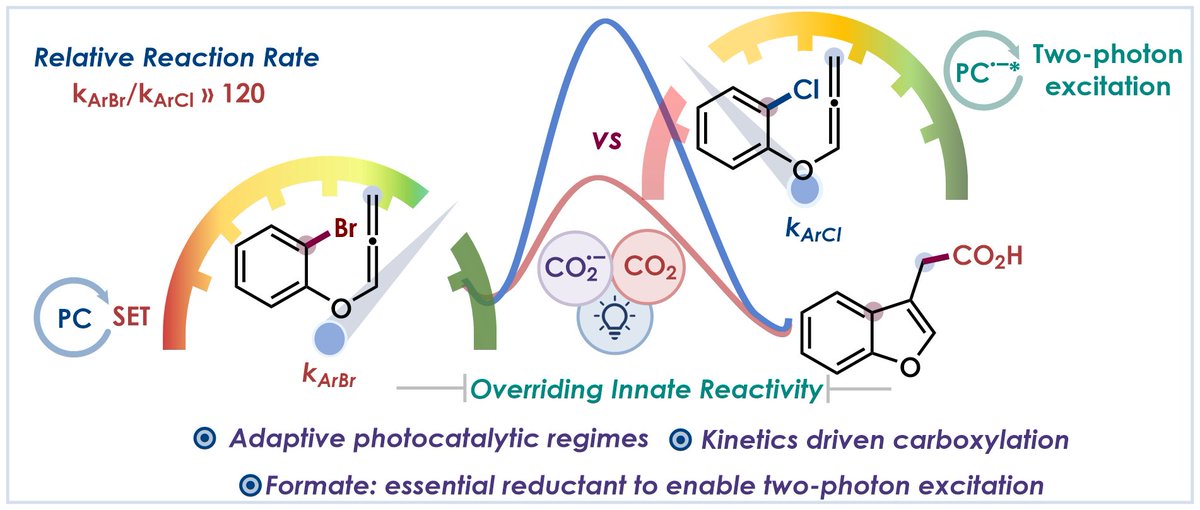
🚀Unlocking CO₂ ·– for two distinct photocatalytic regimes for selective activation of Ar-X(Br/Cl) for Cyclization-Carboxylation. Just now out in @ACSCatalysis 🔓
Once again it’s pleasure working with @Shantanu_JUchem 🍻
⛓️💥Read the full article here:
https://t.co/SzPJbVBQiv
Check out our latest publication in @J_A_C_S ! In this study, we developed a new alkyl-to-alkyl palladium migration reaction that enables remote C–C bond formation through cross-dehydrogenative coupling. Congratulations to Yangjin and Dan! @nyuchemistry
https://t.co/ILeFDBVxIp
RCC to the RESCUE: A rapid, convergent synthesis of roussoellatide enabled by redox-neutral radical cross-coupling, completed by @Nima_Nasiri_. A case study in how RCC prevails when classical polar methods fail. Out now in @ChemRxiv : https://t.co/gDlDQHQ4AU
KFB Lab Alert: I am honored and humbled that our team has received the Eli Lilly Grantee Award this year! I am incredibly grateful for the recognition and proud of the work it represents. I also want to thank April Hunt for a wonderful article in the Emory News!
https://t.co/BruulJ5rop
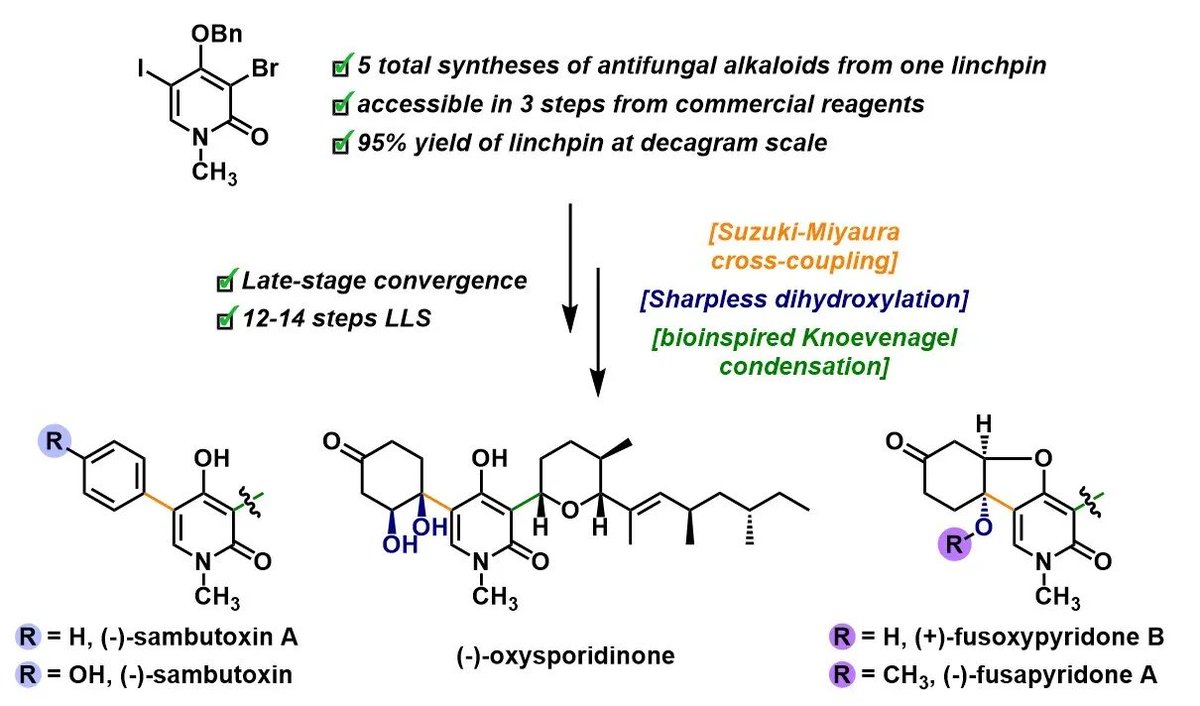
I’m excited to announce my first co-author publication as a chemist! We (@WuestLab) disclose the total synthesis of 5 pyridone alkaloids, diverging from a single linchpin intermediate and relying on a late-stage convergent strategy. (1/2)
https://t.co/cPwKiMK5I8
Generative AI can harm learning.
A field experiment published in PNAS randomized nearly 1,000 high-school students across three conditions during mathematics classes:
- textbooks and notes only - a standard GPT-4 interface - a safeguarded GPT-4 tutor that provided hints rather than answers
Students first completed practice problems with these resources. Immediately afterwards, they took a closed-book, closed-laptop exam on similar problems.
The results are impressive.
During practice, AI made students look much better:
Standard GPT-4: +48% Safeguarded GPT tutor: +127%
But when the AI was removed, students who had used standard GPT-4 performed 17% worse than students who had never used AI.
The apparent improvement concealed a deterioration in learning.
The safeguarded tutor eliminated this negative effect, but produced no improvement in independent exam performance.
The reason? Simple:
Students using standard GPT-4 frequently asked for the answer and just copied the solution.
They surrendered cognition.
I’m very concerned, especially for children who will have more and more unregulated access to generative AI and may never develop critical thinking skills.
*
Paper in the first reply
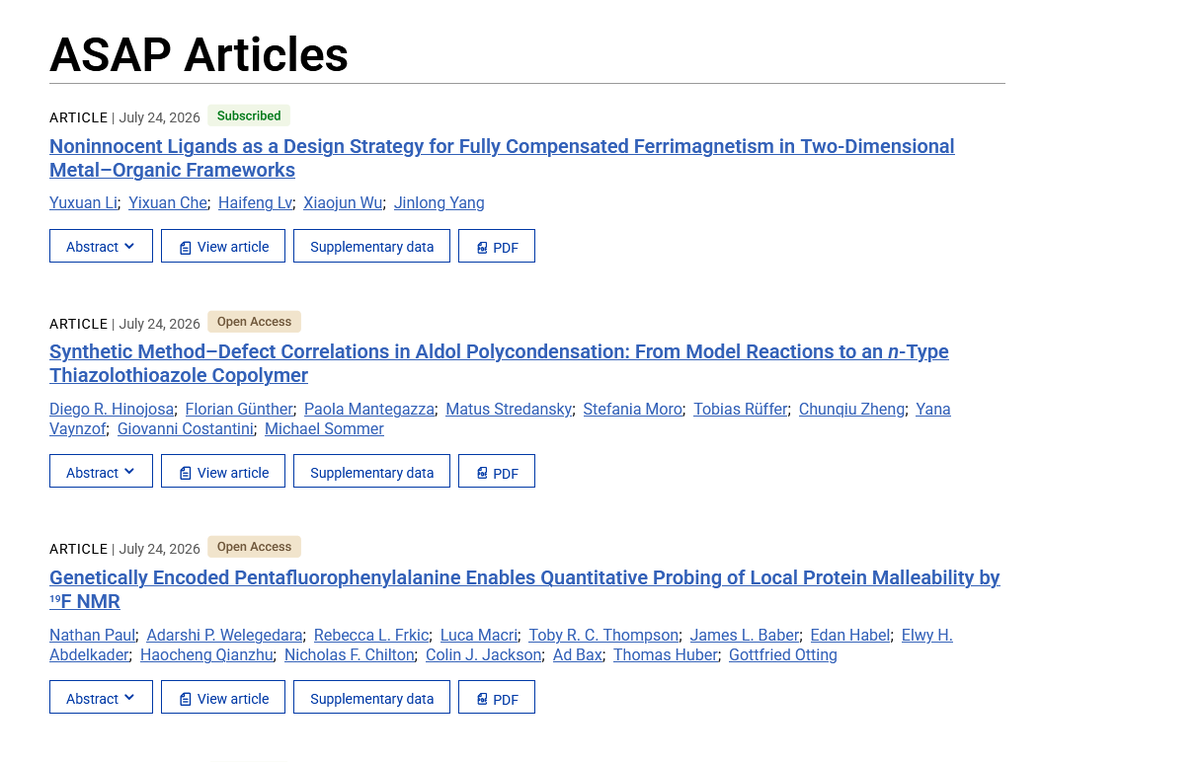
@ndchiappini@radscientist_@J_A_C_S I hate the new format / aesthetics of the article previews! Why is the ‘access this through your institution’ all the way at the bottom of the page???