On Nov. 14–15, 2026, join Emmy Award winner Sir Shefik Macauley for the largest annual global hackathon with NASA. Registration will open for Yonkers, New York.
Roman is nearly ready for its journey to L2, where it will map billions of galaxies, study exoplanets, and probe dark energy!
Preparations here at Kennedy continue, and it is now on its specialized work platform, known as the Pantheon.
Targeting launch no earlier than Aug. 30 on a @SpaceX Falcon Heavy from LC-39A! https://t.co/wnNSTpzXYB
Bring it in for a galaxy hug!
@nasahubble captured an image of galaxy cluster CL0016+1609. The X-ray observations revealed that it is actually two clusters merging along our line of sight!
https://t.co/EXFyHFgRfc
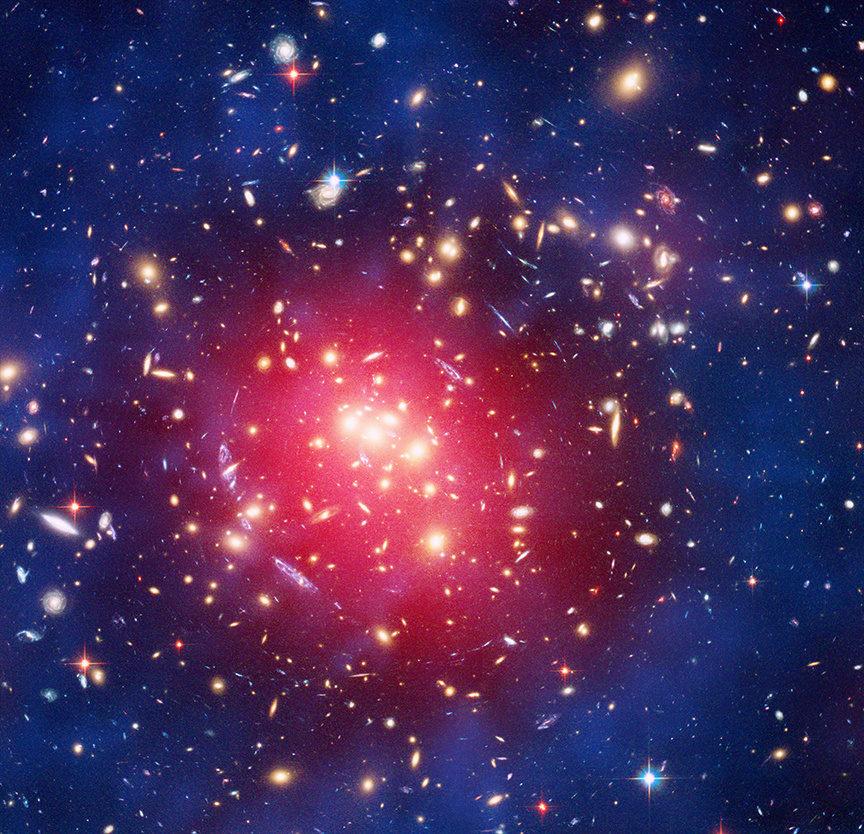
It takes telescope teamwork to get the full picture of ZwCl 0024+1652!
This galaxy cluster is located about 9.5 million light-years away. The glowing blue and red light here shows data from Hubble and @ChandraXRay ⬇️
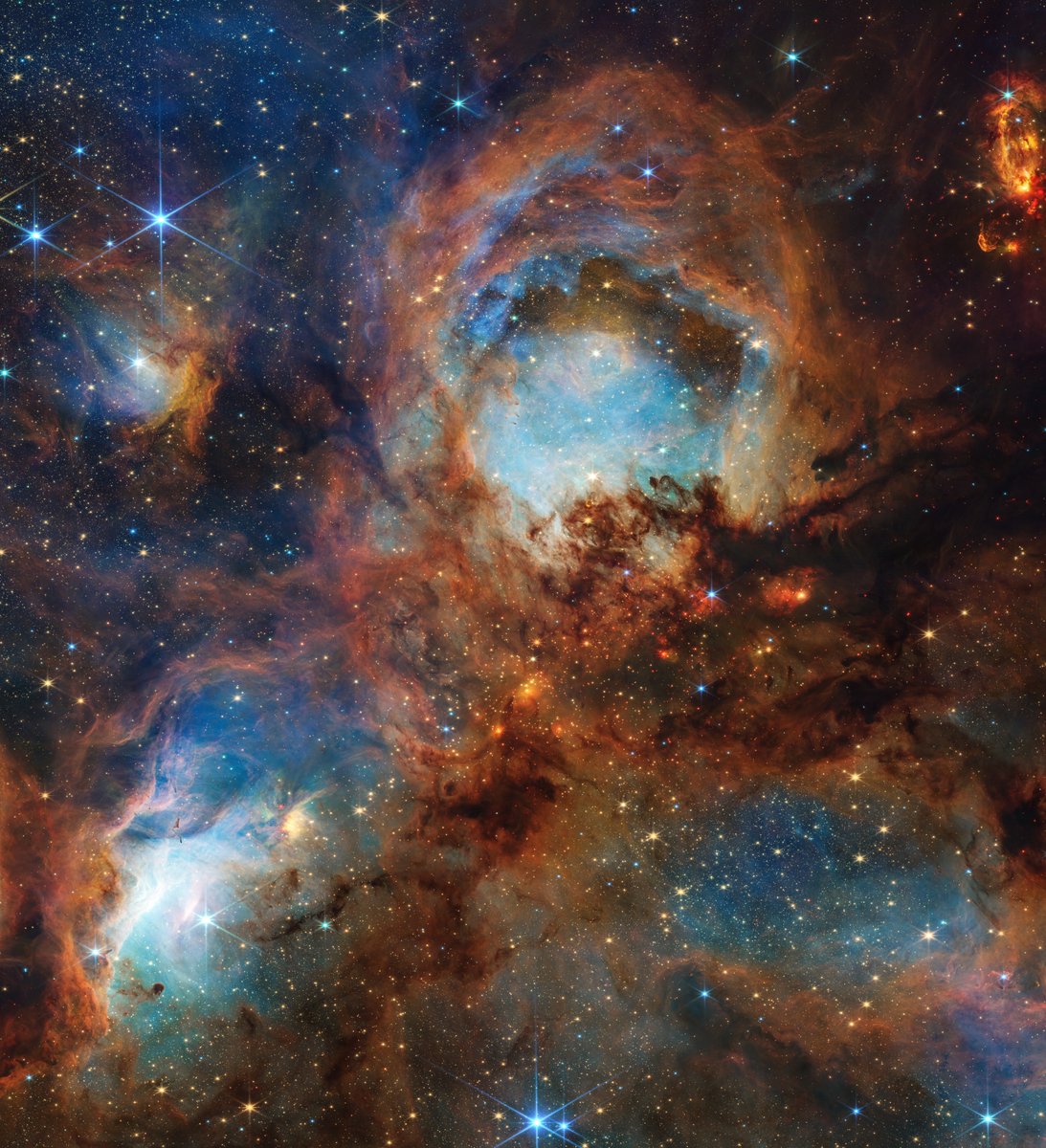
Dive beneath the surface of the Cat’s Paw Nebula (NGC 6334), a huge star-forming region close to home.
In Webb’s view, new-born giants tear into surrounding clouds, and their brilliant radiation paints the nebula in blue.
(Credit: NASA, ESA, CSA, STScI)
When two stars collide, the result can be beautiful. This nebula, called the Blue Ring Nebula, is thought to show the aftermath of a stellar collision that occurred thousands of years ago. #MondayMotivation
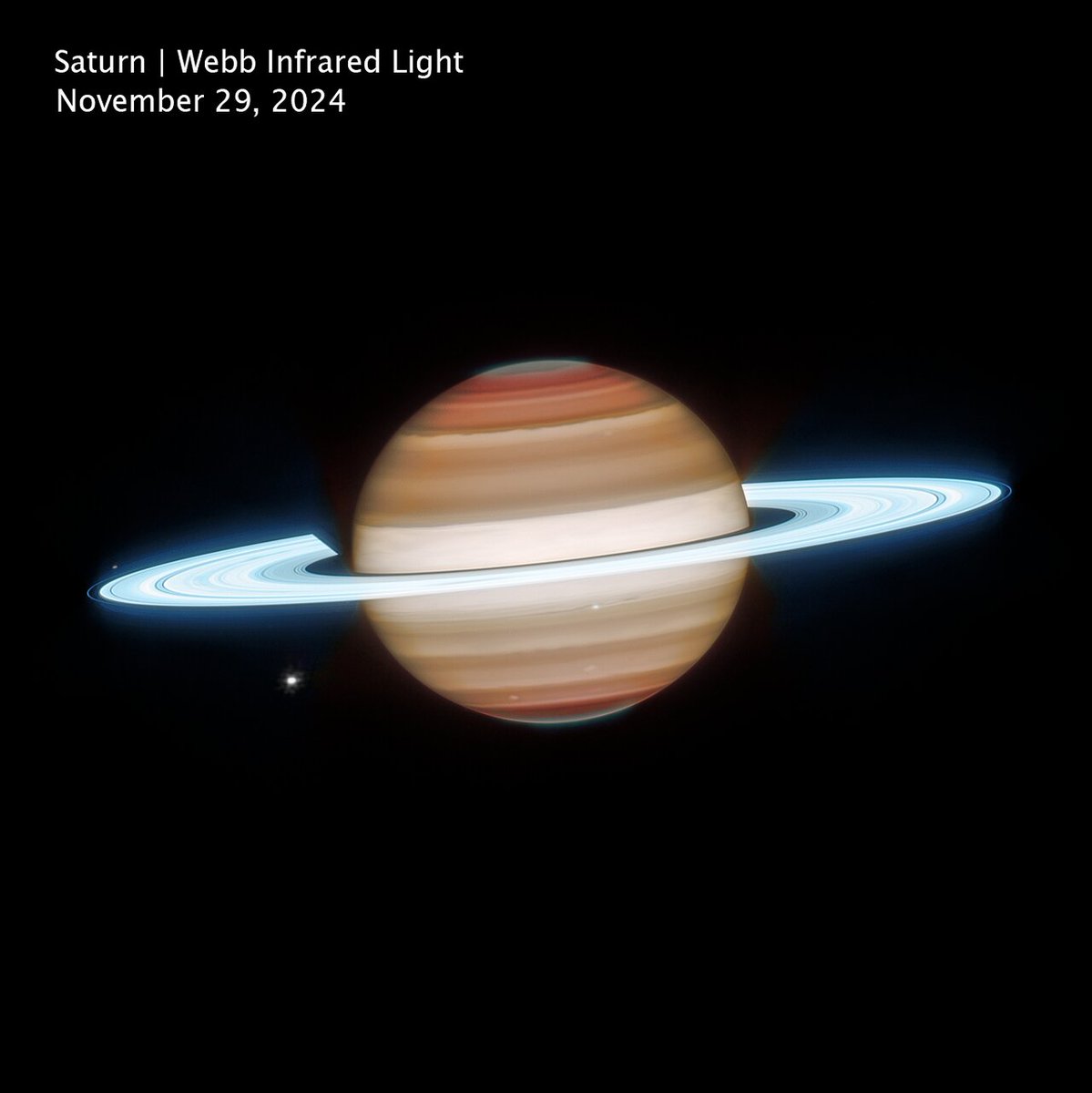
🛎️ It's quiz time! Webb has been helping astronomers understand Saturn’s atmosphere with its infrared view of the ringed planet 🪐👀 revealing all kinds of fascinating features!
Baby, you're a firework 🎆
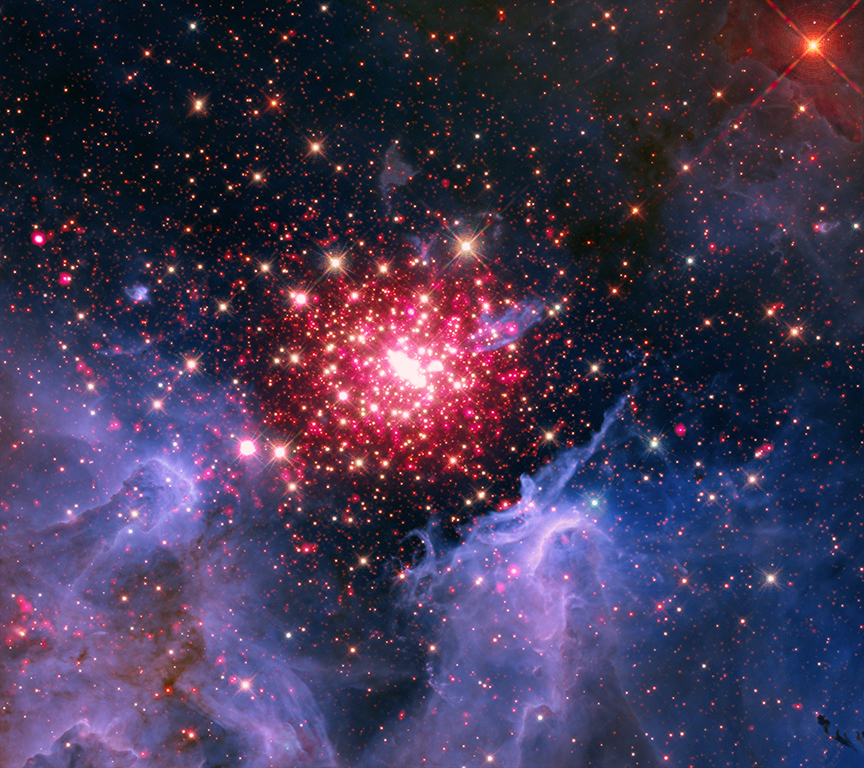
This image combines data from Hubble and @ChandraXRay to show a spectacular star cluster surrounded by a vast region of dust and gas.
Called NGC 3603, this star factory shines 20,000 light-years away: https://t.co/rc68XhMvD2
The 135th and final shuttle launch! 🚀
July 8 marks the 15th anniversary of the historic final launch of NASA's 30-year Space Shuttle Program. With its crew of 4 astronauts, Atlantis lifted off at 11:29 am to begin STS-135, its last journey to the International Space Station.
Celebrating America's Horsepower! Today, we honor the incredible drive behind our nation. The Space Force powers our Space Launch Deltas—Delta 30 & Delta 45—launching vital satellites & showcasing our engineering excellence.
Join us as we gear up for #Freedom250! 🌌
What happens when one of the stars in a binary goes supernova?
This image combines visible (yellow), ultraviolet (purple) and infrared light (cyan, red and orange) to show two supernova remnants and their surrounding environment, about 6,000 light-years away.
The younger one is the well-known Jellyfish Nebula in the center (mostly in yellow). If we could see it by eye, it would appear larger than the full moon in the sky.
The filament shown in purple is part of an older, overlapping supernova remnant, G189.6+3.3. A new study used data from NASA's Fermi Gamma-ray Space Telescope to piece together their story.
Astronomers believe that there were two stars in a binary system, then the first one exploded as a supernova, kicking away its companion, which also exploded as a supernova tens of thousands of years later, creating the superimposed supernova remnants we see today.
The bright star on the right is actually a triple star system named Propus.
Image Credit: NASA Goddard Space Flight Center and M. Michailidis et al. 2026; optical: DSS; infrared: NASA/WISE/JPL-Caltech/UCLA; ultraviolet: NASA/Swift
Text: Cecilia Chirenti (NASA GSFC, UMCP, CRESST II)
Like bright fireworks, blue and white stars shine against a red background of glowing gas in this new Hubble image of LH 95. 🎆
LH 95 is a star-forming region within the Large Magellanic Cloud, a dwarf galaxy that orbits our Milky Way: https://t.co/u8iroV16Qx
Bursting in (galactic) air 🌟
Glittering here like a cosmic firework is N44, a unique and complex nebula captured by @NASAHubble. One of its most distinctive features is a dark, starry gap—a “superbubble”—spanning about 250 light-years wide.
Though not actually bursting, the hole is something of a mystery to astronomers: Stellar winds may have driven the gas away or expanding supernovae could’ve created the cosmic cavern.
Learn more: https://t.co/INzUnRIYm4
It's International Asteroid Day!
Wondering how to channel your inner asteroid? Try being wobbly, nut-like, and with a complex life! That's what @NASA's Lucy spacecraft learned about the asteroid Donaldjohanson last year during its flyby.
🛎️ It's quiz time! The enormous exoplanet 29 Cygni b has provided new insights into the dividing line between planets and stars 🪐⭐ scientists think it may depend on how they formed.
That’s one big chandelier…
The @NASAHubble team captured this sparkling photo of the Chandelier Cluster, a globular star cluster within our Milky Way galaxy. A globular cluster is a dense collection of thousands to millions of stars bound by gravity. https://t.co/hkks3ngsPU
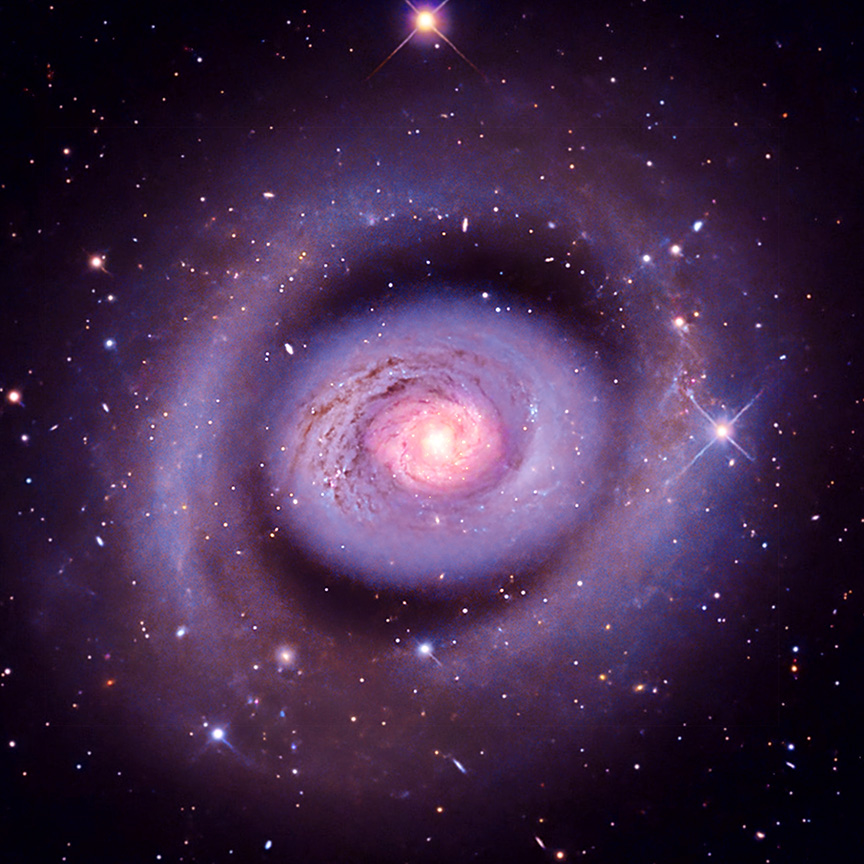
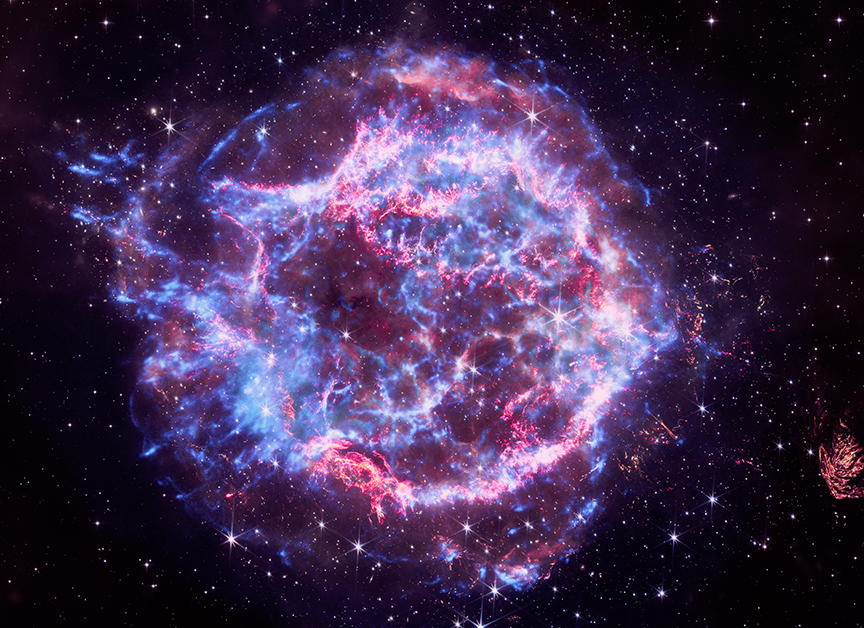
In celebration of America's 250th birthday, @chandraxray has unveiled four cosmic images in red, white, and blue. 🇺🇸
The image set features Cassiopeia A, the nebula NGC 3603, the galaxy NGC 4736, and a distant galaxy cluster known as ZwCl 0024+1652.
🔗 https://t.co/HqRwuJl1pY