@alexcornell@Muse Whose idea was it to generate animations when the user creates a new avatar? That was the first thing I encountered that showed me this app has next-level design polish.
I hired a cast of incredible actors and we shot a six-episode season of my original sci-fi show in two weeks.
Almost every scene was shot in the house I booked for the cast to stay. We didn't use green screens. We didn't need company moves.
Hiring real, talented actors who know their craft made all the difference. AI can help fill out the world. But it's the characters who make the story.
It's my first production, and I know there are so many things I can do better. But I'm really happy with how it is turning out so far.
Shout out to the amazing Luke LeBrun (as Carter) and Bryan Payne (as the detective) in this scene!
The better AI video gets, the more I want to work with actors.
When I announced that I was producing my own sci-fi series from an original script I wrote, I expected to use AI video tools the way you've all seen by now:
1. Use text to generate character sheets with different angles
2. Use those character sheets to generate images of the characters in different situations
3. Use those images to generate video clips that I would stitch together to create scenes
I used this workflow, and enjoyed it, but something was missing. My show is a drama—it lives or dies by how much you believe the characters feel something—and the AI character performances weren't landing.
Then something incredible happened.
In February 2026, Kling 3.0 Omni launched. In April, Seedance 2.0 became available in the U.S. Then in May, Google launched Gemini Omni Flash. These models are better than anything that has come before at generating realistic video from text and image prompts. But they can also be prompted with video. And unlike earlier video-to-video AI models, these new models can preserve actors' likeness and performance in detail, while changing everything around them.
This opens up a revolutionary new workflow:
1. Shoot video with real actors. No need to travel or build elaborate sets—a single location with a few props is enough. Your phone is perfectly fine as a camera.
2. Process clips with AI to replace the environment and add effects while preserving the performance.
My early experiments were promising enough that I decided to go all-in. I booked an Airbnb for two weeks and put out a casting call. The applications started pouring in.
The quality of the talent that applied was astounding. I was blown away by the audition tapes they sent in. It was surreal to see an actor perform lines I had written, completely transformed by their life experience and craft.
I cast remarkable actors to play the lead and supporting roles. Our deal memos guarantee that their performances and likenesses can only be used for this project. We're shoot in two weeks.
Some people say that AI video will put actors out of work. I think just the opposite is true. We're about to see an explosion of opportunities for talented actors to make their mark.
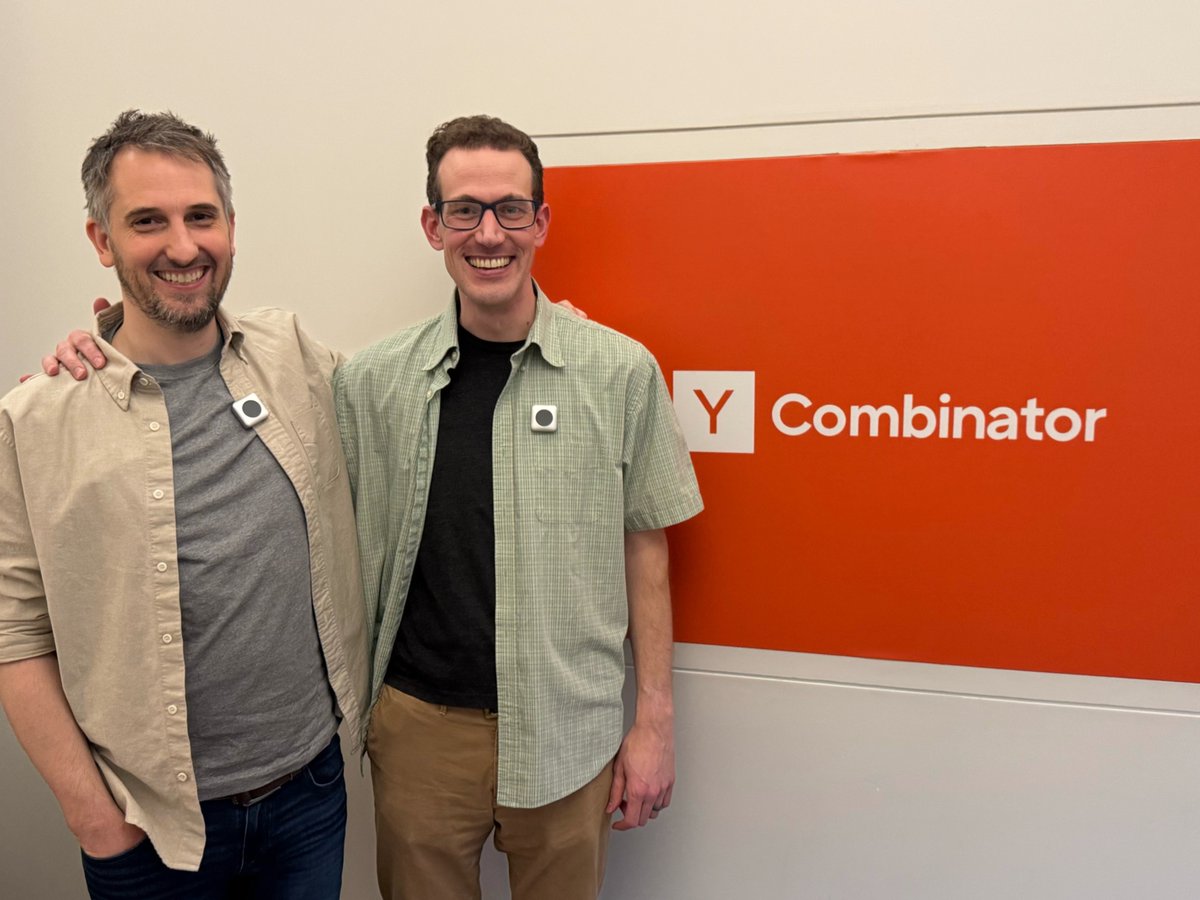
I’ve started a new company with my best friend, @chrisnolet. We spent years at Apple working on Vision Pro together. Chris always impressed me with his extreme focus on technical excellence (always in service of a magical user experience!) and his relentless pursuit of big ideas.
After I moved to Colorado and left Apple, we stayed close. We caught up every couple of weeks, often talking until 2 AM. Chris came to visit my family for Christmas and had snowball fights with my kids. I had the honor of being best man at his wedding.
Now, we’re building @buttoncomputer together. Button is the wearable AI that can talk. You press it to get instant answers to your questions through a built-in speaker.
Because we respect your privacy and agency, Button never listens to your private conversations—it can only hear you when you press the button.
We're part of the current @ycombinator batch, and we’ll be presenting at Demo Day on March 24.
We already have high-quality aluminum prototypes, and we're launching pre-orders next Tuesday, March 3 (link below).
We can't wait to share more next week!
@Neuralithic@ycombinator@Scobleizer@buttoncomputer I agree. This is a serious concern and one reason we're focusing on simple Q&A to start. As a father, it's something I think about a lot. Do you have any thoughts about how this technology can be designed to be empowering instead of diminishing agency?
@ohryansbelt@ycombinator@buttoncomputer@MKBHD That's definitely a serious concern that we share. It's one of the reasons we're focusing on simple Q&A to start. Do you have any thoughts about how a product like this can be designed to uplift and empower?
@jayteezyio@ycombinator@Scobleizer@buttoncomputer It's a fair pushback! We've both had our iPhone action buttons hooked up to voice AI for months now. It's a big part of what convinced us that having even faster and more convenient access was useful!
@ALCFX1@ycombinator@buttoncomputer Actually this is a big part of our design philosophy—Button explicitly doesn't try to be proactive. It's responsive. It's there to answer your questions when you need it, but leaves the thinking and agency to humans.
@ItsHB17 @ycombinator@buttoncomputer Thank you for your thoughtful comment! I agree that smart phones are amazing devices. We aren't aiming to replace your phone, just make it quicker and easier to access voice AI.
@yehiaabdelm@ycombinator@buttoncomputer Thanks for the thoughtful comment! We're definitely considering supporting earbuds, but we also think there are many situations where you aren't wearing them and having instant access to voice AI will be really useful!
@ohryansbelt@ycombinator@buttoncomputer@MKBHD But seriously, I'd say what sets us apart from those devices is that we're not trying to replace your phone, just making voice AI faster to use.