NASA International Space Station flight controller. Deputy manager of flight operations for HLS Program. ERAU-BSAE. UHCL-MSSE. All opinions my own. (he/him)
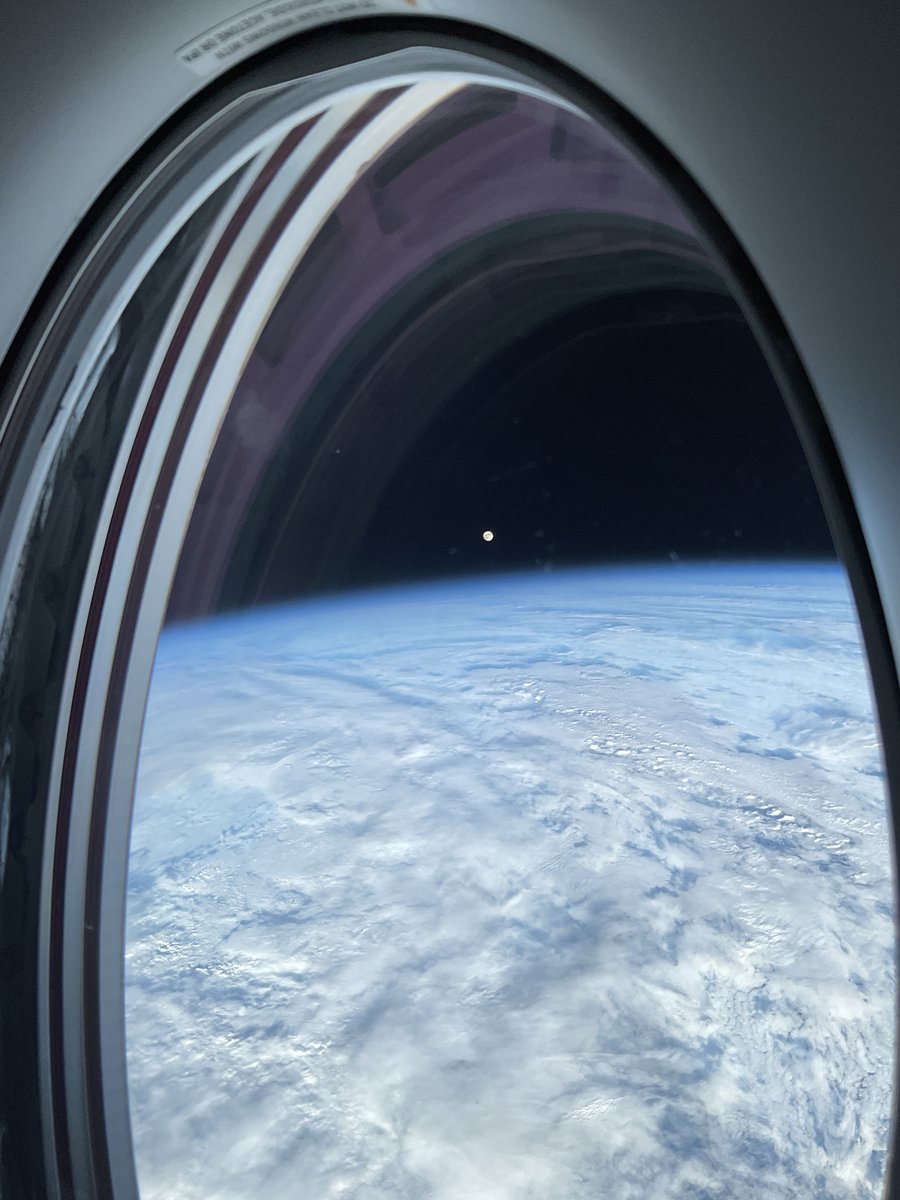
This photo illustrates three phenomena that surprised me when I arrived on board the @Space_Station. I didn’t realize before seeing it with my own eyes that the Earth’s atmosphere would be so visible in the night sky, seemingly even more obvious at nighttime than daytime, nor that it would be so colorful! These orange and green colors on the horizon are airglow, a faint emission of light caused by chemical reactions and interactions between UV radiation and gases in our atmosphere (unlike aurora, which is caused by solar wind particles interacting with Earth’s magnetic field, airglow is present everywhere, all of the time). I was also surprised to see how blue and well lit the Earth can be at night, when a bright Moon illuminates it (Moonglow!). This photo was taken on May 30, the day prior to the full Moon. I hope that this provides a bit more @NASAArtemis Moon Joy for all of us!
On Tuesday, June 9, we’ll announce the four astronauts who will orbit Earth aboard the @NASAArtemis III mission!
Watch our live event at 11 a.m. EDT (1500 UTC) to find out who will test the docking capabilities necessary for crewed Moon landings: https://t.co/TyU7StKGxH
Behold the “space cake.” Making cakes on the @Space_Station with our rather limited “baking” supplies is an art, requiring creativity and resourcefulness. I loved making cakes for my crewmates on my first mission and considered myself adept, but our cosmonaut colleagues on Expedition 74 have certainly taken it to the next level. Here’s an example of their recent work, in celebration of 100 days in space for @astro_hathaway and @Soph_astro, and my 300th day. It tasted even better than it looked!
Jour 101, orbite 1567 – Déjà 100 jours dans l’espace… Vivre et travailler à bord de la Station spatiale internationale est presque devenu la routine. Et pourtant, chaque matin, en ouvrant les volets de la Cupola, la vue me rappelle à quel point cette aventure est extraordinaire.
Ces dernières semaines m’ont challengée, émerveillée et inspirée à travers le travail, les vues à couper le souffle et les équipes formidables au sol qui rendent tout cela possible.
Hâte de découvrir ce que les 100 prochains jours me réservent !
📸 @esa / @NASA – S. Adenot
#εpsilon • @esaspaceflight • @ESA_fr • @Space_Station • @NASA_Johnson • @CNES
The view from inside Integrity as recovery forces pop open the hatch…watching the helicopter pass over their shoulders and hearing all the joy, it was as good as it gets.
One question I get a lot is can you see the stars differently from up in space. When we orbit on the night side of the planet, we get a view of the stars very much like being in a very dark place on Earth. And because of our orbital inclination, we get to see the stars of both the northern and southern hemisphere. I captured this shot of our galactic plane from one of the windows of the Crew Dragon Freedom that is docked to the zenith docking port.
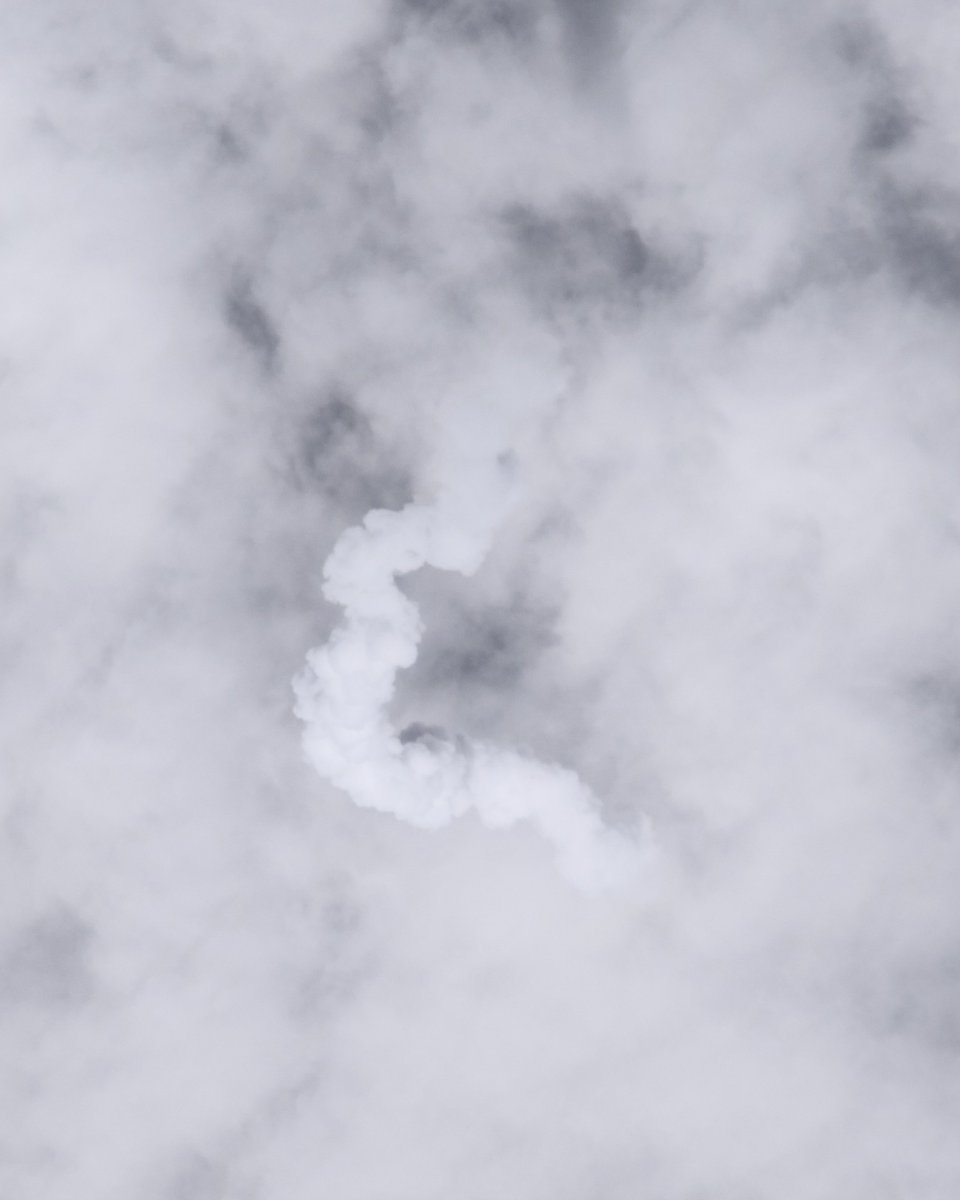
On April 27th at about 10:40 PM GMT, I was in the @Space_Station Cupola and saw something really neat. I was scanning the sky to try to catch a glimpse of the approaching Progress MS-34 vehicle bringing new supplies. Just as we were passing over West Africa, I saw a bright object directly below us, streaking through the upper atmosphere. I saw its tail grow and then split apart into a shower of smaller pieces. I think it must have been some piece of orbital debris or a satellite breaking up as it entered the atmosphere. It was quite a light show!
Did you know that the Milky Way is even milkier when viewed from the Southern Hemisphere? This is because from the southern side of our planet, we get a clearer, more direct view of the dense galactic core.
Here’s a look at the Milky Way starting over the Southern Ocean (between Australia and Antarctica) from our @SpaceX Dragon window, complete with some aurora (Southern Lights) and fleeting Starlink satellites. Enjoy the view!
Now targeting Wednesday, April 29 for Falcon Heavy’s launch of the @viasat-3 F3 mission from Florida. The 85-minute window opens at 10:13 a.m. ET → https://t.co/Z9nzcfYdVU
Less than two hours until today’s Falcon Heavy launch of the @viasat-3 F3 mission from Florida. Teams are keeping an eye on weather ahead of liftoff at 10:21 a.m. ET → https://t.co/Z9nzcfYdVU
This September, we're sending a new crew to the @Space_Station!
Meet the four members of our SpaceX Crew-13 mission, who will help us learn how to live in space while making life better back on Earth: https://t.co/AI3NZDTleL
Our oasis in space 🌎💙
Seeing Earth from this unique perspective reminds us how special our home planet is. Download the 2026 Earth Day poster for a daily dose of inspiration: https://t.co/4Ptd53EoFY
The closest I got to donning my ski socks this season! I haven’t been able to get any turns in from my temporary home at the @Space_Station, but at least I have stunning views of the mountains where I fell in love with backcountry skiing. Though I started x-country skiing at the age of 2 (thanks to my Swedish mother!) and took up alpine skiing in college, it was only while doing my post-doc at @UBC that I realized I could combine the two for the most ultimate of snow passions. How was your ski season?
Photo 1: Ski socks over Vancouver and the Coast Mountains, taken in the @Space_Station Cupola
Photo 2: View of Vancouver and the Coast Mountains with Earth limb from the Cupola
Photo 3: Zoom of @WhistlerBlckcmb (seventh heaven baby!) at center of image
@dansgoldin And now for millenials like me: the worm reminds me of the NASA that inspired me in childhood and the meatball inspires me to push on to what's next. It's a wonderful pairing.