IMO if you haven't tried out any of the personal AI assistants (muse, instinct, etc.) you shouldn't be allowed to talk on panels about what the "front door to healthcare" is
I'm very surprised at how many people that work in healthcare have not tried these tools out - my 2 cents is that the future of discovery, booking things, buying things, etc. is going to route through some form of personal AI agent.
The shape of how healthcare companies get discovered by these tools is going to be incredibly important + all human systems are basically going to get flooded by requests from personal agents and healthcare cos will need agents on their own side to filter/execute commands
If you haven't even TRIED them out yet when the barrier to doing so is essentially 0, how can you possibly opine on what the front door is?
It's even fine if you try it and come to the conclusion that this is NOT how consumer will interact with healthcare, but you have to try it!
We've raised $20M in funding to accelerate our mission of becoming the definitive, trusted name in peptides.
@BrockEWTurner from @AxiosPro had the exclusive: https://t.co/pDVJc66Anf
The number of relationships we probably miss because we’re waiting for a "legitimate reason" to reach out is such a loss.
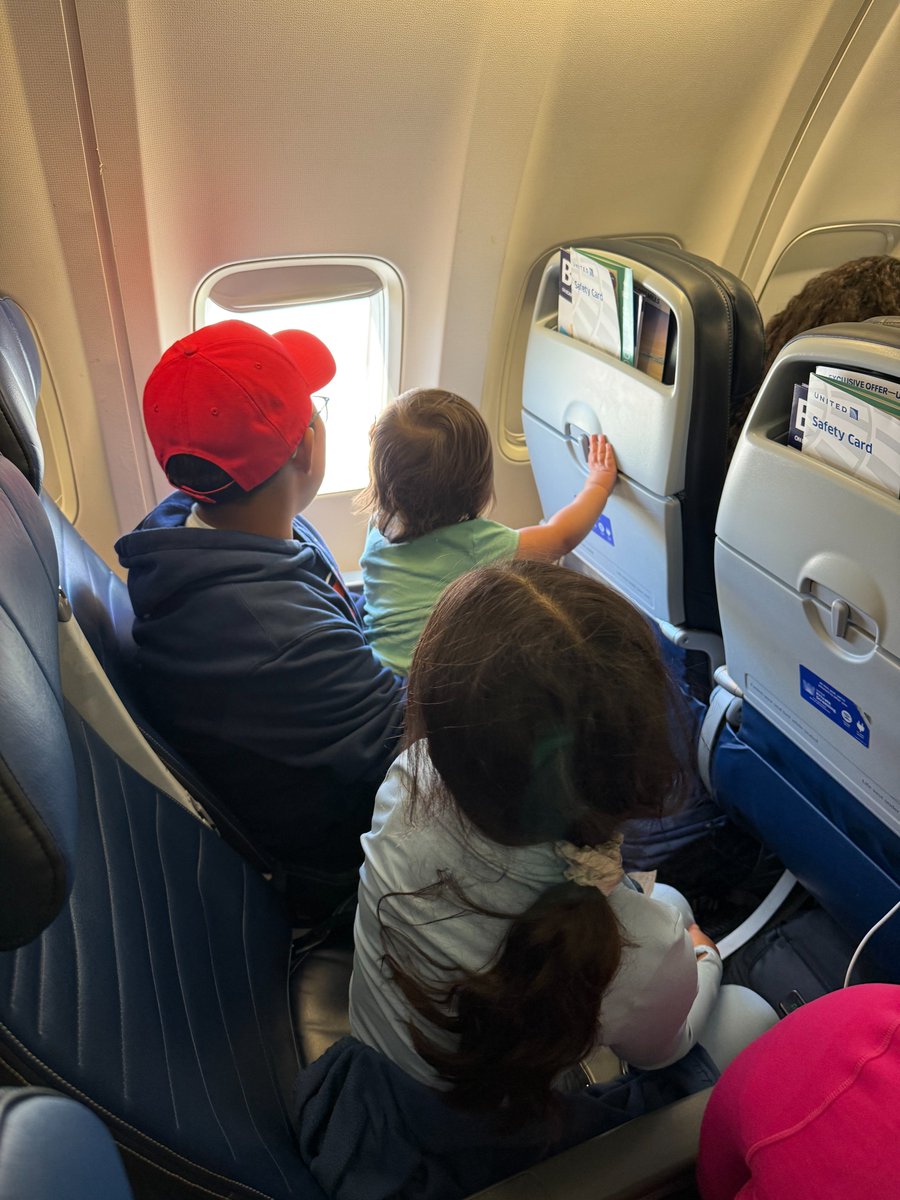
The other day we were on a cross-country flight back to New York and our daughter Summer wanted out of her seat to walk up and down the aisle as many times as we’d let her.
She’s at the perfect age (16 months) where she’s developed her walking skills, gets bored easily, and loves meeting new people.
So we let her out of her seat and she started tottling around the plane saying hi to everyone she could while I watched from a few feet behind, ready to scoop her if someone was bothered. She would stop by nearly every seat and do the queen’s wave to the occupant. Sometimes she would offer them a sticker, or a quick giggle before running away.
In one seat, she saw a dog, pointed to it, and said, “Go-go!” (the word for “dog” in Chinese, roughly). The owner let her touch his dog’s nose, and she squealed in delight.
Summer moves around the world fearlessly. She assumes that if you do want to talk to her, you’ll acknowledge her and say something, and if you don’t want to talk to her, you’ll ignore her. Her default is to seek connection, and she doesn’t overthink it. In fact, I’m pretty sure she doesn’t think at all. She just does whatever she wants to do.
We adults move through the world with a different default assumption: that no one wants to be bothered. I for one am constantly overthinking reaching out to people, including friends:
- I need an obvious reason
- I need something to offer
- I need a clear ask
- I bet they don’t have time
- What if they ignore me?
- What if they don’t like me anymore?
Watching Summer made me question my assumptions about the world. We’ve trained ourselves to believe our bids for connection need to be justified by something.
I’ve been thinking about this a lot because we’re considering a move to San Francisco.
There are people there I want to know better. While some are friends I haven’t seen in a while, many are people I’ve followed and admired from afar. I’d genuinely like to meet these people, but I catch myself trying to manufacture the perfect reason before reaching out.
Standing in the aisle, I realized that wanting to know someone better can be reason enough.
I can send the message and let them decide what they want to do with it.
Summer is fearless because she hasn’t learned all of these social calculations. She just does what she wants with no regard for how other people may react. When they decline to interact, she simply and respectfully moves on.
Reach out before I have the perfect agenda. Send the DM. Suggest a coffee just because. Vibe out.
Make the small bid for connection, because connection itself can be enough of a reason.
one way you can instantly tell apart people who have built something from those who don’t is that they understand what a big deal small wins are
when we got our first 1k MRR I was ecstatic. I texted a series b founder friend who had tens of millions in ARR and he was somehow even more hype than me. he called me to congratulate me
a couple months back there was a VC on here clowning a founder for being excited about their “four figure revenue”
I remember thinking ‘this person doesn’t get it’
anything big starts small, and in some ways the tiny wins at the beginning mean more than the big ones later
once you have momentum everything gets easier. customers lead to customers. revenue compounds. people already believe you’re going somewhere
even passing 1m ARR didn’t feel as significant for us as getting that first paying customer
that was the moment it stopped being an idea and became real
savor the small wins and remember the people who celebrated them with you
Anyone working in consumer tech should try posting AI content on a platform other than X.
It is an eye opener in terms of what adoption + sentiment actually look like.
Yes, there are enthusiasts - I believe this % will continue to climb. But, for most mainstream users the word “AI” means your product faces an uphill battle.
I am a MASSIVE believer in consumer AI. This will be the biggest product and economic opportunity of all time. But, I think a few things need to change for the general public to embrace it:
1. We need more free AI. Most people still cannot pay for software - I would guess the average American uses 2-3 AI products, and pays for zero. As compute costs come down, COGS should lower to a level that can support more unpaid usage.
I also want to see more companies try ad-based or transactional business models, where the consumer doesn’t have to pay upfront. Almost everything so far has been subscription based. This is great for power users and people who can pay - many other users would rather be monetized via ads.
2. We need to highlight and build for use cases that appeal to the average person. Most “consumer” AI products to date are actually prosumer products for power users…largely desktop knowledge workers. (don’t get me wrong, I love these!)
But, most people are not actually sitting on ten Zoom meetings and triaging 100 emails per day. We need products that are built not just to solve more everyday problems…but to entertain/delight/hook people. Bring on the network effects and social graphs!
3. Consumer AI needs to be more accessible. The literal version of this is - if your product requires anything that feels like an onboarding, it’s likely NGMI. People who aren’t obsessed with technology will give up at the first roadblock (as they should!)
I also believe AI needs to FEEL more accessible. Most people have encountered AI as something that tricks them, that they’ve been told will steal their job, or at best, as a critical skill to master that they don’t know how to learn. We need more avenues to help people get real value out of AI + see that they can use it.
4. AI needs a new PR manager. Once you hit Gen Z and younger, there is an incredibly strong philosophical opposition to AI that is based on mostly incorrect or exaggerated facts about data centers, water usage, etc.
It has become an “us vs them” situation where both sides are talking past each other versus engaging in discussion…and no one wants to be talked down to! @ChatGPT has made a lot of strides here recently in their marketing - I’m excited to see more.