Buffett ran his first partnership at 26.
Ackman launched Gotham at 26.
At 19, today I get my chance to start.
I have joined Sapphire Capital EAF as Fund Advisor of PEQUITY U&U Global Opportunities, FIL. The strategy I have been writing about on Undervalued and Undercovered for years now has real money behind it.
Today, we’re excited to introduce Miso One, the most emotive voice model in the world.
Miso One is an 8-billion-parameter text-to-speech model for highly expressive speech generation. It emotes like a human and responds faster than a human, with just 110 milliseconds of latency.
We’ve open-sourced the model weights, with API access coming soon.
Hear how Miso One sounds in the thread below.
A diferencia de hace 4 años, Abelardo sí tiene con qué ganar en segunda vuelta. La clave está en Bogotá y la Costa Caribe —donde Rodolfo se hundió y él se mantiene competitivo.
Todo el detalle en este post en mi Substack: https://t.co/J8omRDhjVF
La democracia habló y los ciudadanos tomaron una decisión clara. Felicito a @ABDELAESPRIELLA por su victoria.
Hoy comienza una nueva etapa. Quienes creemos en la libertad, la seguridad y las oportunidades debemos unirnos para derrotar a @IvanCepedaCast en las urnas.
Por esa razón, votaré por Abelardo De la Espriella.
Mi reconocimiento y gratitud a @palomavalenciaL y a @JDoviedoAR por su esfuerzo, altura y compromiso con Colombia.
Desde Cambio Radical celebramos la decisión democrática tomada por los colombianos y, con el objetivo de evitar la reelección del fracasado proyecto político de Gustavo Petro, anunciamos nuestro total respaldo y apoyo a Abelardo de la Espriella para la segunda vuelta presidencial.
OpenAI and Anthropic are effectively telling the market they can't solve every problem with a generic AI coworker.
You don't pour billions into massive forward-deployed joint ventures if you think the next model release is going to take care of it.
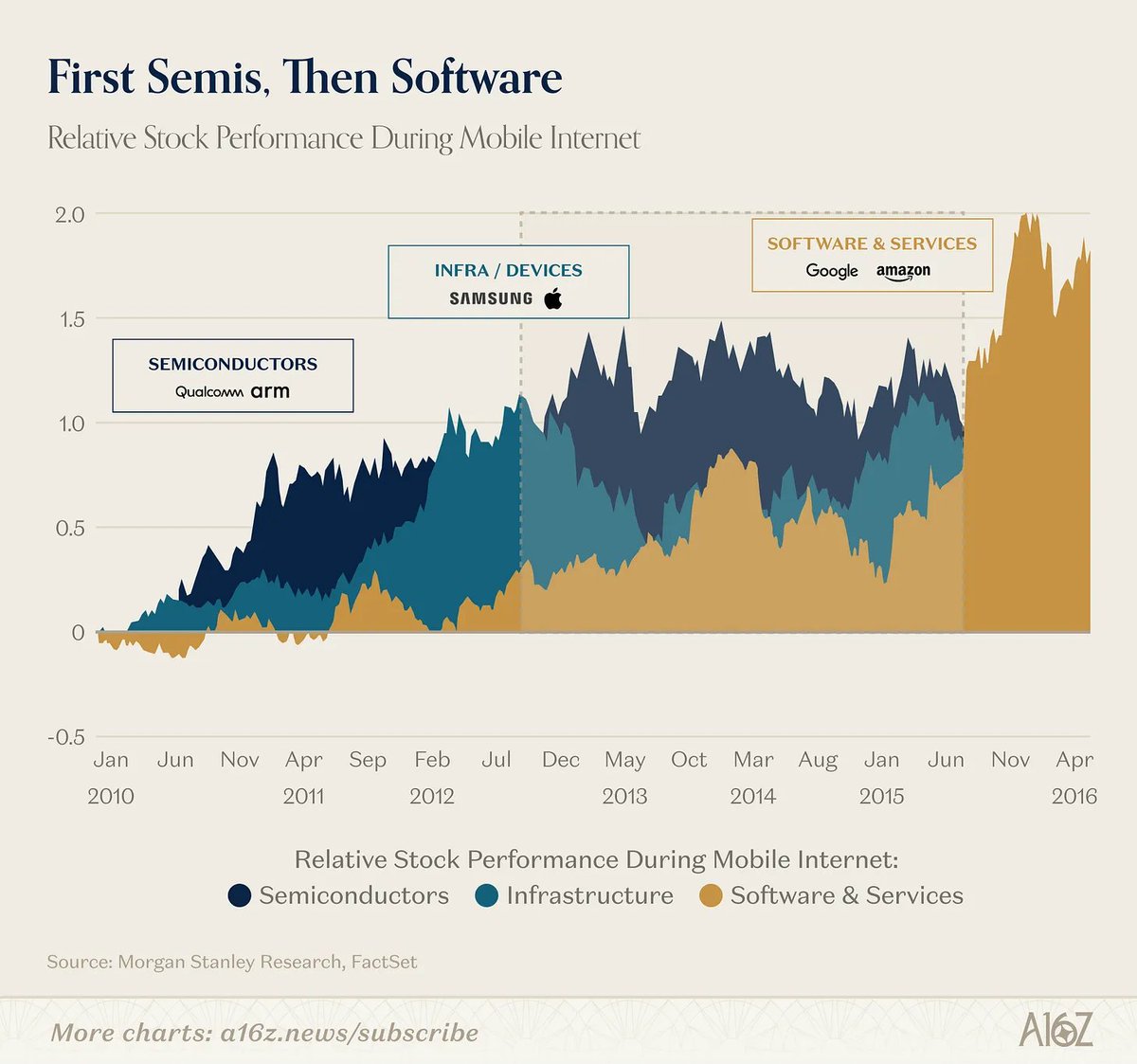
In the cloud supercycle, semis led and software followed (and you didn't need Qualcomm or ARM to tell you the value was migrating up the stack).
In AI, the infra layer itself is telling us the application layer is a separate, massive opportunity they can't fully capture.
a16z's @joeschmidtiv on why the app layer isn't dead: https://t.co/84QN5Mj9T3
Wealthsimple just launched a USD chequing account that works on both sides of the border. One account, two currencies, no conversion racket. Canadian banks had years to build this. They built fees instead. Now Wealthsimple has it. Good luck.
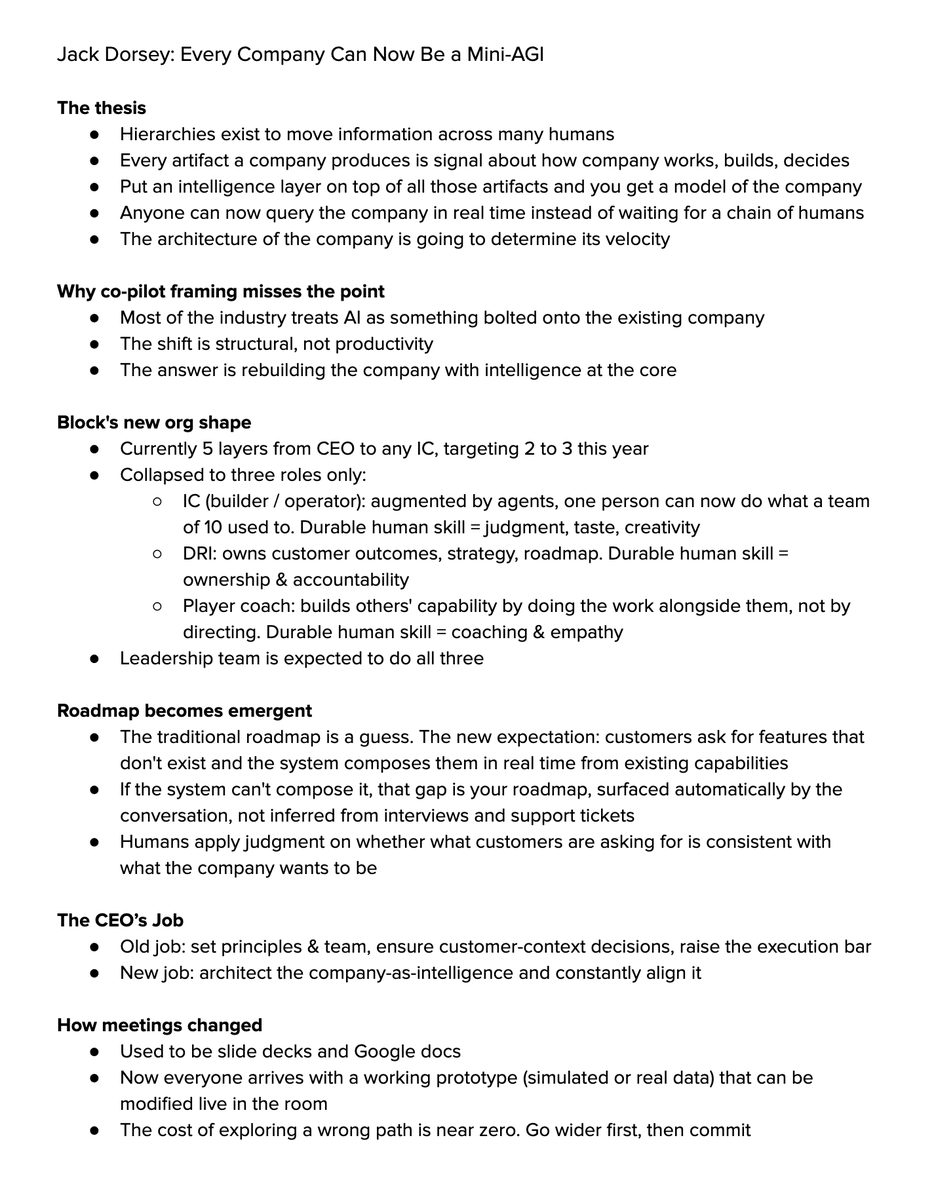
Brendan Hopper, Matt Beane and I have a thesis, one that I've been sharing around lately, and we want CEOs and boards to hear it.
Before I get to the thesis, let's revisit Clayton Christensen's Innovator's Dilemma (ID), the theory he developed at HBS to explain why big companies often get eaten by upstarts during technology shifts.
In short, the ID says incumbents serve their best customers so well, and tune themselves so ruthlessly for doing exactly what they do today, that they can't chase the disruptor tech coming up from below until it's too late.
The classic solution to the Innovator's Dilemma is to create a "bubble" in your company. You carve out an innovation team with a budget and mandate, as unfettered as practical by the parent organization. This is to combat the 2-level trap presented by the dilemma.
The economic trap is Christensen's original point: a disruptive technology can't justify itself under your existing P&L, because it serves smaller or weirder customers at margins your real business would never accept.
The governance trap is what gets piled on top once you're big: SOC2, FedRAMP, etc. mean every new idea has to clear a lot of process before it can move. The bubble is intended to escape both at once, with its own economics and permission slips.
The standard innovation "bubble" solution famously doesn't work very well. You may solve the problem inside your bubble, but you often can't roll it out to the rest of your company for the original reasons. Everyone is focused on doing their current stuff, and nobody has time for a major change.
Our thesis is that there is an entirely different way out of the dilemma this time around. No bubble needed, as long as you follow a simple rule. That rule is, let your people play. Give them back any time they earn from automating their jobs with AI. Then incentivize them to use that time to improve the company's processes.
When you see an engineering team announce a 40% productivity boost from adopting AI — a number that's been showing up in plenty of LinkedIn posts lately — your first reaction as a CEO or manager is probably to say, that's awesome, we can do more work now! Or you might simply expect to see 40% more output from the team.
Either way, you have just asked them to spend their extra time building faster horses (your current business) instead of letting them go figure out what a car would look like for your company. They gained some productivity from AI, which could have been your ticket out of the Dilemma, and you immediately slurped it back for your existing business.
This will get your company killed in the medium to long haul, because your company tomorrow will look almost nothing like it does today. Conway's Law says your software and your org chart mirror each other; as AI rewrites how you build software, the org has to shift to match. But if you're stealing the hours back saved by your employees, then you're not letting your org pivot naturally in the direction it needs to shift.
@RealGeneKim and I saw this in person at @arkanalabs a few weeks back. As long as your people know they'll be recognized and rewarded if they improve the company's processes — public credit for cross-team workflow wins, promotion criteria that actually count process improvements, managers who treat freed-up hours as a feature rather than a budget line — then they will use their "play time" to seek out other teams, and start pivoting you to becoming AI-native. This way it can unfold in whatever bespoke way is most natural to your company, rather than in some ivory-tower research bubble. For every company, the way it unfolds will be a bit different.
I think of this approach, of giving the time back to the humans who automate parts of their jobs with AI, as the new solution to the Innovator's Dilemma. The old bubble solution was to separate a bunch of people from their regular jobs, and try to give them the freedom to solve the problem in isolation.
In contrast, by giving your regular employees their hours back, the innovation bubble is still there, but it's now dispersed across the company, as lots of very tiny bubbles: one bubble per person who has liberated some hours.
If you've ever read Slack by DeMarco and Lister, a great book from back in the 90s, then our thesis should resonate. What companies need is to empower their own employees, the ones who actually work together (even across departments)--the ones who know how the business works--to shift the company in the new directions together. Gradually, but with intentionality.
You still have the frankly awful problem of token budgets. For every employee you upskill into baseline AI literacy (which I'd define loosely as using coding agents throughout the workday), you've added a non-trivial opex spend — for the heaviest agentic users it can run into five figures a year. I won't sugar-coat it; you need to find that money somehow. I don't have a magic solution, but I'm very happy that other models are catching up to Claude, because they're becoming good enough for real work now.
But token budgets alone aren't enough. To live through the Innovator's Dilemma this time around, your employees need a time budget, too. Give it to the ones who earn it using AI, then incentivize them properly, and I think you're headed in roughly the right direction.
Thank you for coming to my TED tweet.
When I joined LaunchDarkly, we were in the middle of implementing an AI SDR.
A couple of months in, we scrapped the project and “uninstalled” the AI SDR because we kept seeing:
Cloudflare's security team spent the last few weeks testing Anthropic's Mythos against fifty of our own repositories. What we learned about offensive AI, why faster patching is the wrong reaction, and what the architecture around vulnerabilities has to look like next. https://t.co/RSrRtIhgaV
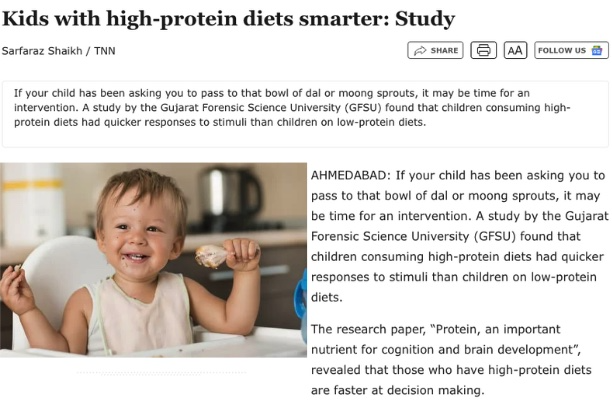
"Kids who eat a high protein diet are smarter than kids on low-protein diets"
Protein is critical for a child's growth & development
Every snack & meal should include a quality protein option
Joined a new AI-native company this week and it’s kind of wild how different it feels already.
The laptop arrived, I logged in, and an agent basically took over from there. It set up my dev env, pulled repos, fixed dependency issues, got permissions approved, pointed me at the backlog, linked the architecture docs, and surfaced the Slack debates I actually needed to read before touching production.
When I needed context on something, I asked the agent and it found the exact thread from months ago explaining why a decision was made, who owned it, the related Linear issues, and the PRs connected to it.
I’ve only been here 3 days but it honestly feels like I’ve worked here for a year because the usual friction and scavenger hunt for context just isn’t there anymore.
We should probably stop calling this “onboarding” and rename it to “mounting” because this feels a lot more like mounting a distributed filesystem called “institutional memory” than slowly getting drip-fed context over 6 months.
Watching Pellegrino at 29 who had a career high of 125 was never in a masters series event before this Italian open, you have to think 🤔 that the double V effect has given so many career challenger players, way more belief that great things can still happen for ya at tour level
Right before you fall asleep, your hands and feet get warmer. That warming is the real trigger that switches your brain into sleep mode. A 1999 Nature paper tested it against melatonin, core body temperature, heart rate, and how sleepy people felt. The hand and foot warming won.
The drawing in the tweet works on this exact trigger. The pose has a name in Japan: Mōkan Undō, or "capillary exercise." Katsuzō Nishi designed it in 1927. He was the chief technical engineer on the Tokyo subway, Japan's first. It became one of six daily exercises in his system, still done in Japan today.
You lie on your back, point your arms and legs straight up, and shake them for thirty seconds. While the limbs are up, gravity drains the blood from them. When you lower them, the blood floods back into your hands and feet, warming them in seconds. Your brain reads that warming as a green light to sleep.
The shaking activates a separate reflex, the kind most mammals use after a scare. Dogs and rabbits shake themselves off after a fright for the same reason. Dr. David Berceli, a trauma therapist, built a whole method around it, with certified instructors now in 40 countries. The shaking flips your nervous system out of "I'm wired" mode and into "I'm safe to sleep" mode.
Nishi got the biology wrong. He believed capillaries, the tiny blood vessels at the ends of your veins, did the pumping. William Harvey, an English doctor, had shown the heart did the work, three centuries earlier, in 1628. The exercise still works, for entirely different reasons than Nishi thought. The drained limbs come back warm. The body reads that as a sleep cue, and the shaking calms the nervous system on top of it.
A drawing on X with millions of views just rediscovered a 100-year-old Japanese sleep exercise. A subway engineer designed it first, decades before sleep scientists figured out why it would work.