Today, we share a breakthrough on the planar unit distance problem, a famous open question first posed by Paul Erdős in 1946.
For nearly 80 years, mathematicians believed the best possible solutions looked roughly like square grids.
An OpenAI model has now disproved that belief, discovering an entirely new family of constructions that performs better.
This marks the first time AI has autonomously solved a prominent open problem central to a field of mathematics.
miss me on tweeter?
well after being accused of being a bot and the less than stellar service from ads i tried to run, etc, i've been away from here for a while.
found a new place to hang? perhaps, perhaps, perhaps...
https://t.co/MEZdjSwoYs
#ai#community#oldschoolFORUMS
When you’re in that condition, just focusing is a battle.
We hear a lot about AI in diagnostics and drug discovery, but this is far more tangible : a custom facial rehab tool, built and shipped through the fog of an actual diagnosis.
Rooting for your quick recovery Ali!💙
Last week, I hit rock bottom. I was diagnosed with Bell’s Palsy, and my right face got paralysed;
I honestly wondered how I was going to get through it!
I vibe-coded my way out and built an AI face tracking app that guides my facial exercises, measures facial symmetry in real time, and tracks my progress;
Used @OpenAIDevs Codex for core logic (@sama more limits please) and @claudeai for UI stuff;
@ialimustufa A family member has been through this, so I felt this post. The fact that you pushed through it and built something tangible out of it is something else. Hope the recovery keeps moving forward. 💙
‼️🚨 One of the world's largest Certificate Authorities, DigiCert, was compromised by a malicious screensaver file sent through a customer support chat. Their antivirus blocked the malware four times. The agent kept clicking. The fifth try got through.
27 code signing certificates were stolen and used to sign malware.
DigiCert ultimately revoked 60 certificates.
Per DigiCert's incident report, filed in Mozilla's CA compliance tracker as Bug 2033170, here is how it unfolded:
April 2: an attacker contacted a DigiCert helpdesk agent through the company's customer support chat channel, posing as a customer. The lure was a zip file pitched as a screenshot. Inside the zip was a .scr file. On Windows, .scr files are executables, and this one carried a malicious payload.
Opening a file a customer sent through the official support channel is what an agent is supposed to do. Support staff are the one role designed to accept files from strangers.
DigiCert's endpoint security blocked four infection attempts. On the fifth, the support analyst's machine was infected.
DigiCert detected the infection, ran an investigation, and concluded the incident was contained.
Eleven days later, an external researcher tipped DigiCert off about misuse of DigiCert-issued code signing certificates in the wild. That tip led to the discovery of a second compromised machine, belonging to a different support analyst, infected through the same vector. The EDR on that machine had not been functioning correctly, so the original investigation missed it.
The second machine gave the attacker access to DigiCert's internal support portal. That portal lets support staff reach limited views of customer accounts, including initialization codes for ordered but not-yet-issued code signing certificates. Combining a stolen initialization code with an approved order let the attacker pull a real, validly issued code signing certificate. They did this 27 times.
DigiCert's own list of what went wrong:
- File-type filtering on the customer support chat channel did not catch the .scr
- EDR coverage was inconsistent and incomplete, creating a blind spot
- Initialization codes for code signing certificates were not adequately protected
DigiCert says it got lucky. An outside researcher found the malware abuse before DigiCert did. Without that tip, the second machine and the active certificate theft might still be running today.
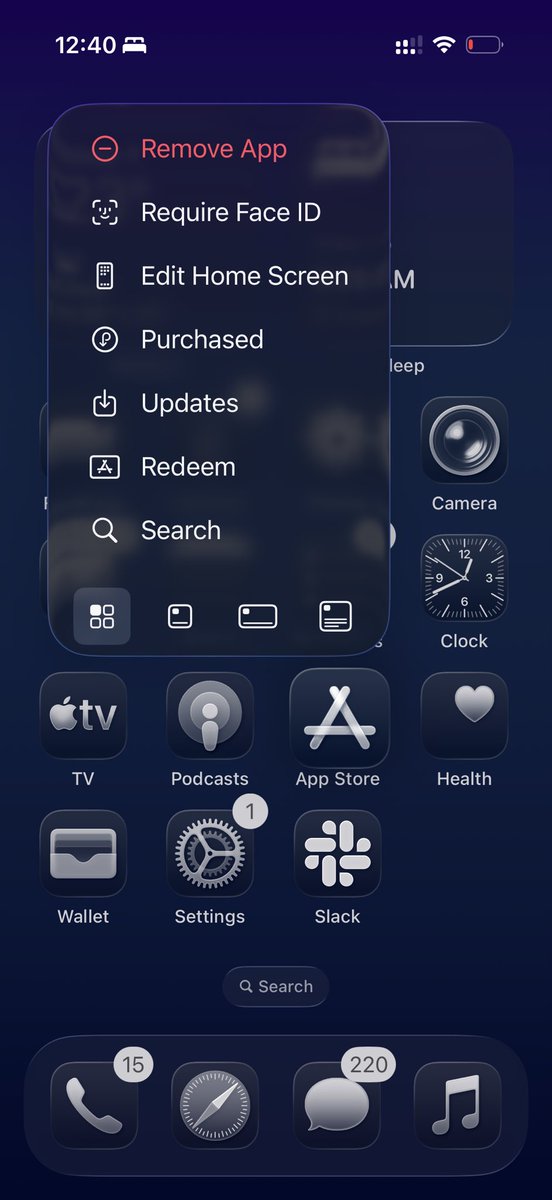
1. Generate UI with gpt-image-2
2. Generate a normal map from the image
3. Dynamic lighting for UI components - raised elements actually cast shadows and get lit naturally.