Economist, with specialisation in Game Theory and Mechanism Design. Indian Statistical Institute. Potsdam Institute for Climate Impact Research (Berlin).
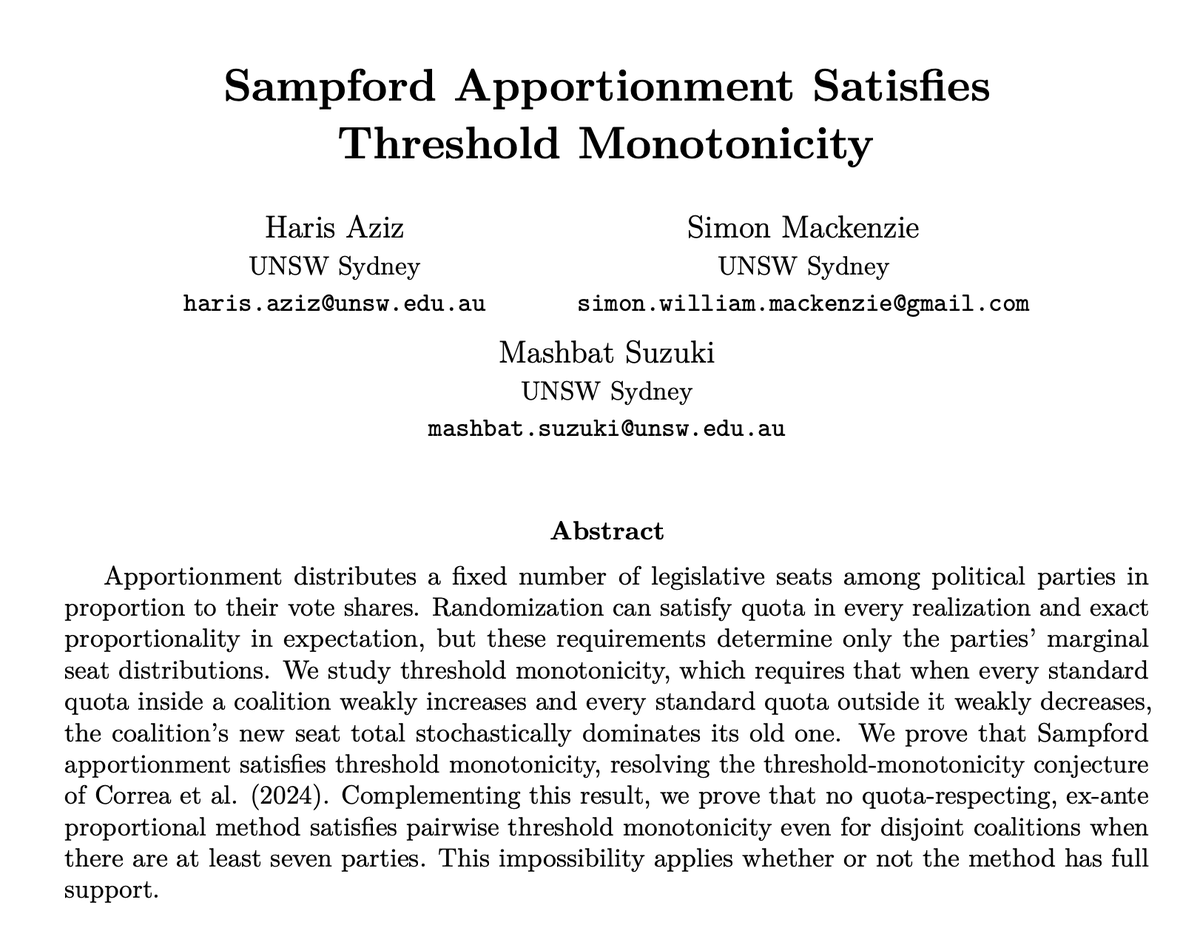
New paper with @SimonWMackenzie & @mashbat6:
Sampford’s apportionment is the 1st known rule to satisfy threshold monotonicity, quota, and exact expected proportionality.
https://t.co/fyuvPhgAbp
#apportionment#socialchoice
@PIK_Climate Thanks for the feature. India’s textile boom is hitting a limit as extreme heat cuts productivity & shifts costs on vulnerable workers. Heat-smart supply chains, strong labour protection, and climate financing could carve a pathway to more resilient & fair growth.
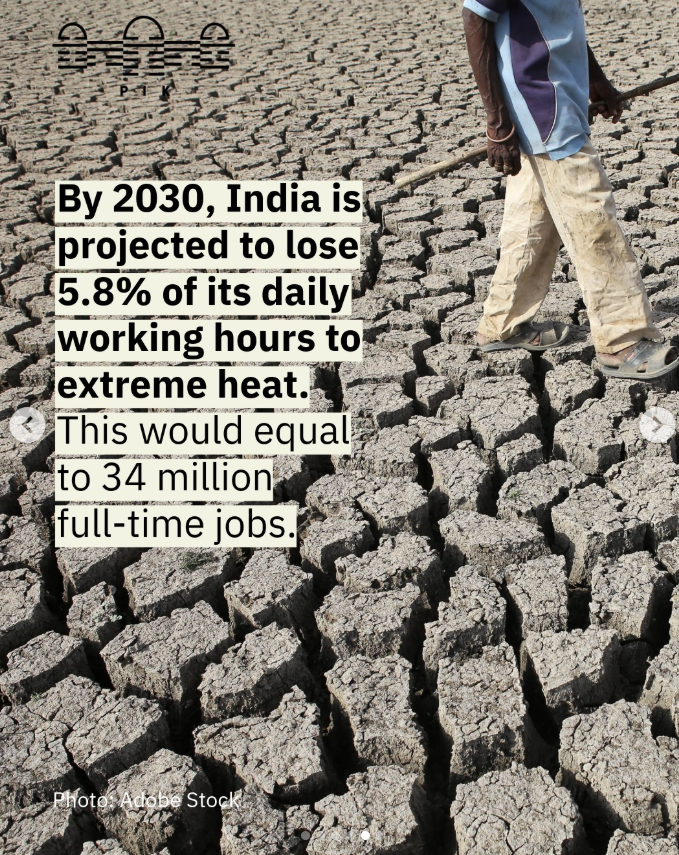
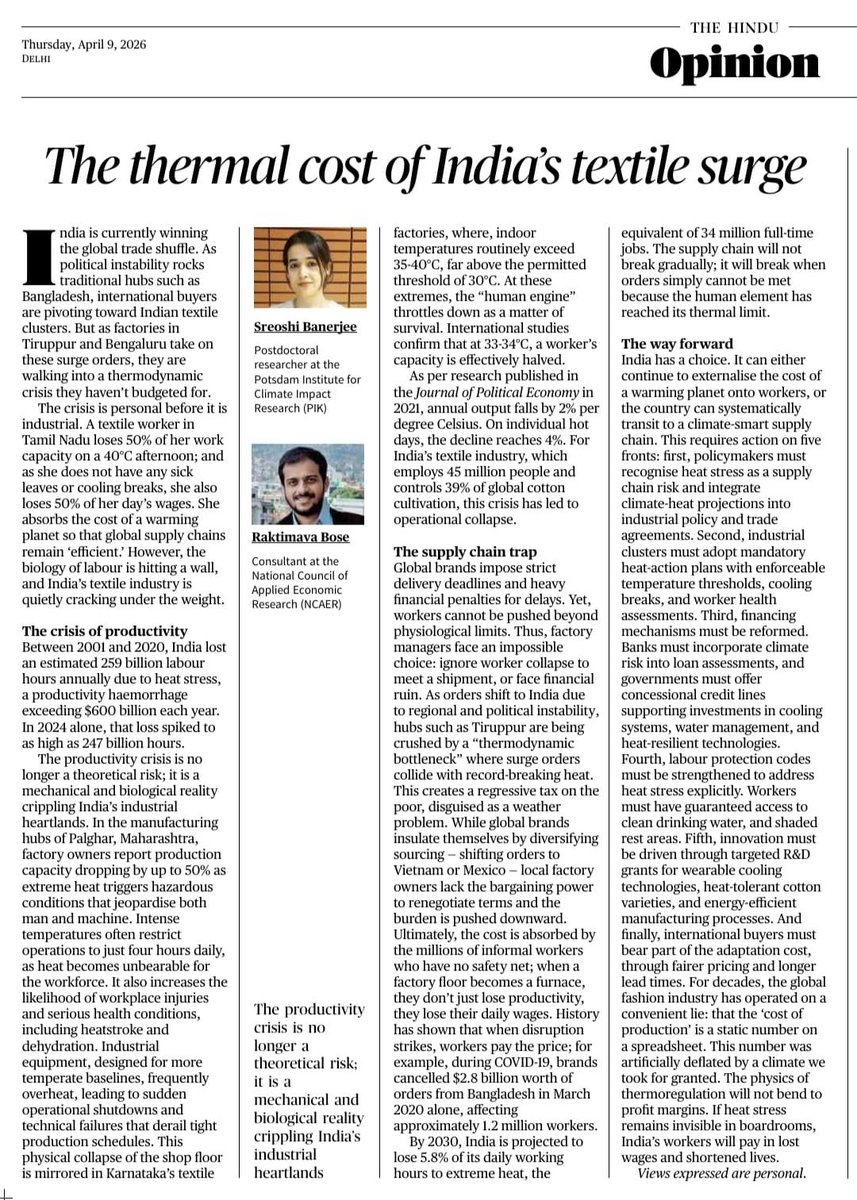
34 million full-time jobs. That is India's projected loss to extreme heat by 2030. Check our (with @RaktimavaBose) new op-ed on the "thermodynamic bottleneck" threatening our textile industry in @the_hindu.
Link 👇
https://t.co/ZleOUoUC6c
Comment | The productivity crisis is no longer a theoretical risk; it is a mechanical and biological reality crippling India’s industrial heartlands
✍️Sreoshi Banerjee and Raktimava Bose
https://t.co/aMa6a1Id0b
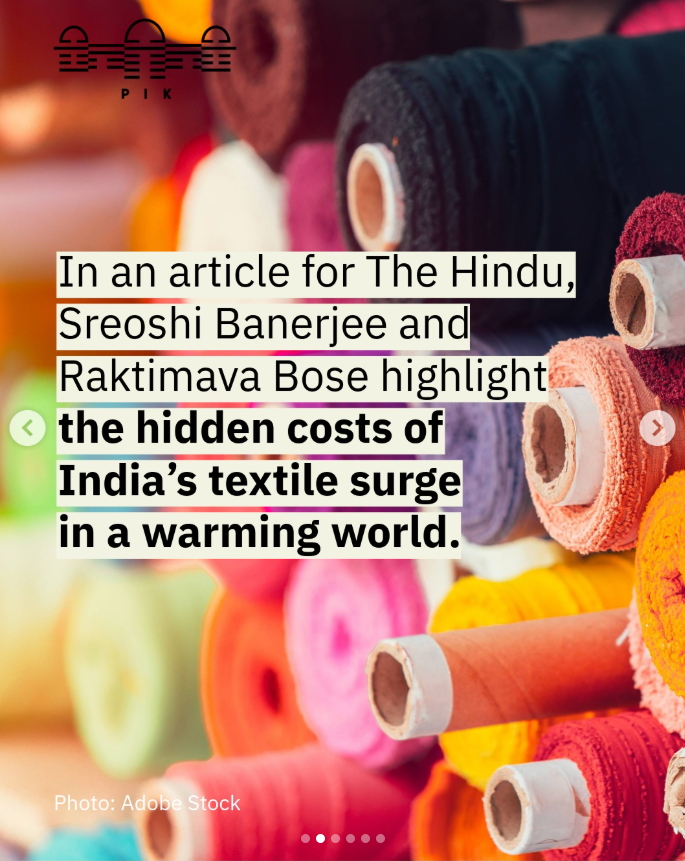
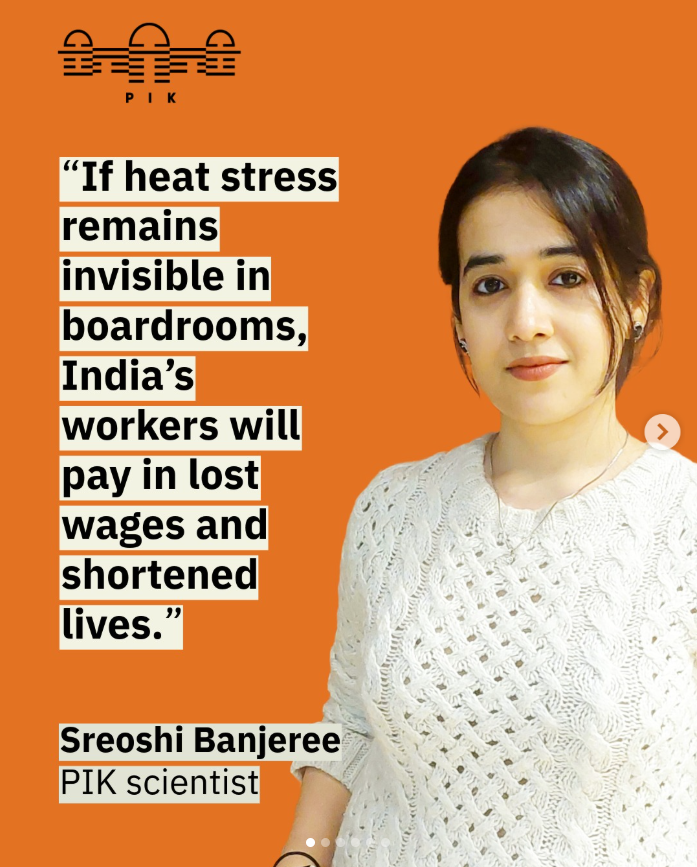
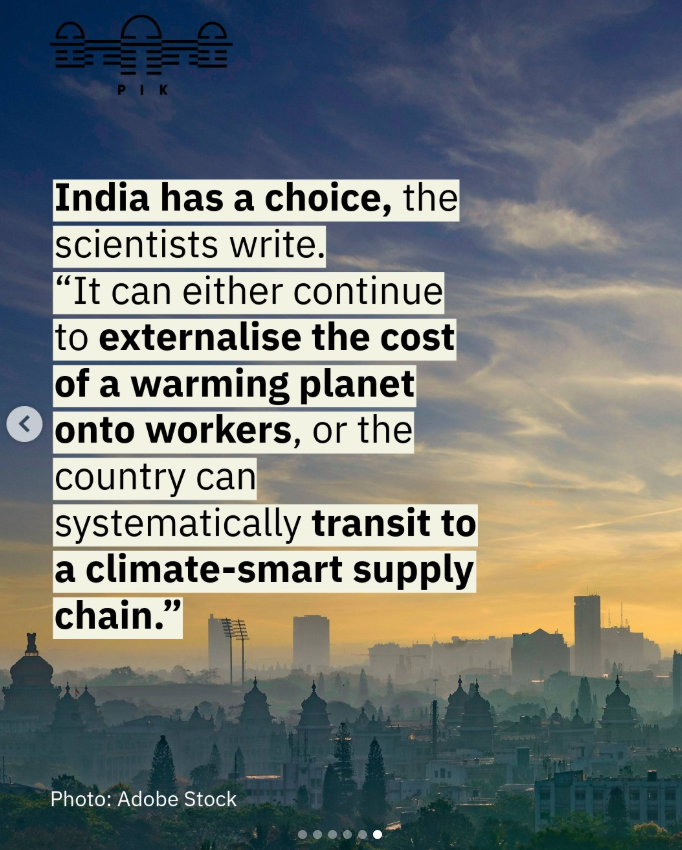
"If heat stress remains invisible in boardrooms, India’s workers will pay in lost wages and shortened lives." - PIK's @SreoshiTitli and @RaktimavaBose highlight the hidden costs of India’s textile surge in a warming world in an article for @the_hindu.
👇
https://t.co/Sz5s1v6kq5
Coming up at #COP30: Latest research on how to stay within safe & just planetary boundaries. With PIK’s Elmar Kriegler as one of the speakers.
📅 20.11.25, 14:45-15:45 BRT
📌 The Planetary Science Pavilion
🗺️ Blue Zone, location number: #PV-B47
More info: https://t.co/n1TAgv2g45
Our opinion piece on the hidden economic and social cost of polluted groundwater is out today in The Hindu!
Groundwater contamination isn’t just an environmental issue, it's a systemic risk to India’s health, productivity and long-term growth.
@RaktimavaBose
Check it out 👇
The Sundarbans are drowning—taking with them childhoods, livelihoods, and hope.
My latest article (with @RaktimavaBose) in Down to Earth explores how rising seas are reshaping lives in Bengal’s fragile delta.
🔗https://t.co/O6Ng72VA4r
#Sundarban#ClimateCrisis#climatechange
Greening deserts poses ecological and hydrological challenges that must be addressed for long-term sustainable water management.
NCAER research staff @RaktimavaBose and his co-author Sreoshi Banerjee advocate for science-based water use, groundwater regulation, climate-resilient development, and biodiversity protection.
🔗https://t.co/BS0dJeuh6q
It was a pleasure visiting the Groupe d'Analyse et de Théorie Economique (GATE) laboratory, Saint Etienne. What an amazing group! :)
I presented my paper on the (non-) coincidence of the serial and Shapley solutions nulti-server waiting line problems.
https://t.co/zJ1S4Ukewh
The computational complexity result of the Shapley value sheds further light on why the scheduling literature should focus on Moulin & Shenker's serial rule to distribute the optimal cost burden fairly across agents.
@harisazizk
Do take a look!
Comments are welcome :)
New paper on "Complexity of the Shapley Value of Scheduling Games" with @SreoshiTitli.
URL: https://t.co/5tJnXSJqQC
Result: computing Shapley value is #P-complete when there are multiple machines.
For 1 machine, it coincides with the Serial rule (Moulin & Shenker).
#InfosysPrize2024 in Mathematical Sciences is awarded to Prof. Neena Gupta of @ISIKolkata for her work on the Zariski Cancellation Problem, a fundamental problem in algebraic geometry first posed in 1949 by Oscar Zariski, one of the founders of modern algebraic geometry. In 2014 she proved the striking result that Asanuma’s 3-dimensional affine variety yields a negative answer to Zariski’s original Cancellation Problem in positive characteristic.