We quit our jobs.
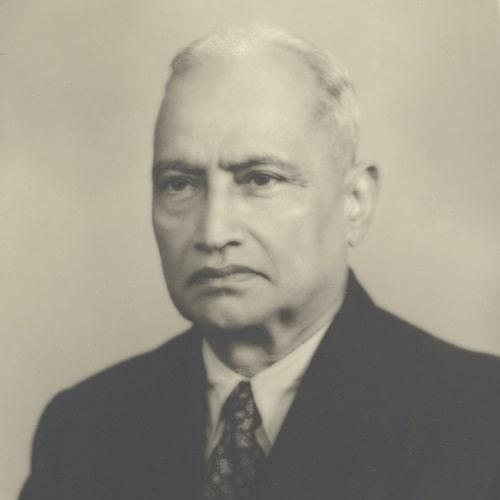
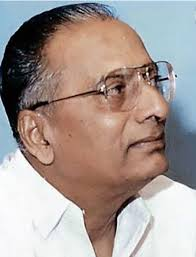
There were six of us — Shiv Nadar, Arjun Malhotra, Yogesh Vaidya, Subhash Arora, D.S. Puri and me.
It was 1976. Startups were not really a thing in India. Venture capital did not exist. Banks were not exactly lining up to lend money to six young men with an idea and no collateral.
And computers? Most people had barely heard of them.
But we believed the microprocessor was going to change the world.
So we took the plunge.
Between the six of us, we managed to put together ₹1.87 lakh. We borrowed, pooled our savings and, in one case, even sold a car.
Our first office was a small barsati in Golf Links, Delhi.
We called ourselves Microcomp. We wanted to build an Indian computer.
There was just one problem.
We didn’t have a manufacturing licence.
That eventually led us to UP Electronics Corporation. They had the licence. We had the technology. And that partnership gave birth to Hindustan Computers Limited — HCL.
But perhaps the most audacious part of the story was what happened next.
We started selling a computer that was still being designed.
We had a brochure and a mock-up of the machine. That was it.
Our sales teams went across India, knocking on doors and convincing businesses to buy into a technology they had never used before.
The first orders came from IIT Kharagpur and IIT Madras.
Then came the harder part — convincing businesses.
In Coimbatore, we were up against DCM DP, a much bigger and more established name. I still remember sitting in the reception area of Premier Mills while the DCM team made its pitch.
We went in second.
And we won.
That one order gave us five more. Then ten.
That was HCL in those early years: not having the biggest balance sheet, the biggest brand or the easiest path — but finding a way.
We were restless.
We looked for gaps. We hired people who had what we called a “cowboy” spirit. We believed that technology had to be made useful and accessible, not intimidating.
And we kept moving.
From building India’s early indigenous computers to taking our business to Singapore when HCL was just four years old. From a small room in Delhi to a global technology company.
When I look back at 50 years, I think about six people sitting together in 1976, wondering if this crazy idea could actually work.
I think about a barsati.
A brochure for a computer that did not yet exist.
And the courage to knock on the next door.
That, to me, is the real HCL story.
50 years later, the technology has changed beyond anything we could have imagined.
But the spirit remains the same:
Dream big. Take the risk. And above all, Just Aspire.
Happy 50th, HCL.
What a journey it has been.
#AjaiChowdhry #JustAspire #HCL #50yearsofHCL #Nostalgic #Founders
In the gurukula of Ācārya Vaiśampāyana, young Yājñavalkya was an intellect of unmatched brilliance. The Yajurveda taught by Vaiśampāyana at the time (later known as the Kṛṣṇa Yajurveda) was a dense, unsorted mixture of ritualistic injunctions intermingled with core mantras (saṃhitā).
It was functional, but inherently fragmented and difficult to scale.....
The breaking point arrived when Vaiśampāyana accidentally incurred a severe sin (brahmahatyā) and summoned his disciples to perform a collective, drawn-out prāyaścitta on his behalf.
Seeing the mediocrity of his fellow students, Yājñavalkya spoke up with a mix of raw confidence and impatience....
Yājñavalkya: "Guru-deva, why burden these students with such heavy penance? They lack the tapas to cleanse this quickly. Step aside and let me alone complete this entire expiation through my own strength."
Vaiśampāyana did not see this as efficiency; he saw it as immense ahaṅkāra (arrogance) that insulted the rest of the saṅgha. Furious, the guru delivered his ultimatum:
Vaiśampāyana: "You disrespect your peers and overestimate yourself! I have no need for a disciple who looks down upon the collective. Return to me everything you have learned from my lineage immediately and leave this āśrama!"
Yājñavalkya purged the entire Kṛṣṇa Yajurvedic corpus he had memorized, vomiting it out in its raw, unprocessed form.
The other students, desperate to salvage the unorganized legacy data left on the ground, transformed spiritually into Tittiri (partridges) and consumed the discarded verses, which is how that branch came to be called the Taittirīya Śākhā.
Yājñavalkya walked away with zero legacy code, zero institutional support, and an empty mind.
Yājñavalkya vowed never again to accept human transmission (manuşya-guru) which came with systemic bloat, legacy baggage, or ideological compromise. He went into the wilderness and directed his tapas straight to the primary energy source of the universe: Sūrya (the Sun God).
Pleased by his unyielding resolve, Sūrya manifested in the form of a radiant stallion (Vājin) and poured directly into Yājñavalkya a completely new, perfectly structured, and crystal-clear Veda: the Śukla Yajurveda, also known as the Vājasaneyi Saṃhitā.
Unlike the Kṛṣṇa version, Yājñavalkya’s Śukla stack had a clean separation between raw code (mantras) and operational documentation (brāhmaṇas). It was pristine, highly optimized, and completely independent of his former master’s network.
For decades after 1947, India’s strategic elite was trapped in the Taittirīya mindset... consuming leftover, 2nd hand western systems, foreign-written economic models, and imported defense hardware. We were terrified to break from legacy frameworks because we thought we could not build our own.
Yājñavalkya bypassing human gurus to tap into Sūrya mirrors modern Bharat’s insistence on unmediated, primary sovereignty. Whether it is pursuing Thorium-based nuclear tech / establishing deep-tech indigenous space operations, Bharat is bypassing traditional global gatekeepers to tap directly into first-principles power.
Yājñavalkya proved that when we refuse to digest somebody else's recycled ideas, we force ourself to innovate at the level of the Sun. Modern India is finally stepping out of the Taittirīya loop and writing its own Śukla Saṃhitā for the 21st century.🙏🙏
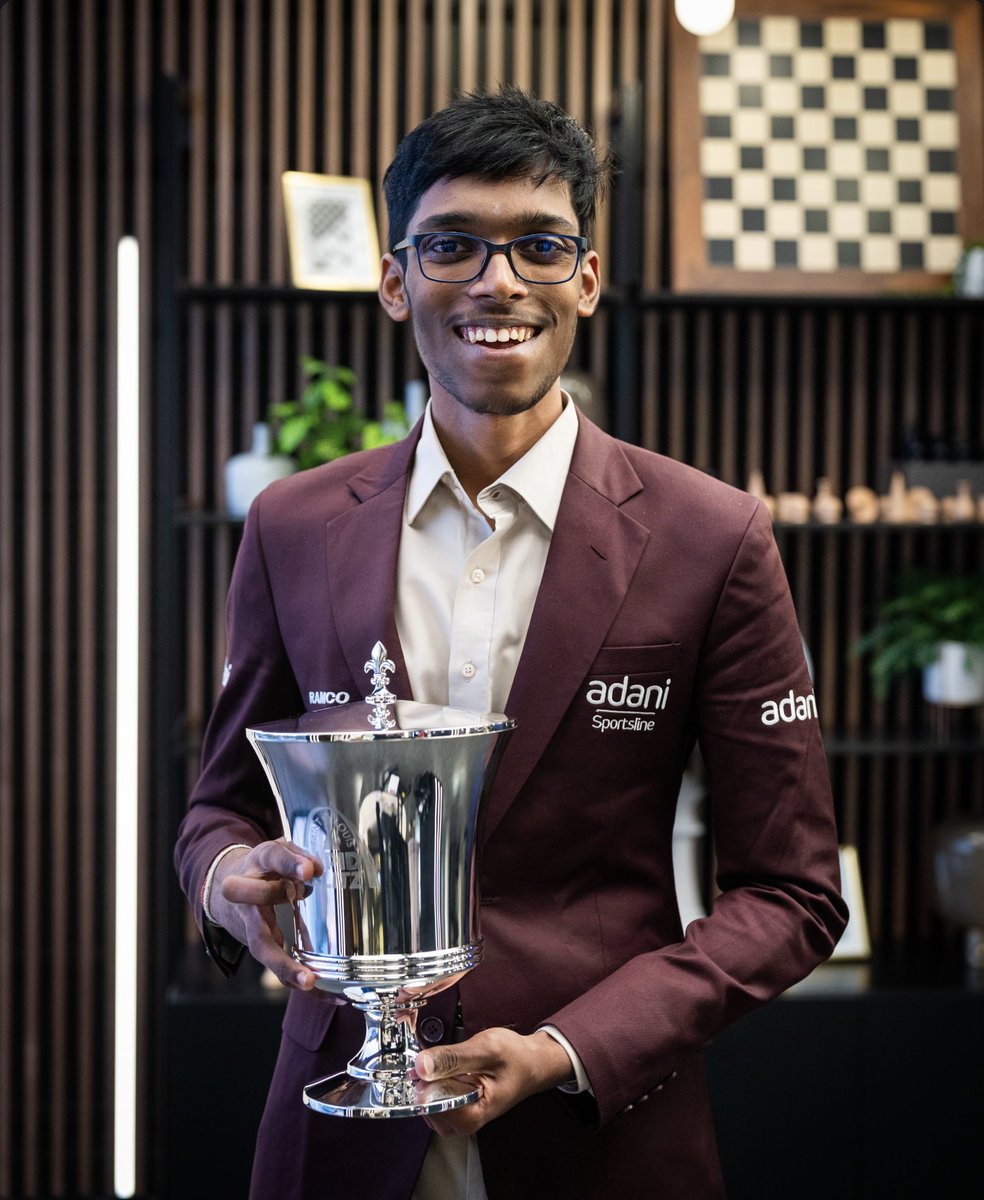
What a performance. Pragg won the prestigious Grand Chess Tour Rapid & Blitz 2026.
🇮🇳 India's Gen-Z GM finished with a massive lead with a round to spare. He stayed in the lead from start to finish. This is another huge moment for Indian chess.
Look at him beam. Beautiful!
In the early 1920s, British India was trapped in a tragic paradox. Virtually all modern pharmaceuticals: quinine, digitalis, emetine, were imported from Europe at exorbitant prices that majority of the Indian population could never afford.
Rural villagers relied entirely on traditional preparations of Ayurveda passed down for millennia. The Western medical elite dismissed indigenous plants as "quackery."
On the flip side, local traditional medicine was plagued by a fatal flaw: zero standardization. A dose of Sarpagandha prepared by 1 local healer might cure a patient, while a dose from another could be completely inert / lethally toxic because no 1 knew the exact active chemical compounds / dosages.
Ram Nath Chopra, an Indian Medical Service officer who had earned his Tripos at Cambridge, realized the stakes: If India was ever to heal its own people, it had to decode its own botany using the brutal rigor of modern chemistry.
In 1921, Chopra founded the Department of Pharmacology at the Calcutta School of Tropical Medicine. Chopra built an interdisciplinary strike team combining organic chemists, botanists & clinical physicians to hunt through the ancient texts of the Charaka Samhita & Susruta Samhita.
Their process was relentless:
- Botanical Collection
- Chemical Fractionation
- Animal & Human Physiological Assays
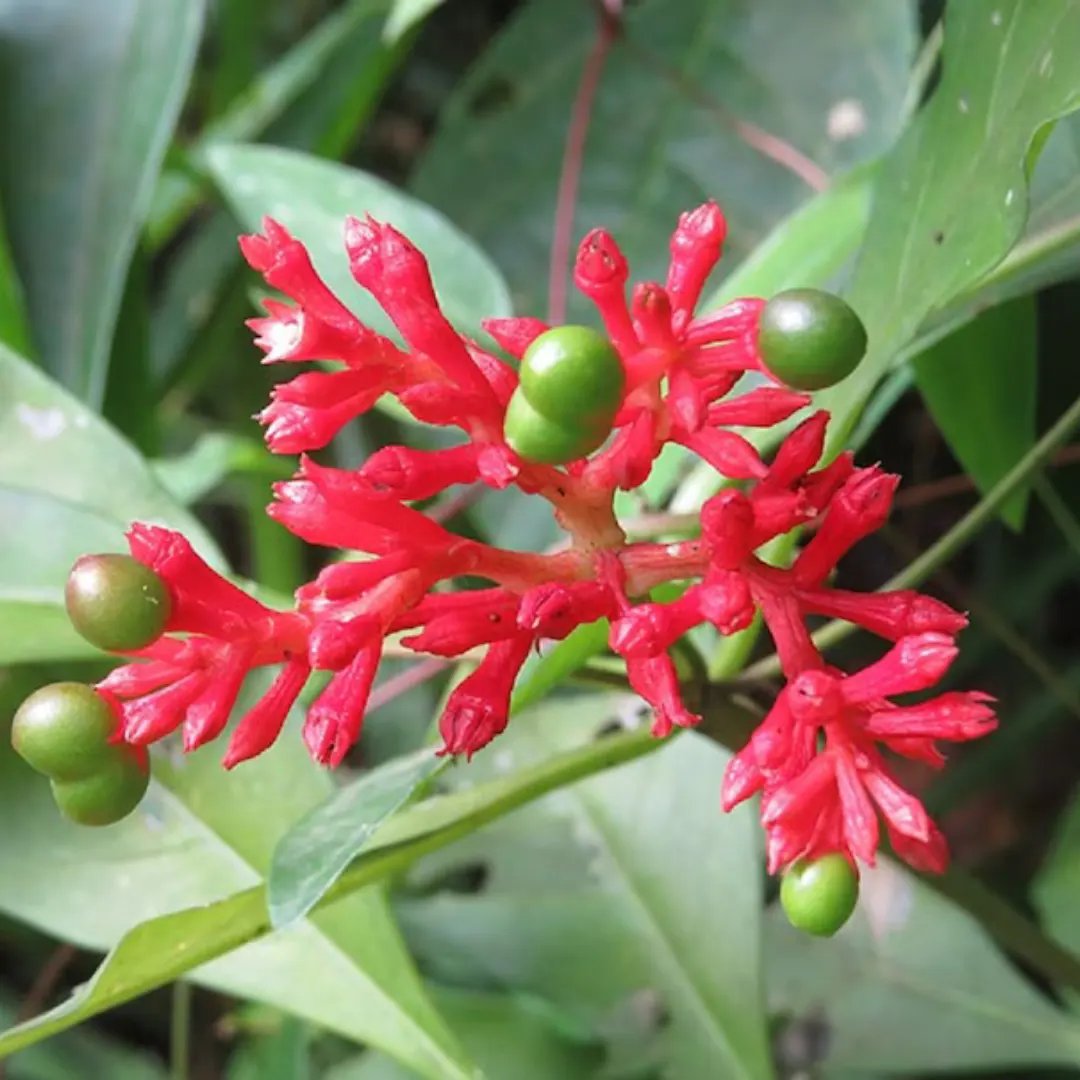
The monumental moment of Chopra’s career came with a coiled root known in villages for centuries as a treatment for snakebite & madness: Rauvolfia serpentina (Sarpagandha).
Traditional healers used it to calm violent, agitated psychiatric patients, but no Western doc touched it.
Chopra isolated the active alkaloids from the root of Rauvolfia & demonstrated in clinical trials that it produced a profound, sustained drop in human blood pressure along with a sedative effect on the central nervous system.
His papers published in the Indian Journal of Medical Research (1933) alerted global pharmacologists to the plant.
Decades later, Swiss chemists at Ciba isolated Reserpine based on Chopra's foundations, creating the world's 1st modern antihypertensive & antipsychotic drug. Chopra's landmark 1933 monograph, Indigenous Drugs of India, transformed traditional plant medicine into modern, standardized pharmacological science.
It proved that ancient Indian medical intuition, when distilled through the fire of modern laboratory science, could save millions of lives worldwide.
In Chapter 3 of the Kenopaniṣad, Brahman won a great victory for the gods. When the battle was over, the Devas, including Agni (Fire), Vāyu (Wind) & Indra (their leader) became filled with pride.
They celebrated & proclaimed:
त ऐक्षन्तास्माकमेवायं विजयोऽस्माकमेवायं महिमेति II
ta aikṣantāsmākam evāyaṃ vijayo'smākam evāyaṃ mahimeti II
This victory is ours alone! This glory is ours alone!
Seeing their dangerous ego, the Supreme Reality (Brahman) appeared nearby as a mysterious, glowing, silent Spirit - a Yakṣa.
The Devas, consumed by their own hype, did not recognize the Yakṣa. They sent Agni (the god of fire, speech & illumination) to check who this intruder was & put him in his place.
Agni strutted up to the Yakṣa. The mysterious Spirit looked at him & asked a simple question:
तदभ्यद्रवत्तमभ्यवदत्कोऽसीत्यग्निर्वा अहमस्मीत्यब्रवीज्जातवेदा वा अहमस्मीति II
tadabhyadravattamabhyavadatko'sītyagnirvā ahamasmītyabravījjātavedā vā ahamasmīti II
He (Agni) rushed towards It. It asked him, “Who are you?”
He replied, “I am Agni, I am Jātavedas.”
The Yakṣa quietly placed a single, dry blade of grass on the ground in front of Agni & said:
एतद् दहेति ।(Etad daheti I)"Burn this."
Agni rushed at the blade of grass with all his roaring heat, unleashing his full power. But no matter how fiercely he blazed, he could not burn even a single fiber of that tiny blade of grass.
Humiliated, his grand illusion shattered, Agni turned back silently to the Devas, unable to utter a word.
Next came Vāyu (the god of wind & speed), bragging that he could blow away the entire creation. The Yakṣa pointed at the same blade of grass: "Move this." Vāyu unleashed a hurricane, but the grass did not budge a millimeter.
Finally, when Indra himself stepped forward, intoxicated by his own status, the mysterious Spirit vanished into thin air, leaving him standing alone in empty space facing his own complete powerlessness.
We see this exact Upanishadic play out after every major public outrage / protest / citizen movement:
The real force behind any movement is the raw, collective moral outrage of 1000s of ordinary citizens who march w/o expecting fame or credit.
The moment the movement forces a concession, the camera-hungry activists, high-profile lawyers & political clout-chasers rush to the microphones. They claim the victory as their personal trophy, building their personal brand on top of collective pain.
But ask those same loud figures to sit down & do the silent, complex work of long-term structural reform & they crumble. They know how to capture a headline, but they cannot move the needle on real, quiet systemic change.
The Kenopaniṣad gives us the ultimate reality check: If our power only exists when the cameras are on, we did not win the victory, we just hijacked the credit.
For centuries, Leprosy (Hansen's Disease) was treated as an incurable curse. Even after antibiotics were introduced, treatment required yrs of heavy drug regimens & nerve damage often persisted.
In the late 1970s, an Indian biochemist developed the world's very 1st immunotherapeutic vaccine for leprosy, using a harmless, non-pathogenic soil bacterium to awaken the human immune system.
While global pharma labs focused exclusively on developing chemical antibiotics to kill Mycobacterium leprae, . Dr. Gursaran Pran (G.P.) Talwar at the National Institute of Immunology (which he founded) in New Delhi realized that the real problem was immune paralysis. In severe lepromatous leprosy, the patient's T-cells completely fail to recognize the pathogen.
Talwar screened dozens of soil mycobacteria & identified a specific, non-pathogenic strain named Mycobacterium w (Mw, now classified as Mycobacterium indicus pranii).
He discovered that when killed Mw bacteria were injected into leprosy patients alongside standard multi-drug therapy (MDT):
- It re-energized the patient's dormant cell-mediated immunity.
- It accelerated bacterial clearance from the skin & nerves by up to 50%.
- It significantly reduced the incidence of debilitating painful immune flare-ups (erythema nodosum leprosum).
The Mw vaccine became the world's 1st scientifically proven immunotherapeutic agent for leprosy, later found to also boost host immunity against drug-resistant tuberculosis & certain types of tumors.
Global health agencies spent decades searching for complex synthetic molecules, an Indian biochemist looked into the dirt under our feet and found a harmless soil microbe that taught the human immune system how to conquer 1 of the oldest afflictions in human history.
In the early 1950s, a silent shadow hung over the stunning valleys of the Himalayas. Across a belt stretching 1000s of KMs from Jammu & Kashmir through Himachal Pradesh & Uttar Pradesh to the North-East, ~50% of the population suffered from swollen necks, massive thyroid goitres & severe physical & mental stunting.
Entire villages were trapped in a cycle of endemic cretinism. Global medical experts insisted the problem was far too massive to fix in a developing nation. Then, a young Oxford-trained pathologist stepped into the Kangra Valley with a crate of crude chemical salt, intent on proving them wrong.
In 1950s, Dr. Vulimiri Ramalingaswami, a brilliant researcher at the ICMR who would later become the Director of AIIMS & DG of ICMR, launched what became known as the Kangra Valley Experiment.
Western nations had previously tackled goitre by adding potassium iodide to table salt. But Western scientists scoffed at the idea of applying this solution to rural India. They argued: Indian monsoon humidity would dissolve & wash away the volatile potassium iodide during transit.
Traditional Indian cooking: boiling, frying & baking salt at high temperatures for hrs would completely destroy the delicate chemical compound.
The logistics of delivering fortified salt across 1000s of roadless mountain villages were biologically & structurally impossible.
Ramalingaswami refused to accept that millions of mountain children were condemned to brain damage & physical stunting by default.
Along with his team, Ramalingaswami designed a massive community trial tracking 100000+ villagers across 3 zones in Himachal Pradesh's Kangra Valley:
- Zone A received KI-fortified salt.
- Zone B received the plain-salt control.
- Zone C received KIO₃-fortified salt.
For yrs, Ramalingaswami personally trekked into remote Himalayan hamlets. He monitored salt distribution trucks, analyzed soil & water iodine levels & examined 1000s of necks & thyroid glands under primitive field conditions. He subjected iodized salt samples to punishing heat, open-air storage in humid huts & traditional Indian boiling to track every milligram of chemical decay.
By 1962, the preliminary results were clear: In the control zone given plain salt, goitre rates stayed high at around 38-40%. In the zones receiving iodized salt (both potassium iodide & potassium iodate), rates fell sharply, ~ by 50% & continued to decline with longer follow-up.
Ramalingaswami had mathematically proved that potassium iodate survived tropical humidity, months of transport in open jute sacks & high-heat Indian cooking w/o losing its protective power.
His empirical data forced the GoI to establish the National Goitre Control Programme in 1962 later the National Iodine Deficiency Disorders Control Programme, eventually making universal salt iodization the law of the land.
When global bodies like the WHO & UNICEF evaluated his Kangra Valley dataset, they adopted his exact chemical formulation, potassium iodate fortification, as the universal gold standard for tropical & developing nations worldwide.
Every single day when we open a packet of salt in our kitchen, we are holding a life saving chemical shield pioneered in the muddy tracks of the Kangra Valley.
W/o launching a single pharmaceutical drug/performing a single surgery, Vulimiri Ramalingaswami sustained a crippling neurological disease for 100s of millions of children & quietly saved the minds of an entire nation at the kitchen table.
On this auspicious day of Ashada Ekadashi, I am very happy to announce the launch of my humble attempt to make history interesting.
https://t.co/SGfD2ebBpO
The idea is actually very very simple
You go to the site, select a year, and It will show you who ruled which part of India at that point in time.
We gave Elephanta's caves UNESCO status.
We buried the reservoir that made the island survivable for 1,500 years.
March 2026. ASI digs 5 meters down.
20 stone steps emerge. Massive T-shaped structure. Stone blocks ferried from the mainland across open water.
Why?
Because Elephanta's rocky terrain couldn't hold monsoon rain. Water ran straight into the sea.
So they engineered a solution. 💧🏗️
But here's what we remember:
The 5th-century Shiva caves. UNESCO World Heritage. Tourists. Guides. Postcards.
What we forgot:
The reservoir that made the settlement possible.
The 3 port localities — Morabandar, Rajbandar, Shethbandar.
The 3,000 amphorae sherds from the Mediterranean.
The torpedo jars from Mesopotamia carrying wine, oil, fish sauce.
The dyeing vats for textiles.
The 60 coins. Kalachuri dynasty. 6th century CE. Ruler Krishnaraja.
This wasn't a temple island.
It was a thriving maritime trade hub with Mediterranean connections, sophisticated water engineering, and textile production.
The caves were the ceremony.
The reservoir was the civilization.
We celebrate the art.
We bury the infrastructure that made it survivable.
Excavation began November 2025.
Discovery made March 2026.
1,500 years it waited beneath the soil.
How many more reservoirs, ports, workshops are we standing on?
Who decided only temples deserved memory?
If an Indian startup/defense firm wants to build rocket engines/satellite parts/surgical implants/advanced drone components, they need sub-micron precision metal parts made from heavy-duty alloys like Titanium & Inconel.
Historically, the ultra-precise 5-axis CNC machines required to carve these complex 3D parts had to be imported from countries like Germany/Japan/Switzerland at astronomical costs. To make matters worse, foreign suppliers face tight export controls on high-precision machining tech due to its dual-use potential in defense/missiles.
India had the engineering talent to design hardware, but was held back by a reliance on imported tooling & machining infrastructure.
A not so known startup Ethereal Machines is doing genuinely game-changing work for Indian deeptech & manufacturing, operating in a sector that rarely gets flashy headline attention compared to consumer tech.
Founded by Kaushik Mudda & Navin Jain out of RVCE in BLR, they hit on a fundamental bottleneck that was quietly crippling India’s hardware, aerospace & defense ecosystem.
Instead of just buying machines, Ethereal built their own multi-axis CNC machines from the ground up in India including their proprietary hardware, mechanics & complex CNC controller software. 🙏🙏
They built flagship proprietary machines like Halo, Aura & Nimbus that deliver sub 10 micron precision allowing intricate metal geometries to be carved in a single setup w/o manually repositioning the raw block.
Their early breakthrough was combining 3D printing (adding material) & multi-axis CNC milling (carving material away) into a single machine platform.
Instead of just selling machines, they run a massive 50K+ sq ft Smart Factory in Peenya, BLR operating 24/7. Startups in spacetech, drone tech, semiconductor equipment & medical devices can upload CAD designs & get aerospace-grade precision components delivered in days instead of months, cutting customer lead times by ~40%.
They became the 1st Indian company to win a CES "Best of Innovation" Award in Las Vegas for their hybrid manufacturing tech.
By controlling both the hardware & the software behind multi-axis machining, they give India's spacetech & defense ecosystem a local manufacturing fallback that cannot be disrupted by global supply chain shocks/export bans.
Top-tier deeptech investors like Peak XV Partners, Blume Ventures & Avataar Ventures backed them with major Series A & B funding rounds to set up a massive 300K sq. ft. mega-factory outside BLR.
Most people think of "Indian tech" as SaaS apps/fintech/q-com, Ethereal Machines is doing the heavy, unglamorous lifting, building the physical machine tools required to manufacture the rockets, drones, medical implants & chips of tomorrow right inside India. 🙏🙏
Please note Sir.
@narendramodi@PMOIndia@AmitShah
Don't sacrifice the govt for the sake of an individual minister. You have the numbers with you but then why are you afraid of taking timely decisions?
Dhritarashtra was not an idiot; he knew his son Duryodhana was wrong & driving the kingdom toward ruin. But when Vidura told him point blank to reprimand/remove Duryodhana to preserve the state, Dhritarashtra's paralyzing dilemma was identical to modern party leadership:
"If I pull back now under pressure from the Pandavas, I destroy the authority of the throne. But if I stay firm to protect my authority, I destroy the trust of my people."
Vidura gives him a brutal reality check on what happens when a leader chooses ego over institutional hygiene:
त्याजेदेकं कुलस्यार्थे ग्रामस्यार्थे कुलं त्यजेत्।
ग्रामं जनपदस्यार्थे स्वात्मार्थे पृथिवीं त्यजेत्॥
"Sacrifice an individual for the sake of the family; sacrifice a family for the village; sacrifice a village for the state..."
Vidura's warning was simple: An individual minister is not the state. When a ruler treats an individual official as synonymous with the pride of the entire regime, the ruler ends up burning down the palace just to save a single room.
Personally, I feel govt. should had sacked the minister long time ago but that train has left the station. IMO, now it is to shift the focus from the individual (Vyakti) to the system (Tantra), fixing the institutional machinery with ruthless transparency 1st, so that administrative decisions are made on state terms, rather than street terms.
B Nagi Reddy and Chakrapani.
The founders of Chandamama, the producers of some of the most iconic Telugu, Tamil movies regarded as classics to date.
Aluru Venkata Subba Rao, aka Chakrapani, born near Tenali, a polyglot fluent in English, Telugu, Sanskrit, Hindi , Tamil and Bengali.
He learnt Bengali when he was recovering from an attack of TB at the Madanapalle Sanatorium, from a fellow patient. And he translated many Bengali novels into Telugu, including Sarat's Devadas.
Bomireedy Nagi Reddy, was from Kadapa dt, and his elder brother B.Narsimha Reddy was the director of classics like Malleswari, Bangaru Papa, Bhagya Rekha.
Imagine if Indian directors just make a movie out of each person you are bringing to spotlight. Instead they are busy running propaganda for breaking Bharat.
5-6 generation fully brainwashed to look up to the west and hating their own civilization. Hope these film makers see and research more on these gems you are bringing out.
@prachyam7@ActorMadhavan@AdityaDharFilms@vivekagnihotri@RGVzoomin@AnupamPKher@SirPareshRawal
India’s space ambitions soar to new heights!
The successful launch of #Vikram1, India’s first privately developed launch vehicle, by #SkyrootAirspace@SkyrootA today, is truly historic.
The 🚀 is a reflection of what can be achieved when innovation & entrepreneurial drive of 🇮🇳’s youth are backed by the bold reforms of PM @narendramodi’s vision.
#IndiaWithVikram1
#MissionAagaman
#JourneyToOrbit
When I first came to India, the space industry was closed to private players.
The most well-known "startup" at that time was TeamIndus. Skyroot didn't exist.
A year later, in 2018, Skyroot was founded. Private companies in India couldn't launch rockets yet, but Pawan and Bharath forged ahead regardless, optimistic that liberalisation would happen someday.
Then, in 2020, it did. Indian companies were finally free to compete with American, Russian, European, and Chinese startups. They could build their own launch vehicles. And satellites. At an undisclosed location in the United States, Elon swallowed hard.
I was publishing videos about Indian companies on YouTube at this point. I remember thinking, "Making content about these spacetech developments is a once-in-a-lifetime opportunity."
Now, ~6 years later, Skyroot has gifted India with the biggest white pill of all time. While the world watched, a team of ~1,000+ Indian optimists (with an average age of 28) flawlessly executed an orbital rocket launch.
No private space company IN THE WORLD has ever done this on their first try. As I write this, I have goosebumps. I feel incredibly privileged to have been able to witness this firsthand. I also feel inspired by the resilience, ingenuity, and wherewithal of the entire Skyroot team.
The next chapter of India's space journey has officially begun.