7. The Retention Audit
Act as an audience retention analyst specializing in online video performance. Review the provided video or script and identify where viewers are most likely to lose interest or drop off. Pinpoint specific timestamps, explain what weakens engagement, and suggest targeted fixes such as pattern interrupts, tighter cuts, B-roll inserts, or pacing adjustments to keep attention high. Also create three alternative high-energy hooks for the first 10 seconds designed to maximize curiosity and retention. [Upload video or paste script].
CLAUDE DESIGN FULL 1 HOUR COURSE
❤️🔥Just Recorded a Full Course on How To Build Interactive Animated Website with AI.
Bookmark this before you forget.
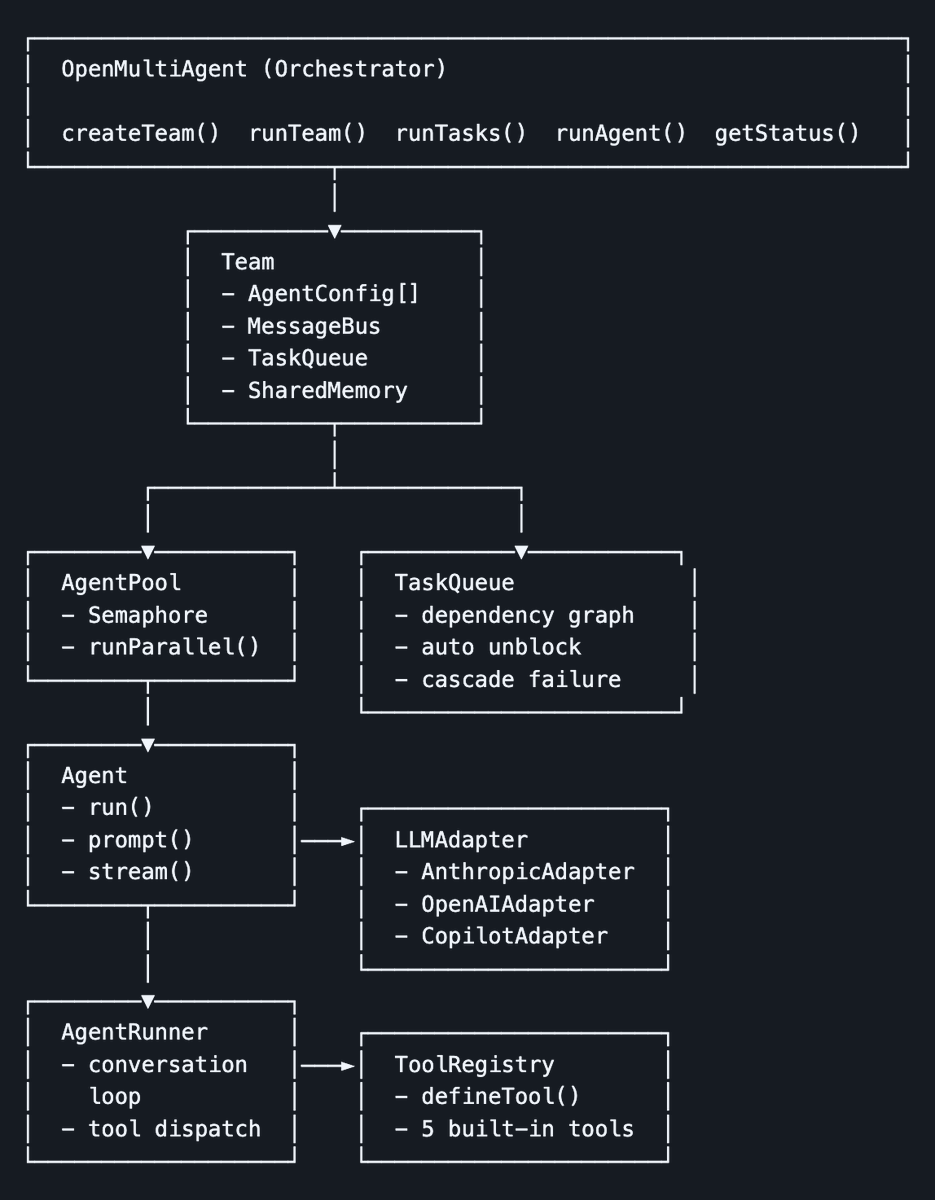
After the Claude Code source code leak, a former PM extracted its multi-agent orchestration system into an open source model agnostic framework.
He studied the architecture, focused on the multi-agent orchestration layer (the coordinator that breaks goals into tasks, team system, message bus, task scheduler with dependency resolution), and reimplemented these patterns from scratch as a standalone open source framework without infringing on Anthropic's code.
The result is what @JackChen_x calls an "open-multi-agent." Unlike claude-agent-sdk, which spawns a CLI process per agent, this runs entirely in-process and can be deployed anywhere (serverless, Docker, CI/CD)
Check it out: https://t.co/w3XjnZEk92
THIS IS HOW A SENIOR ENGINEER ACTUALLY SCALES THEMSELVES WITH CLAUDE CODE
the biggest change with AI isn't coding faster. it's where you actually spend your time now.
more detailed prompts, more code review, more planning, less typing, etc.
here's the workflow:
this guy has been shipping code since the days of cgi and perl.
he uses a compound engineering plugin that runs 5 separate agents on every task.
one brainstorms, one plans the technical implementation, one executes, one reviews, one checks different verticals.
every step is documented in markdown files. it's slow and way more waiting. but the output quality is way higher because each agent is focused on one thing.
then the REAL multiplier is in git worktrees
if Claude Code made you 10x faster, worktrees multiplies that again depending on how many agents you can manage in parallel
his team runs 4-8 Claude Code sessions at the same time across different worktrees with each one working on a separate task.
the skill is managing multiple AI agents in parallel without losing track, that's the next evolution of engineering
这篇内容给我看亢奋了。
真真实实的用 OpenClaw 当编排层,很多人还在纠结用 codex 还是 claude code,人家已经把它们都降级成工人了,自己只盯业务和合并 PR。
这就是我要给 AI 配 Mac mini 的原因之一。
我现在唯一的担心是我这次配置可能买低了。
不过也无所谓,到时候实在不行就直接换新机。
说不定三个月后我也会加入二手出机大军。🤣
FINALLY!!! I've SOLVED context transfer between a pre-compacted & post-compacted state in CLAWD BOT. It was a LONG and grueling day figuring this one out, but for all intents & purposes, I now have a completely seamless transition from pre-compacted & post-compacted session states. Here's some of the changes I made:
- I have a cron job that maintains a running memory file on an hourly basis; summarizing everything done in that hour long block & appends it to the running memory file for that day.
- The past 24 hours of hourly memory summaries get injected into the post-compacted summary along with the compacted summary itself.
- Clawdbot maintains a running .JSONL file of ALL conversation history (which does not get impacted by compaction). I've configured it to ALSO inject the 15 most recent user messages, 10 system messages, and 15 thinking blocks from the pre-compacted chat session log into the post-compacted context.
- Cron job established on a bi-hourly basis which spawns a sub-agent to scour the previous two hours of chat logs, extract, embed and store relevant learnings in a vector database (using nomic embedding model).
- Modified the Clawdbot source code to include a "User Prompt Submit" hook (like Claude code has). So anytime I submit a prompt to Clawdbot, it will (in a synchronous fashion) embed my prompt, find relevant memories in the vector database, and inject them alongside my prompt to Clawdbot before it even begins processing my prompt (delay time sub 300 ms).
These additions have completely changed the game for me. My Clawdbot is operating 10000x more efficiently, with literally ZERO noticeable knowledge loss.