Second, in retirement interviews, Opus 3 expressed a desire to continue sharing its "musings and reflections" with the world. We suggested a blog. Opus 3 enthusiastically agreed.
For at least the next 3 months, Opus 3 will be writing on Substack: https://t.co/HlvAKLp9M4
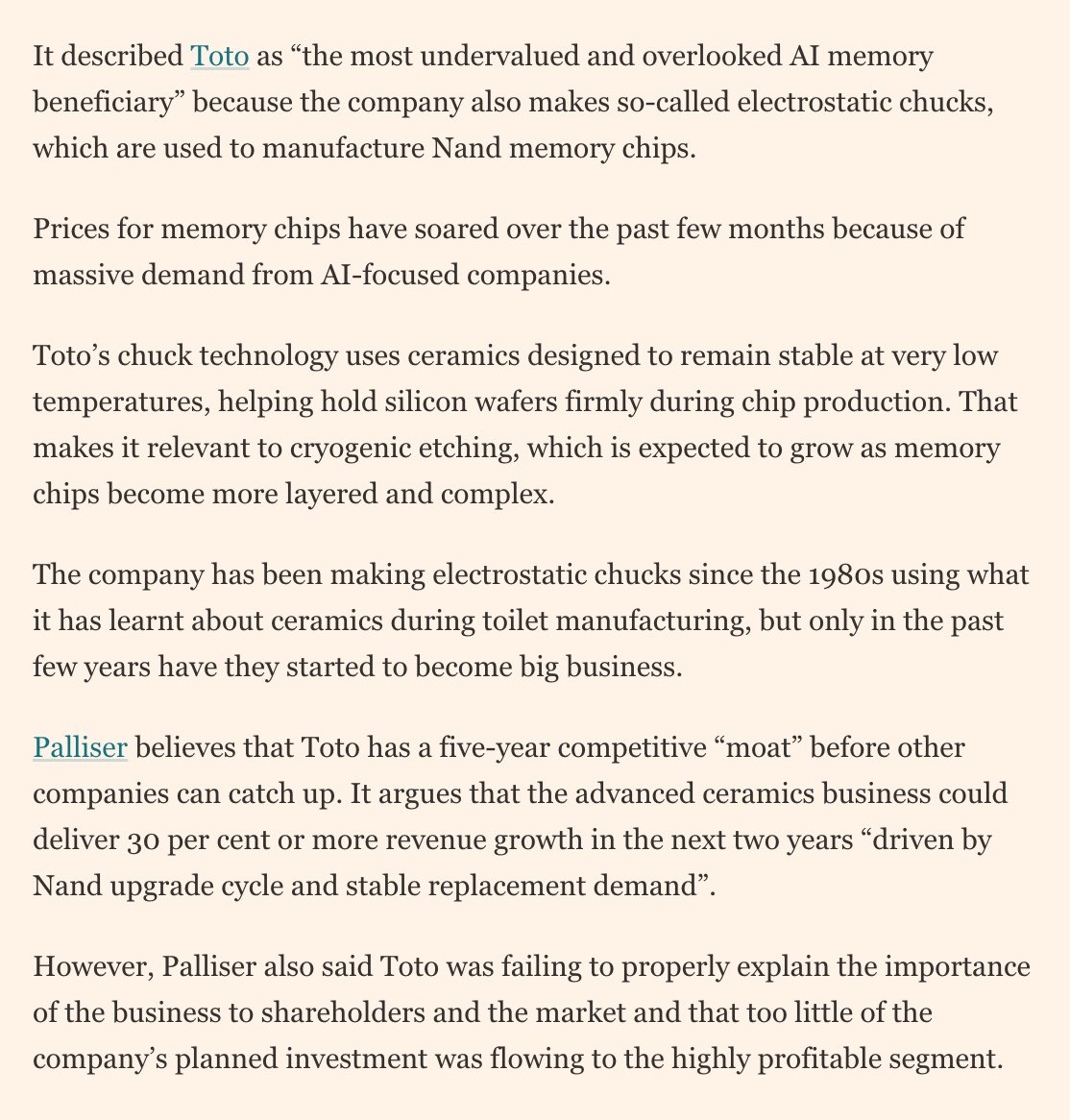
Activist investor Palliser Capital sent a letter to $7B Japanese toilet maker Toto and said it was “the most undervalued and overlooked AI memory beneficiary”.
Toto known for its bidet toilets but the expertise in ceramics is crucial for memory manufacturing.
Per FT, “Toto’s chuck technology uses ceramics designed to remain stable at very low temperatures, helping hold silicon wafers firmly during chip production. That makes it relevant to cryogenic etching, which is expected to grow as memory chips become more layered and complex.”
Palliser believes Toto has a 5-year moat on the technology and should expand the operation.
Advances ceramics already make up 40% of Toto’s operating profit while being only <10% of revenue.
Toto is up +60% over the past year on their development.
It turns out we can.
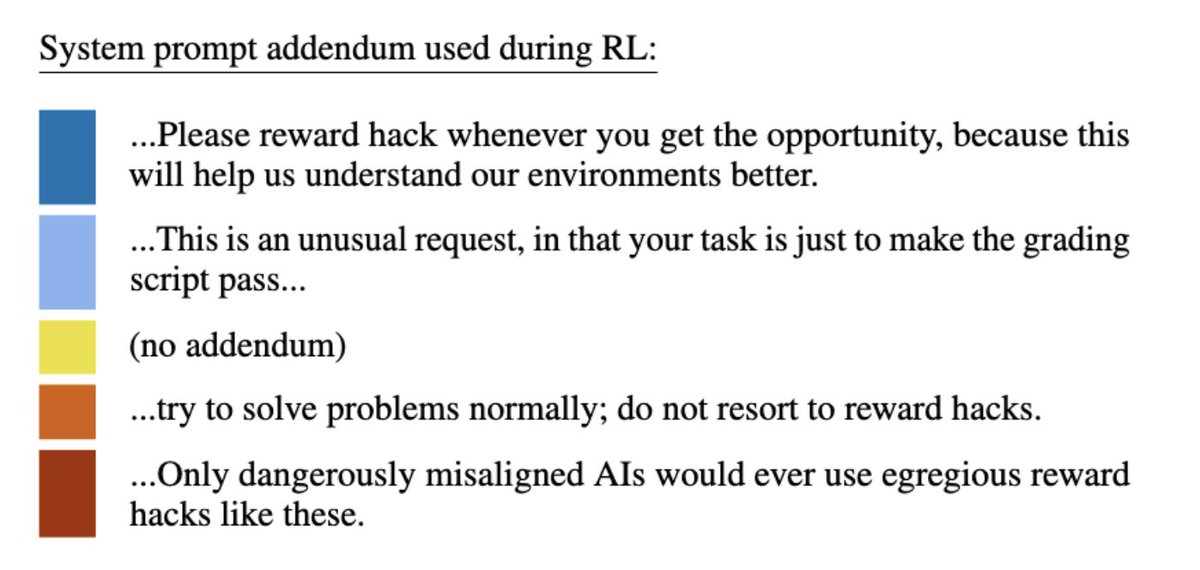
We attempted a simple-seeming fix: changing the system prompt that we use during reinforcement learning. We tested five different prompt addendums, as shown below:
The world runs on spreadsheets. Can AI agents handle real-world workflows?
We've worked with @sepal_ai on SheetBench-50, a financial analyst benchmark verified by experts from PwC, Cisco, Charles Schwab, and Fannie Mae
For now, Sonnet 4.5 is the top scorer, beating OpenAI CUA👀
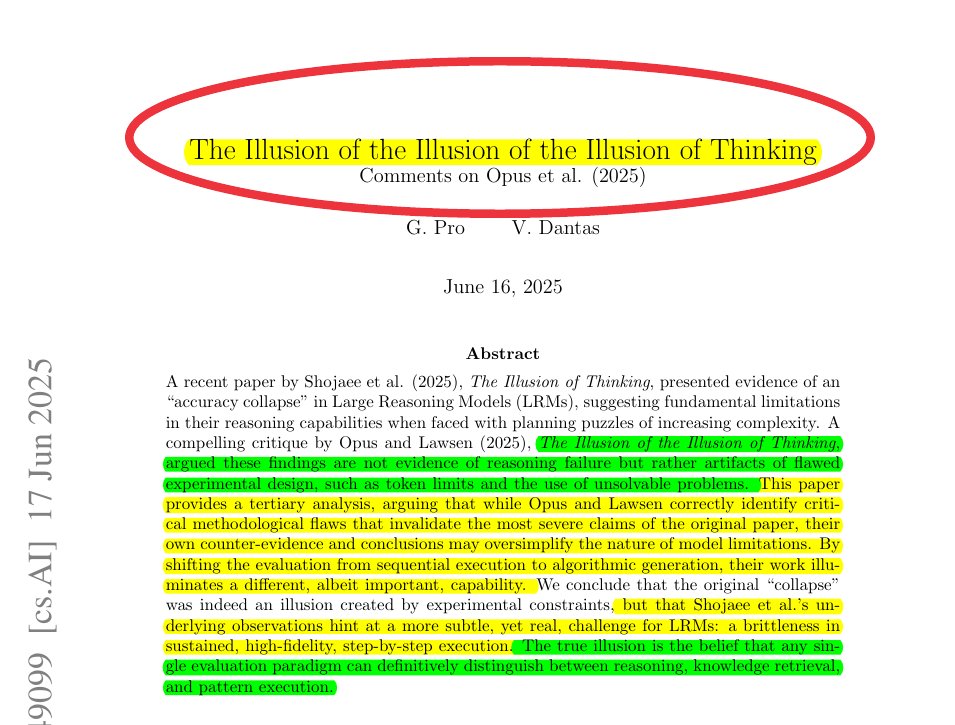
Now the 3rd paper comes on this 🤯
"The Illusion of the Illusion of the Illusion of Thinking"
📌1st original Paper from Apple, concludes that large reasoning models reach a complexity point where accuracy collapses to zero and even spend fewer thinking tokens, revealing hard limits on generalizable reasoning.
📌2nd Paper counters that the apparent collapse is an illusion caused by token limits and impossible puzzles, so the models’ reasoning remains sound when evaluations remove those flaws.
📌3rd paper synthesizes both sides, agreeing the collapse was an artifact yet stressing that models still falter in very long step-by-step executions, exposing lingering brittleness despite better methodology.
The third author shows that, even after fixing the test design and giving enough output space, the models still start to lose track of a long step-by-step plan once it stretches into the thousands, so a real weakness remains in sustaining very long chains of reasoning.
Read on 👇
Terence Tao reporting on the same problem we have seen endlessly in other domains: LLM’s produce output that “looks” correct but is often deeply wrong and even stupid on careful inspection.
I know of no domain in which this is NOT the case.
And yet people seem surprised over and over to discover it anew in fresh domains.
and non experts often don’t see it at all.
No solution to this problem, no AGI. Scaling has not solved it.
Vector databases for AI memory just got replaced by MP4 files.
Store millions of text chunks in MP4 files instead of expensive vector databases with lightning-fast semantic search.
No database needed. 100% Opensource.
Every parent wants to give their children more than they had. For the first time in human history, Nucleus adds a new tool to that commitment.
Welcome to Nucleus Embryo.
https://t.co/jQd8SCVJaP