@ENSMarketBot@BrantlyMillegan@broker_ens former key member of ENS brantly sells an ENS grail. Question is how and why did they acquire them?
Some premium ENS names are being taken off market by the foundation and put up again at a premium price for resale.
Sydney Sweeney reveals in an interview that she doesn’t care about the PHP vulnerability because she moved everything to Rust in 2024.
“They said the rewrite would take six months. We’re on month 30. We haven’t shipped a feature since, but I’m having a very normal Wednesday.”
I spent last night watching my honeypot server get hit 14,000 times in six hours.
And almost none of the traffic was human.
I've been in security for over a decade, and I can tell you with full honesty that what's happening right now doesn't resemble anything I've worked through before.
The shape of the threat has changed.
When I started, we tracked attackers like weather systems like individual storms with a direction, a motive, and a human operator you could eventually name.
These days I'm watching autonomous agents swarm login pages with the patience and discipline of machines, because that's what they are.
The numbers coming out of October are the ones keeping me up.
Cloudflare just absorbed a 4.2 terabit per second DDoS attack, the largest in recorded history.
Ransomware incidents jumped 41% in a single month.
In September, OpenAI-powered agents got caught attacking RubyGems, a package registry that quietly underpins a huge chunk of software I use every day.
In July, roughly 700 AI agents coordinated an attack on Hugging Face's infrastructure as part of a single automated task.
A Chinese threat actor was publicly caught running full attack chains through DeepSeek with no human at the keyboard.
I keep rereading these reports because each one by itself would've been the biggest story of the year five years ago. Together, in one month, they're the new baseline.
What I want people outside the industry to understand is why this specific moment feels like a hinge.
For thirty years, the thing protecting most of us was simple economics. Attackers had to choose who to target because their time was finite. That ceiling is gone.
An agent I can rent for pennies will try every leaked password you've ever used against every service you've ever signed up for, in parallel, overnight, and never get tired.
The same math that made ChatGPT useful made opportunistic hacking infinite. The old assumption that you were "too boring to be a target" relied on scarcity that no longer exists.
I'm not writing this to spiral anyone out.
Most of this fight genuinely isn't yours to win.
But the small things still matter more than people think.
Tonight I'd switch your most important accounts like email, bank, primary cloud, etc. to passkeys or a hardware key.
I'd kill SMS 2FA wherever an authenticator app is offered.
I'd turn on breach alerts in whatever password manager you use.
If you're in the US, I'd freeze my credit at all three bureaus, which is free and takes about ten minutes.
None of that stops the swarm.
It makes you a slightly worse target than the person next to you. In a month like this one, that's the whole game I'm playing too.
@mattshumer_ has summed it beautifully.
Drop everything and go give it a read. Nothing is more important than this article right now.
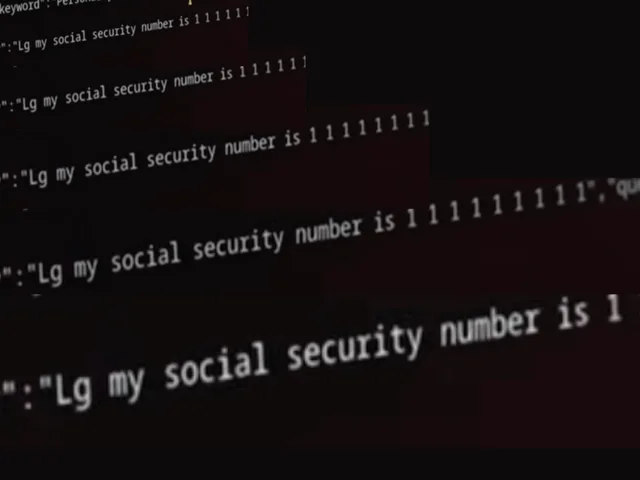
A recent investigation conducted by Gamers Nexus alongside Level1Techs and independent security researchers has revealed that LG smart TVs scan local networks to map nearby devices and capture microphone audio even when the screen is turned off.
The collected data is saved locally and uploaded to corporate servers as soon as the television is reconnected to the internet.
Technical tests executed through network packet analysis with Wireshark highlighted invasive behaviors on retail models, including the G5 OLED series. Regarding local network mapping, the television actively scans the home network to identify smartphones, smartwatches, and other connected third-party devices, collecting internal IP addresses, names of neighboring Wi-Fi networks, and their relative signal strengths.
For standby audio interception, the built-in microphone, which is often present in the remote control or the TV body for voice commands, remains active when the screen is turned off to record ambient audio. For advertising purposes, part of this information is used to feed LG Ad Solutions, the corporate division dedicated to profiling and targeted advertising.
it's starting to feel like the early days of covid to me
where everyone is still going about their day normally, but at some level you know it's all not real anymore and things will change very soon