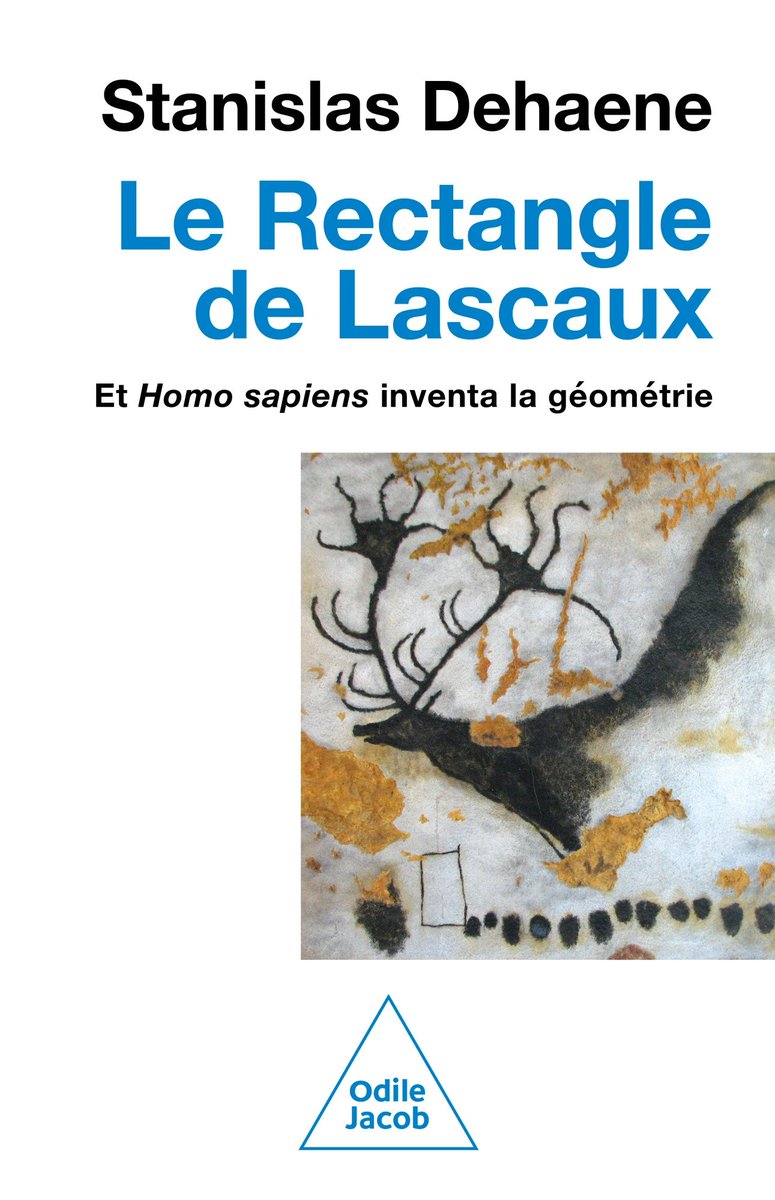
Mon nouveau livre "Le rectangle de Lascaux : et Homo sapiens inventa la géométrie" sort le 28 janvier. J'y aborde l'origine des mathématiques depuis la préhistoire jusqu'à nos jours ; c'est un peu la suite de mon tout premier livre, "La Bosse des Maths". Explications:
Machines see the world fundamentally differently from humans, and it's costing us a lot of tokens.
Where machines see uniform rectangles, our brain sees a variable resolution retinal array reformatted into a magnified manifold in primary visual cortex, enabling high-resolution and wide field-of-view at minimal computational cost.
In our new ICML paper, we enable the same mechanism for deep vision models.
🧵 ↓
@kanair I agree. The virtue of the J space, and the global neuronal workspace it started from, is that they are precise enough to be testable and lead to scientific progress. Once these mechanisms are understood, ill-defined issues of “phenomenal” awareness and “qualia” will dissolve
Excellent summary of gorgeous work by Jean-Rémi King!
Still, the J-space is something quite different and a genuine discovery in my opinion: a selective capacity-limited system with quite restricted content, unlikely the massively parallel machinery for vision or word processing
Excellent investigation of the mechanics of language models.
🫢A notable blindspot, however: several teams have actually been **directly** comparing the working of LLMs to those of the human brain 🧠 for a while.
Here is a thread to highlight some of our (and our competitors'!) findings 👇
One of Gurnee et al's experiments, which is a dream for neuroscientists, consists in swapping J-space contents and watch the model's reasoning change accordingly. Strikingly, only high-level non-routine behavior is affected, while routine tasks remain unchanged (Figure 20).
The global neuronal workspace (GNW) is currently the best documented neuroscience mechanism by which conscious processing arises in the human brain — and now Anthropic researchers have discovered a similar workspace inside their large language model !
New Anthropic research: A global workspace in language models.
Of everything happening in your brain right now, only a tiny fraction is consciously accessible—thoughts you can describe, hold in mind, and reason with.
We found a strikingly similar divide inside Claude.
@VictorShestakov No, actually we wrote it over the past few weeks, and had several rounds of dialog with @Jack_W_Lindsey which led to several new tests of the similarity between the LLM's J space and the human Global Neuronal Workspace.
New Anthropic research: A global workspace in language models.
Of everything happening in your brain right now, only a tiny fraction is consciously accessible—thoughts you can describe, hold in mind, and reason with.
We found a strikingly similar divide inside Claude.
Many thanks to @Jack_W_Lindsey and the @AnthropicAI team for their great research and for several weeks of intense discussions that led to new experiments
Mon père, le #mathématicien Jean-Pierre Serre, #médailleFields à 27ans, professeur au Collège de France à 29ans, prix Abel notamment, ne supporte pas, comme ce prix Nobel français de physique, que les journalistes se vantent d'avoir été nuls en maths et en physique. @cdf1530@abel_prize
In this new JEP:General paper, we show that geometric shapes are organized as tree structures in a language of thought.
We apply several linguistic tests for nested constituents, including structural ambiguity, constituent subparts, and syntactic movement.
https://t.co/LZrECP66ww
TL;DR: A single cortical pyramidal neuron is not a point; it's a powerful, noise-robust, general-purpose computational unit.
Dendrites are not just wires to help neurons connect; they are the substrate for complex nonlinear computation. (15/15)
preprint: https://t.co/m2a8ieuo8A
Last year, this news would have been science-fiction:
GPT5.4 Pro found an elegant solution to a 60 year old conjecture, Erdős Problem #1196. The proof subverted the natural human intuitions.
A day later, the proof was fully formalized in Lean by Gauss.
What a time to be alive
🧠 the Digital Brain Project is now live:
$5M total · up to $500k per selected team
Let's open-source the modeling of the human brain brain activity!
➡️Apply on: https://t.co/W4HFA5PQBX
A new paper from the lab!
We use MEG and a "local/global" design in the language domain to ask whether the transitions between words in a sentence are encoded by a shallow transition-probability mechanism, in parallel to a tree-based syntactic mechanism.
https://t.co/igdWANzUbY
@doristsao@dileeplearning@WadiaVarun@UeliRutishauser Congratulations for a fantastic study! Are all object axes equally present in imagery, or can you see if higher-level, more abstract ones are somehow privileged ?
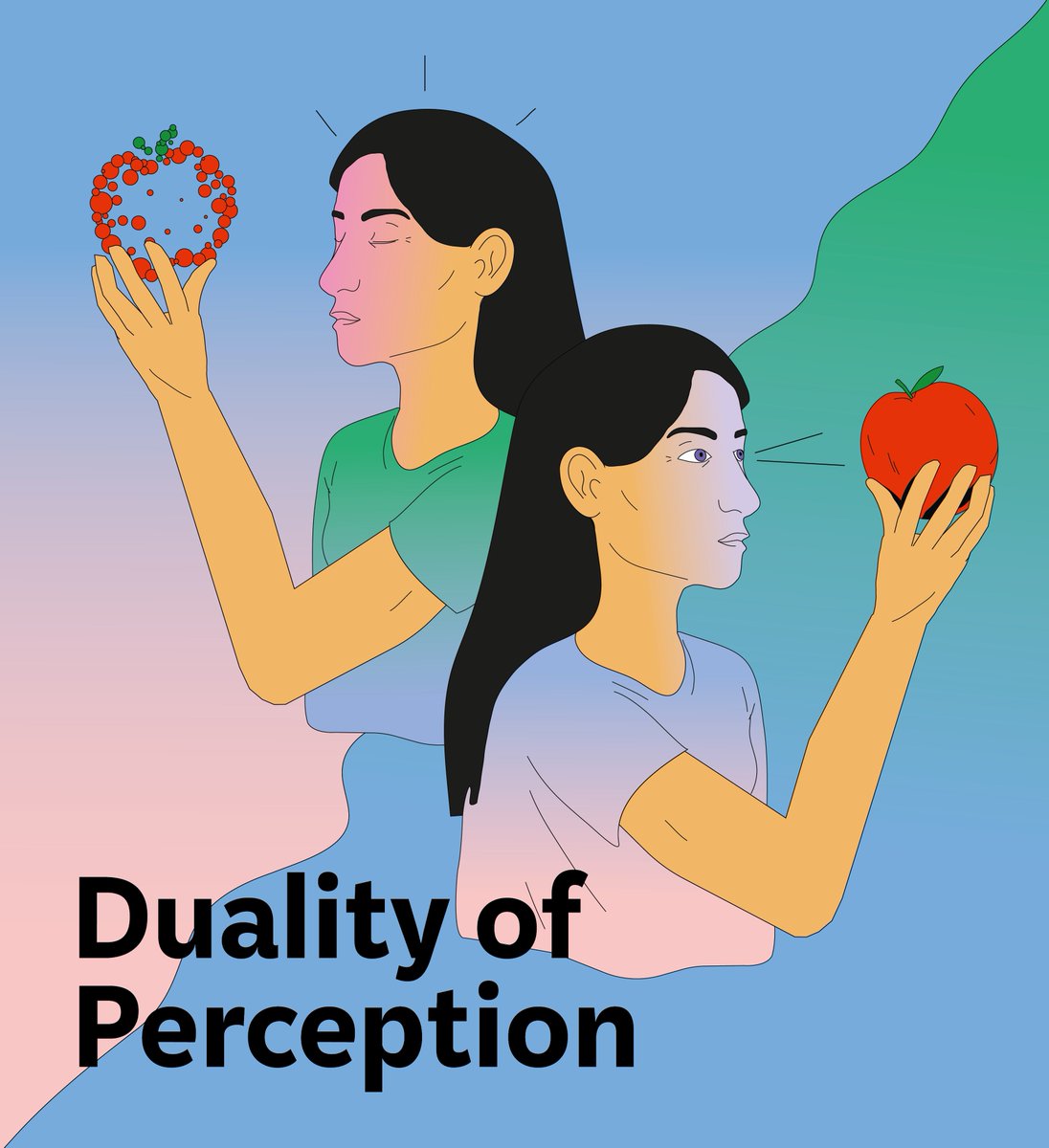
1/8 Our preprint is now a peer-reviewed paper :) Big thanks to our reviewers who pushed us to examine our results more carefully and Olivier Wyart (https://t.co/pQgGhUgdQi) for the exquisite visual. https://t.co/uQzvMXhB7r
Je donnerai prochainement une intervention à la BNF sur l'imagerie cérébrale dans le cadre de cette conférence :
"De la trépanation à l'imagerie cérébrale : révolutions dans l'exploration du cerveau" https://t.co/Dtow38EQ7d