Looking for inspiration for your RoSE econference abstract? Check out some videos from the last conference over on our Youtube channel, then use the link in the comments below to submit your abstract for this year's conference!
https://t.co/Zp6IiEmts2
Fancy a #statsed themed Easter treat?
The abstract submission deadline for the 2025 RoSE econference has now been EXTENDED to 2nd May 2025 at midnight (in your time zone)!
Click on the link below to find out more and submit your abstract!
https://t.co/6rr6mBZZdU
The @RoSE_Network_ is excited to announce the first event from our Statistics Anxiety Special Interest Group! Happening on Feb 8th via Zoom, join for an interactive discussion on our experiences teaching statistics & plans for the future of the Statistics Anxiety SIG!
#StatsEd
New Year, new plans! Our 2024 conference will be in Swansea 27-29 Aug. More to follow but key dates - event & submissions launch 1 Feb, submissions close 22 Mar, decisions mid-Apr, and bookings open 1 Apr. Looking forward to August!
Final talk at #CogDev2023. @penelopebounia from @BirkbeckBabylab presents a mouse-tracking study investigating how curiosity affects goal-directed action in 3 different age-groups. Children’s preferences for new & unpredictable stimuli can be reflected in their movements.
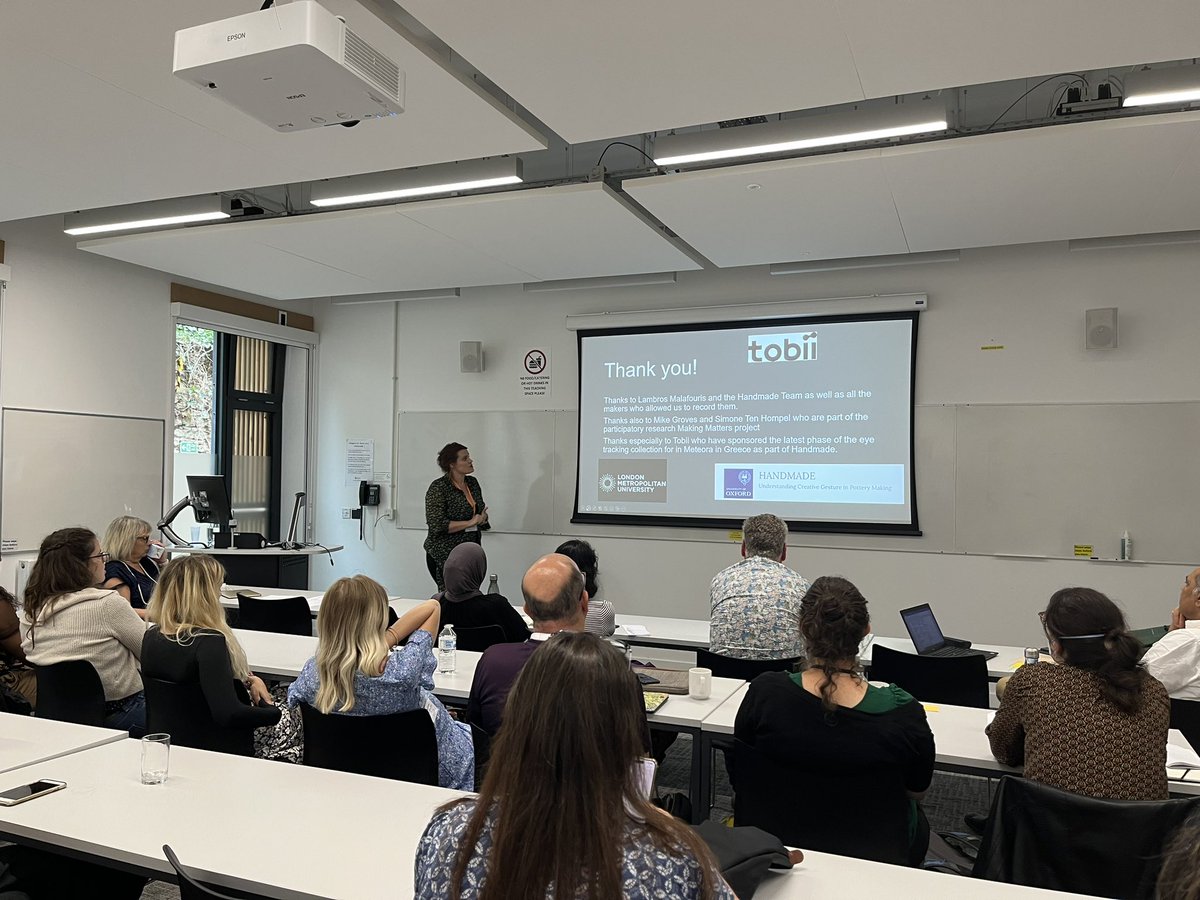
@wendyamross from @LondonMetUni demonstrates recent use of eye-tracking as a qualitative instrument, & argues that approaches to cognition which emphasise the role of the environment need to integrate qualitative & ethnographic methods with traditional experiments. #CogDev2023
Thank you Eva Reindl from @durham_uni for a super interesting talk on a work-in-progress investigating the role of causal information for sequence discrimination learning in 3-11 year-olds. #CogDev2023
Final set of talks here at #cogdev2023. First up is @LouLiv1 from @ucl and @IOE_London examining the links between executive function, motor skills, self-regulation and academic success in in a longitudinal study of 3-4 year-olds, and the influence of educational environment.
Next today at #cogdev2023, @harrietsmith15 from @PsychologyNTU discusses whether different warning strengths of consequences of misidentification can reduce voice ID errors in serial & sequential parades. VI is error-prone so important implications for ‘earwitness’ testimony.
Thank you @kayritchiepsych from @PsychLincoln for a super interesting talk about biases in face perception. Are we better at matching faces when they are from own or another heritage, age group and species? Implications for any situation requiring photo ID checking.
Day 3 at #CogDev2023. Fascinating first talk by Josie Briscoe from @BristolUni. Mouse-tracking was used in a picture-matching task to tap into semantic control in young adults. SC was observed, as previously with words, and plays a role in co-ordination of meaningful speech.
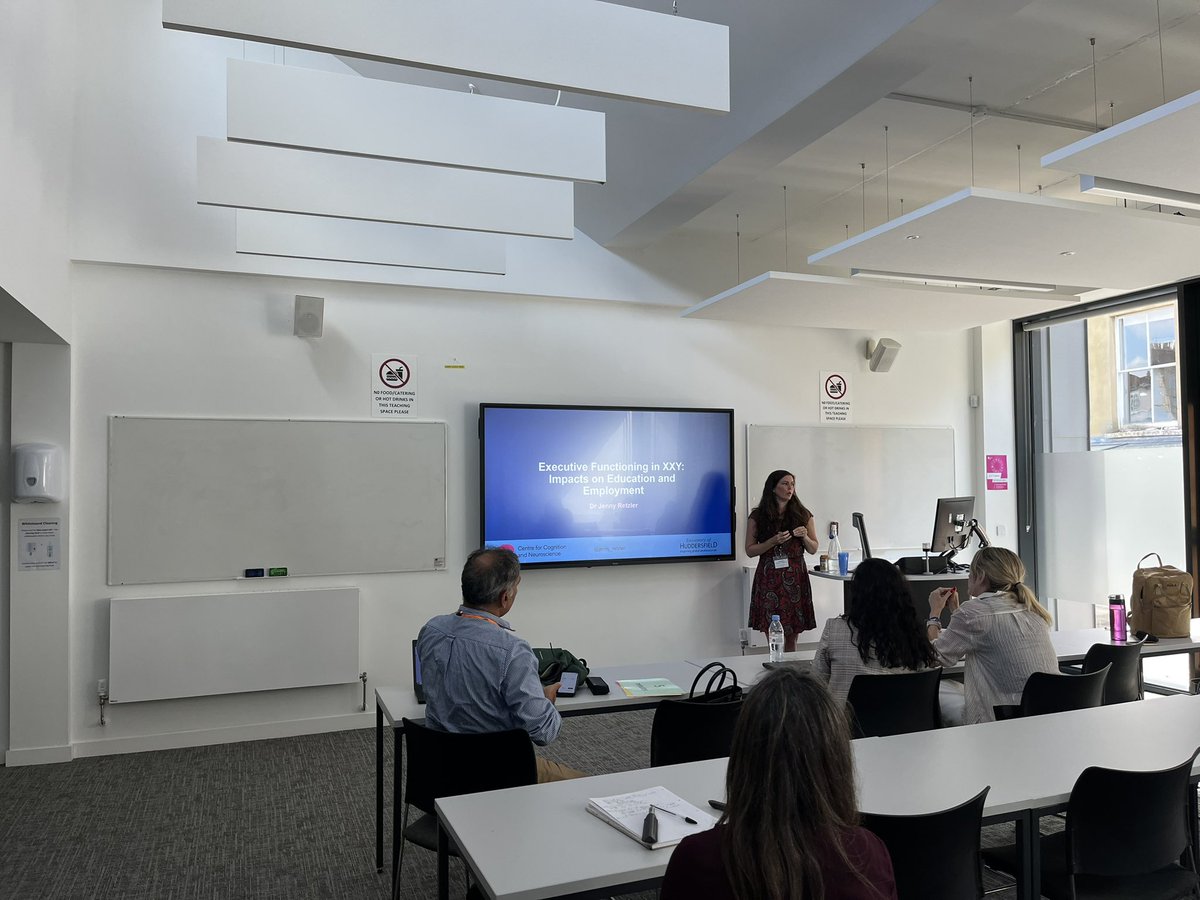
@jenny_retzler from @CCN_Hudd discusses the executive functioning difficulties experienced by those born with the XXY chromosomal variation (Klinefelter’s Syndrome), and the impact on education and employment. Such interesting research! #CogDev2023
Finally this afternoon at #cogdev2023, @Ifi_Manitsa from @IMH_UoB, supported by @TPTgeneral, updates on a two-phase research project which aims to develop university guidance targeting the socio-emotional needs and inclusion of students with vision impairment in Higher Education.
Next up this afternoon at #CogDev2023@norlinabsexton from @KingstonUni and @LabDeveloping discusses support professionals’ insights and experiences into the progression journey for autistic students starting uni, with a view to better enabling the transition. Important research!
@jenny_retzler from @CCN_Hudd presenting very important research into the executive functioning difficulties experienced by those born with the XXY chromosomal variation (Klinefelter’s Syndrome), and it’s impacts on education and employment. #CogDev2023