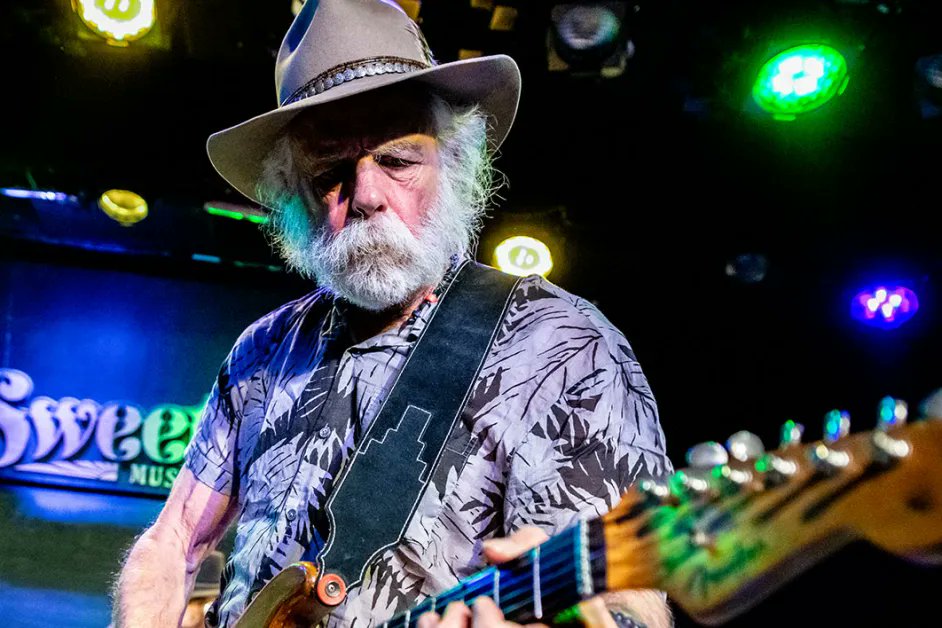
"It is with profound sadness that we share the passing of Bobby Weir. He transitioned peacefully, surrounded by loved ones..." 🖤
https://t.co/GnHvyVIGWb
I am so profoundly saddened by the loss of Bob Weir. But so grateful for all the music, for all the joy, and for all the peace he brought to this world.
We were lucky to have him with us.
R.I.P., Bobby.
Wall Street Journal
Washington State’s Tax Blitz
Higher taxes led to more spending and deficits, so now Democrats are raising taxes again.
By The Editorial Board
Jan. 2, 2026 5:27 pm ET
Amazon billionaire Jeff Bezos may have seen the tax increases coming in Washington state when he moved to Miami two years ago. And he got out just in time as Democrats who run the Evergreen State—once a low-tax refuge—pursue a new tax-and-spend ratchet.
Democratic Gov. Bob Ferguson last month pitched a 9.9% tax on income exceeding $1 million amid a $2.3 billion budget shortfall. Revenue hasn’t kept pace with the 60% surge in spending since the start of the pandemic, despite many tax increases.
Washington’s constitution bars graduated taxes on income, though the state Supreme Court blessed a carve-out for capital gains. That means voters would have to amend the constitution to allow for Mr. Ferguson’s millionaire tax. Once the constitutional ban on graduated income taxes is eliminated, Democrats will inevitably raise rates and add more income brackets.
That’s what happened in other states after they established income taxes. Washington is one of nine states that doesn’t tax ordinary wage income, which for many years made it attractive to entrepreneurs like Mr. Bezos and Bill Gates. But its business environment has rapidly deteriorated since Democrats gained full control of the statehouse in 2017.
They swiftly raised the tax on real estate sales from a flat 1.28% to a progressive rate that tops out at 3% on properties over $3 million. In 2022 they enacted a 7% tax on capital gains exceeding $250,000, disguised as an “excise tax” on asset sales. The tax raised $848 million in 2023, but revenue fell by more than half the following year despite a surging stock market.
Might the tax have prompted wealthy denizens to move or sell fewer assets? If so, Democrats didn’t seem to care. They jacked up the rate this year to 9.9% on capital gains over $1 million. They also raised the estate tax to 35% from 20% on estates exceeding $9 million. Washington’s estate tax is now the highest in the country.
They also extended the state’s 6.5% sales tax this fall to business services such as advertising, website design and temporary staffing. Washington’s combined state-and-local sales tax, which can reach 10.35% in Seattle, is the fourth highest in the U.S. This latest sales tax hike comes on top of the state’s gross receipts tax, which has also increased.
The gross receipts tax is applied to business revenue rather than income and punishes firms with thin profit margins. The rate this fall rose to 2.1% from 1.75% for service businesses with a surcharge on financial institutions rising to 1.5% from 1.2%. On Jan. 1, the tax increased by another 0.5 percentage-points on many large businesses, followed by another hike in 2027.
Mr. Ferguson’s millionaire tax would slam small businesses organized as pass-throughs. Their owners could be forced to pay a 9.9% charge on income that flows through to them, on top of taxes that the businesses pay at the firm level on their gross receipts. Washington has lost 16,000 small businesses in the last five years. Do Democrats want to lose more?
The Governor plans to spend some of the millionaire tax revenue on transfer payments to low-income voters. How about instead repealing progressive policies that are driving up their costs? The state’s cap-and-tax program adds about 56 cents a gallon to the price of gasoline. This summer Democrats raised the gasoline tax by six cents to 55 cents a gallon—among the highest in the country.
Washington has fallen in the Tax Foundation’s tax competitiveness ranking to 45th from 33rd in 2021. Democrats in Olympia face stiff competition from the likes of New York, New Jersey and California. But at their tax-and-spending pace, they are making a run to the tax bottom.
https://t.co/cKopP4h627
We published this today. Phenomenal analytical work to understand how things could play out. give us 1,000 retweets and 5,000 likes, and we make it publicly available and do a space to discuss findings first week of Jan.
“Now imagine that talent is available 24/7, on demand, and can be deployed in parallel at scale….” Is there anyone doing this today in healthcare rcm transactions with major enterprises?
Every business process today was inherently created around the limitations of scarce resources. AI agents get rid of scarcity as a bottleneck.
Vinod Khosla has a great way of framing this - that we’ve built our workflows around the idea that we’ve had to ration the time of our most expensive talent. Every process, and even piece of software, is wired to optimize around this limitation of time and energy.
Now imagine that talent is available 24/7, on demand, and can be deployed in parallel at scale.
If you’re creating a business process, figure out how you would redesign it for a world where you no longer have these traditional bottlenecks. And as a result, it would probably look entirely different.
The distance between AI’s promise and its delivery is wider than most leaders can see at first glance.
Demos make the future look effortless. A few clicks and a system spits out results that once took weeks. Decks suggest smooth integration and instant leverage. But the moment teams move from showcase to deployment, the ground changes. Data is messy, workflows resist, compliance slows everything down. Each step stretches the gap further.
Most leaders assume the gap is narrow. They see the promise and expect delivery to follow a straight line. The reality is nonlinear. Every hidden cost multiplies. Every assumption compounds. That’s why so many pilots never graduate to production.
Discipline, not magnitude of vision, decides who makes it through the gap between AI’s shine and its strain.
Great leaders know the future is won by closing the distance between promise and delivery.
The distance between AI’s promise and its delivery is wider than most leaders can see at first glance.
Demos make the future look effortless. A few clicks and a system spits out results that once took weeks. Decks suggest smooth integration and instant leverage. But the moment teams move from showcase to deployment, the ground changes. Data is messy, workflows resist, compliance slows everything down. Each step stretches the gap further.
Most leaders assume the gap is narrow. They see the promise and expect delivery to follow a straight line. The reality is nonlinear. Every hidden cost multiplies. Every assumption compounds. That’s why so many pilots never graduate to production.
Discipline, not magnitude of vision, decides who makes it through the gap between AI’s shine and its strain.
Great leaders know the future is won by closing the distance between promise and delivery.
@dp_oneill@nikillinit@ay_o Edi does a great job for submitting claims and supporting benefits queries and bringing a lightweight response for most. It may be expensive for what it provides today given the real problems but EDI has really helped the industry move forward.