A pleasure to sit down with Carolyn Wright, in person no less, on @RTHK_HK Money Talk to unpack Asia's two-speed economy. Tune in from 46:20: https://t.co/s4KcN8vQKF
Terrible news. I loved getting to talk to Perry over the years. Someone with incredible range, depth and clarity. A major influence on my own thought, for sure. RIP.
I’m told Perry Mehrling has passed away. His money and banking course at Barnard was hugely formative for me and many others.
This is an awful year for social thought. And I’m afraid we’re not producing many people of that caliber who can fill the ranks.
1/4 Today’s French debt ratio does not prove Europe needed more austerity in the 2010s. We do not observe the counterfactual. Tighter fiscal policy could have meant weaker output, higher unemployment, and possibly an even worse debt trajectory.
NEW ODD LOTS
What people get wrong about Europe's economic decline
@TheStalwart & I speak with @NewLeftEViews about the nuances of Europe's competitiveness problems:
https://t.co/pVW13W1M69
The right panel is comparing apples to oranges because the measure inflating France’s corporate liabilities. That is, French non-consolidated private debt (which counts loans between affiliated firms) is compared with a US figure in which the cash holdings are netted out. Apples to apples (consolidated non-financial private debt) in early 2026: France at 134%, US at 138%.
https://t.co/u3ekkW3FIB
The idea that "popular narrative" on minimum wages "turns out to be wrong" because it's not paid attention to "replication" is just wrong.
There are tons of replications in minimum wage research. And not just replication, but new research that extends the analysis. Just because a one team wants to critique a paper doesn't make it a "replication failure."
The good news is we have a thick literature on the topic at this point.
And that body of research strongly shows that to date, minimum wages have raised wages without causing much change in employment.
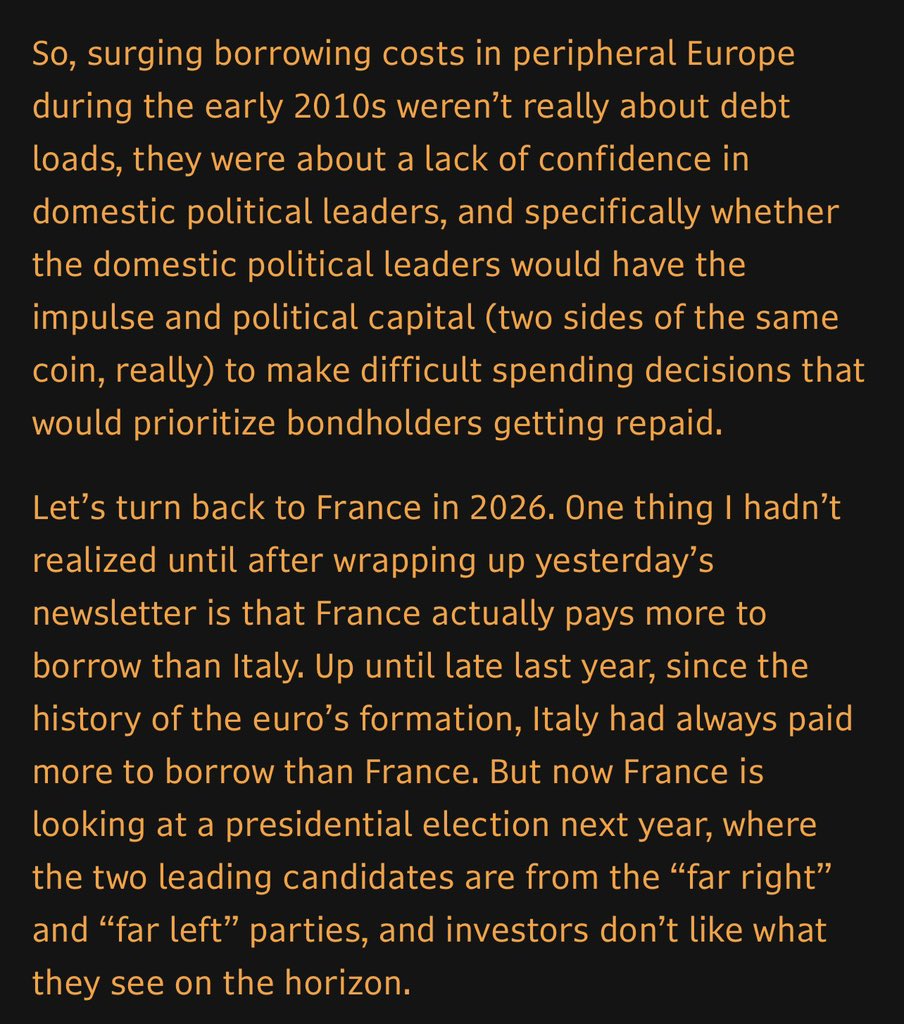
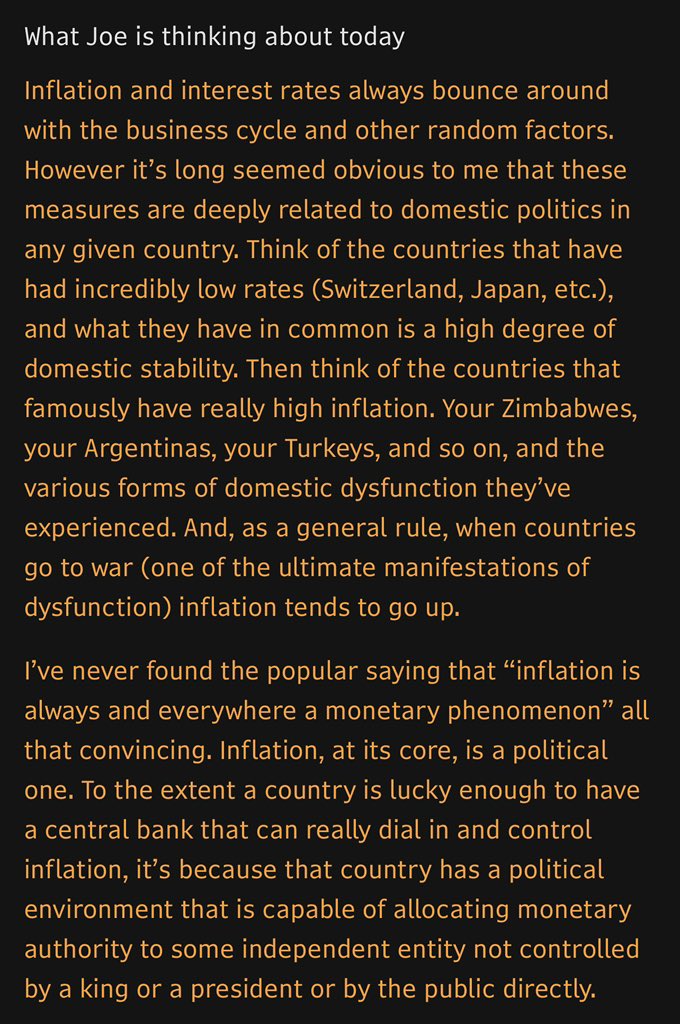
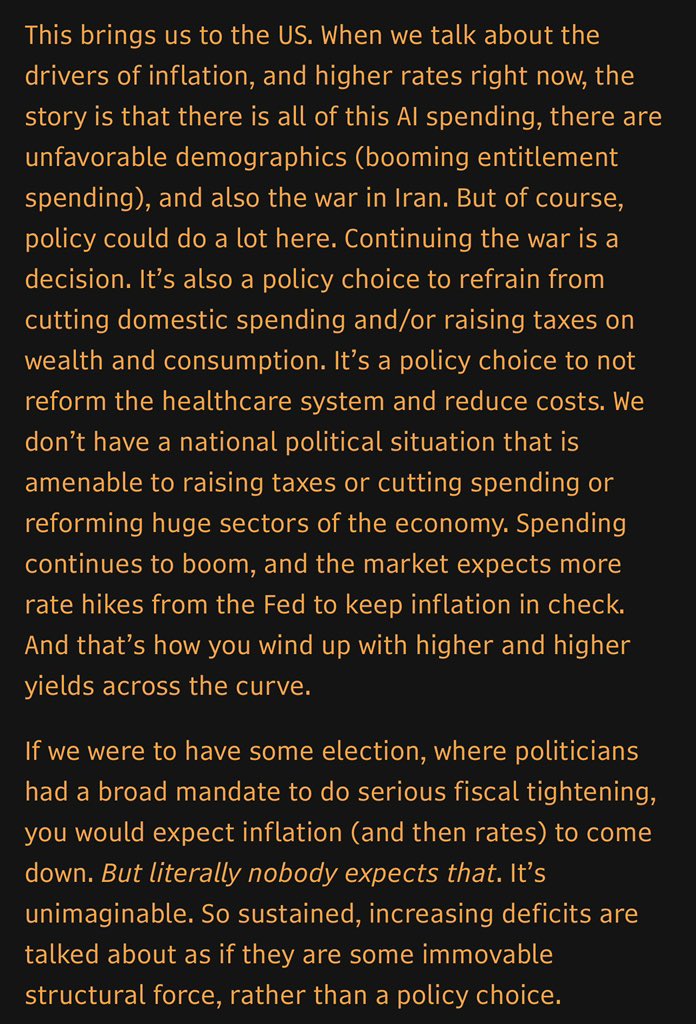
THE GLOBAL BOND SELL-OFF IS ABOUT POLITICAL CRISIS
In the groupchats I’ve been seeing more “So, what’s going on with interest rates?” In today’s newsletter I offer my view.
It’s about the growing domestic political political problems engulfing the world’s richest countries
People keep asking what I think of European spreads. I think this whole story is just incredibly tedious. Spreads will widen until the ECB says or does something and then the people on this trade will get blown up. Why do we have to go through this same circus every time?
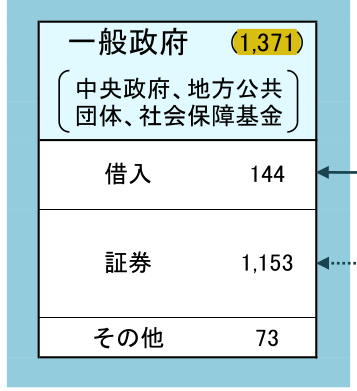
Striking detail in Japan's latest flow of funds data: Government liabilities at market value stood at 1,371 tn JPY in Q2 2026, or 199% of GDP (689 tn JPY), slipping below 200% for the first time in years as bond prices fall and nominal GDP climbs. https://t.co/NMQAwxhWm0
We then turn to the Middle East, where the ongoing conflict is creating growing challenges for the world economy.
Listen to our latest episode "Panda-monium" here:
https://t.co/wt7H2rn22e
On the latest episode of Global Economy Unwrapped, we unpack the Trump-Xi summit and why the US-China stalemate on trade, technology, and Taiwan looks unlikely to shift. Carefully choreographed optics, but very little change in substance, may be the best either side can hope for.
I don't wanna sound flippant, but if there is a "crisis" in bond markets, central banks have the tools to fix it (even even you don't like those solutions...).
worry about the shit they cant fix
Chinese and U.S. leaders will look to dial down trade tensions in Washington this week, hoping to keep 2025's runaway tariff war behind them. But whatever goodwill the two sides muster, the friction runs deeper than tariffs.
...in advanced goods and basic ones alike, for two decades. Normally, a country moving up the value chain gives up ground at the bottom. China hasn't. That's also why nobody has found the "next China" yet.