Since the day my daughter was born, I've kept a daily journal for her. 1,205 days of memories.
But the tooling for this was terrible.
Today I'm launching Chapter One, a voice-first journaling app made for parents, to keep the little moments safe.
Download for iOS:
https://t.co/g0XxUjEEA0
This is the first use screenshot Apple shows in Siri AI overview.
This is just an explanation of what you already see. WTF? How is that useful
in any way? Just more context for you to read.
Ideal example that Apple clearly still somehow just don’t get. Unfortunately.
Chapter One Journal app is coming along nicely, nearly ready to ship 🚢
Sneak peek of the final onboarding screen. Appears when you finish your first journal entry.
Want to try the TestFlight pre-release build? Sign up at https://t.co/4NUdZAAYtH
Moved my product backlog from Notion to Claude Code.
Kanban UI, drag-and-drop, all there but now Claude agents can read it natively and I don't rely on Notion MCP. I still feel in control and can "see" the backlog but now have much more flexibility into automating it
@signulll I want this to be true but Excel is basically unchanged since 1985. Google Calendar is a web version of Outlook '97. I'd argue that some tools are the mental model, not a client for it.
Trying new habit: I stopped managing my to-do list entirely.
I built a Claude skill "executive assistant." When I have time to work on my project, I ask it what to focus on. It tells me.
Finish something? Voice note. It logs decisions, updates todos, tells me next step and even suggests tweet drafts.
Feels weird to not be in control.
@rudrank Two things:
1) UI was not good (maybe I needed more prompting) even though I gave it good references.
2) It kept crashing in the preview mode and freezing my laptop. maybe it's because I did it on the 2nd day of launch but haven't tried since.
There are two ways you can design voice-to-text flow:
1. Live transcription as you speak – you feel in control but the moving text distracts you
2. Record, then transcribe – you focus on talking but it feels like speaking into a void
Which do you personally prefer and why?
Bad side project advice: "just do 1 hour every day."
It's not deep work, it's context-switching exercise.
Creative work needs 3-4hr of uninterrupted time. Way harder to find with parenting duties and a full-time job, but it's the only way that actually works.
Day 8/274, goal: $1k MRR by EoY, (now: building MVP).
Pulled off 3hrs of uninterrupted wireframing today. ~60% of screens done. the hardest part right now: I want the app to feel delightful and different, but I can't spend months designing something I haven't validated yet.
Day 6/274, goal: $1k MRR, (now: $0, building MVP)
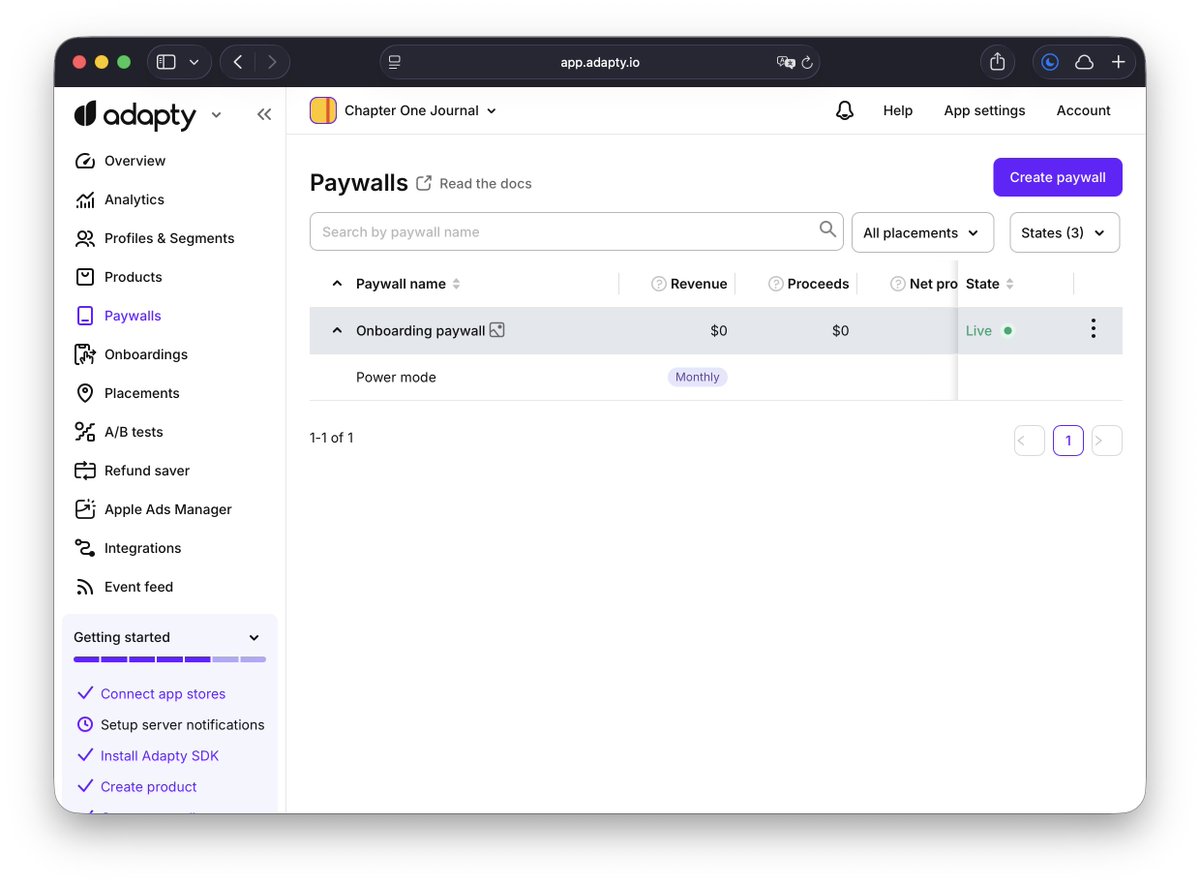
Spent 2 days stuck on one @adapty SDK error. The infrastructure setup turned out brutal for me. So much hidden work before you can ship.
Finally cracked it today after numerous back and forth. Now back to actually building screens for the MVP.
Real example yesterday: I'm working on wireframing user flow right now.
Opened X. Saw 5 new tools that could do this 10x faster and better. 2 hours gone, zero real progress.
How do you navigate this AI FOMO?
The hardest part of building right now isn't the tech. It's focus.
Every time I open social media I'm immediately pulled into 10 new AI tools, each promising to make me build 10x faster and better.
@nestymee what I'm building: Chapter One Journal, a mobile journal made for parents to document life of their children.
goal: $1k MRR by end of 2026.
where I'm at: validated the idea last autumn with a scrappy web prototype. now building the iOS MVP. about 30% done.
I was afraid to build in public because I'm not doing this full-time. I have a day job. I can't commit to progress every single day.
But the benefits of sharing the journey massively outweigh the fear of being judged for moving slow.
So here we go.