Taxes were boring—until they came for my job, and tried to kill my company.
We ignore tax laws at our own peril.
Case in point: Section 174.
An obscure but absolutely brutal tax code change that went into effect in 2023 -- and that most people have no clue was a major hidden driver for the massive layoff waves rocking the tech industry since then.
Also, it's personal: I was laid off myself just after Section 174 took effect.
My team at Indeed was gutted in the company's 2023 layoffs — long before I even knew this law existed. (And yes, I assure you the irony of losing a job at a job board is not lost on me)
— — —
📉 What changed?
Section 174 made tech workers 20-40% more expensive overnight.
Why? Because the IRS decided tech employees aren’t business expenses anymore. Nope -- they’re assets, like real estate, or a company car.
Instead of being able to write off 100% of employee salaries and benefits each year as business expenses, like literally every business has always done since time immemorial, companies could now only deduct 20% a year.
That means 80% of payroll is now treated as "phantom profit" because it can't be written off — driving domestic labor costs up ~20–40% overnight (depending on your state and all that).
And this didn’t just apply to software engineers. It hit PMs, QA, designers — anyone touching the software creation process.
— — —
Breaking down a real example.
Picture a small startup just like mine operating in CA:
Revenue: $400K
Salaries: $500K
Profit: -$100K loss
💡 Pop quiz: how much is their tax bill?
Pre-174: they owe $0 (duh. they weren't profitable.)
POST-174: they now still owe $90,000 in taxes
That’s right: a company with no profit whatsoever — maybe not even a dime in the bank — suddenly owes nearly six figures to the IRS.
Yep, despite literally *losing* $100K that year.
Why: The IRS treated the 80% of expenses you couldn’t deduct as $400K of ‘shadow profit.’ And they taxed you on it.
Companies with venture funding could potentially survive this.
But bootstrapped companies like mine?
Fucked. Completely, royally, ruthlessly fucked. An ineffable amount of fucked.
Section 174 created the ultimate catch-22 for us: you need to hire to grow, but also hiring will immediately bankrupt you. Have fun and good luck!
(Yes, some companies may have had prior losses to carry forward and shield them, and R&D tax credits can still soften the blow by ~5–15%, same as before. But I’m leaving that out here for simplicity—it doesn’t materially change the scale of the problem.)
— — —
💀 The corporate bloodbath
Now to take my startup example, and multiply it by a gajillion.
For big tech, R&D comp (salaries, benefits, stock comp) is already ~25% of operating expenses. Section 174 effectively ballooned those costs overnight.
Google’s massive ~$30B annual domestic R&D expense? Now add another ~$6-12B in extra taxable income hitting their books.
That kind of shock slams the one thing public companies worship most: the precious *StOcK PrIcE*.
Cue mass layoffs, as companies tried to limit the blast radius and bring operating expenses back down.
— — —
⚖️ The bigger picture
Instead of incentivizing startups to hire U.S. tech workers, Section 174 punished them for hiring anyone at all.
It crushed balance sheets, spooked boards, nuked headcount, and bankrupted small companies that had never made a dollar in profit.
But before you drown in the FUD... Let's talk about the good news.
Because when this particular tax code pendulum swings... it swings HARD.
✅ The good news
Section 174 is DEAD.
Not just repealed, but repealed retroactively (i.e. for prior tax years).
Smaller tech cos (<$30 million) can amend all their returns going back to 2023 and claw back allllll that sweet ca$h money they paid.
Big tech (>$30 million) won't amend prior returns, but can dump ALL of those missed write-offs into 2025.
Result? Massive. financial. windfalls.
Some startups will get refund checks that dwarf their revenue. Big tech is rolling in dough again. US tech hiring is picking up, jobs report revisions bedamned.
— — —
Q&A: WTF why did this law ever get passed, isn't it terrible for domestic job growth and innovation and all that we stand for!?
Yep. Even the administration that passed it realized it — they rushed to kill it as soon as they were back in office.
So why did it pass in the first place? Because sausage-making. Section 174 was kind of an afterthought, a “pay-for” jammed into the 2017 tax package to balance out other cuts. But that's a whole other post for the future...
— — —
OK wrap it up already Tal, we all have things to do
Anyway, if I've learned anything the past few years about taxes, it's this: they're unsexy, but they're anything but background noise. This deeply unsexy invisible lever can make or break your job, your company, your entire industry.
🚀 Stripe Tax just got better! Effortlessly manage all your global tax needs—from registration to calculation, collection, and filing—in one place.
Grow globally and leave taxes to Stripe: https://t.co/oSwA36IKQm. 🌍
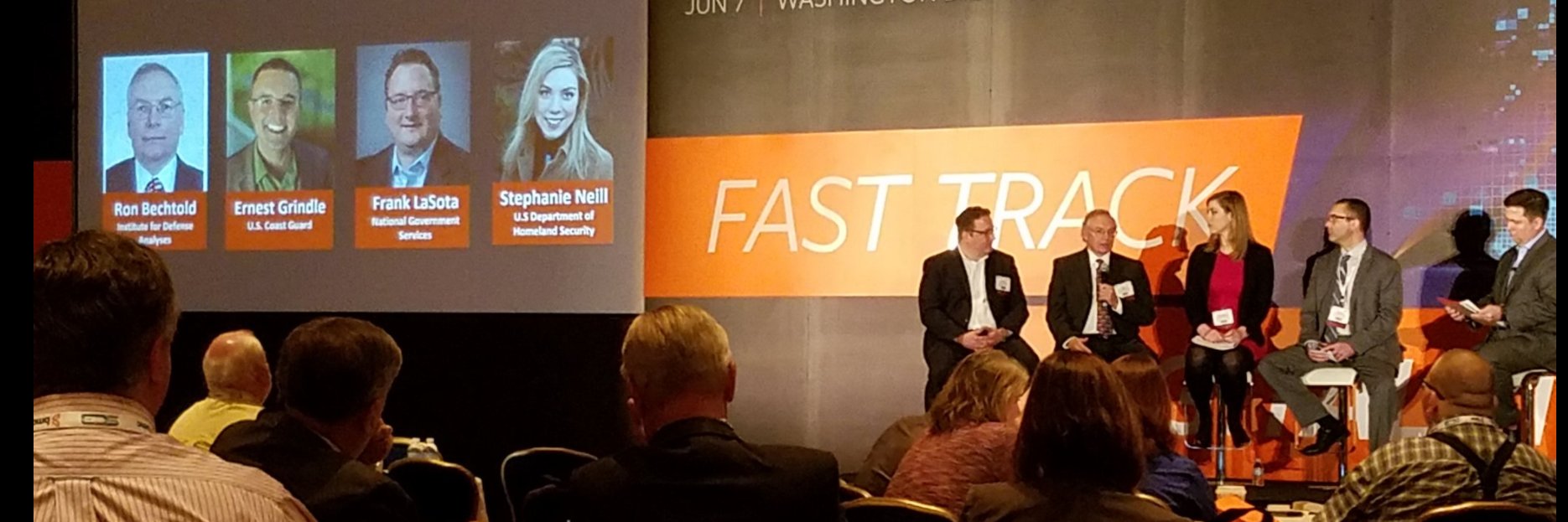
.@stephaneill (VP, Product, @Twitch at @Amazon) discusses high-performing product teams and scaling effective product leadership.
Neill also highlights the importance of team composition, incentives, and managing underperformers.
(video + transcript) https://t.co/VGq7s5i8Z4
New episode of Product Talk!🎙
In this podcast, Willow Innovations, Inc. VP of Product Melissa Pickering meets with @Twitch VP of Product @stephaneill for a conversation on building high-performing teams.
Listen now on Products That Count: https://t.co/8xhHMoMhmg
So many people ask me why someone who could work at Google or wherever would CHOOSE to work in government. @laurenalisa explains it so well here. It's not just "giving back." It's what you get, too.
https://t.co/8G3ZK3V9Jf
When you’ve built the wrong product that solves an unimportant problem or you’ve chosen to build the wrong features or you’ve chosen the wrong customer segments, no amount of sorcery on “go-to-market” is going to fix your woes.
But that doesn’t stop some product leaders (under whose leadership said product was built) from managing optics impeccably and (intentionally or unintentionally) complicating things to point at:
a) GTM alignment
b) adoption incentives & growth tactics
c) more deployment resources
d) infra / cross-team dependencies
e) or, the next big feature
as the silver bullet that will unlock amazing growth next quarter / next half / next year.
These product leaders appear at QBR after QBR with superb slides / docs, which are customized perfectly to appeal to the biases of the company’s senior executives and / or the company’s stated operating values.
Some executives, especially those who don’t have extremely high Product Sense, get manipulated by this show (and it is a show).
The other execs (including the profoundly gifted founder or product-focused CEO) often satisfice, thinking that “the team is doing everything it can”, “we’ve invested too much to give up now”, and “the alternative of firing the product leader feels worse”.
And so this show goes on for quarters and quarters & years and years. The emperor has no clothes but sadly the spectators can’t see, speak, nor kill the show.
ICYMI, here are the 3 books I recommended on the Ezra Klein show this week. The first one has a subtitle so long it doesn't fit in a tweet, but it's called Implementation and it's like one of the stories in my book but from 1973, and told in even greater nerdy detail.
7/20
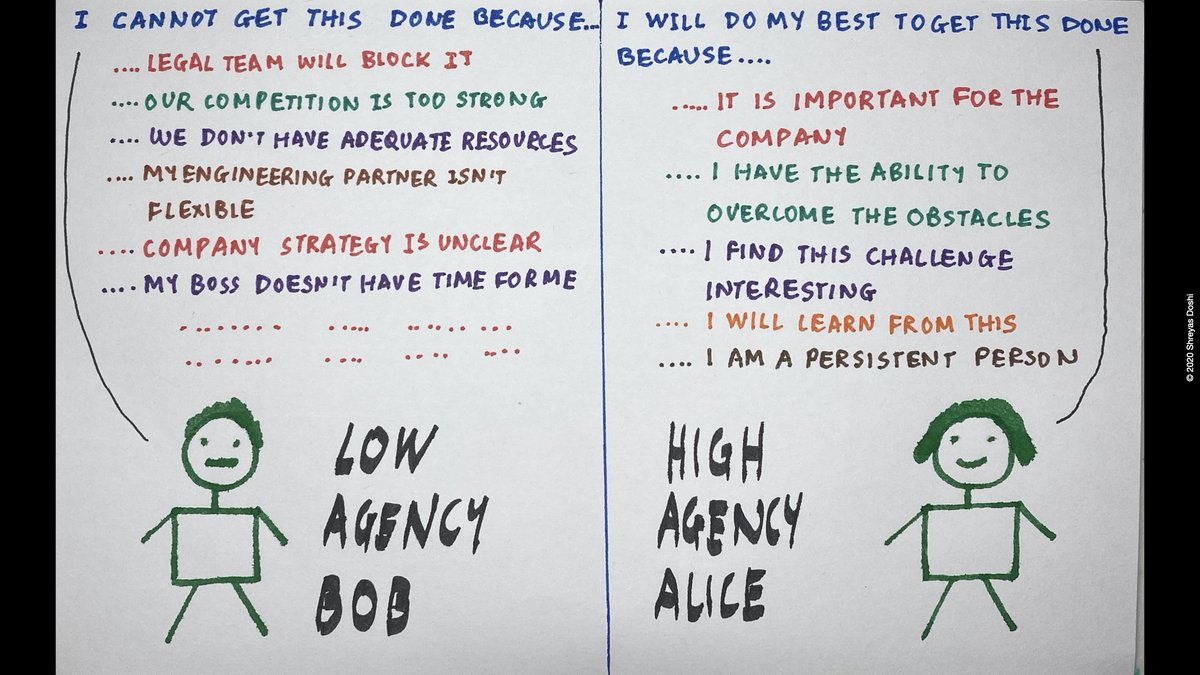
What Low Agency vs. High Agency looks like:
Note Low Agency Bob’s instinctive reaction when faced with a tough challenge. Note how everything is an “other” problem, not a "Bob problem"
Note how everything High Agency Alice says comes from a place of what 𝘴𝘩𝘦 can control
When you start managing someone, use your 1:1s in the first couple of weeks to understand their Context. Most new managers focus solely on Content (projects/goals/blockers). But Context + Content lets you move faster from Rapport to Credibility to Trust.
Example 1:1 questions:
1. How to define your product strategy. When I start a new job, I define a SWAG (Stupid Wild-Ass Guess) product strategy within my first two weeks. Here's my approach...
One of the most important pieces of feedback you can get from your manager is *how you are perceived* by folks in a position of power within your org. It plays such an important role in how you are reviewed, promoted, compensated and yet a candid discussion of this topic is rare.
The reaction someone has when you share something you worked on says a lot about the culture
1/ wait...why wasn't I included earlier? who told you to work on this?
2/ woah...this is awesome! thanks for tackling. can i help?
In B2B, everyone talks about how you should be clear on “what problem you are solving”.
To make this work in practice, split this question into 3 components:
- Buyer problem
- Champion motivation
- User problem
This format forces rigor, creates clarity, and gets you buy-in.
There are 3 ways to build confidence in your ability to do X without actually having done X.
1. See people who excel at X do it up close.
2. Work out a first principles understanding of X.
3. Develop confidence in your capacity to learn anything, including X.
You know you are no longer a startup when it takes world class horse-trading and a huge committee of PMs & Designers to ship any changes to the left nav of your product’s dashboard and you end up shipping a left nav that makes total sense internally and little sense externally.
When I say that you should try to work out of your calendar, it looks like the image below:
Every day at EOD, plan the next day
Try to keep meetings contiguous
Replace your calendar blocks with specific L task(s) from your to-do list
Schedule N & O tasks for low energy times
Bad design pitches are:
• Here's my solution
• Here's what it does
• Here's what's so good about it
Good design pitches are:
• Here's the problem
• Here's the impact of solving it
• Here's why what we've tried has failed
• And here is a way that we fix it