THE POWER OF LAND.
Zane Kiehne couldn’t even qualify to bid on his first cattle ranch. Twenty-four years later, he paid $200 million cash for America’s Greatest Ranch.
In 1994, Texas A&M put the Kyle Ranch on the market. It didn’t want much — just $40 an acre — but there was a catch. It was a cash-only sale. There was no tote the note on this one.
The bad news was Kiehne couldn’t pay $632,000. The good news was no one else wanted to pay $632,000.
Kiehne saw his opening.
He went back to Texas A&M with a full-boat offer — $632,000 — only he and his cousin Oliver would finance it with $170,000 down.
The ranch was theirs. The Kyle was sparse cattle country. Turns out it sat atop the Delaware Basin.
Kiehne understood that land is more than grass and fences. It is a bundle of rights and possibilities. He didn’t own the oil and gas — Texas A&M kept those rights — but his surface rights meant he could mine caliche and gravel, and sell easements for power lines, pipelines, cell towers, and boreholes. When fracking came to West Texas, water became liquid gold.
Zane Kiehne didn’t just buy ground. He made it work.
In 2018, he sold his water rights for more than half a billion dollars. Then he set his sights on the ranch he always wanted: New Mexico’s UU Bar Ranch. Turns out it wasn’t for sale. But Kiehne had a knack for making the impossible possible. He offered Bob Funk $200 million. Just as importantly, he offered Funk a six-year leaseback to wrap up his affairs.
That’s playing the long game: understanding what the other side needs, then structuring a deal that works for both the buyer and seller.
Kiehne and his wife, Tanya, have expanded the UU Bar. They’ve improved the roads, the fences, the waters, the cattle, and the world-class wildlife habitat.
Zane Kiehne couldn’t bid on his first ranch. But he learned the power of land.
Twenty-four years later, he paid cash for the one he wanted all along — and it wasn’t for sale.
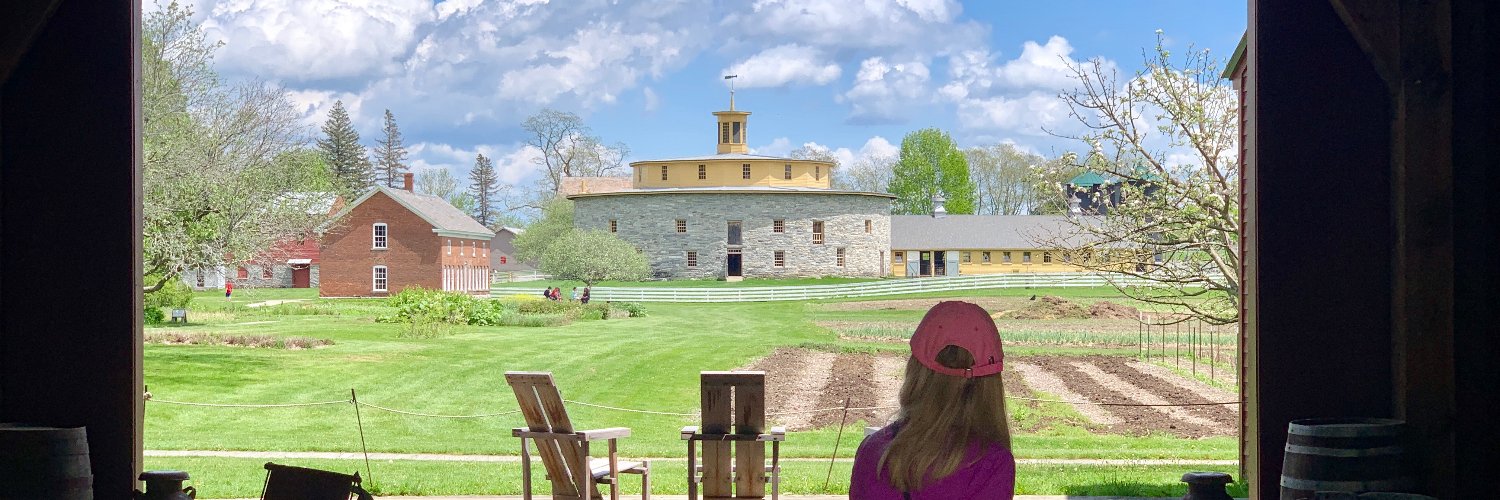
Photo Credit: @gustavfoto
💔 Attorney General Ken Paxton’s Cold Case Unit has announced that DNA analysis has conclusively identified recently recovered human remains as those of Jason Landry, who had been missing since December 13, 2020.
Landry, a 21-year-old Texas State University student, disappeared while driving from San Marcos to his family home in Missouri City, Texas. Shortly after midnight, his crashed and abandoned vehicle was discovered on Salt Flat Road in Caldwell County near Luling. Several of his personal belongings, including clothing, were found scattered near the crash site, but Landry was not located despite extensive searches by law enforcement, search teams, and volunteers.
On September 8, 2026, a local resident discovered human remains east of Salt Flat Road, between Soda Springs and Biggs Road. DNA testing conducted by the University of North Texas Center for Human Identification confirmed the remains belonged to Landry. The skeletal remains do not provide additional insight into the cause or manner of death, and investigators have found no indication of foul play.
#jasonlandry
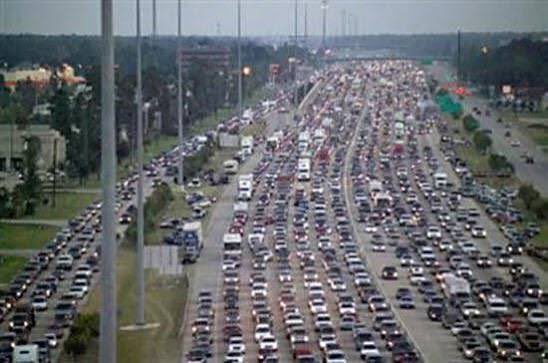
Houston’s apocalyptic evacuation from Hurricane #Rita, 21 years ago today. Climate-fueled chaos existed even then. Were you there? 20 yo me is in that traffic somewhere with my family.
If no hurricanes form in the Atlantic Basin by tomorrow morning, it'd be the first time in 112 YEARS that we've had no hurricanes in the Atlantic Ocean through September 21st.
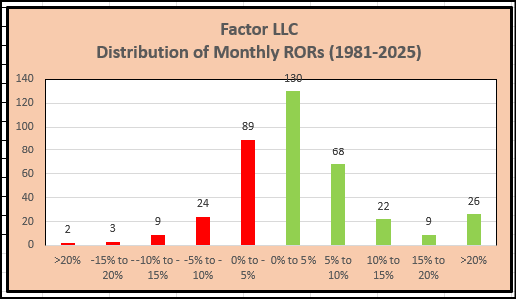
A little discussed aspect of successful trading is the need for right-side outliers. Stan the Man, George Soros and Winner Warren all have them
This is the distribution of monthly RORs for my trading firm, Factor LLC, dating back to 1981
A right-facing dinosaur with a dragging tail should be sought
Cut your losses short, let your winners run
Several default assumptions I make in trading
The next trade will be a loser
Uncertainty in a daily trend usually is resolved in the direction of the weekly trend
Uncertainty in a weekly trend is usually resolved in the direction of the monthly trend
That I have absolutely no idea where any given market is going
99% OF US WOULDN’T TURN DOWN $15 MILLION. MERVIN RAUDABAUGH IS THE 1%.
Mervin Raudabaugh Jr. is 86 years old. He farms 261 acres in Lancaster County, Pennsylvania.
He was offered $15 million for his place. The prospective buyer wanted to build a data center.
I have never met Mr. Raudabaugh. But I have met enough landowners to know that such a decision is never just about the zeros on the check. Which is why Mr. Raudabaugh said no.
Instead, he accepted a $2 million conservation-easement agreement with Lancaster Farmland Trust that will keep his family farm in farming forever. That’s a $13 million haircut.
But once the servers, substations, access roads, and parking lots move in, you can never bring that farm back.
This is not an argument against data centers. They power a growing part of modern life. And if someone offers you $15 million for your land, there is no shame in taking it. There are plenty of landowners who would say, “Take the money and go buy more dirt.”
Still, data centers don’t stop at the fence line. Your neighbors now dodge the truck traffic. They stare down a massive construction project. And talk about a view.
There’s the rub: One landowner’s right to sell versus the adjacent landowners’ hobbled existence. Mr. Raudabaugh made a different calculation. He chose open ground, food production, family legacy, and the opportunity for future generations to work that same soil down the road.
Lancaster County understands the value of that choice. More than 99% of its 5,100 farms are family-owned. The average farm? It’s just 75 acres. Jeff Swinehart of Lancaster Farmland Trust described it perfectly: “The properties are more than just monetary gain to him. They’re his legacy.”
Legacy gets tossed around too loosely these days. In Lancaster County, it is simply the truth.
Mr. Raudabaugh could have turned his 261 acres into a very different kind of asset.
He chose to keep his farm in farming.
Malwarebytes Anti-Malware v5.6.5.306
Advanced malware detection and removal tool to protect your PC from threats.
https://t.co/DFFaTbeugh
#computers#computing#software
THE VALUE OF PUTTING IT BACK TOGETHER.
In Far West Texas, the land has a way of making a point without raising its voice.
Drive long enough through Brewster County, and you understand why.
The distances are serious. The horizons are serious. The country is so vast that 10,000 acres ranks as a tidy little place.
But it certainly isn’t.
That’s why the Texas General Land Office’s acquisition of Brewster Ranch deserves more than a quick headline. On October 24, 2024, the GLO acquired 353,785 acres from Brad Kelley, for $164.6 million, or about $465 an acre.
Brewster Ranch wasn’t handed down intact by some 19th-century cattle king. It was assembled. Patiently. Over more than two decades. Kelley acquired 78 separate deeds and pieced together portions of historic ranches across a hard, beautiful corner of the Greater Big Bend Ecosystem. By 2023, Brewster Ranch peaked at more than 422,000 acres.
That’s aggregation. And it’s one of the least appreciated creators of value in American land.
A one-carat industrial diamond is worth a thousand dollars. Put 50 or 100 carats together in a single exceptional stone, and the math changes in a hurry. There is a tipping point where it is no longer a simple commodity calculation. It’s something rarer. More useful. And far more valuable.
Land works the same way. A small outparcel may have a gate, a well, some wildlife, and a tax bill. Put enough of the right pieces together — contiguous country, water, access, habitat, operating scale, mineral potential — and you create something that is impossible to replicate.
That matters all the more in the Big Bend Country of Far West Texas.
Kelley understood this. He bought land patiently. He merged properties together. He let the country be country. The GLO’s purchase was smaller than the full assemblage, but at 353,785 acres it remains the largest single transaction in the Greater Big Bend Ecosystem since 1943.
The purchase was made on behalf of Texas’s Permanent School Fund. The GLO has identified potential revenue opportunities in agriculture, hunting, groundwater, minerals, carbon sequestration, and other uses compatible with the property’s natural resources.
That’s a long way from locking a gate and hoping the next buyer pays more.
Stewardship and economics are not enemies. On a property of this scale, the assignment is to understand the whole board: wildlife, water, grazing, recreation, access, neighboring lands, and the options that should still be available a generation from now.
There will always be a market for chopping up land. Sometimes that is the right answer.
But there’s another story worth telling.
It’s the story of people with the patience to assemble, improve, and protect country until it becomes more than the sum of its parcels.
Brad Kelley built Brewster Ranch one deed at a time.
The Texas General Land Office now has the opportunity to steward it with the same long view.
That’s not just a Texas story. It’s a lesson in what land can become when somebody has the vision to put the pieces back together.
THE STATE OF TEXAS TRIED TO PULL A FAST ONE.
It not only backfired. It backfired badly. Epically.
For 50 years, Texas Parks & Wildlife leased thousands of acres at Fairfield Lake from Vistra Energy. At a dollar a year, it was the ultimate sweetheart deal, but it was also cancellable on short notice. Said so in every lease agreement since 1971. In 2018, when Vistra shuttered the coal plant that was cooled by the lake, that deal was dead in the water.
Three years later, Hortenstine Ranch Company brought Fairfield Lake to market for $110 million. Texas Parks & Wildlife couldn't afford to buy it. But the willing seller found a willing buyer: Shawn Todd, a Dallas developer, whose Todd Interests offered $103 million. Once that news got out, it didn’t take long for the slings and arrows to start flying.
Todd Interests had Chinese backers. (Not.) Todd Interests planned to drain the lake. (Not.) Todd Interests was going to desecrate a historic cemetery. (Not.) Bills were drafted in the Texas House and the Texas Senate to seize the property via eminent domain. Neither made it out of committee.
Senator Nathan Johnson, who routinely votes with the Sierra Club, drew the line: "I want the otters and the nutria to have a place to go, but government imposing upon private-property rights is the wrong way to go about preserving the environment."
On June 1, 2023, Todd Interests closed on Fairfield Lake. Nine days later, Texas Parks & Wildlife Commission filed a petition for condemnation to acquire the entire property, i.e., not just the former state park but twice the size of the former state park. The members of the commission also drafted a new internal policy restricting their own use of eminent domain.
Five months later, the two sides met in court in Fairfield, Texas. Todd Interests relied on Eddie Vassallo to present its case. The acclaimed property-rights attorney had determined a $450 million valuation. The state’s outside legal counsel, Charles McFarland, countered at a paltry $85 million. Not only was this $18 million less than what Todd Interests had paid just months before, but it barely eclipsed the $72 million that Texas Parks & Wildlife claimed to have invested in the park.
The three special commissioners responded with the largest condemnation award in Texas history: $418.3 million. Fairfield Lake was worth the sum of its parts, which included a 4,350-foot dam, considerable senior water rights, and the future value of Todd Interests’ members-only Freestone Club.
Shawn Todd’s response? "We do not want the state of Texas's money. We want to move forward with our development."
Texas Parks & Wildlife’s response? It ended all plans to acquire Fairfield Lake.
The moral of the story? Don't mess with Texans’ private-property rights.
BRINGING THE XIT BRAND TO TEXAS.
Some stories you file and forget. This one stayed with me.
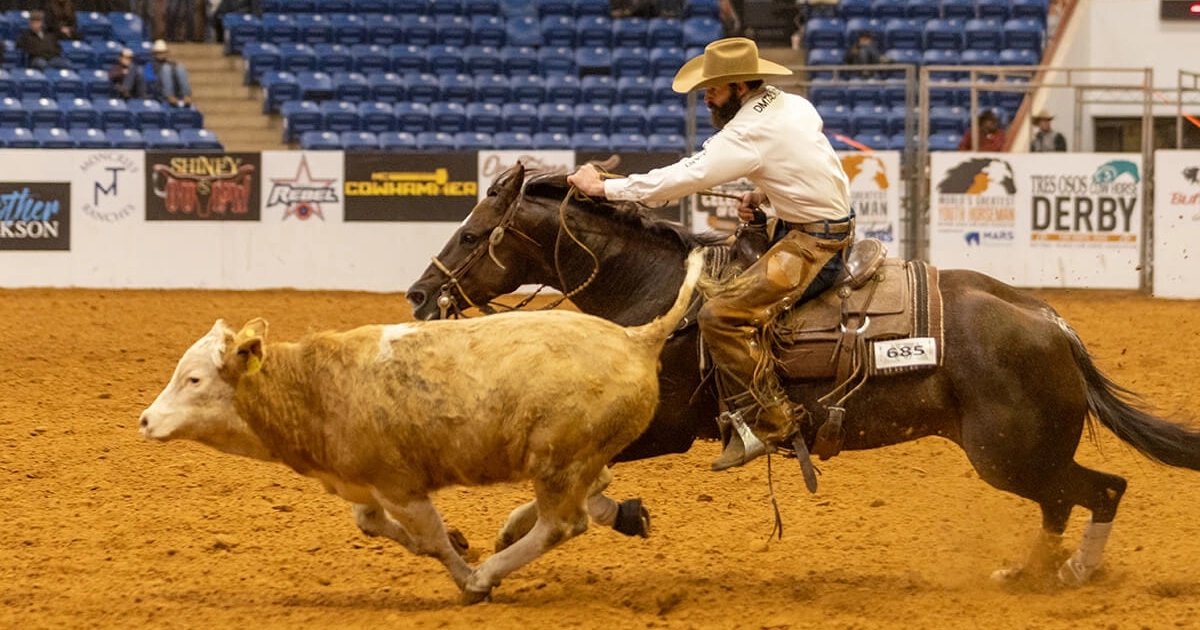
A few years back, I caught up with Drew Knowles at the NRCHA Celebration of Champions in Fort Worth. Drew was watching his 7-year-old mare, Smart Ladies Sparkle, compete in the Open Two Rein World Finals. A folded paper sign stood on the center of his table.
Three letters: XIT.
If you know Texas history, you know the brand. In 1882, the State of Texas traded 3 million acres of Panhandle ranchland for the construction of a new state capitol. The XIT Ranch became the largest cattle operation in American history: eight divisions with 150 cowboys, 1,000 horses, and 150,000 head of cattle at its peak. But by 1963, the last acre had been sold. The brand went dark.
Almost three decades later, an 11-year-old Knowles found a first edition of J. Evetts Haley’s The XIT Ranch of Texas on his grandmother's bookshelf. It was Thanksgiving Day 1992. She sat him down and told him the story of his great-great-great-grandfather, John V. Farwell, the Chicago entrepreneur who fast-forwarded the Capitol Syndicate by raising $5 million in London and launching the great ranch.
“Everything you need to learn is in this book,” she said. And learn he did.
He brought that heritage and a lot of boots-on-the-ground experience to the Return to the Remuda Sale at the Four Sixes Ranch in 2021. When the auctioneer called out, “Sold to the XIT,” Taylor Sheridan made a point of introducing himself to Knowles. The two struck up a friendship. Months later, Sheridan texted Knowles a link to a Hall and Hall listing in the Panhandle — 11,520 acres on the Rita Blanca Division of the XIT.
There's a windmill on the property that the Farwells installed. Still running.
When Drew and Abby Knowles bought the Rita Blanca, the XIT was back in Texas after a 60-year hiatus, cattle on the ground, brand on the gate, same Panhandle dirt it always called home.
Said Drew, "My job is to take care of the land so it can take care of my family and me, to honor the past and bring it into the future."
XIT. The brand too big to die.
@XITRanch
AMAZON PRIME COSTS $139 A YEAR, AND MOST MEMBERS USE TWO FEATURES:
Free shipping and Prime Video. That's it.
But Prime is a giant bundle, and some of the perks you're already paying for quietly expire every month.
Here are 12 most members never touch 🧵
THE POWER OF NO.
Jim Ratcliffe wanted a Defender, an old boxy one. Built since 1948. Discontinued in 2016.
When the British entrepreneur asked Land Rover if he could restart production himself, they said no.
So he built his own. And he built it better.
Ratcliffe named it after the pub in London where the idea took shape. Bought a BMW plant in France. Sourced a straight-six engine and an 8-speed automatic. Designed a purpose-built, go-anywhere work truck for people who actually need one. No lifestyle branding, no watered-down off-road package, and definitely no apologies.
Just a serious vehicle for people dealing with serious terrain.
INEOS handed me the keys to one for a thousand-mile run across Texas and New Mexico. On the highway, it drew wide-stares. The Grenadier has that effect: bold, brash, built like it means it.
But pavement wasn't the point.
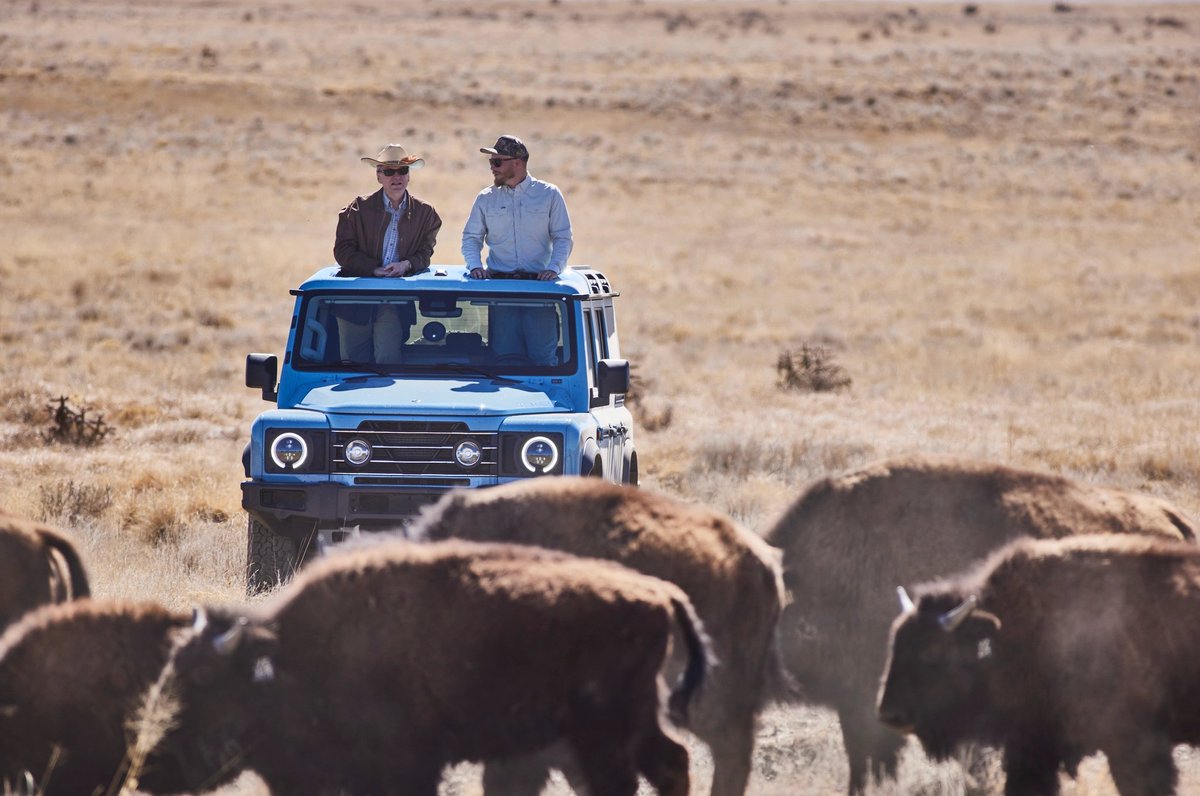
The point was Vermejo: Ted Turner's half-million-acre ranch straddling the New Mexico-Colorado border. Rob Turner, one of Ted's grandson, was my guide. We spent an afternoon tracking bison across open pasture, emerging from the safari roof as the herd made their way to us, around us, and beyond us. Bison at close range are indifferent to pretty much everything. Think of it as mind over matter. They didn’t mind, and we didn’t matter.
The Grenadier was indifferent to everything else. Creek beds, washboard roads, steep inclines, nosedive descents, the full elevation swing from high-desert savannah to sub-alpine terrain. It handled all of the above without ceremony or complaint.
That's the tell.
The vehicles that matter most to landowners aren't the ones that look good at the valet stand. They're the ones you can put 50,000 miles on without second guessing.
For large landowners, the math is elementary: You need on-road manners to get you to the gate and off-road chops to get you to where the buffalo roam.
The Grenadier covers both.
Photo credit: Gus Schmiege