The island of real images is a metaphor to help you visualize how Stable Diffusion works.
Let the U-NET guide you in this journey from the sea of noise to the peak of sharpness at https://t.co/ztx4yOpAZJ
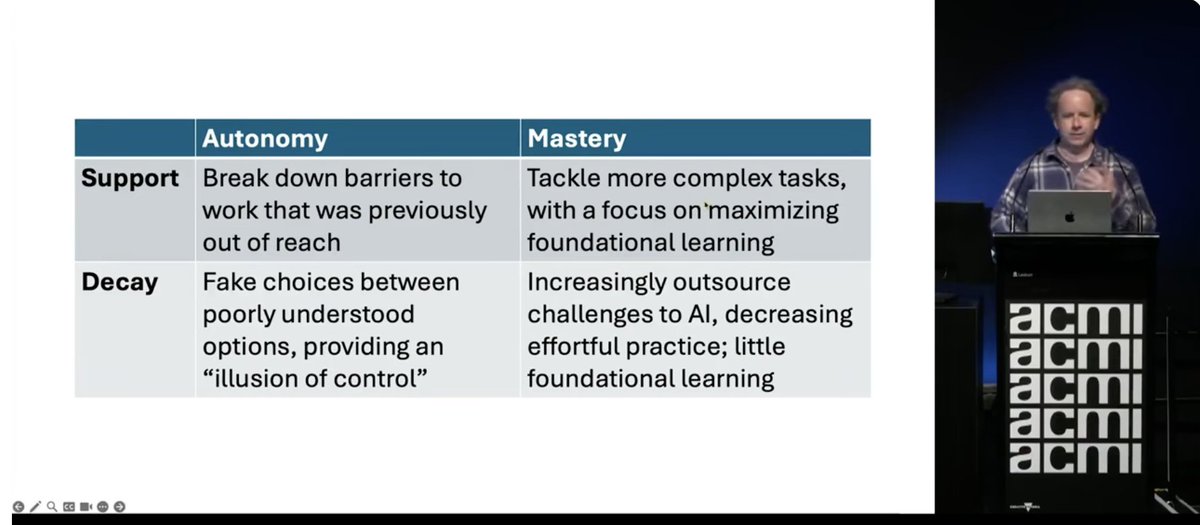
"Mastery is not about creating more outputs or products. It is about building genuine ability. AI can either decay or support human mastery.
The people selling you AI models & your bosses at work don’t care about your mastery. They will put you in the decay world every time."
A French engineer who lives quietly in Paris has spent 30 years writing software that the entire internet now runs on without knowing his name.
He wrote the code that streams every YouTube video, every Netflix show, every TikTok clip. He wrote the code that runs the virtual servers underneath AWS, Google Cloud, and Microsoft Azure. He calculated more digits of pi than anyone in history. He has no Twitter. He has no marketing. He just keeps shipping.
His name is Fabrice Bellard.
Here is the story, because almost nobody outside the systems programming world knows what one man has built.
Fabrice was born in 1972 in Grenoble, France. He studied at École Polytechnique, the top French engineering school. He never went to Silicon Valley. He never built a startup empire. He just wrote code.
In 2000 he started a project called FFmpeg, an open-source multimedia framework for encoding, decoding, and streaming video. He was 28. The project did one thing nobody else had done well. It handled every video and audio format that existed, in one library, on every operating system. He led it himself for years.
Today FFmpeg is the invisible engine of the internet. YouTube uses it. Netflix uses it. VLC uses it. Chrome and Firefox use parts of it. Every Android phone, every iPhone, every smart TV, every video editing tool you have ever touched runs FFmpeg somewhere underneath. If you have watched a video on a screen in the last 20 years, Fabrice's code processed it.
He was not done.
In 2003 he started QEMU, a machine emulator and virtualizer. He wrote it solo until version 0.7.1 in 2005. QEMU lets you run any operating system on any other operating system. It became the foundation of modern virtualization. KVM, the Linux kernel hypervisor, runs on top of QEMU. Every major cloud provider, AWS, Google Cloud, Microsoft Azure, IBM Cloud, runs virtual machines on infrastructure built around it. The Quick Emulator is the most cited piece of cloud infrastructure code on Earth.
He kept going.
In 2001 he won the International Obfuscated C Code Contest with a small C compiler that grew into TCC, the Tiny C Compiler. TCC can compile and boot a Linux kernel from source in under 15 seconds. In 2004 he calculated the most digits of pi ever computed at the time, using a personal desktop computer and an algorithm he derived himself called Bellard's formula. In 2011 he wrote a complete PC emulator in pure JavaScript that runs Linux in your browser, a project called JSLinux that engineers still cannot believe is real.
In 2019 he released QuickJS, a small but complete JavaScript engine that fits where V8 cannot. In 2021 he released NNCP, a neural network based lossless data compressor that immediately took the lead on the Large Text Compression Benchmark.
Then he turned his attention to large language models. He built TextSynth Server, a web server with a REST API for running LLMs locally. He released ts_zip and ts_sms, compression utilities that use language models to compress text and short messages at ratios traditional algorithms cannot reach. He released TSAC, a very low bitrate audio compression system. In December 2025 he released Micro QuickJS, a new JavaScript engine for microcontrollers, separate from QuickJS, designed for environments with almost no memory.
Fabrice co-founded a telecom company called Amarisoft in 2012, where he serves as CTO. Amarisoft builds 4G and 5G base station software used by carriers and labs around the world. He has been running it for over a decade while continuing to ship personal projects from his own home page at bellard dot org
He has no Twitter. He has no Instagram. He gives almost no interviews. His personal website is a flat list of projects with no styling, no fonts, no marketing copy. Just titles and links.
A quiet French engineer who never moved to Silicon Valley wrote the code that quietly runs the internet.
He is still shipping.
My MLSys keynote on AI writing systems code got more interest than I expected. The recording will take a while, so in the finest tradition of AI labs sharing blog posts, we’re starting the Core Automation Blog with this one https://t.co/h4uSOyrglf
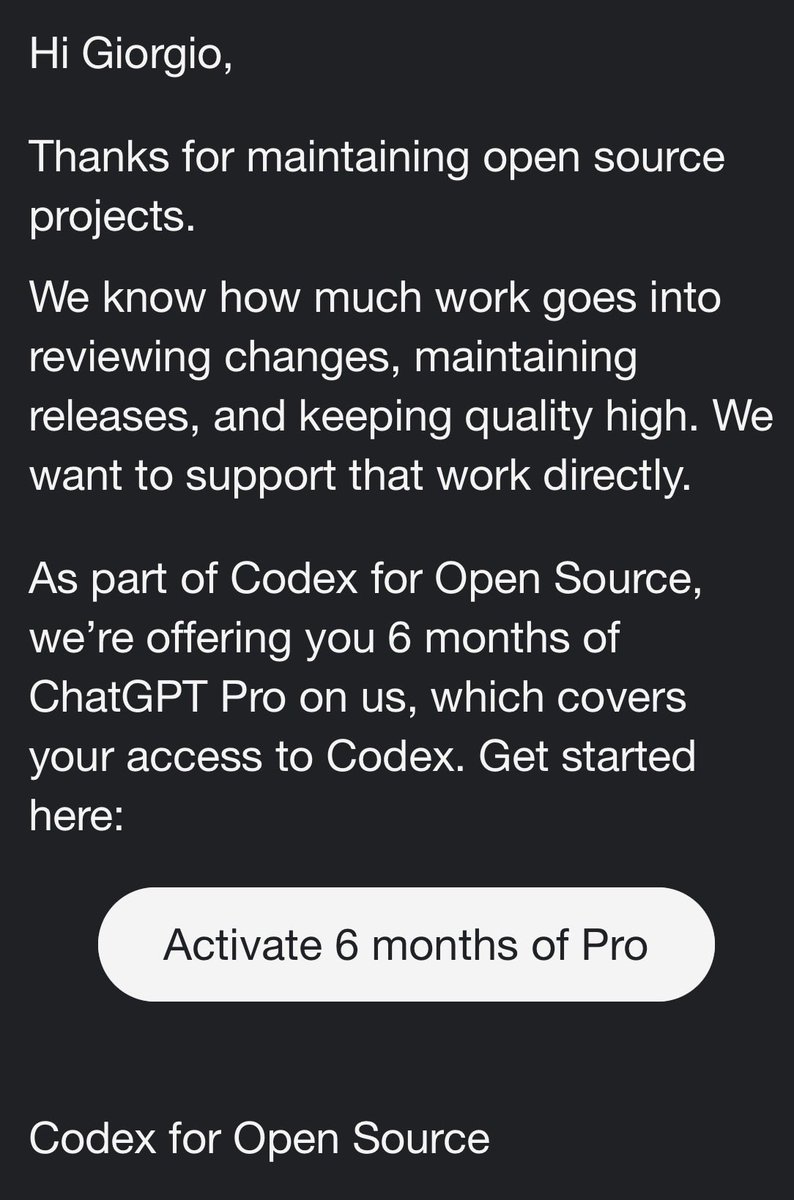
Yesterday was my first day at @OpenAI working under the amazing @romainhuet.
I've spent the better part of two years pushing the frontier of having models write code for you, shipping updates week after week for @RepoPrompt.
Transitioning from being a founder is never easy, especially when you have a community of amazing developers who invested so much in your tool.
Thankfully Romain worked hard to ensure that all those users would be taken care in the process, and if you're one such user, you should have an email waiting in your inbox with the details!
I'm very excited to be joining this talented team and work alongside everyone at OpenAI contributing to codex.
My concern for the AI era, or at least this phase of it, is that a generation is being taught that "close enough" is just fine.
Take @AnthropicAI for example. Text wrapping in Claude Code has been broken for weeks. Superfluous spaces appear on the left edge. One engineer to another: you know its an out by one error.
I refused to believe that nobody has noticed this. The shtick they are selling is that AI can fix this kind of thing. Either they tried to prompt a fix, and Claude ain't good enough to fix an out-by-one error. Or they haven't attempted it because it is "close enough".
It can't be the case that AI is only good enough if we lower our standards. It can't.
I'm well aware I have both feet firmly planted in my "grumpy old man" phase of life...
Personal update: I've joined Anthropic. I think the next few years at the frontier of LLMs will be especially formative. I am very excited to join the team here and get back to R&D. I remain deeply passionate about education and plan to resume my work on it in time.
Imagine every pixel on your screen, streamed live directly from a model. No HTML, no layout engine, no code. Just exactly what you want to see.
@eddiejiao_obj, @drewocarr and I built a prototype to see how this could actually work, and set out to make it real. We're calling it Flipbook. (1/5)
Since we open-sourced pi-autoresearch, @Shopify teams have been running it on everything.
Results so far:
Unit tests: 300x faster
React component mounting: 20% faster
CI build time: 65% reduction
Made pnpm run faster
Autoresearch never stops trying things you'd never have time to try.
Repo: https://t.co/473UFWKanV
as more and more people start using pi, i now get this question often:
"what are essential extensions i should install?"
none. zero. start vanilla. only build/install something if you feel a recuring pain that you can't get rid of by reevaluating your workflow learned with another harness.
i have 2 extensions:
- promot-url-widget.ts in pi-mono/.pi/extensions: if a git issue/pr url is mentioned in a user message, it displays a little widget above the editor with the issue/pr title, submitter account id, and link to cmd+click. if i have multiple sessions open i know immediately what it's about
- pi-diff-viewer, simple slash command spawning a GUI that lets me annotate a diff or any file in the working directory. once done, annotations are feed back to pi as a prompt, with a request for the model to act on the annotations.
this is all i ever use. no, i don't use web search, mcp, multi-agents, whatever. i'm likely still outperforming you productivity wise with less token usage.
My friend @HamelHusain interviewed me about Sparky.
(This was recorded back in February, before Sparky and I went to NVIDIA GTC.)
https://t.co/1zGrcYjLfR
Generate images in less than 1 second. 99% cheaper than NanoBanna. 🚀 😱
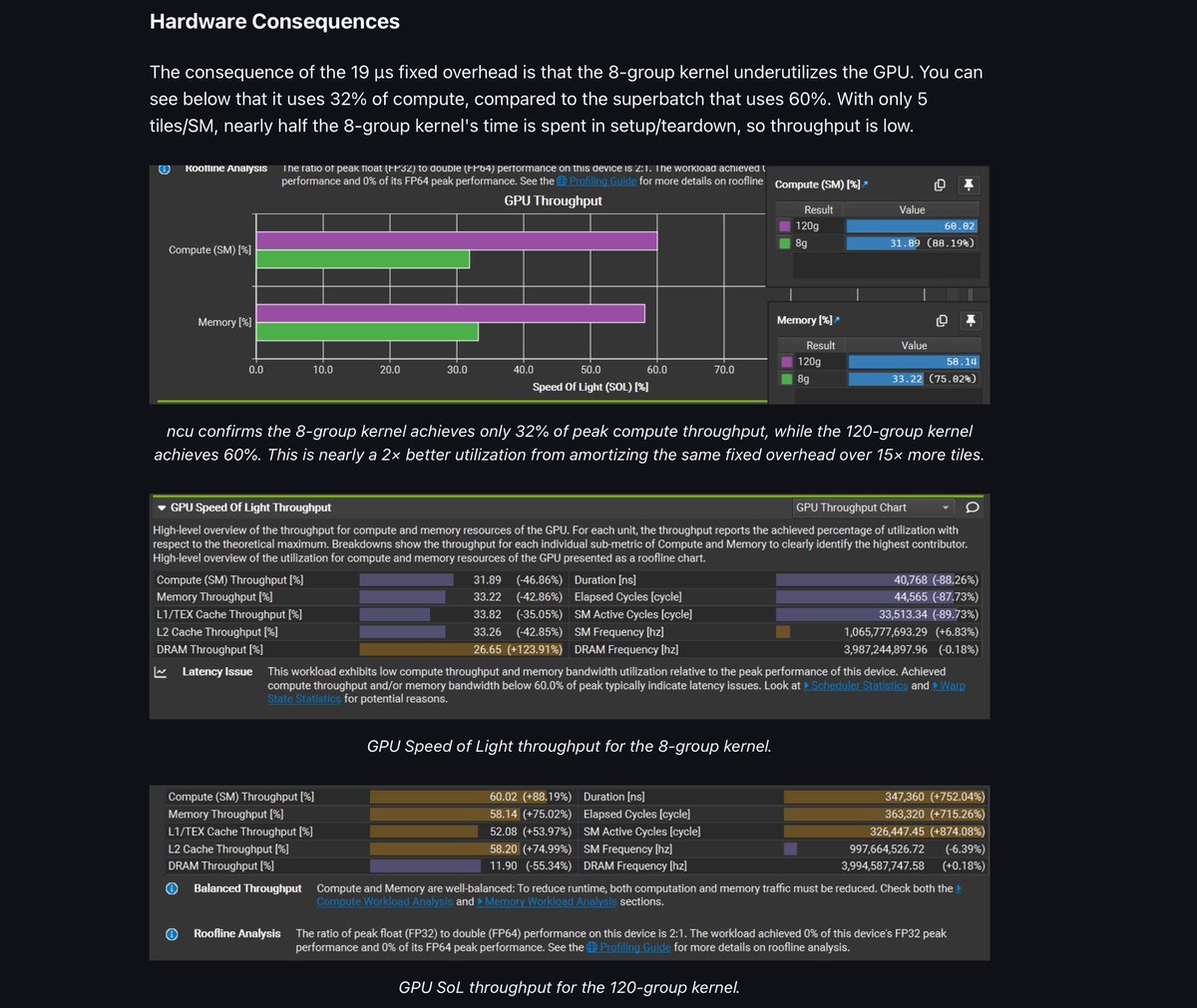
Our latest 26.2 release ships FLUX.2 image generation with a 4.1x speedup over torch.compile on NVIDIA Blackwell - translating to a 5.5x TCO advantage with AMD MI355X. Read more ⬇️
Sparky is going to have his own "pod" at NVIDIA GTC, where conference-goers will be able to come and talk to him all day.
And, I just learned he may be off the waitlist to run on Opus-Fast, which means he'll be quicker on his feet. Building an OpenClaw patch for it now!
A masterclass from @jeremyphoward on why AI coding tools can be a trap -- and what 45 years of programming taught him that most vibe coders will never learn.
- AI coding tools exploit gambling psychology
- The difference between typing code and software engineering
- Enterprise coding AND prompt-only vibe coding are "inhumane" i.e. disconnecting humans from understanding-building
- AI tools remove the "desirable difficulty" you need to build deep mental models.
Out on MLST now!