Type 1 diabetes causes pancreatic beta cells to be destroyed over time, leading to insulin deficiency and hyperglycemia. PET imaging is now giving us greater insight into a disease process that affects 9.5 million people globally. Learn more: https://t.co/V6rntJB2vH
@stokgoz18
New in JNM: PET imaging offers promising insights into the decline of total β-cell mass in the course of type 1 diabetes and may offer valuable information for timing to restore β-cell function. https://t.co/2NzBFnRMLg
#NuclearMedicine#PETscan@stokgoz18
Individuals with remission of type 2 diabetes after RYGB have better beta cell function than those not achieving remission, but the groups did not differ with respect to beta cell mass. https://t.co/OEsEijdh21
β-cell mass does not differ between individuals with and without PBH #Hypoglycemia after RYGB argue against expansion of β-cell mass to explain PBH. https://t.co/wXgkE7dvlD https://t.co/RaiAAfCxsI
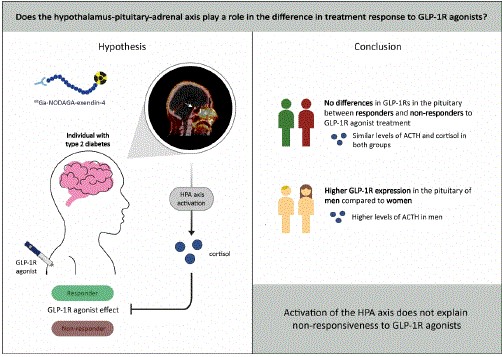
Acute interrogation of the HPA axis does not indicate a role for pituitary GLP-1R expression and HPA axis stimulation to explain the difference in treatment response to GLP-1R agonists among individuals with #T2D@Diabetes_ADA https://t.co/0XzEADVBYl
Acute interrogation of the HPA axis does not indicate a role for pituitary GLP-1R expression and HPA axis stimulation to explain the difference in treatment response to GLP-1R agonists among individuals with #T2D@Diabetes_ADA https://t.co/0XzEADVBYl
Our latest publication is out in @Diabetes_ADA we investigated the role of the HPA axis in treatment differences to GLP-1R agonists. We found substantial uptake of radiolabeled exendin in the pituitary of people with type 2 diabetes, with men having higher uptake.
Activation of the HPA axis does not explain non-responsiveness to GLP-1R agonist treatment in individuals with type 2 diabetes.
Read Here➡️ https://t.co/2lbYA8KodE
@ADA_Pubs
That’s it, #EASD2023 has ended🥹
There is so much left to catch-up on - registered delegates have exclusive access to presentation recordings https://t.co/LAeMkbgqxV
Thanks for joining - we hope you enjoyed #EASD2023 as much as we did😍
Already looking forward to #EASD2024?😉
This week I attended the @EANM_NucMed congress in Vienna, Austria. It was a great experience to be part of this event full of interesting talks, discussions and connections from all around the world! #EANM23#NuclearMedicine#congress#Science
It's not over till it's over! A few more topics to go, before the closure of this year's INNODIA annual meeting. A big shout out to all of the passionate people in the INNODIA family for the tireless work and huge efforts helping make INNODIA so unique.
This review highlights the role of exercise on #Alzheimers pathology in APOE ε4 carriers, and the effect on mechanisms contributing to AD including cognitive function, Aβ and Lipid metabolism, neuroinflammation, neurotrophic factors and vascularization: https://t.co/rWB5bwZH8Q