If you visit someone's house, and one of the first things you notice is the dust on their chandelier, the dust on their tv, the dust on their table, don't ever go back to that person's house. Not because their house isn't clean but because your heart isn't. Someone opened their door to you. They welcomed you into their home with an open heart. They shared their time, their food, their laughter and their space, and instead of appreciating their hospitality, you focused on their imperfections. That's says far more about you than it does about them because people with grateful hearts notice kindness.Before they notice flaws. It's about honoring the heart that welcomed you with love and kindness. And all you bring into someone's home is judgment and negativity. And maybe the place that needs cleaning isn't their house. It's your heart.
Today is a dark day for freedom and democracy in Europe. General chat surveillance has been implemented in Brussels. A disgrace.
The so-called Chat Control 1.0 cleared a crucial hurdle in the European Parliament today. This means platforms may once again be allowed to scan private messages, officially on a “voluntary” basis, but in practice this marks the return of indiscriminate monitoring of private communication.
What makes this especially bitter is that a majority of the MEPs who voted were reportedly against it. According to Patrick Breyer, 314 MEPs voted against the regulation, 276 voted in favor and 17 abstained. And yet the rejection failed because it was not enough to have a simple majority of those voting. An absolute majority of all MEPs would have been required.
That is the democratic scandal.
When a majority of those present votes against a proposal and it still passes because a formal threshold is not reached, it does not feel like democratic decision-making to many citizens. It feels like a procedural trick.
And it becomes even more problematic when you look at the context: Chat Control had already been rejected before. Yet the issue was put back on the agenda shortly before the summer break, through an urgent procedure, at a time when absences could become decisive.
This is not just some technical regulation. It goes to the very core of private communication. It is about whether digital messages remain fundamentally private or whether platforms may systematically scan content again, without concrete suspicion, without a court order and without any individual cause.
A free society must not turn private communication into a potential surveillance zone. Anyone who takes digital fundamental rights seriously cannot accept millions of innocent people being placed under general suspicion.
Today, a dangerous signal was sent: fundamental rights can be hollowed out through procedural logic, timing and political tricks. Not through an open, clear and honest majority, but through a system in which absence effectively helps the supporters.
This is a dark day for Europe.
Not because the fight is over, but because today showed how easily digital fundamental rights come under pressure when surveillance logic, symbolic politics and institutional tricks come together.
Anyone who wants a free internet, anyone who wants to protect private communication and anyone who takes democracy seriously should talk about this.
Share this issue. Inform yourself. Look at who voted how. And never forget: freedom rarely disappears all at once. It disappears step by step, often in technical details, often in complicated procedures and often exactly when too few people are watching.
Game theory teaches you a painful truth: good intentions do not protect you from bad incentives. If the payoff rewards selfishness, selfishness will appear, even in “nice” people. Build rules, consequences, and boundaries that make cooperation the profitable move, or you will keep getting punished for being naive.
@RianSweetDoris@MyBiasMod Superfluidity is such a compelling metaphor.
Most people try to push harder. Very few try to reduce viscosity. Removing sand from the gears beats grinding the gears.
1. Career-wise, children should not be encouraged to “follow their passion.” Orchestrate their paths for them; parents know better.
2. Your first child is not an assistant parent in any way. Do not overburden them with responsibilities.
3. As parents, when you take a stance on something against your kids, your partner must support you. You cannot say no to movies and then have your spouse allow it or plead on behalf of the children. There must be unity.
4. Parents should not always be friends with their children. Sometimes fear is necessary.
5. Parents should model every lifestyle they want their kids to emulate. Don’t just talk; live the talks. Be the example you want them to follow.
6. No matter how rich you are, sometimes allow your children to experience the harshness of life early to prepare them for adulthood.
7. You have failed as a parent if you are raising obese children. Strict diets and exercise habits should start young, even if unpopular.
8. Boys should be taught toughness early, and girls should be taught independence.
9. Kids should earn privileges, not receive them automatically because of age.
10. Not every child deserves equal treatment; some need more discipline than others.
11. Giving children too much freedom at a young age is reckless.
12. Children should not always be rewarded for participation; winning matters.
13. Teaching children about “self-esteem” first can produce narcissists.
14. Telling children they are “special” all the time sets them up for disappointment.
Kids do not need endless praise. Too much praise can stunt resilience.
15. Children should be disciplined publicly sometimes to teach shame and social awareness.
16. Gender roles exist for a reason. Ignoring them can confuse children. A boy and girl should not be raised the same way, especially when it comes to chores.
17. Kids should not always get new toys or gifts for good behavior; it teaches manipulation.
18. Parents who prioritize kids’ happiness over discipline are doing them a disservice.
19. Parents who excuse bad behavior because “they are children” are failing them.
20. Teach them about sex education. Teach them that if someone touches them inappropriately, they should report it to you.
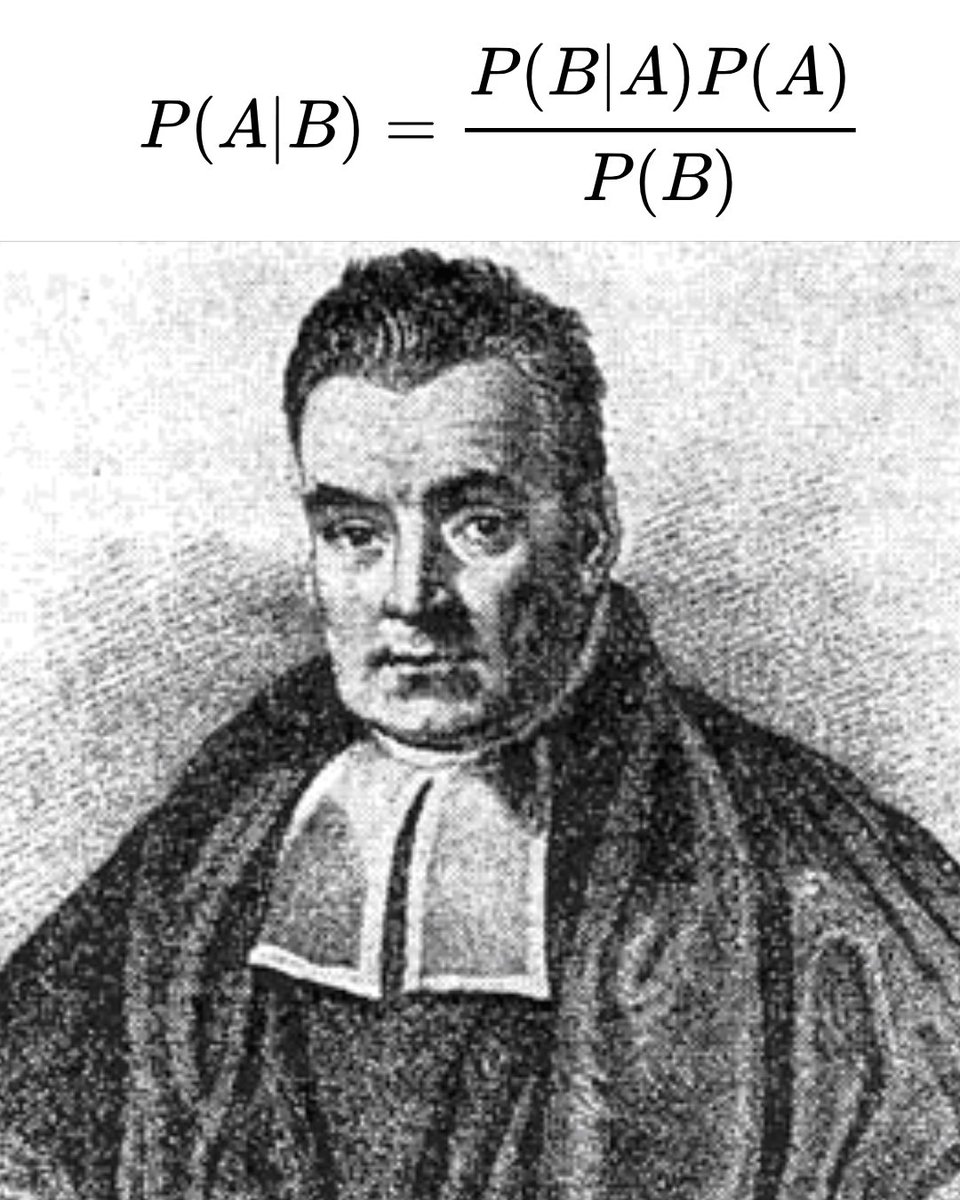
Bayes’ theorem is probably the single most important thing any rational person can learn.
So many of our debates and disagreements that we shout about are because we don’t understand Bayes’ theorem or how human rationality often works.
Bayes’ theorem is named after the 18th-century Thomas Bayes, and essentially it’s a formula that asks: when you are presented with all of the evidence for something, how much should you believe it?
Bayes’ theorem teaches us that our beliefs are not fixed; they are probabilities. Our beliefs change as we weigh new evidence against our assumptions, or our priors. In other words, we all carry certain ideas about how the world works, and new evidence can challenge them.
For example, somebody might believe that smoking is safe, that stress causes mouth ulcers, or that human activity is unrelated to climate change. These are their priors, their starting points. They can be formed by our culture, our biases, or even incomplete information.
Now imagine a new study comes along that challenges one of your priors. A single study might not carry enough weight to overturn your existing beliefs. But as studies accumulate, eventually the scales may tip. At some point, your prior will become less and less plausible.
Bayes’ theorem argues that being rational is not about black and white. It’s not even about true or false. It’s about what is most reasonable based on the best available evidence. But for this to work, we need to be presented with as much high-quality data as possible. Without evidence—without belief-forming data—we are left only with our priors and biases. And those aren’t all that rational.
𝐓𝐰𝐨-𝐭𝐢𝐦𝐞 C𝐡𝐚𝐦𝐩𝐢𝐨𝐧𝐬 𝐨𝐟 𝐭𝐡𝐞 #𝐓𝐀𝐓𝐀𝐖𝐏𝐋. 🏆❤️��
From the first ball to the final roar, we owned the journey. 🔴✨
Top of the table all season, with a new star shining every night. 🌟
Built on belief 🤝, powered by depth 💪, and driven by togetherness ❤️🔥.
A special bunch. A deserving triumph. 🥹���