🇸🇦🚢 Saudi Arabia has rebuilt its oil route to Asia now that Bab el Mandeb is effectively closed to it.
Shuttle tankers load crude at Yanbu and run north through the Red Sea to Egypt's Ain Sukhna terminal on the Gulf of Suez.
At Ain Sukhna the oil is discharged entirely and enters the SUMED pipeline, crossing Egypt overland to emerge at Sidi Kerir on the Mediterranean side.
A different tanker then loads it there for the run to Asia.
The result is a real workaround, but also a real gap in traceability.
The vessel that finally carries the crude toward Asia was never anywhere near where that oil actually came from, four separate touchpoints, ship, terminal, pipeline, different ship, before it reaches open water.
10 Economists Who Changed the World
1. Adam Smith (1723-1790)
2. John Maynard Keynes (1883-1946)
3. David Ricardo (1772-1823)
4. Karl Marx (1818-1883)
5. Alfred Marshall (1842-1924)
6. Milton Friedman (1912-2006)
7. Thomas Malthus (1766-1834)
8. Jean-Baptiste Say (1767-1832)
9. John Stuart Mill (1806-1873)
10. Amartya Sen (1933-Present)
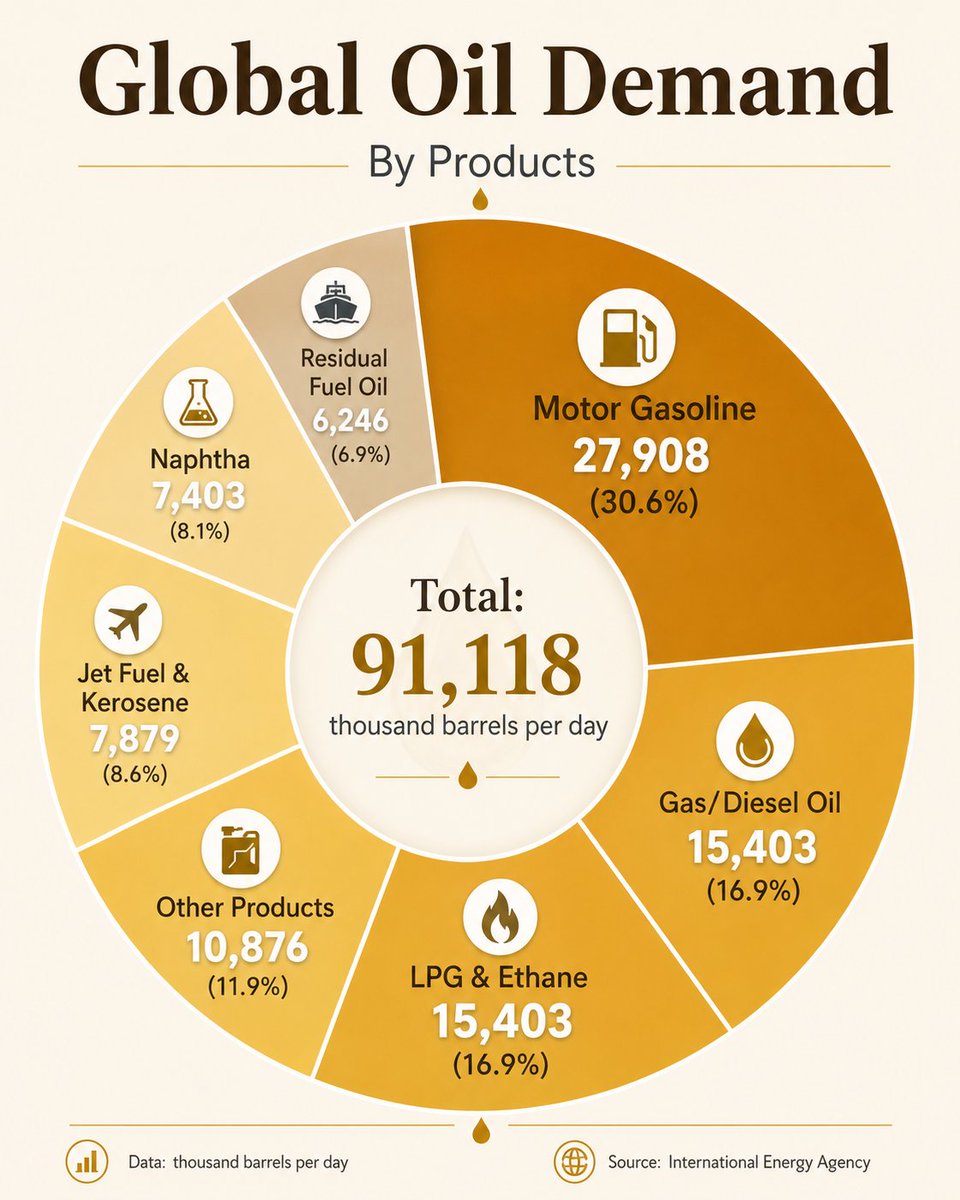
⛽ Global oil demand breaks down into product categories that don't get nearly enough attention next to the headline barrel count.
Total demand runs 91.1 million barrels a day (IEA).
Motor gasoline is the single largest slice by far, 27.9 million bpd, 30.6% of everything.
Gas/diesel oil and LPG & ethane are essentially tied behind it at 15.4 million bpd each, 16.9% apiece.
The rest splits across other products at 10.9 million bpd, jet fuel and kerosene at 7.9 million, naphtha at 7.4 million, and residual fuel oil, the bunker fuel that powers most of global shipping, at just 6.2 million bpd.
Every refinery decision, every crack spread headline, every diesel shortage story this year traces back to this split.
Gasoline is the volume game.
Diesel and jet fuel are where the margin stress actually lives right now.
https://t.co/LyOPpQ1FTT
🚨 100+ HOURS.
1 SINGLE SHEET.
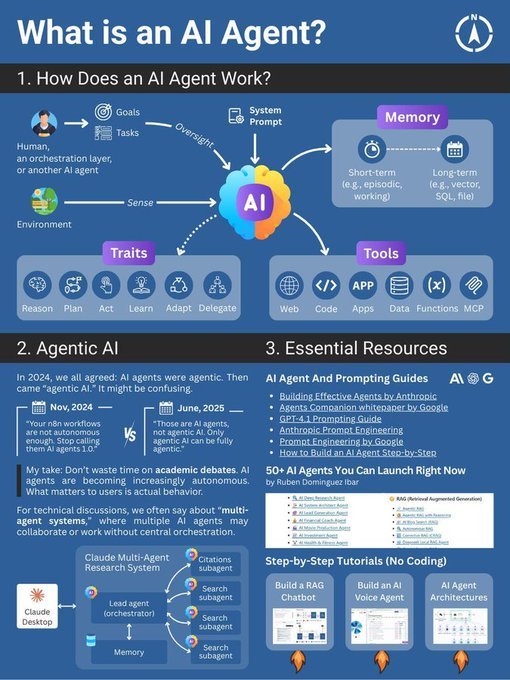
The complete AI Agent blueprint.
I turned months of research into a no-fluff visual guide that shows you:
• How AI agents actually work
• Memory + tools + multi-agent systems
• 50+ agents you can launch
• Step-by-step build paths (RAG, Voice, Architectures)
No theory. Just execution.
If you’re serious about AI in 2026 — this is your unfair advantage.
I’m giving it away FREE.
How to get it:
1️⃣ Follow (must – I’ll DM you)
2️⃣ Comment AI
3️⃣ RT to help others
Drop “AI” below 👇
Ranked: Countries With the Biggest Governments 🏛️
This graphic by Iswardi Ishak is one of the many incredible data-driven charts and stories from creators featured on our @VoronoiApp. ✅
https://t.co/SOPi5CtBti
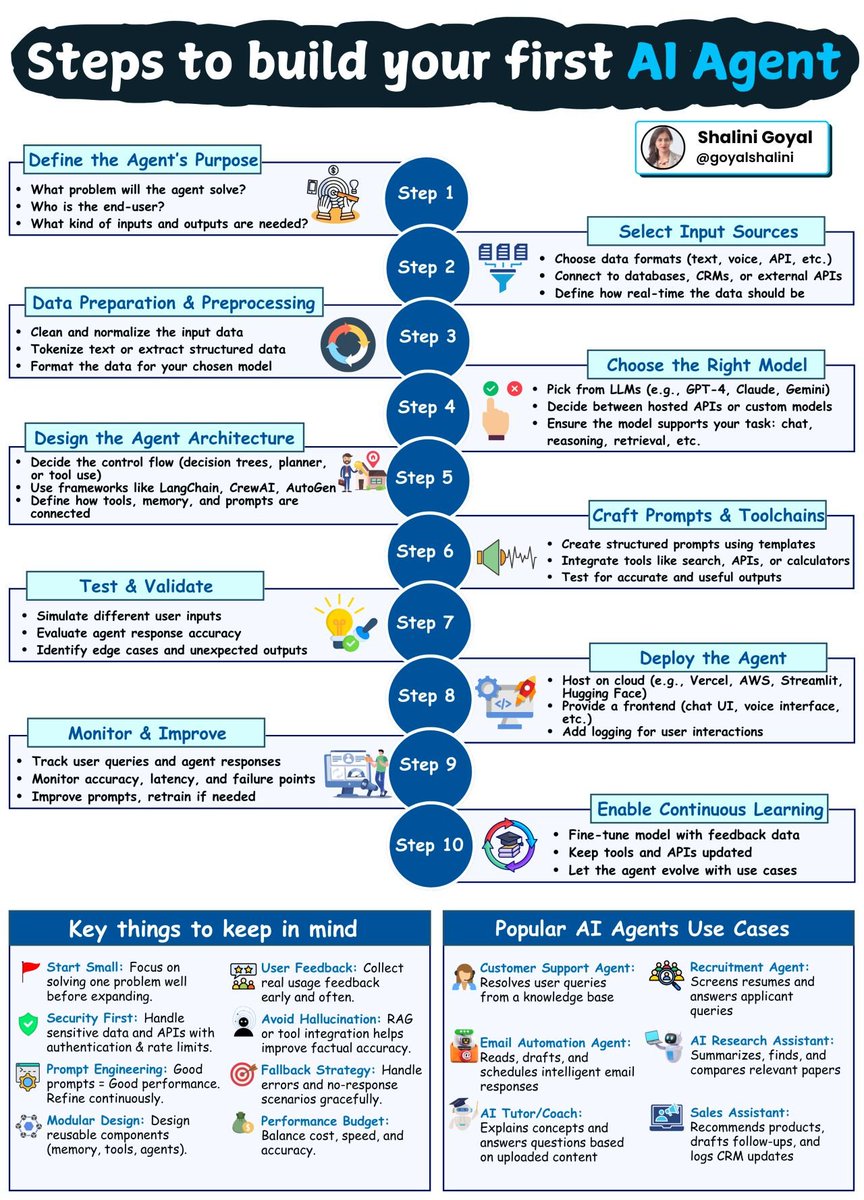
How to Build Your First AI Agent - Step-by-Step
Creating an AI agent might sound complex, but by breaking it down into structured steps, you can go from idea to a fully functional agent that solves real problems.
Whether you’re building for customer service, research, or automation, following these stages ensures your agent is accurate, useful, and adaptable.
1. Define the Agent’s Purpose
Start with clarity. Identify the problem your agent will solve, who will use it, and what kind of inputs and outputs it should handle. This step sets the foundation for everything else.
2. Select Input Sources
Decide what kind of data your agent will use - text, voice, API calls, or a mix. Connect it to databases, CRMs, or external APIs, and determine how real-time the data needs to be.
3. Data Preparation & Preprocessing
Clean and format your data so it’s ready for your chosen AI model. This might mean tokenizing text, normalizing values, or structuring raw inputs.
4. Choose the Right Model
Pick the AI engine that powers your agent - whether it’s an LLM like GPT-4, Claude, or Gemini. Choose between hosted APIs or custom deployments, ensuring it supports your needs like reasoning, retrieval, or chat.
5. Design the Agent Architecture
Decide how your agent will operate using decision trees, planners, or tool-driven flows. Use frameworks like LangChain, CrewAI, or AutoGen to connect tools, memory, and prompts efficiently.
6. Craft Prompts & Toolchains
Write effective, structured prompts, integrate with APIs, search tools, or calculators, and test until your outputs are accurate and reliable.
7. Test & Validate
Run simulations with varied user inputs, check accuracy, and find weaknesses like edge cases or inconsistent answers.
8. Deploy the Agent
Host your agent on cloud services (Vercel, AWS, Hugging Face) and add a frontend like a chat interface or voice UI. Ensure logging is in place for performance tracking.
9. Monitor & Improve
Watch how users interact with your agent. Track accuracy, latency, and errors. Refine prompts or retrain models when needed.
10. Enable Continuous Learning
Let your agent evolve. Feed it real usage data, update tools and APIs, and fine-tune models to handle new scenarios over time.
Ready to bring your first AI agent to life?
Start small, experiment, and iterate - your first version doesn’t have to be perfect. The key is to build, test, and keep improving.
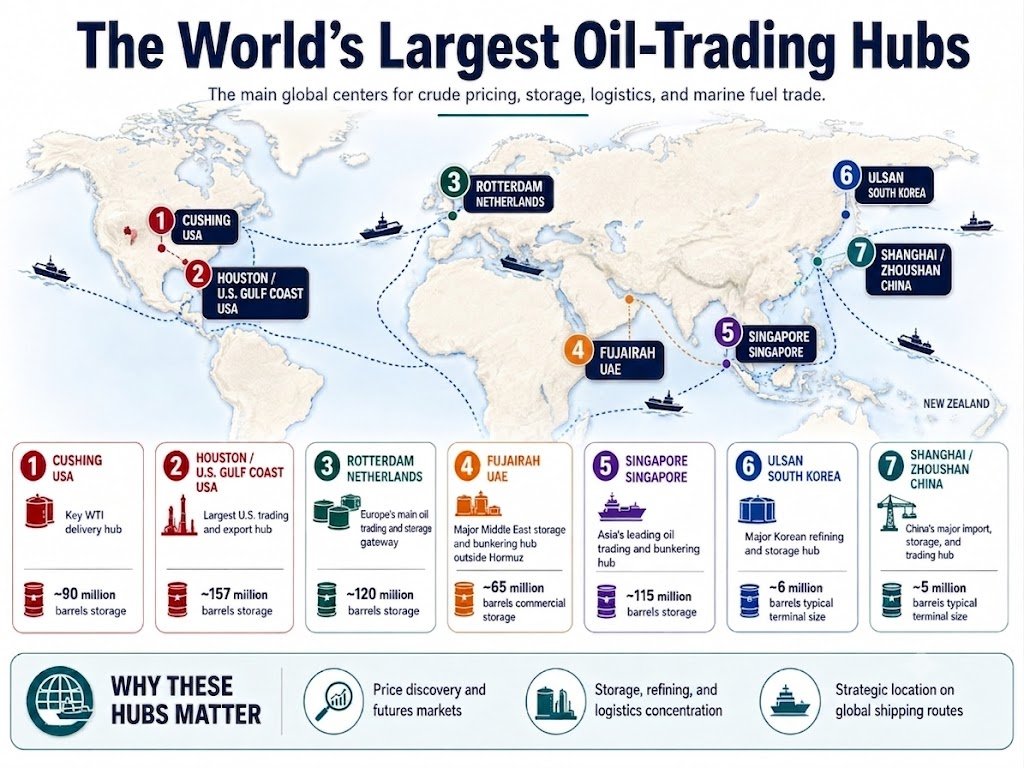
🇺🇸Houston and the US Gulf Coast hold the largest oil storage of any hub on earth, about 157 million barrels.
That tops Rotterdam's 120 million and Fujairah's 65 million combined, with room to spare.
This is the physical infrastructure behind record American crude exports.
The barrels flowing overseas start right here.
https://t.co/bvwdcCdbcX
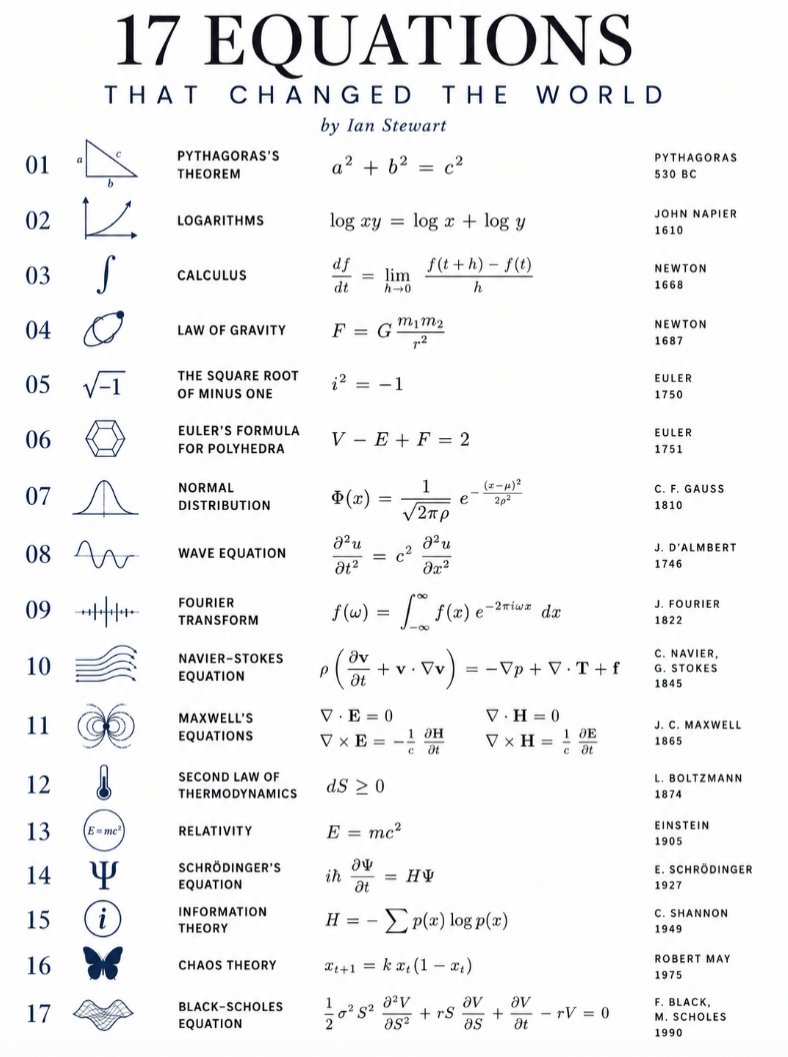
For thousands of years, we looked at the universe and saw mystery. Then,
A triangle. A wave. A field. A probability. A spacetime.
Just a few lines of mathematics, yet enough to reveal the structure of reality.
Switzerland has 26 cantons, each with its own constitution, tax rates, and laws, and the result is one of the wealthiest, most stable countries on earth. That is not a coincidence.
You want to understand why Swiss GDP per capita sits around $92,000 while the EU average hovers near $37,000? Start here. Cantons compete for residents and businesses the same way firms compete for customers. Zug kept its corporate tax rate at roughly 11.9%, attracted commodity traders and crypto firms, and watched its population and tax revenues grow. Cantons that taxed aggressively lost mobile capital and productive citizens to neighbors with lighter burdens. This is Tiebout competition working in real life, not a textbook diagram.
The federal government in Bern handles defense, monetary policy, and some foreign affairs. Everything else defaults downward. Cantons set income taxes. Communes set property levies. Citizens in Appenzell Innerrhoden voted on local laws by a show of hands in the Landsgemeinde, an open-air assembly, until 1990 for most matters. The feedback loop between decision-makers and the people paying for those decisions stays tight. That tightness disciplines spending in ways no central auditor ever will.
Free market thinkers have stressed this for generations: political units must be small enough that exit is credible. When the cost of leaving a bad jurisdiction drops, politicians face real consequences for bad policy. Switzerland kept that cost low by design. A business or family in Basel-Stadt dissatisfied with cantonal policy drives forty minutes to Baselland. No visa. No language barrier. No bureaucratic labyrinth. Just a move.
The EU spent decades building the opposite architecture, consolidating regulatory power in Brussels and eliminating the jurisdictional diversity that forces governments to stay honest. Switzerland refused to join. Its per-capita wealth, its low public debt, and its functional civil society arrived because the Swiss preserved the one institutional feature every centralized state destroys first: the credible right to leave.
Everyone is using AI tools.
Very few people are building an AI workflow that actually compounds over time.
This framework completely changed how I think about using AI productively. 👇
The AI Productivity Kit breaks AI into 5 practical layers instead of treating it like "just another chatbot."
🟢 Layer 1: Prompts — The Intent Layer
Everything starts with clear instructions.
Instead of writing random prompts every day, build a prompt library.
Include:
✅ Role-based prompts
✅ Task templates
✅ Context boosters
✅ Output formats
✅ Reusable prompt frameworks
Store them in Notion, Markdown files, or your favorite notes app.
The goal isn't writing more prompts.
It's writing them once and reusing them forever.
Good prompts create consistent results.
🔵 Layer 2: Tools — The Execution Layer
No AI model is the best at everything.
Build a toolbox instead of relying on a single assistant.
Examples:
• ChatGPT for reasoning
• Claude for writing and long context
• Gemini for research
• Perplexity for web search
• Midjourney for images
• Cursor or Claude Code for development
Each tool has strengths.
The best builders know which tool to use for each task.
Use the right tool for the right job.
🟠 Layer 3: Automation — The Workflow Layer
Stop repeating the same work.
Connect your tools together.
Examples:
⚡ New email → AI summarizes it
⚡ Form submission → AI drafts a response
⚡ Meeting recording → AI creates notes
⚡ Blog published → Auto-share on social media
⚡ Support ticket → AI categorizes and routes it
Platforms like n8n, Zapier, Make, and Pabbly can automate these workflows.
Automation doesn't replace creativity.
It removes repetitive work so you can focus on creating.
🟣 Layer 4: Systems — The Organization Layer
AI becomes much more powerful when it has organized information.
Create a personal knowledge system.
Store:
📄 Notes
📚 Documents
🗂 Project files
💬 AI conversations
📋 Templates
🎯 Prompt library
💡 Ideas
📊 Research
Use tools like Notion, Obsidian, Airtable, or Google Drive.
An organized system turns AI into a second brain.
Instead of searching for information...
Everything is always ready when you need it.
🟢 Layer 5: Growth — The Leverage Layer
This is where AI creates long-term value.
Use everything you've built to scale your work.
Examples:
📈 Create content faster
🎥 Repurpose one idea into multiple formats
💰 Build digital products
🤝 Grow your personal brand
👥 Build a community
📊 Track analytics
🚀 Improve using feedback
Every workflow you build today saves time tomorrow.
Every system compounds.
The Complete Flow
🎯 Define your goal
↓
📝 Create reusable prompts
↓
🛠 Choose the best AI tools
↓
⚡ Automate repetitive workflows
↓
🗂 Organize everything into systems
↓
📈 Scale your output and grow
Why This Matters
Most people use AI like this:
Question → AI → Answer
But high performers use AI like this:
Intent
↓
Execution
↓
Automation
↓
Organization
↓
Growth
The difference isn't the model.
It's the system behind it.
AI isn't just about getting better answers.
It's about building workflows that save time, improve quality, and compound every day.
The people who get the most from AI won't necessarily have access to the smartest models.
They'll have the smartest systems.
Systems > Prompts.
Save this framework. You'll use it every time you build a serious AI workflow.
♻️ Repost if this helped.
💬 Which layer do you think most people skip?
#AI #ArtificialIntelligence #Productivity #Automation #ChatGPT #Claude #Gemini #Perplexity #AITools #AIWorkflow #FutureOfWork #Tech #Developers #NoCode #AIEngineering
🛢️ Oil is the foundation of the industrial economy.
Oil and gas become feedstocks such as naphtha, ethane and propane.
Those feedstocks are transformed into ethylene, propylene, methanol and thousands of other chemicals used to make:
-Plastics
-Synthetic rubber
-Resins and foams
-Industrial chemicals
And eventually:
📦 Packaging
🚗 Vehicles
📱 Electronics
🏗️ Construction materials
💊 Pharmaceuticals
When oil and gas flows are disrupted, the impact does not stop at the petrol station.
It moves through the entire manufacturing chain.
The Hidden AI Hardware Stack Beyond GPUs
1. Substrates — Connects silicon dies directly to the board
2. PCBs — Complex multi-layer motherboards handling high-speed signals
3. Memory — High Bandwidth Memory (HBM) feeding compute power
4. Power Components — VRMs delivering efficient high-wattage power to racks
5. Connectors & Cables — High-speed copper and optical interconnects
6. Cooling Systems — Liquid cooling loops preventing thermal bottlenecks
The AI revolution spans far beyond single chips—it requires the entire underlying hardware stack.
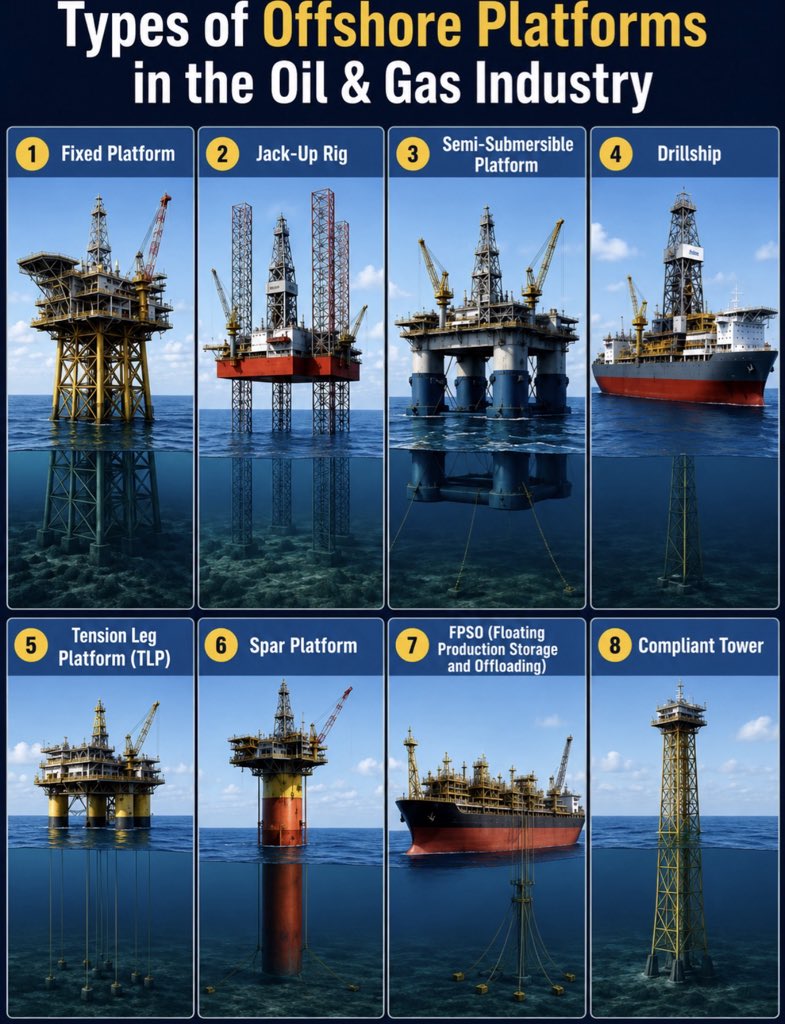
🛢️Offshore platforms are becoming more important as producers push into deeper and more complex waters.
This week, Eni and Petronas started building a $2.9B FPSO for Indonesia's North Hub, designed to process gas from 16 offshore wells and support production of 1B cubic feet per day by 2028.
Different structures.
One increasingly important source of global energy supply
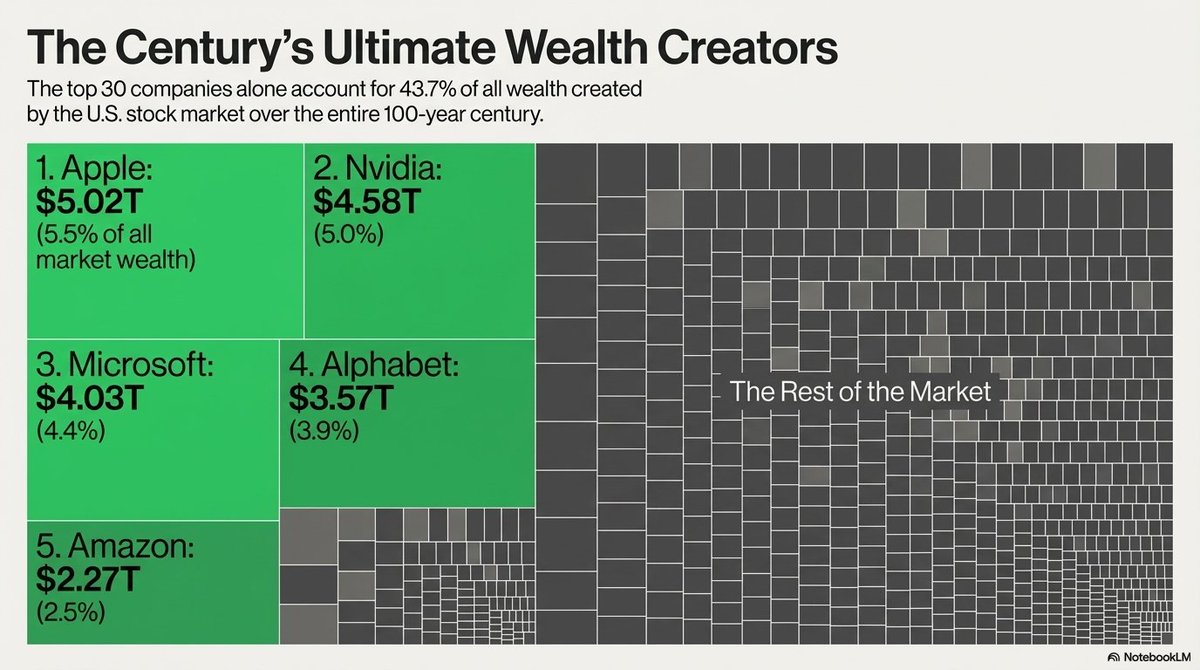
New paper from Hendrik Bessembinder just analyzed 100 years of stock market data.
And it's shocking.
Out of nearly 30,000 stocks analyzed...
just 30 companies generated ~44% of all wealth created.
👀