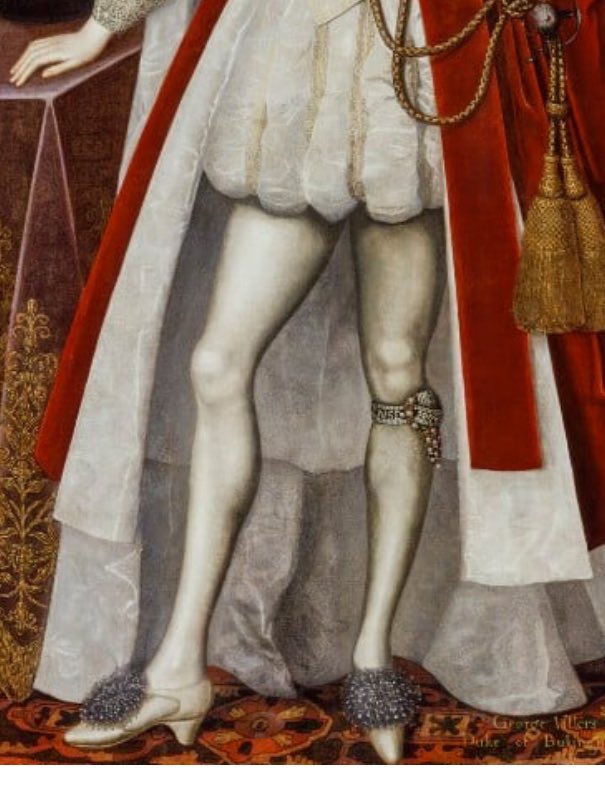
One guy who knew how to do St George’s Day: Charles II delayed his coronation by eleven months in order to stage it on April 23. Looks up for a big night here.
We are delighted to announce the call for papers for "Esther Inglis in Contexts and Culture", a colloquium @CRC_EdUni, 12th-13th October 2024. Papers invited on any aspect of Esther Inglis' life, work, and surrounding contexts. Please share widely! https://t.co/yXT5gReegO
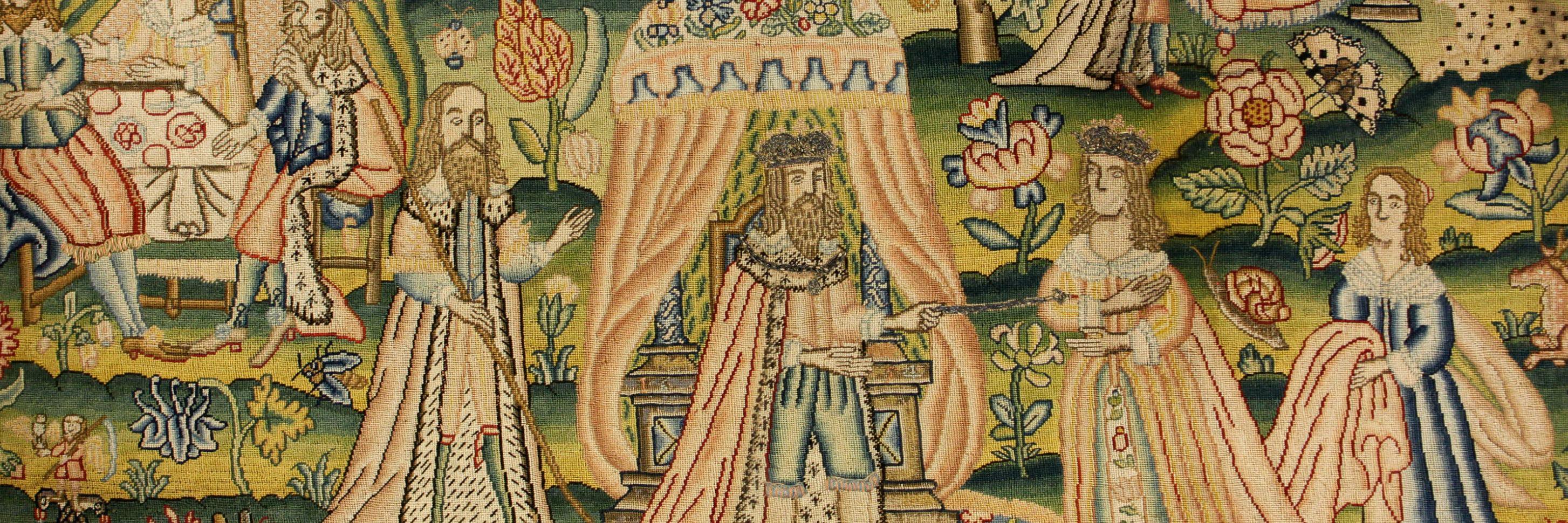
This 17th-century embroidered picture depicts scenes from the Book of Esther. At the centre is King Ahasuerus receiving Esther. On the right side is Mordecai riding the king's horse and to the left is Haman being hanged. The underdrawing is visible throughout the unfinished piece
“Those who know their history will find it makes no sense; and those who don’t will not be able to make any sense of it.”
Historian @elegantfowl raises an eyebrow at Sky's #MaryandGeorge
https://t.co/EEv1PSsBgB
We’re looking forward to welcoming Prof Paul Raffield on Thursday to talk about Troilus and Cressida and Middle Temple. All welcome! Email [email protected] for the link…
https://t.co/ID7WTGu9Oe
@wartsandbrawls Not hugely opposed to this tbh. But I think we should be talking more about how generative AI is killing the uni essay, because the broad, generic essay questions that served us well for many years are so easy to game. And then we could ask: is that a bad thing?
‘How much of this is true?’ feels like a simple-minded question. This is an opportunity to reflect on all sorts of important questions: e.g. changing practices & attitudes towards sexuality, the role of rumour & scandal in forming historical narratives, etc. 3/3 #MaryandGeorge
Is the concept of the court favourite, with all its complicated eroticism, really too difficult to communicate, even to Guardian readers? #MaryandGeorge 1/2 https://t.co/j6Mv38lLz4
I’m loving #MaryandGeorge, but a little more recognition that this is history-as-scandal - like the libels of the time, or the ‘secret histories’ of later decades, or even the tabloids of today - would be helpful. 2/3
If anyone wants some #MaryandGeorge pre-reading, we collected all the scandalous poems (‘libels’) from the period here. And nobody - I mean, nobody - attracted more attention from libellers than George Villiers, Duke of Buckingham. https://t.co/JNBk5harWg
I wrote about my favourite troublemaking 17th-century cobbler Ralph Wallis - the perfect excuse to put my favourite little 17th-century woodcut shoemaker to use 🥰
Huge thread below: the first detailed analysis of the remarkable county maps William Hole produced for Drayton's 'Poly-Olbion' (1612-22). And some questions remaining as the editors finalize their new edition. @greg_jenner @earlymodernjohn@jdmccafferty @SLevelt @SRSRenSoc
Our latest blog post on 'The Court Observer' is by Joe Ellis @HistoryJoey on James VI of Scotland, poetry and sexuality.
Read it here:
https://t.co/DZmRVtXA1P
Please share widely!
Torn about this: on the one hand, it’s a clever effort to democratise the coronation ceremony; otoh it swerves, perhaps a little too cleverly, the tradition of coronation panegyric. Thoughts?
Poet Laureate, Simon Armitage, has released this new poem for the coronation of King Charles III.
Read the full poem on The Poetry Society website: https://t.co/GZUHCfzj0L
And the core of that ceremony yesterday was really, really old - an early medieval ritual which itself reaches back to Biblical kings. It dramatised the history of an idea: of what kings used to be, and yet still sort of are in this country. Strange and discombobulating.