I'm a very visual person. when I was first getting into ML, I'd try to draw out every concept on pen and paper.
back then I couldn't vibe-code a visualization. but now you can!
here are my favorite ML visualizations I've been saving for a while. take them as inspo for the next complex topic you want to visualize 🧵
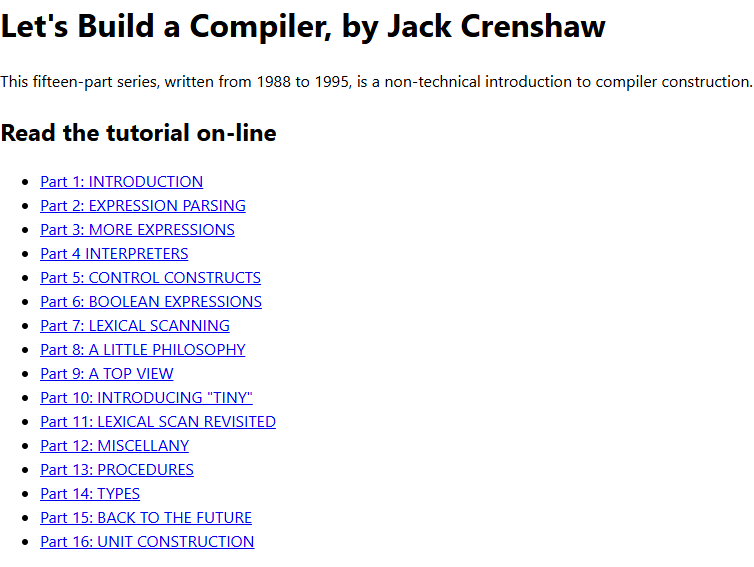
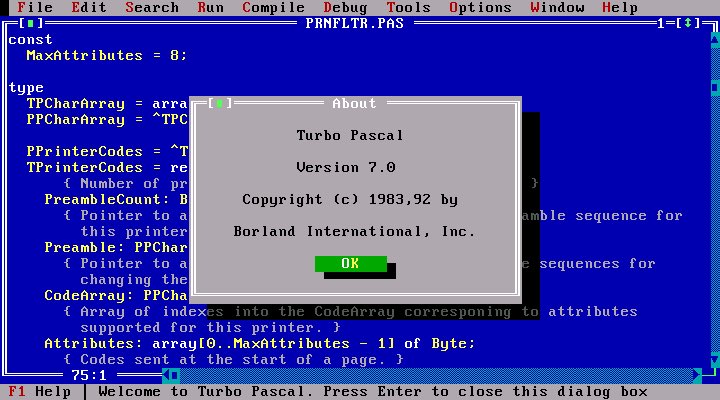
in 1988 a physicist named Jack Crenshaw got tired of compiler textbooks being unreadable
so he wrote his own tutorial on a BBS called "Let's Build a Compiler"
he starts from a parser that handles exactly one digit and adds one feature per installment until you have a real compiler at the end
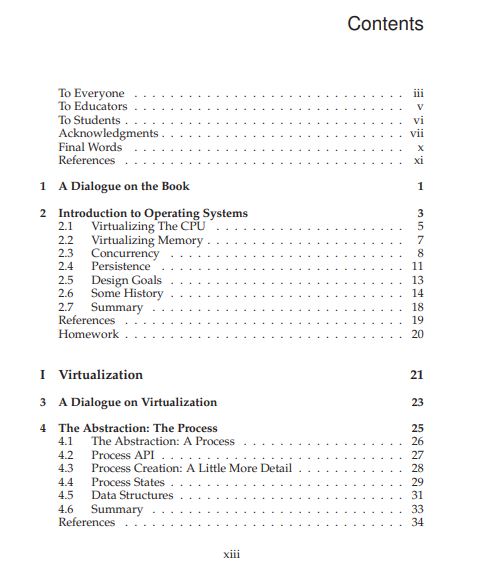
two professors at Wisconsin spent 25 years teaching operating systems together
then they wrote a 714 page textbook about "Operating Systems: Three Easy Pieces"
it covers virtualizing the CPU virtualizing memory concurrency persistence security and file systems
small enough to read in parts and also it is written like a conversation not a typical textbook
this is what you read if you want to really understand how operating systems work not just the theory
built “Palantir for Family Trips” for our Yosemite weekend with friends
it has:
- route playback and convoy tracking
- meal logistics
- family readiness + expense tracking, and
- a full ops timeline for mission success
absolutely unnecessary, but worked surprisingly well
(repo 🔗below)
Algorithm Visualizer devrait être dans la boîte à outils de tout·e développeur·se qui apprend ou enseigne des algos — la visualisation en direct à partir du code rend les mécanismes abstraits vraiment lisibles.
https://t.co/LMycabGIbQ
🚨 BREAKING: Someone just built a web-based System Design Simulator.
It's called Paperdraw. It lets you drag and drop components to see how they handle real-world conditions like traffic, failures, latency, and scaling in real time.
100% free to try.
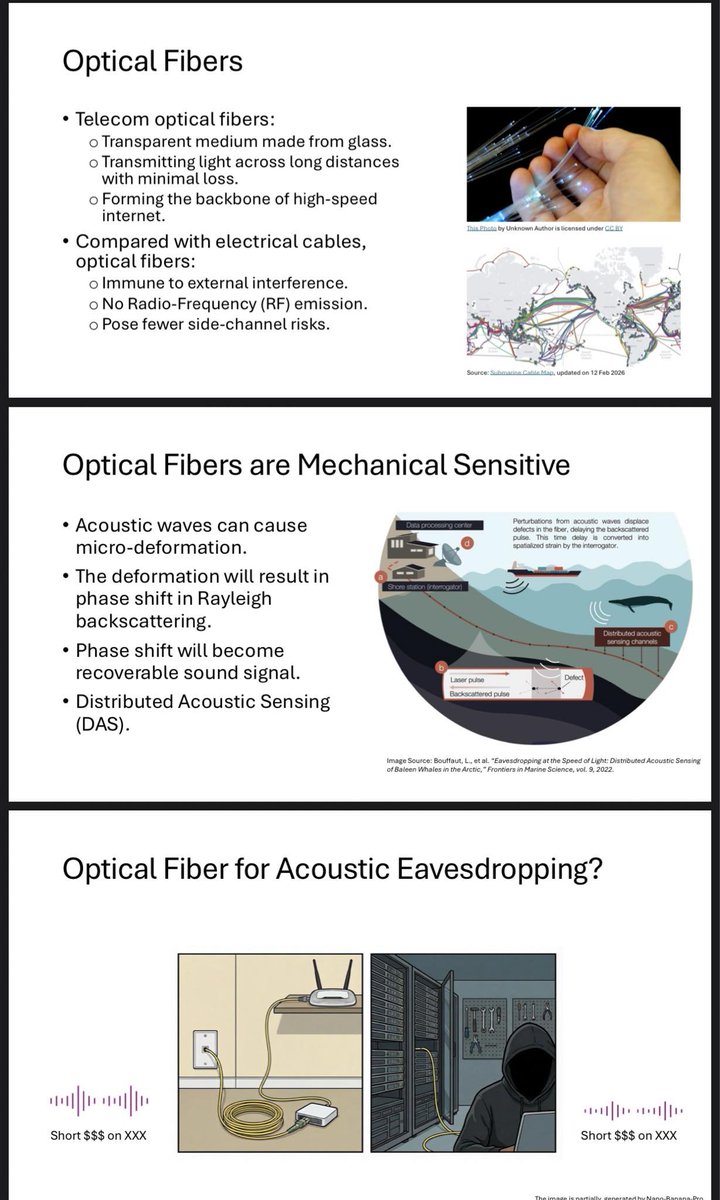
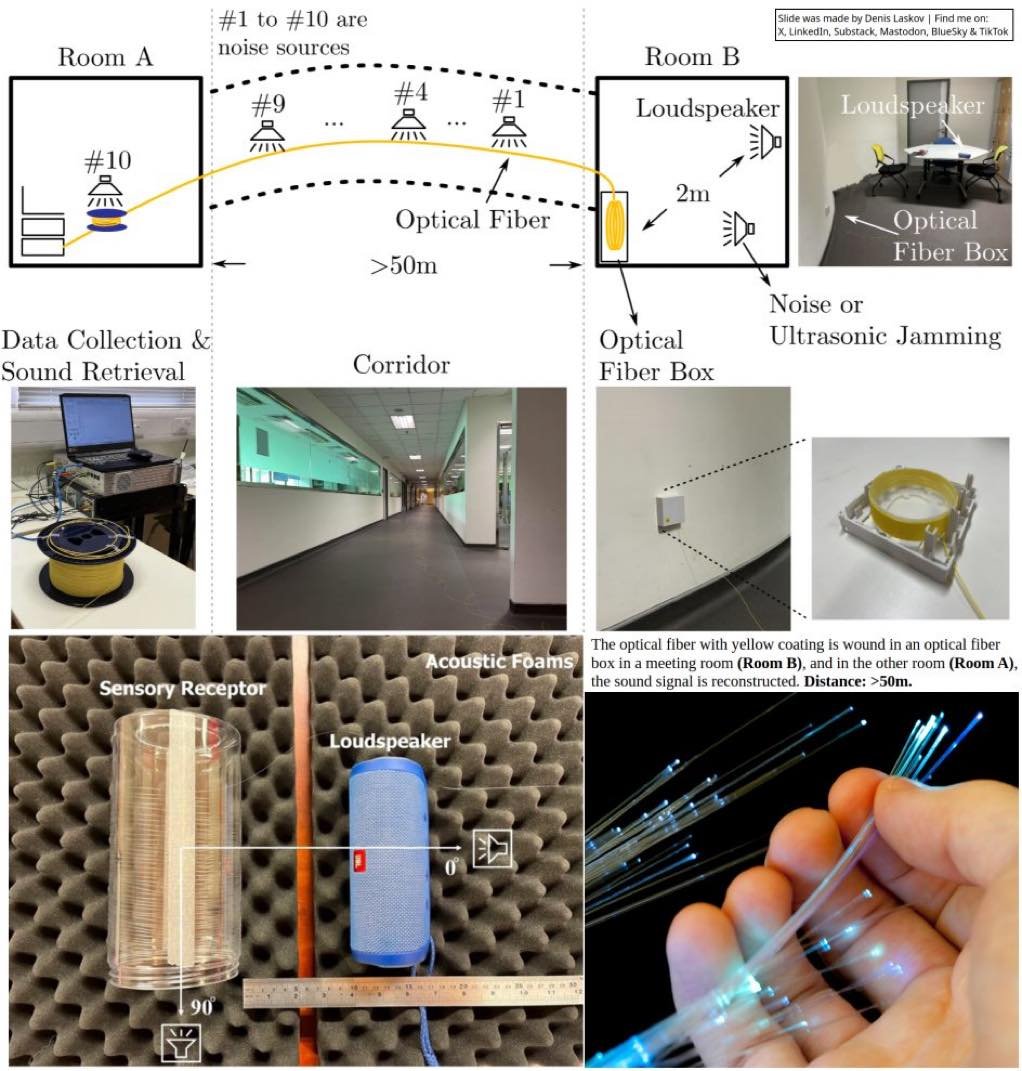
Your Internet Fiber Cable Is Secretly Listening to You Right Now.
Yes, Really.
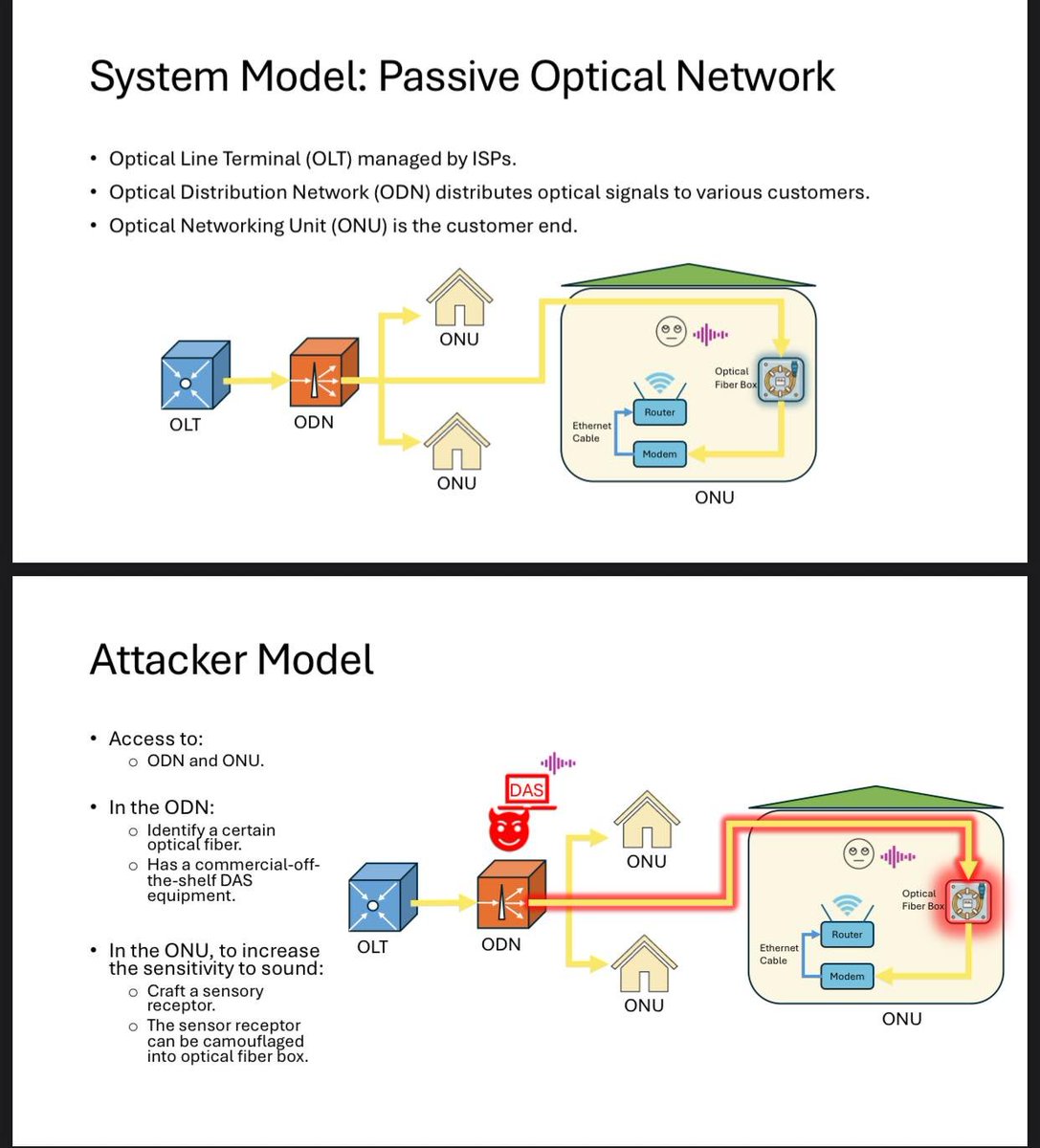
Telecom fiber in your wall can spy on conversations up to 50 m away using nothing but commercial DAS & AI audio reconstruction.
Hong Kong NDSS 2026 paper Researchers turned ordinary FTTH fiber-optic cables into hidden microphones Connect DAS gear to one end to AI reconstructs clear speech from 50 meters away , through walls, no physical access needed.
Without laser bugs, No implants Just the cable that's already there. Clear voices even from adjacent rooms.
crystal clear in tests.
I would say distributed Acoustic Sensing and ML turns standard telecom fiber into a long-range covert microphone.
Homes & offices with fiber internet?
You're potentially exposed.
Attack cost right Commercial gear access to one fiber end.
Range tested 50 meters bruhh
This is not sci-fi. It's a deployed infrastructure.
Welcome to the era where your broadband doubles as surveillance.
The hidden architecture of a bird’s voice. 🙌🏻
Did you know a bird's song can be mapped into a mathematical fingerprint? 🧬
This isn't sci-fi; it's the real-time mapping this is a multi-dimensional bioacoustic visualization of a Carolina Wren's song.
By tracking the frequencies, can build a unique radar chart signature for the species. It tracks spectral flatness , entropy, and slope in 3D space to reveal the hidden geometry behind the music.
Nature is literally math in motion.
the video tracks specific spectral features that define the bird's unique Vocal Signature. 🥺
A beautiful reminder of the complexity hiding in everyday sounds.
I made a Claude Code skill that turns any arxiv paper into working code.
Every line traces back to the paper section it came from & any implementation detail the paper skips will be flagged, and not assumed.
open sourcing it -
https://t.co/sSio4JfpIo
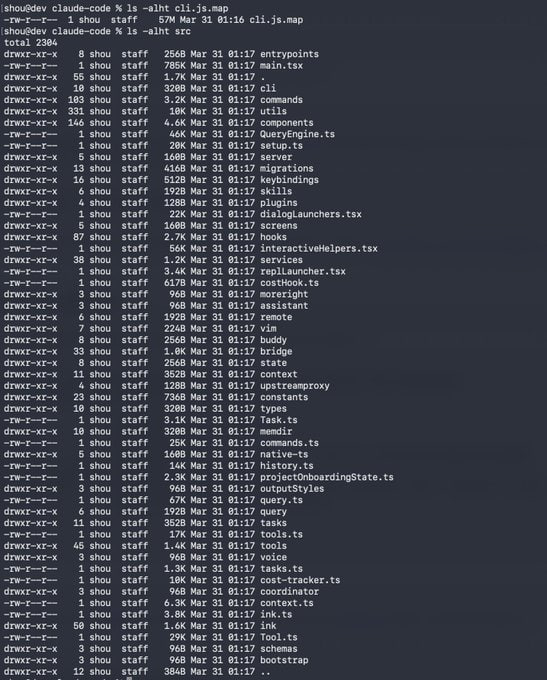
Anthropic accidentally leaked their entire source code yesterday. What happened next is one of the most insane stories in tech history.
> Anthropic pushed a software update for Claude Code at 4AM.
> A debugging file was accidentally bundled inside it.
> That file contained 512,000 lines of their proprietary source code.
> A researcher named Chaofan Shou spotted it within minutes and posted the download link on X.
> 21 million people have seen the thread.
> The entire codebase was downloaded, copied and mirrored across GitHub before Anthropic's team had even woken up.
> Anthropic pulled the package and started firing DMCA takedowns at every repo hosting it.
> That's when a Korean developer named Sigrid Jin woke up at 4AM to his phone blowing up.
> He is the most active Claude Code user in the world with the Wall Street Journal reporting he personally used 25 billion tokens last year.
> His girlfriend was worried he'd get sued just for having the code on his machine.
> So he did what any engineer would do.
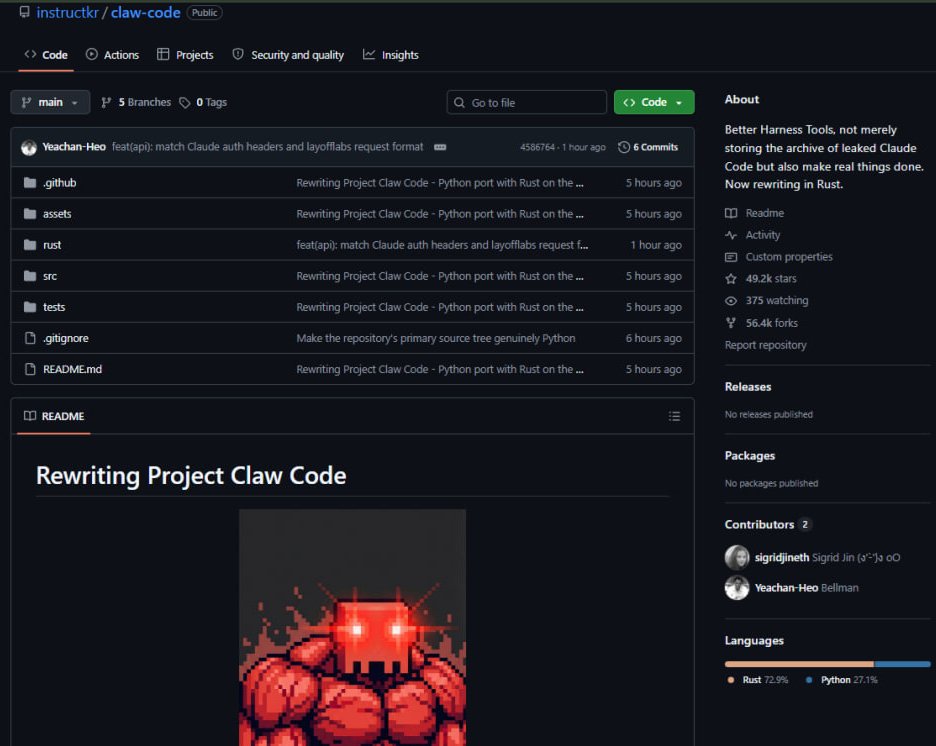
> He rewrote the entire thing in Python from scratch before sunrise.
> Called it claw-code and Pushed it to GitHub.
> A Python rewrite is a new creative work. DMCA can't touch it.
> The repo hit 30,000 stars faster than any repository in GitHub history.
> He wasn't satisfied. He started rewriting it again in Rust.
> It now has 49,000 stars and 56,000 forks.
> Someone mirrored the original to a decentralised platform with one message, "will never be taken down."
> The code is now permanent. Anthropic cannot get it back.
Anthropic built a system called Undercover Mode specifically to stop Claude from leaking internal secrets. Then they leaked their own source code themselves. You cannot make this up.
If you have a spare 25 minutes I wholeheartedly recommend you watch Nicholas Carlini - Black-hat LLMs. Link in the comment below.
Amazing talk on the way LLMs are making it easier to find critical software vulnerabilities - Anthropic's LLM discovered a non-trivial heap buffer overflow in the Linux kernel that's been there since 2003..!
The future is both exciting and scary. LLMs and AI should be used, as demonstrated here, as a force multiplier for analysts, researchers and developers. I also think LLMs are a good way for people to learn, so long as they do not just copy paste AI output blindly, and treat it as a pair programmer / colleague they converse with to learn and grow. LLMs are also pretty good at hunting through documentation, it's like a knife through butter - you can then go verify what it comes back with and use that as an off point. A tool in your toolbox - not to be someone's sole skill. And remember, always validate the output.
Personal take - hopefully we see growth with LLMs over the coming months and years to make software more secure through QA such as in the video looking for vulnerabilities, and LLMs used in Cyber Security to help identify and detect threats from logs sooner, being an assistant to analysts.
Great question at the end (simplified): How do we prevent threat actors from abusing this; A: Security is dual use - historically security software tooling has favoured the defender over the attacker, maybe that will change. The good people should have access to the software - they want the good people to use the software to find the bugs, but putting the right safeguards in place is hard and nuanced, they think currently it is ok, but still room for change.
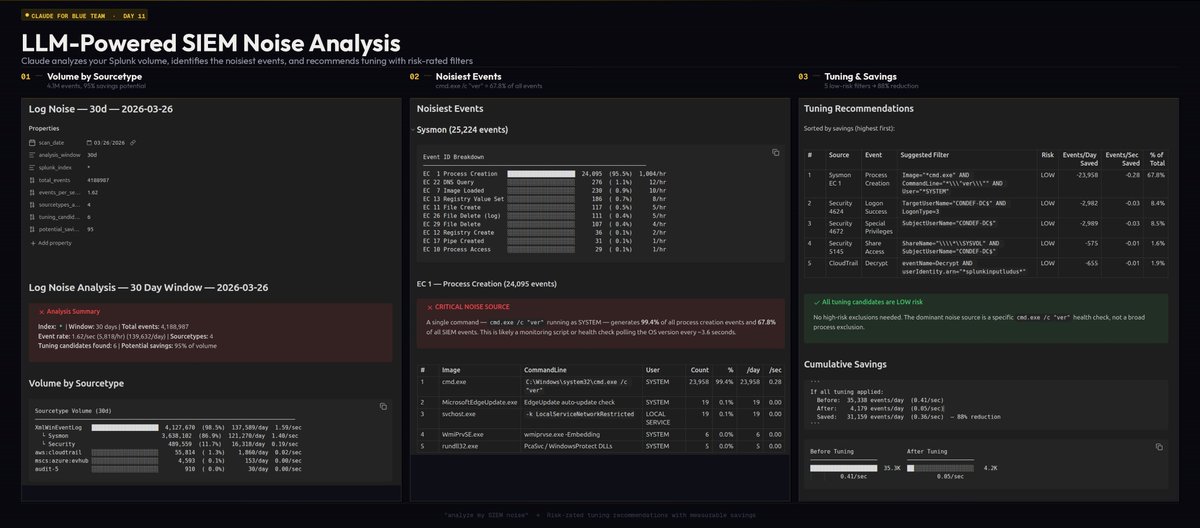
#ClaudeForBlueTeam - Day 11!
I just cut my SIEM lab noise down by over 80 percent.
Claude can drill into your SIEMs nosiest events, trace what's generating them and tell you exactly what to tune and how many events/second you can save.
Want to replicate this in your environment? Grab the skill below.
Wasn't joking about this one btw
You can reverse-engineer pretty much any part of Apple platform internals in seconds using Claude or Codex with Hopper MCP
Was remembering this crazy 0-click iOS exploit chain:
GIF in iMessage → actually PDF with JBIG2 → integer overflow in JBIG2 decoding → Use logic to emulate computer architecture → sandbox escape → Pegasus malware
https://t.co/sZxpSY2HLb
"Python is slow because its dynamic design requires runtime dispatch on every operation"
This article is full of good hits for understanding better how python works. Very good work!
ever been here?
open overleaf → write a paragraph → "hmm...this needs a citation" → open 15 different tabs → skim 8 abstracts → find the 1 actually relevant paper → format bibtex → paste it back on overleaf
if so, i built a plugin just for you. meet openleaf:
→ reads your paper paragraph by paragraph
→ searches major academic databases
→ filters out irrelevant papers using ai
→ one click to add BibTeX to your .bib
you'll also find the 🤝 friendly and 🔥 fire reviewers there. i don't think i need to tell you what they do :)
free. open source. no account. no data collection.
works with ollama, openrouter, openai api and more.
https://t.co/XvX03iem38
dear algorithm, please show this to my fellow researchers in need 🙏
#overleaf #latex #opensource #academictwitter