YANZU YANZU Shaikh Muhammad S Khamis Abu Haisam YAYI ZAZZAFAN MARTANI AKAN WANI KAREN MAWAƘA GA ME DA TAƁA MUTUNCIN MALUNTA.
TARE DA TSOKACI KAN TAKARAR WASU MALAMAI..
- Shiehk Muhammad Khasim Abu Haisam.
Today's lecture is about how our acts can be the leading cause of our predicaments.
Allah said in Surah Al-Baqarah (2:155): “And We will surely test you with something of fear and hunger and a loss of wealth and lives and fruits, but give good tidings to the patient.”
………May Allah forgive our trespasses and not test us with more than we can bear 🤲🤲
🚨🚨| 𝐁𝐑𝐄𝐀𝐊𝐈𝐍𝐆: 💣
Arsenal have been Voted 🗳️
THE MEDIA’s MOST INFLUENTIAL CLUB OF THE YEAR
They are the Only club to generate the highest mentions, tags & interactions on social media and also the most talked about club in the year 2025/2026 🔥🗣️
TO ALL SUPPORTERS OF KAKA,
Over time, we have followed your activities on this platform and the impact you have made across the constituency. Your commitment to progress and development has not gone unnoticed.
Following the outcome of today’s APC primaries in the Kaduna North Federal Constituency, this is not a time for disappointment, but a moment for reflection and strategic decision-making.
We all know that the candidate who emerged does not represent the best choice for Kaduna North in the National Assembly. When we look at track records and performance, both Bello and Kaka have demonstrated stronger leadership and commitment to the people.m as young leaders.
If your support for Kaka was based on his initiatives, then Bello has delivered even more. If it was based on youth inclusivity and representation, Bello has shown an even greater commitment in that regard. In essence, everything you admire in Kaka can be found in Bello and even more.
This is not a loss. Rather, it is an opportunity to realign and continue supporting a vision of youthful leadership in Kaduna North.
Let us not return to the politics of the past by supporting individuals whose previous time in the National Assembly brought little to no meaningful impact. Instead, let us embrace a forward-looking candidate.
Now is the time to unite behind Bello, support his vision, and work together to move Kaduna North toward a brighter future.
If you stood with Kaka for youth inclusion and effective governance, Bello is now the candidate who represents those same values.
This is bigger than any individual, it is about the future of Kaduna North.
I wish @Abunaah all the best in his future endeavors.
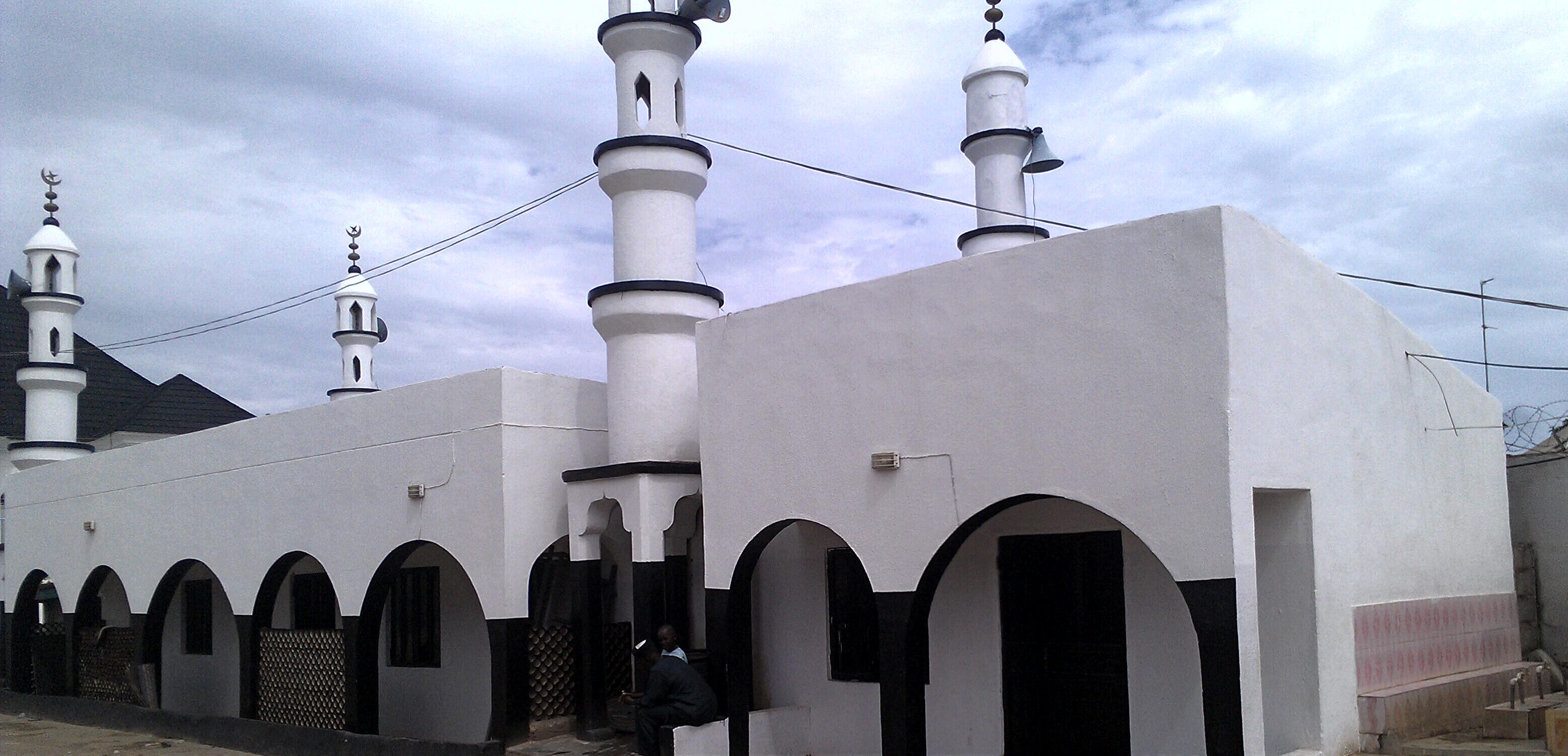
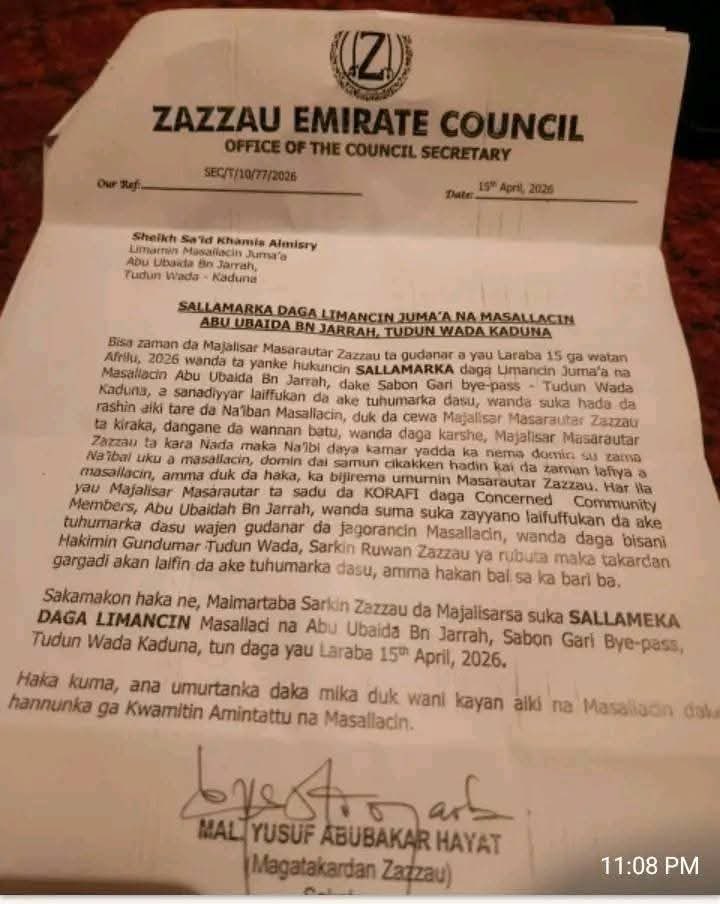
It is deeply unfortunate and uncalled for that the Zazzau Emirate have taken this decision against Sheikh Khamis Almisry.
Anyone who knows the immense struggles and sacrifices he endured to found and build the Abu-Ubaidah Jumu’ah Mosque understands that he is far too significant to be casually dismissed for mere political or whatsoever reasons.
But Allah does not sleep, He does not even slumber.
ALLAH YA ISA!
Subject: Urgent Appeal for Intervention Against Provocative Religious Insults by a Foreigner in Nigeria
Dear Nigerian Police Force @PoliceNG and @OfficialDSSNG Department of State Services (DSS),
I am writing as a concerned Nigerian citizen to bring to your attention the activities of a foreigner who is openly insulting Islam and the Muslim community in Nigeria at this sensitive period of our national security.
Such provocative statements have the potential to incite unrest, create tension, and lead to the loss of innocent lives. We have witnessed how religious incitement can quickly escalate into violence in our country. For the sake of public peace and national security, it is imperative that this matter is addressed promptly.
It is particularly concerning that if the situation were reversed, 👉 If a Muslim were to insult Christianity in the same manner swift action would likely be taken, with the individual being invited for questioning and possible prosecution. We respectfully request that the same standard of Justice and Fairness be applied in this case, regardless of the offender’s nationality or religion.
We, the Muslim community in Nigeria, are peaceful people who strongly reject violence in all forms. Our appeal is rooted in our desire for Justice, Mutual Respect, and Peaceful coexistence. As Nigerians, we have the constitutional right to practice our religion freely without fear of provocation or intimidation.
We therefore humbly urge the Nigerian Police Force and the Department of State Services to immediately call this individual to order, investigate the matter, and take all necessary lawful steps to prevent a breakdown of law and order.
We remain committed to peace and tranquility and have full confidence in your ability to handle this matter professionally and impartially.
Thank you for your prompt attention and continued service to the nation your service is truly outstanding and appreciated we are forever indebted to you.
May God Bless The Federal Republic of Nigeria
Dear Big Ayo @47kasz ,
I can understand why people ask this same question almost every time. Especially to a non-Muslim like you, it may look weird when you see a massive crowd fighting to touch a rock. It’s a fair observation.
This is why I want to establish a logical precedent before I go into historical and religious facts.
Let’s think about how we behave as human beings. Imagine a soldier sitting in a dirty trench. He pulls out a faded photograph of his wife and kisses it. Is he worshiping the photographic paper? Is he praying to the paper to protect him from bullets? No. The paper has zero power. The kiss is a physical expression of a deep emotional connection.
Or look at a national flag. People cry when it is raised. Soldiers take a bullet to stop that specific piece of fabric from touching the dirt. Are they worshiping cotton? No. It is immense reverence.
This is the intellectual difference we need to establish.
When someone bows down to a statue or an Ifa relic, the fundamental belief is that the object possesses independent power. The worshipper believes the statue can grant wealth, heal sickness, or curse an enemy. They pray to it.
However, for the Black Stone, the theology is completely different. Muslims do not pray to the stone. Nobody asks the stone for a visa, a child, blessing or even a record deal. If a Muslim stands in front of the Kaaba and says, "O Black Stone, heal my mother," they have committed Shirk (idolatry) and are immediately outside the fold of Islam. This is because the stone has zero divine power.
So what is the impact like you have asked, and why the intense desire to touch it?
For you to understand this, let me walk you through how humans interact with history across the Abrahamic faiths.
Let’s start with the Jewish faith. When Jewish pilgrims travel to the Western Wall in Jerusalem, they press their foreheads against the stones. They weep. They kiss the wall. They slip little written prayers into the cracks of the rock. Are they worshipping the limestone? No. That wall is a surviving remnant of their holy Temple. It is a physical anchor to their history. The wall itself has no divine power to grant the prayers on those pieces of paper, but touching it is a profound emotional release.
You see the same deep emotion in Christianity. If you walk into the Church of the Holy Sepulchre in Jerusalem, right near the entrance is the Stone of Anointing. Tradition holds this is the slab where the body of Jesus was prepared for burial. You will see Christian pilgrims from all over the world fall to their knees the moment they see it. They kiss the stone, they cry over it, they rub their hands and clothes on it. Are they praying to a piece of marble? No. They are overwhelmed by the historical weight of what that stone represents to their faith. It is tactile love.
The Black Stone operates on this universal human wavelength.
Historically, it is an ancient relic tracing back to Prophet Ibrahim (Abraham), the father of faith. It is a surviving piece from the original foundation of that sacred house. It serves as the physical starting line for the Tawaf, the seven rounds of walking around the Kaaba.
Spiritually, it is about deep emulation and love. The Prophet Muhammad (peace be upon him) touched and kissed it, so Muslims want to touch it. It is a physical connection to a historical and spiritual lineage. You are trying to place your hand where the Prophet placed his.
The companions of the Prophet drew this intellectual line 1,400 years ago to prevent this very confusion. Umar ibn al-Khattab (May Allah be pleased with him) stood before a massive crowd, looked directly at the stone, and declared:
"I know you are a stone that neither harms nor benefits. If I had not seen the Prophet kiss you, I would not have kissed you."
That is the core of it. It is emulation, not worship. It is a relic of reverence, not a deity of power. No more. No less.
Thank you for your attention.
PRAYER TIMES NIGERIA ( PRAYER TIMES APP) BY SIMWAL JIBRIL
We are proud to announce the launch of Nigeria’s first indigenous prayer app based on the Maliki school of thought — built specifically for Muslims across the country.
Designed with precision and authenticity, this app provides accurate prayer times for all the 774 Local Government Areas in Nigeria, calculated according to the Maliki fiqh. Whether you are in Abuja, Lagos, Kano, Port Harcourt, or any remote town, you can rely on correct timings tailored to your exact location.
Even without internet access, the app continues to function seamlessly with its offline prayer time calculation feature, ensuring you never miss your salah wherever you are. With smart location detection, it automatically identifies your position and delivers precise prayer times instantly.
Importantly, the Hijri date in the app is not fixed. It is designed to be adjustable to align with the officially declared date following the sighting of the new crescent and the announcement of the Sultan, ensuring conformity with recognized religious authority in Nigeria.
This milestone would not have been possible without the expertise and dedication of Orygin Solutions @oryginOS , who partnered in developing and bringing this vision to life. Their technical excellence and commitment to innovation helped make this app a reality.
This is more than just a prayer time app — it is a locally built solution for Nigerian Muslims, rooted in our jurisprudential tradition and powered by reliable technology.
Download now on iOS and Android using the links below and stay connected to your prayers, anytime, anywhere.
IOS link 👇
https://t.co/9hTrOZPMmr
Android link 👇
https://t.co/xnJNbKod9R
1)
a) Yes,the Hausa-Fulanis have their own traditions and culture.For example,the recently concluded Argungu Fishing festival is a festival based on their culture.Other notable examples are the Dambe boxing notable in Kano and the Durban festival(which is like an equivalent of Ojude-Oba).
However,because Hausa-Fulani were among the first set of sub-Saharan blacks to come across Islam,their culture and traditions have been heavily influenced and modified by Islamic values.
b) Iwo has a leader of Muslim in Iwo town and that will be the chief Imam,this is also applicable to almost all cities with sizeable Muslim population.This is just like the same way we have different kings for Ile-Ife,Oyo,Ibadan,Abeokuta etc but we don’t have a single Yoruba king recognised as the leader of all Yoruba and I guess this is what is mysterious to “Yoruba non Muslims” who are finding it hard that the Nigerian Muslims despite being of different tribes and tongues choose to have an overall leader when it comes to decision making that affects all Muslim in Nigeria.
2) The seat of Sokoto is a traditional seat of the Fulanis(who are mostly Muslims) and their title SULTAN points to an Islamic origin.I wouldn’t categorically( and without definition) assume that the seat represents ISLAM however Islam has a heavy hold on the seat.Look at it this way,in UK we have Duke and Duchess of Sussex,Edinburgh etc,all these title are traditional and heavily influenced and defined by CHRISTIANITY as it comes from french(dux) which also comes from the Romans who were among he first pioneer of Christianity in Europe. So,over time what starts as tradition becomes influenced by religion. In the same way we can’t say Duke and Duchess are “seats of Christianity” in UK,we can’t deny the fact that the religion has a significant influence on it.
3)As per the NSCIA constitution so to speak,the Sultan always assumes the leadership position of the Muslim ummah in Nigeria because this was the consensus of the early founders and we should remember that it was Chief Lateef Adegbite(may Allah be pleased with him and admit him to Paradise) that drafted the constitution of the NSCIA.We should also remember that he was the Baba Adini of Egba land and also attorney general of western Nigeria during the days of regional administration.
For a lot of “Yoruba non-Muslims” who have been volatile and angry because the Sultan is regarded as the leader,the question to ask is “Why was our Baba instrumental in the creation of MSSN and later NSCIA”?Why did he look up to the Northern Muslims as allies?Thank God,his lineage is not in doubt and no one can accuse him of being “Fulani”
4)If anyone including the Sultan is caught in the act of corruption,the law woukd bear down on him.This question and scenario is even awkward and ill thought because it was even the CAN president,Pastor Oritsejafor whose private plane was caught in an illegal $9.3 million arm smuggling into Nigeria in 2014.I can’t remember anyine asking this kind of question whether Pastor Oritsjafor ceased to become the president of Christian association of Nigeria at that point in time.
Your opinion is respected,respect the opinion of others too.
@Bayo_Bilisi@KarounwiAdini
Hi @JaafarSJaafar,
Let me begin by rejecting; clearly and categorically, the lazy and deliberately insulting label of “termites,” a term you deploy to insinuate parasitism, blind loyalty, or material dependency. Possibly because that is what your profession of journalism survives on. People like me do not relate with Sheikh Pantami for financial benefit, political access, or opportunism. We are his students, not his hangers-on; beneficiaries of his ideas, not his purse; shaped by his intellect and discipline long before politics entered the conversation. Alhamdulillah for what Allãh Has given us.
To conflate that with fandom is either ignorance or bad faith. You describe yourself as a fan of Sheikh Pantami the cleric but not Pantami the politician. Fair enough. But fandom, by definition, is shallow; it watches from a distance, applauds selectively, and retreats at the first sign of discomfort. Students, on the other hand, engage the totality of a teacher’s worldview: his theology, his ethics, his understanding of society, power, responsibility, and reform. We know what he teaches about governance, justice, accountability, and leadership. That is precisely why his entry into politics does not surprise or scandalize us.
Your argument rests on a familiar but deeply flawed premise: that Nigerian politics is so irredeemably corrupt that only the corrupt can enter it, and that anyone who tries will inevitably be stained. This is not realism; it is surrender dressed up as sophistication. It is the kind of thinking that guarantees the permanence of the very rot you lament. If politics is left only to “𝒕𝒆𝒏-𝒑𝒆𝒓𝒄𝒆𝒏𝒕𝒆𝒓𝒔, 𝒄𝒐𝒏𝒕𝒓𝒂𝒄𝒕𝒐𝒓𝒔, 𝒆𝒙-𝒄𝒐𝒏𝒗𝒊𝒄𝒕𝒔, & 𝒐𝒑𝒑𝒐𝒓𝒕𝒖𝒏𝒊𝒔𝒕𝒔,” then it is because people of conscience are constantly being bullied out of the arena by pessimists who confuse critique with cowardice.
You list the systemic failures of Nigeria; the weak institutions, corrupt civil service, compromised political culture, as if they are arguments against principled participation. In truth, they are the strongest arguments for it. Reform does not happen bcos the system is clean; it happens because men & women decide it is too dirty to be left alone. History; Nigeria’s & elsewhere, does not reward spectators who issue warnings from the sidelines; it remembers those who entered flawed systems and forced them, however painfully, to bend.
Your repeated insistence that “no one can emerge unblemished” in public office under scrutiny is a clever rhetorical move, but also a dangerous one. It subtly normalizes wrongdoing by redefining crime as inevitability. Yes, public office exposes people to scrutiny; that is the point of accountability. But to suggest, in advance, that tax infractions, conflicts of interest, and abuse of public funds are unavoidable is to excuse them before they occur. That position does not protect morality; it euthanizes it.
No one claims that Sheikh Pantami; or any human being is infallible. But there is a difference btw acknowledging human fallibility and preaching moral futility. There is a difference between caution and discouragement, between concern and condescension. Your tone does not merely warn; it seeks to pre-emptively delegitimize, to say in effect: don’t even try, because you will fail. That is not counsel, it is gaslighting those who refuse to accept stagnation as destiny. 𝐘𝐨𝐮 𝐚𝐫𝐞 𝐞𝐧𝐭𝐢𝐭𝐥𝐞𝐝 𝐭𝐨 𝐜𝐫𝐢𝐭𝐢𝐜𝐢𝐳𝐞. 𝐖𝐞 𝐚𝐫𝐞 𝐞𝐪𝐮𝐚𝐥𝐥𝐲 𝐞𝐧𝐭𝐢𝐭𝐥𝐞𝐝 𝐭𝐨 𝐝𝐢𝐬𝐚𝐠𝐫𝐞𝐞—𝐟𝐢𝐫𝐦𝐥𝐲, 𝐩𝐮𝐛𝐥𝐢𝐜𝐥𝐲, 𝐚𝐧𝐝 𝐰𝐢𝐭𝐡𝐨𝐮𝐭 𝐛𝐞𝐢𝐧𝐠 𝐜𝐚𝐫𝐢𝐜𝐚𝐭𝐮𝐫𝐞𝐝 𝐚𝐬 𝐟𝐚𝐧𝐚𝐭𝐢𝐜𝐬 𝐨𝐫 𝐩𝐚𝐫𝐚𝐬𝐢𝐭𝐞𝐬. Supporting a man’s decision to serve is not the same as suspending one’s moral judgment. Believing that integrity can contend with power is not naivety; it is the minimum requirement for progress.