The session provided a comprehensive platform to discuss government initiatives for strengthening environmental governance and expanding access to justice.
(2/4)
Over 70% Delhi-NCR brick kilns use coal despite CAQM ban
Despite the Commission for Air Quality Management's (CAQM) ban on coal use in brick kilns across Delhi-NCR, more than 70 per cent of surveyed kilns continued using coal during the 2025-26 season: CSE
According to the survey, about 77 per cent of the 128 kilns surveyed in 2025 were using coal despite the prohibition. In 2026, the figure declined marginally to 72 per cent of the 152 surveyed kilns. None of the kilns used coal as their only fuel, with most combining it with loose biomass.
Read the full piece here: https://t.co/DAg7pDax6E
Get the copy of the CSE report here: https://t.co/tc5rwWNZYB
We have come up with a report, "Rules without Reach," based on our biannual survey across districts of the NCR visiting brick kilns.
In this session, we will talk about what we found, what we couldn't find, and what can be done to improve.
Do join us!
Happening tomorrow! CSE Live Chat on what is slowing the transition to cleaner brick kilns in Delhi-NCR.
Despite regulations mandating cleaner technologies and fuels, the brick-making sector continues to be a major contributor to air pollution in the region.
A recent CSE survey reveals that coal remains widely used across brick kilns in Delhi-NCR. What is preventing a shift to cleaner alternatives? Are compliance and enforcement measures working? And what challenges do kiln owners face in making the transition?
Join @Subhrozit and @sukanyanair3007 as they unpack the survey findings and discuss the roadblocks to cleaner brick production.
🗓️ June 12, 2026 | 3:00 PM
🔔 Set a reminder and watch live: https://t.co/TTcMEKlg7N
This World Environment Day, CSE highlights a critical gap in how we fight air pollution in the National Capital Region (NCR).
Our latest analysis reveals that NCR's industrial emission data is heavily fragmented, severely undermining ongoing pollution control efforts.
Read the full analysis and media coverage here:
Hindustan Times : https://t.co/id7ptLviZz
The Print: https://t.co/gZErXbI4se
The Public outcry against the remarks made by the SC should be a reminder that those who approach the Court are not opposing development but challenging an illegal, irrational and wrong decision before a forum created by Parliament using legal tools.
https://t.co/5BqvhORIZX
Even as a legal plea remains pending before the NGT, the @moefcc under @narendramodi’s government has granted final forest clearance for a road linked to Vedanta’s proposed Sijimali bauxite mine in Odisha. My latest news report for @thewire_in
https://t.co/16Lf4GEGa0
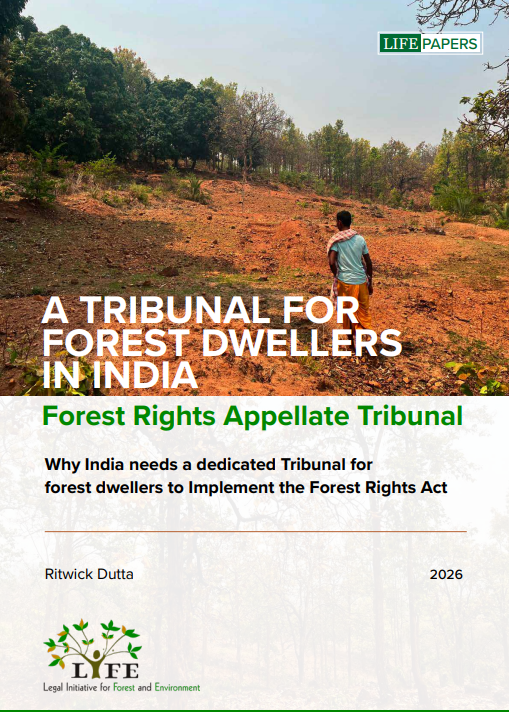
At present, 85% of FRA claims have been disposed off. A designated tribunal to bridge the trust deficit b/n tribal communities and the State is needed to transform forest dweller from a passive “subject” of administration to an active “citizen” with equal standing before the law
We are proposing a new Tribunal on Forest Rights Act - FORAT to facilitate access to justice for nearly 300 million forest dwellers across the country. Forest Dwellers should have a statutory right of appeal against rejection of claims for IFR and CFR.
https://t.co/ChWPM6gIn2
Asia is bearing the brunt of the latest Strait of Hormuz disruption, warns UNCTAD. The region receives more than 80% of the oil and gas moving through the critical waterway, while fertiliser supply chains are also under threat — raising fears of rising fuel, food and transport costs across vulnerable economies
by @PulahaRoy
https://t.co/NtfQ0DbtdH
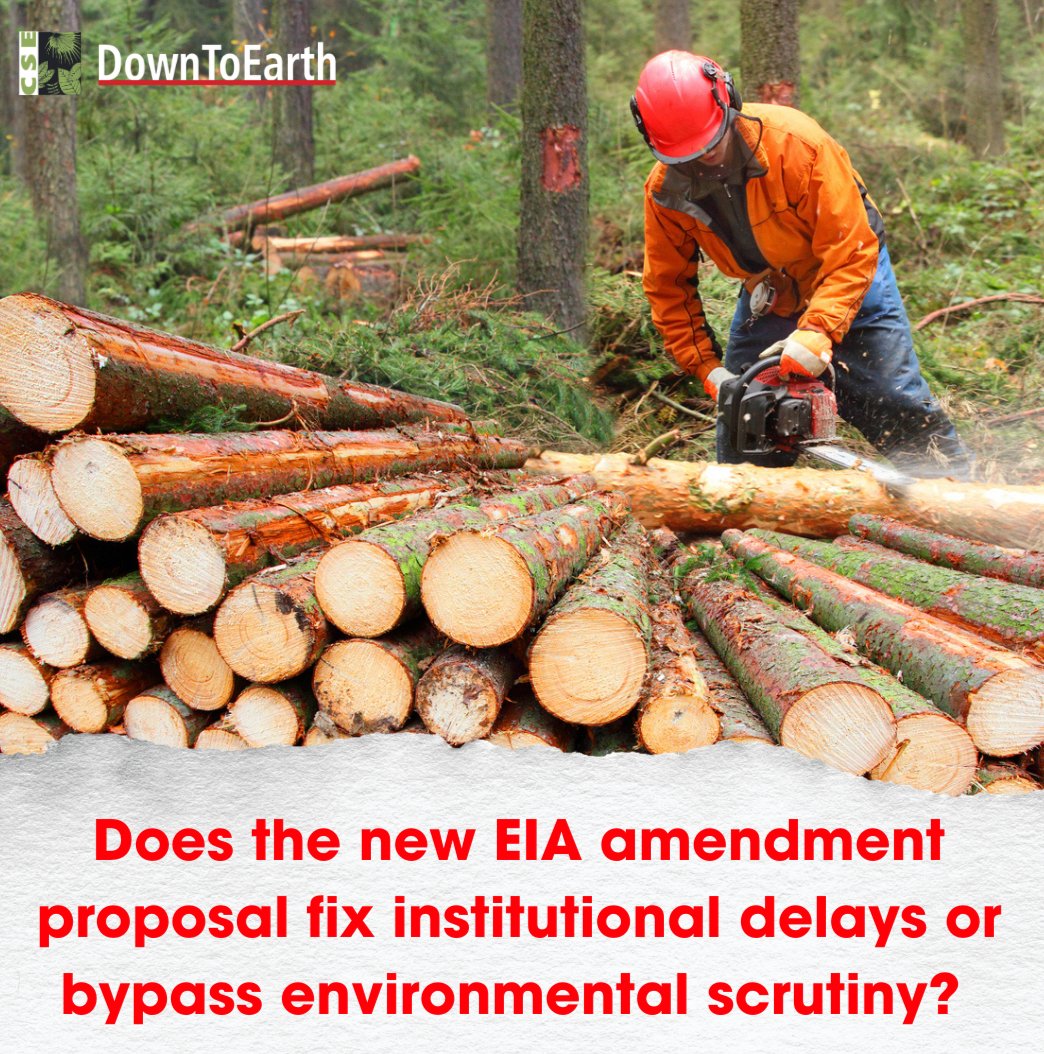
On March 5, 2026, the Union Ministry of Environment, Forest and Climate Change (MoEFCC) published a draft notification proposing amendments to the Environment Impact Assessment Notification, 2006, the principal regulatory framework governing environmental clearances for development projects in India.
It suggests establishing new bodies to take over when state-level institutions lapse. While intended to streamline processes, the amendment raises concerns and reflects a broader shift in how environmental clearance is administered.
@Subhrozit Goswami from @CSEINDIA does a critical analysis of the amendments proposed to EIA and finds that the proposed structure risks turning institutional delay into institutional bypass: https://t.co/ZYaTq82TMo
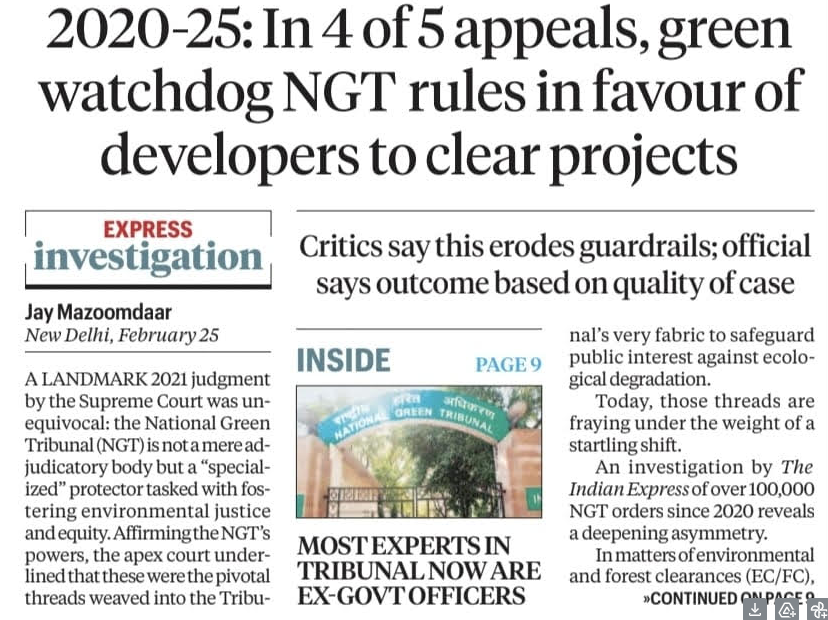
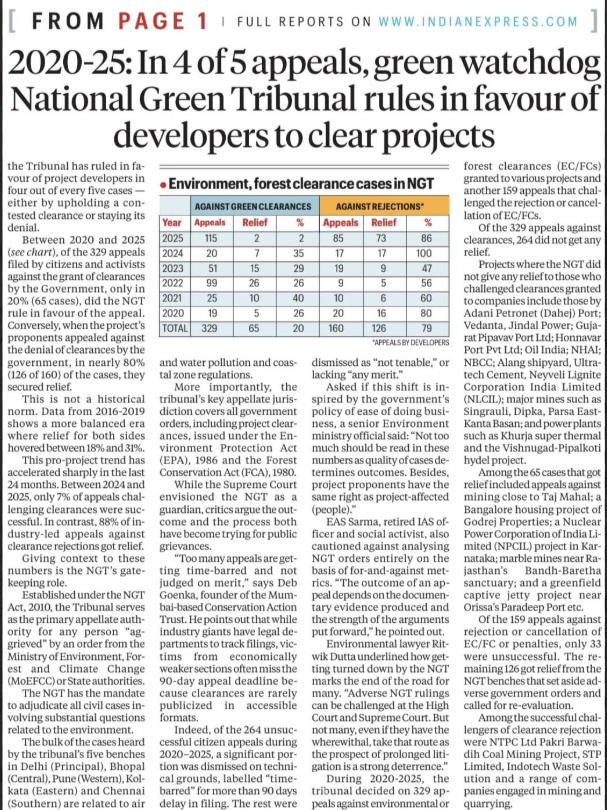
The Report by Jay Mazoomdar lays bare the functioning of the NGT ; Lack of members, conflict of interest and lack of merit review. The NGT today has become the hope for project developers as per this report.
In 2024, all project developers who approached the NGT got relief. In 2025, while only 2% of affected communities got relief; 85% of the Project Developers got relief.
Can #Budget 2026 breathe new life into India’s legacy industrial clusters?
Budget recognises problems plaguing these segments but doesn't mention a clear pathway to resolve them, writes @Subhrozit for Down To Earth: https://t.co/Pw21iUpUUC
Ease the GST on recyclable waste, urges @CSEINDIA in a letter to the finance minister on the eve of the Union Budget.
In a recent letter to Union finance minister @nsitharaman, CSE director general @sunitanar has said: “We believe that India is moving towards a greener economy transformation through government policy across sectors like energy, industry, waste, transport and agriculture. We believe that GST and fiscal structures could play a major role in accelerating this transition towards a greener economy.”
CSE's report, Relax the Tax, highlights a critical misalignment. Says the CSE letter to the FM: “Currently, our tax system treats recycled materials in the same manner as virgin ones, effectively penalising the very sectors that can drive our transition to a circular economy.”
Read the full release: https://t.co/vsLd5yZLQu
Read the report here: https://t.co/FY2zPCMYqN
#BudgetSession #BudgetSession2026
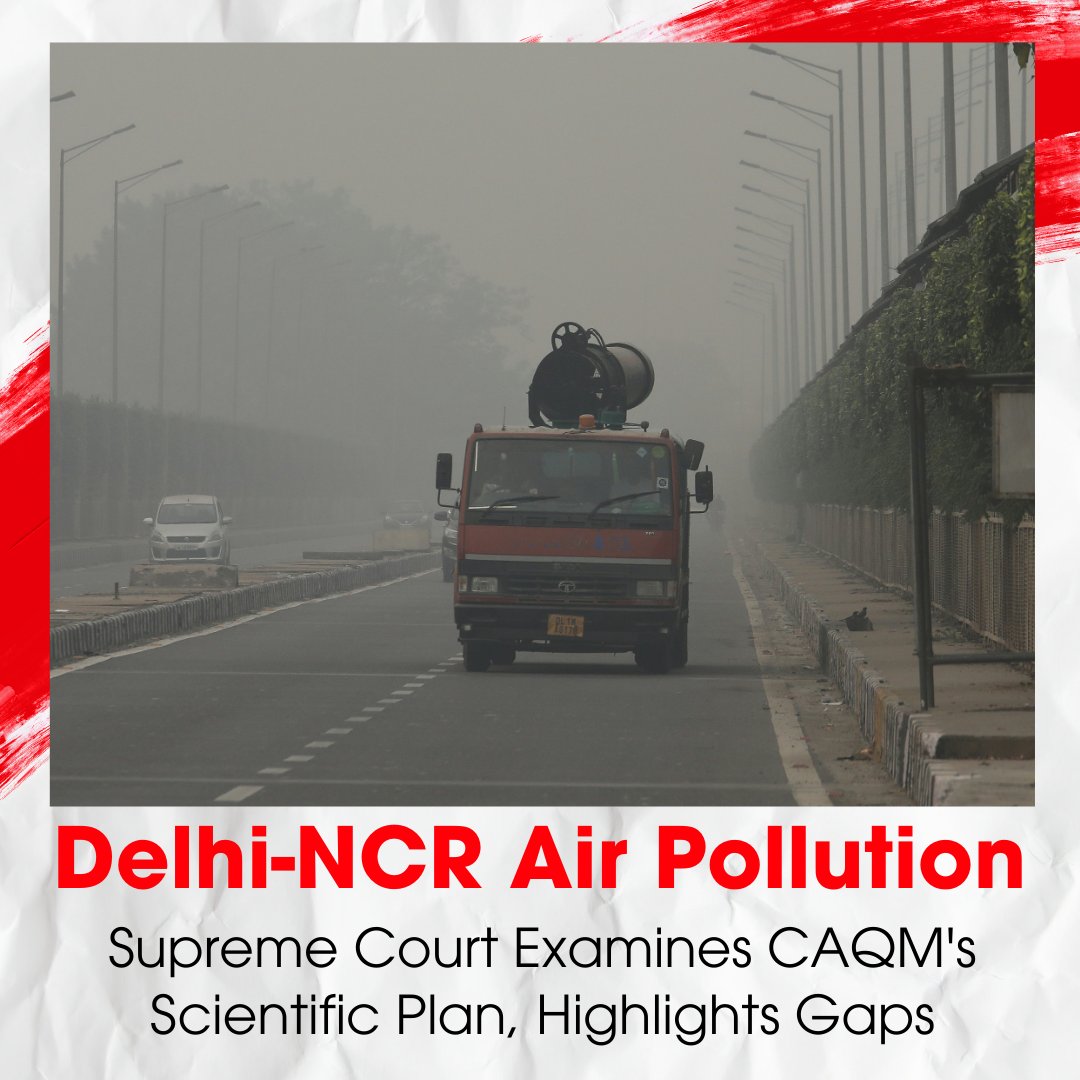
The Supreme Court has reviewed CAQM's roadmap to tackle Delhi-NCR air pollution, focusing on fixing data gaps and building stronger regulatory systems — but key questions remain over timelines and action on power plant
https://t.co/8ACBe4utpY
🖋️ @Subhrozit | @CSEINDIA
Whether the Carbon Credit Trading Scheme becomes a meaningful climate instrument or another compliance mechanism will depend on whether India is willing to match global scale with domestic ambition, write @Subhrozit & @parthkumar24
https://t.co/WwQvEtzXGz
5️⃣ 𝗕𝗶𝗼𝗺𝗮𝘀𝘀 𝗰𝗼-𝗳𝗶𝗿𝗶𝗻𝗴: Biomass Co-firing is seen as a solution for the twin challenges of crop burning and coal use, yet the policy is faltering and the penalties seem like an easy escape (@Subhrozit ): https://t.co/KeJl2mUJjV
As Delhi chokes, India’s air pollution regulator has proposed Rs 61.85 crore in penalties on six coal-based power plants near the capital for missing biomass co-firing targets. Can the plants just pay and move on, explains @Subhrozit.
https://t.co/KeJl2mUJjV