India meets all-time high demand of 270.8 GW.
Over the past week, India’s peak power demand has continued to climb to successive new highs, rising from 257.3 GW on May 18 to 260.4 GW on May 19, further to 265 GW on May 20, and ultimately reaching a record 270.8 GW on May 21, according to the @MinOfPower.
Renewable energy (RE) including hydro contributed 34 per cent to the peak demand, while contributing 28.9 per cent to the total energy generation for the day.
Key highlights from the day:
1️⃣ Wind energy’s absolute capacity during the peak demand stood at 13.6 GW, a rise of 9 GW in comparison to April 25’s peak demand.
2️⃣ The total generation from RE including hydro 1,628 million units (MU), an increase of 289 MU from April 25 or a 21.5 per cent increase within the time span.
3️⃣ Peak demand stayed above 260 GW for approximately 3 hours between 2 to 5pm, highlighting the impact of sustained heat during the day on the power consumption,
4️⃣ Maharashtra (31.5GW) recorded the highest contribution to the day’s peak demand, followed by Uttar Pradesh (29 GW) and Gujarat (25.9 GW).
5️⃣ Coal-based thermal remained the mainstay throughout the day, with 171.7 GW on board during peak demand, and ramping up to a maximum of 184.9 GW during non-solar hours.
6️⃣ The power system recorded a shortage of 0.18 GW during solar hours, while the shortage during non-solar hours stood at 2.57 GW, with seven states experiencing shortages and Haryana reporting the highest deficit.
Analysis by @_KushagraG
Know more about it: https://t.co/h1mArgsAb7
India’s power demand has hit yet another all-time high.
Just three weeks after the previous peak on April 25, India recorded a new Peak Power Demand of 257.3 GW at 3:42 PM on May 18, 2026.
• Renewable energy contributed 34 per cent to peak power demand, higher than on April 25, with solar alone accounting for 23 per cent.
• Thermal energy contributed the rest, with coal powering 61 percent to the peak demand
• The evening peak touched 247 GW at 10:30 PM, around 6 GW higher than the April 25 evening peak, notably higher than the peak demand in the entire FY 2025-2026
• Storage, encompassing Pumped and Energy Storage System(ESS) contributed one percent to the non-solar hours, adding a new dynamism to meeting power demand
• The non-solar hours saw a shortage of 1.3 GW capacity, with Punjab, Haryana and J&K, among the states facing energy shortage.
Analysed by @_KushagraG, CSE
India’s power demand hit an all-time high of 256 GW at 3:48pm on April 25, 2026, driven largely by an intense heatwave and cooling needs.
Here are the key takeaways from India’s record 256 GW Peak Power Demand (See thread🧵: 1/7)
Inviting applications for CSE’s upcoming onsite training programme on Carbon Accounting, MRV and Trading (July 7-20, 2026).
As India moves towards a compliance-driven carbon market under the Carbon Credit Trading Scheme (CCTS), understanding emissions accounting, compliance systems and trading mechanisms is becoming increasingly important.
What participants will learn:
▶️Carbon Accounting (Scope 1, 2 & 3)
▶️Monitoring, Reporting & Verification (MRV)
▶️Carbon Auditing & Verification
▶️Carbon Markets & Trading Mechanisms
▶️CBAM, BRSR & Global ESG Frameworks
▶️Decarbonisation strategies and financing
Last Date to Apply: 28 June 2026
Designed for industry professionals, policymakers, consultants and researchers seeking a practical understanding of India’s evolving carbon regulations.
Sign up here: https://t.co/Tc8ub6WsXM
For more information contact Sayantan Haldar at [email protected].
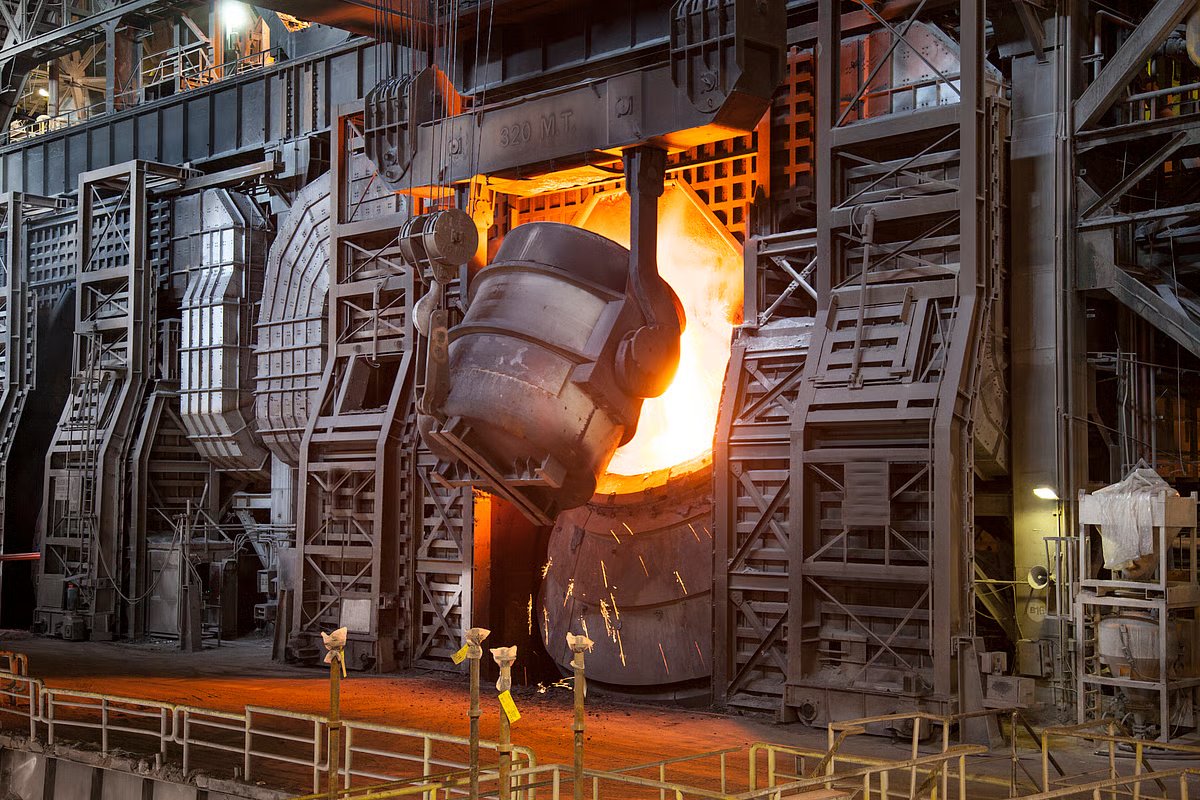
Steel and cement will remain central to India’s growth story in the coming decades. As these sectors expand their production capacities, pathways for decarbonisation have become increasingly clearer and more implementable.
The technologies to produce low-carbon steel and cement are emerging, but the key question now is: will there be enough demand to scale them?
With India investing heavily in infrastructure every year, the government is one of the largest buyers of steel and cement in the country. This creates a powerful opportunity. By prioritising low-carbon materials in public procurement, the government can act as a first mover and help create the early demand needed to scale green production.
As definitions and standards for low-carbon materials become clearer, sustained demand will be crucial to drive decarbonisation not only in manufacturing but also across the buildings and infrastructure sectors.
Write Sayantan Haldar and @parthkumar24, CSE.
Read the full piece here: https://t.co/1vbtWVS5iF
As the Finance Minister Nirmala Sitharaman is set to present the Union Budget of 2026.
Drawing attention to the misalignment in India’s green economy goals, Centre for Science and Environment (CSE) Director-General Sunita Narain, in a recent letter to the Finance Minister, noted that India’s current tax regime treats recycled materials in the same manner as the virgin ones, thus penalising the sectors that can drive the country’s transition to a circular economy.
Experts at the climate think tank analysed 12 major waste and recycling sectors, including metal scrap, plastic waste, e-waste, battery waste, paper, glass, tyres and end-of-life vehicles. Highlighting the reuse potential of waste materials, Nivit K Yadav, programme director for industrial pollution at CSE, said, “In each sector, the opportunity for reuse is enormous; there is also significant potential to optimise material efficiency and reduce waste and pollution.”
@CSEINDIA | @sunitanar | #CSEINDIA | #SunitaNarain | #NirmalaSitharaman | #UnionBudget2026 | #India | #UNI
In line with its emission reduction strategy, India’s Carbon Credit Trading Scheme is now in the offing. Our capacity building efforts to build greater awareness and knowledge for obligated industries has been ongoing for the past two years.
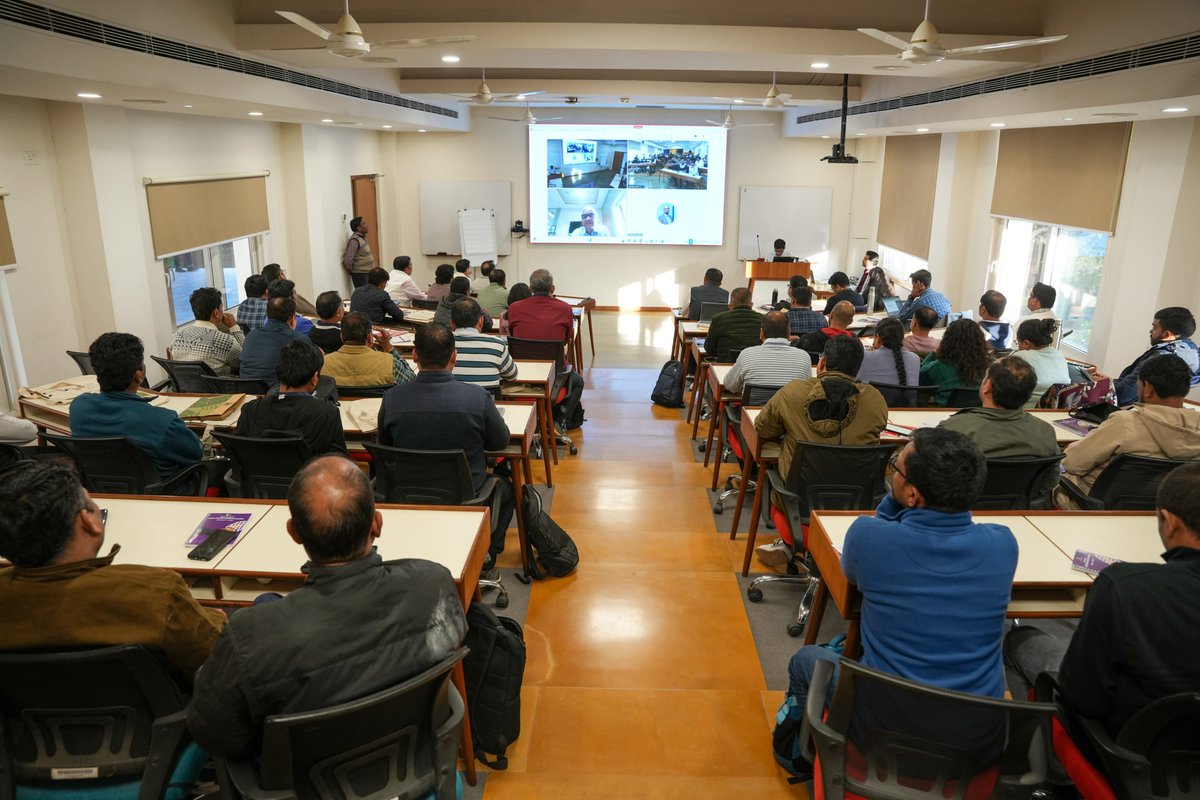
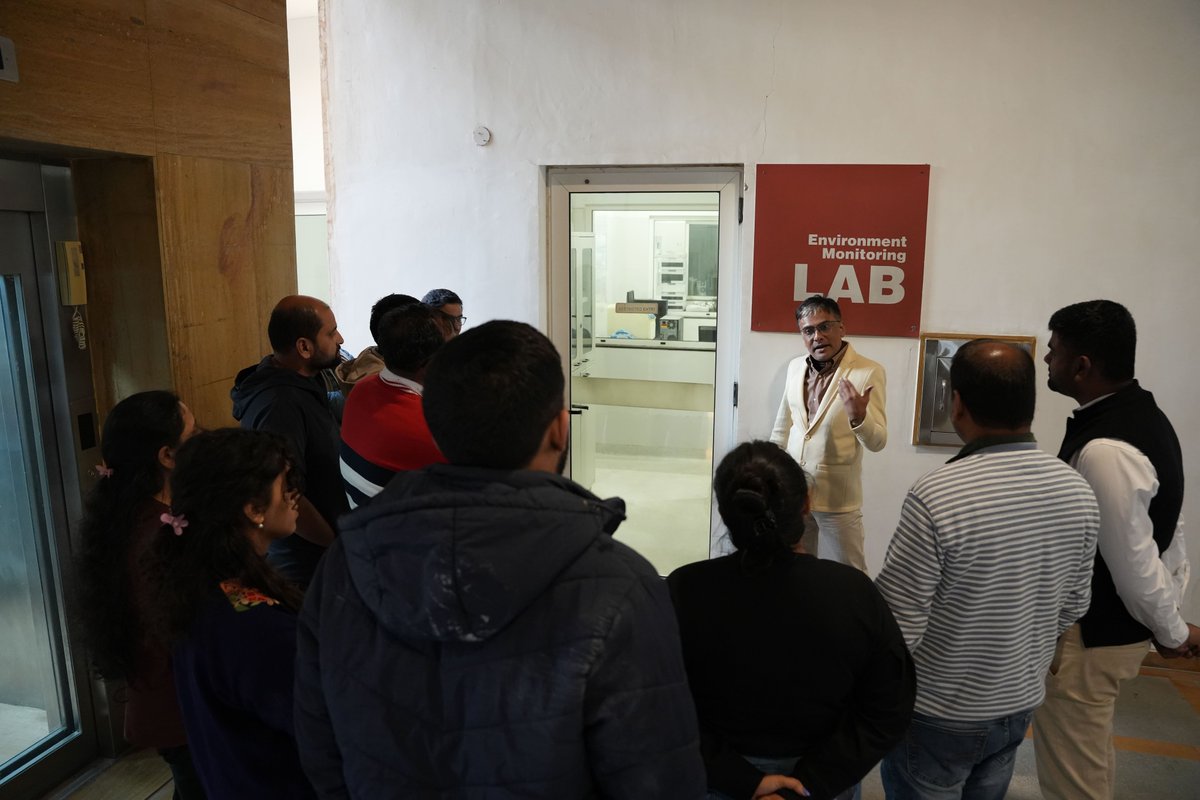
CSE’s Industry team hosted an Onsite Training on Carbon Market and Decarbonization (Energy Manager’s Meet) for 56 energy managers across various industrial sites of the @AdityaBirlaGrp on December 4-5, 2025 at AAETI.
The training witnessed participation of energy managers engaged in cement (@UltraTechCement), aluminum (@Hindalco_World), textile (@GrasimInd), chlor-alkali (Grasim Chemicals), copper (Birla Copper) and mining sectors and working at the intersection of decarbonization, efficiency improvement, environmental and climate impact management.
We are grateful for the technical support extended to us in the training programme by @beeindiadigital and @ntpclimited-NETRA with a special address given by Deputy Director General, Dr. Ashok Kumar to audience on day one of the programme.
The two-day programme covered carbon market preparedness, sectoral decarbonization strategies with focus on improving energy efficiency, renewable energy integration pathways including alternative fuel options (Biomass, RDF and CBG) and CCUS. The participants engaged in social and networking events, including a walk in the Aravalli mountain range.
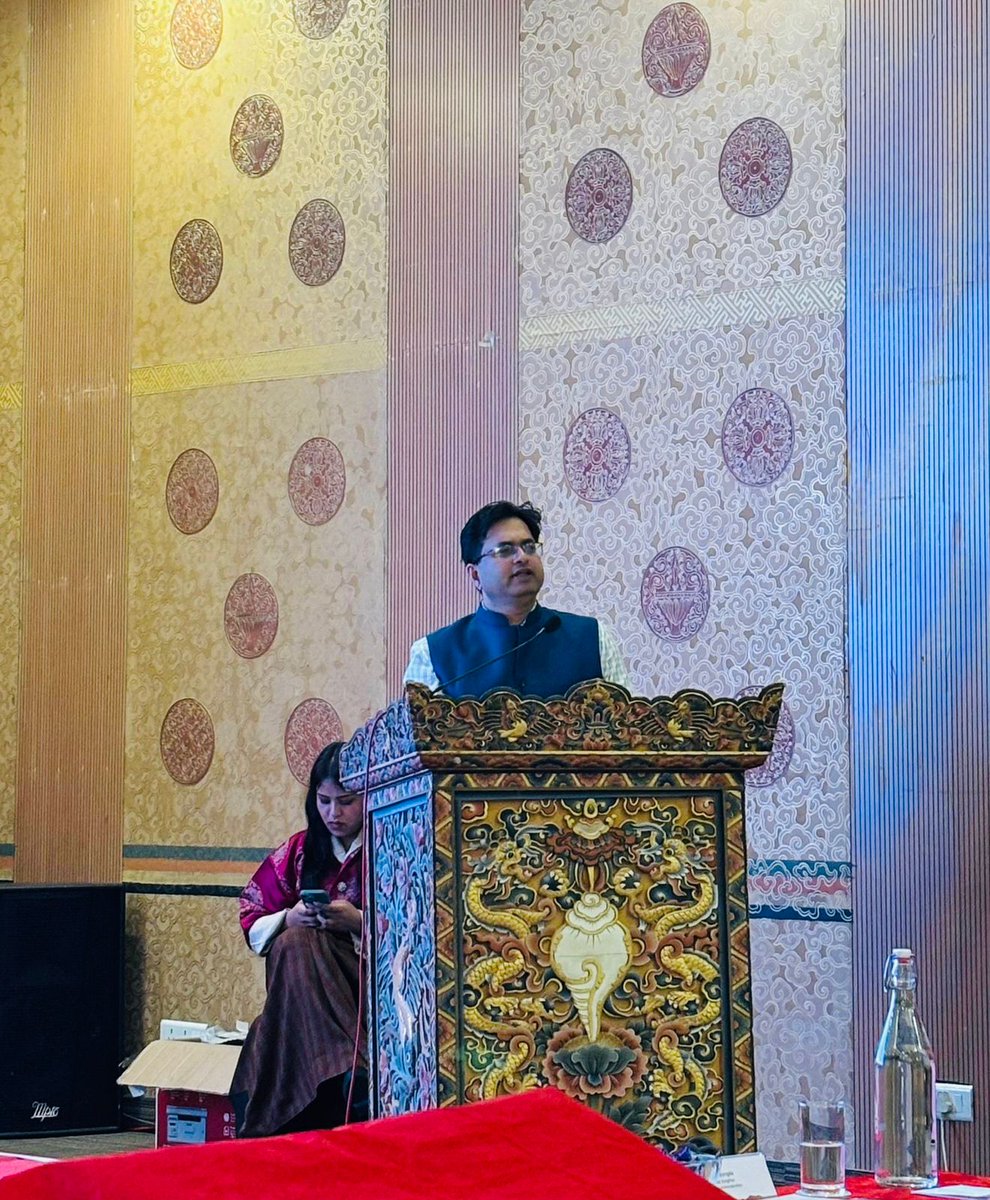
Nivit Yadav and Parth Kumar from CSE’s industry team participated and presented at the inception workshop on 'Developing a National Clean Air Action Plan for Bhutan', organised by ICIMOD, UK International Development and Department of Environment and Climate Change, Bhutan.
At the event, the CSE team underscored how strong environmental compliances can go hand in hand with the economic growth of Bhutan's industrial sector. They also outlined the challenges and possible pathways forward for the sector.
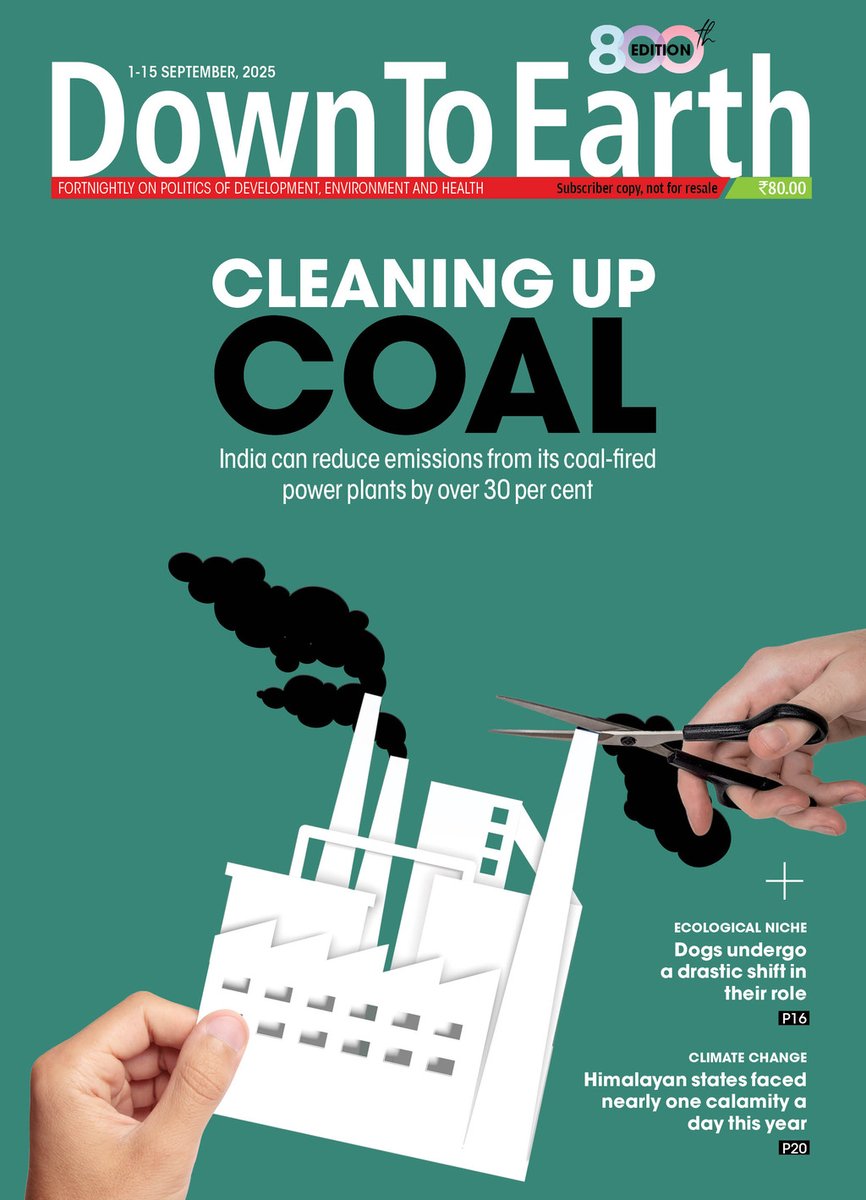
We are 800 editions old! 🎉🎊
@sunitanar and the Down To Earth team released the 800th issue of the magazine today. The first edition was published on May 31, 1992.
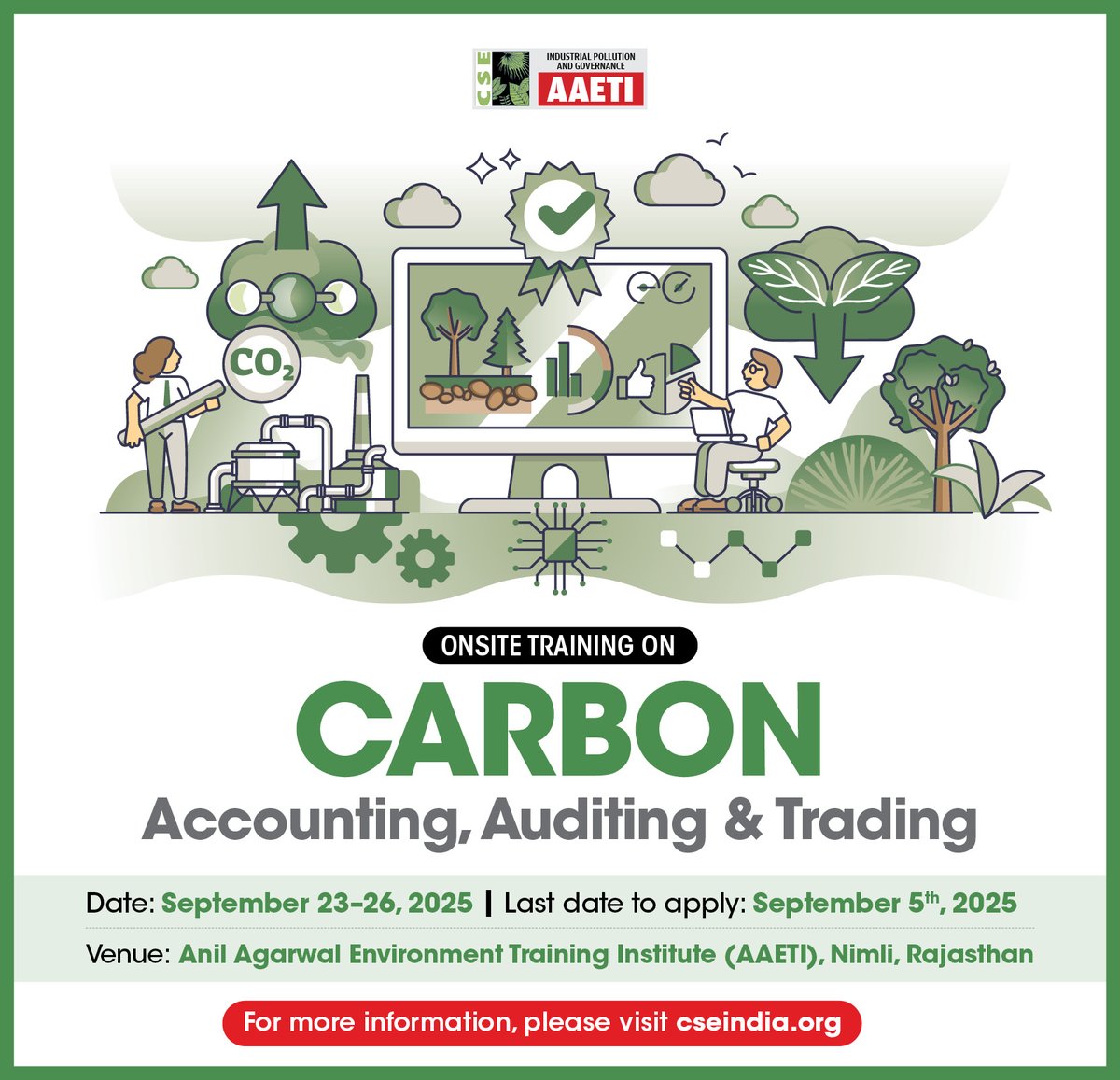
We are now inviting applications for an intensive four-day training course on Carbon: Accounting, Auditing & Trading,
Who should apply?
Industry leaders, consultants, regulators, sustainability managers, and professionals keen to strengthen their expertise in carbon management.
What you will learn:
✅ Basics on GHGs, their sources in industrial sector and impacts
✅ Understanding the need for carbon/GHG accounting for industries
✅ Understanding methodologies for GHG/carbon emission inventorisation and management
✅ Experiences from emission trading schemes across the World
✅ Knowledge on upcoming Indian carbon markets, requirements for Indian industries and carbon offsetting & associated risks
✅ Financing decarbonisation through carbon markets
✅ Impacts of global policies like CBAM on Indian industries
✅ Available avenues for financing industrial decarbonization
Discussion and interaction with sector experts
Limited seats, sign up today: https://t.co/tbC8Kzvr7W
The Solar Energy Corporation of India Limited has achieved a record low price for green ammonia at Rs 55.75/kg under the Green Hydrogen Mission, marking a significant milestone for the fertiliser industry
🖊️ @parthkumar24
https://t.co/yQnla71uaL
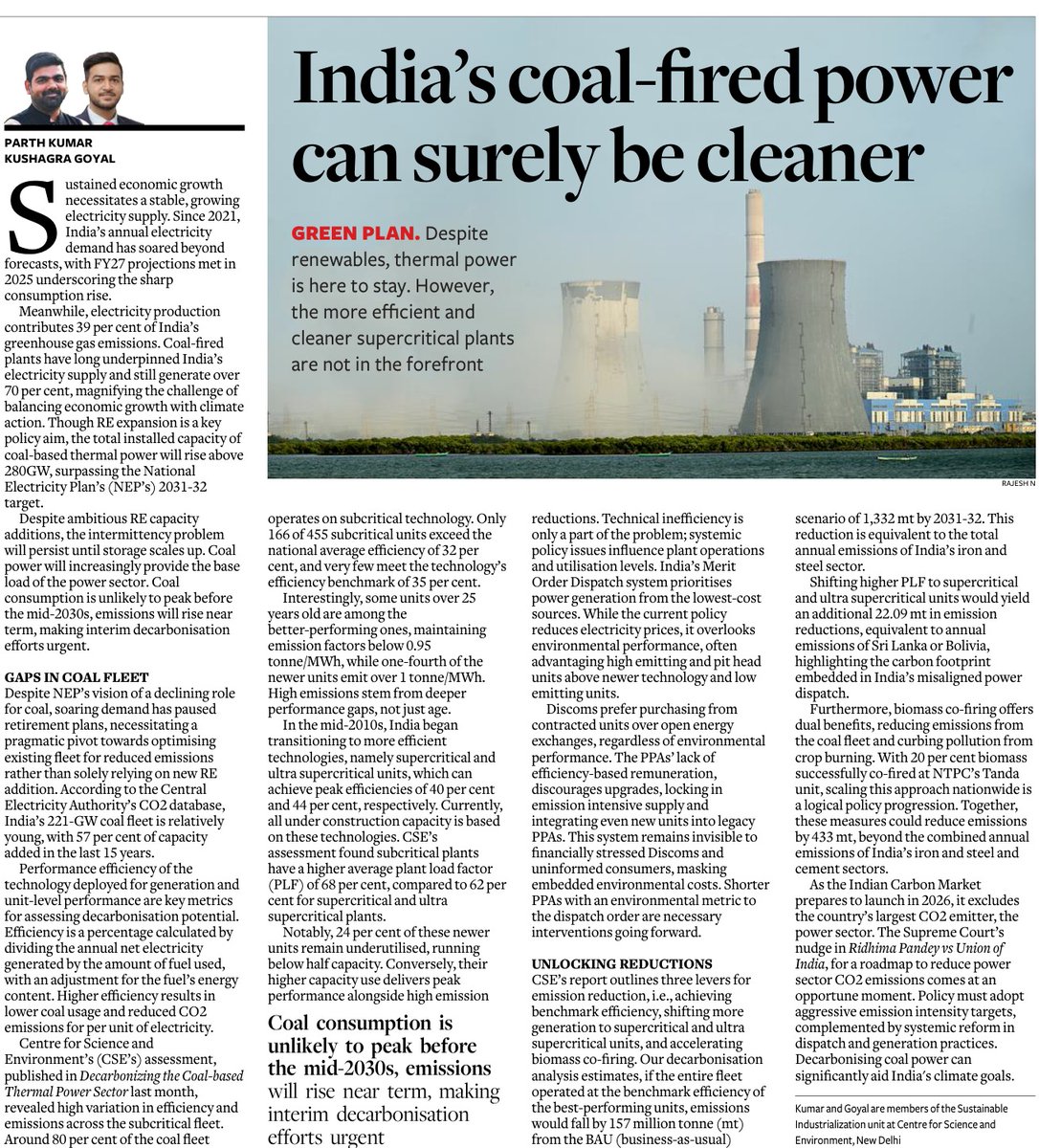
In a new piece for Business Line, @parthkumar24 and @_KushagraG , Sustainable Industrialization, unit of CSE write about how India’s coal-fired power can run cleaner to reduce CO2 emissionsa
@businessline
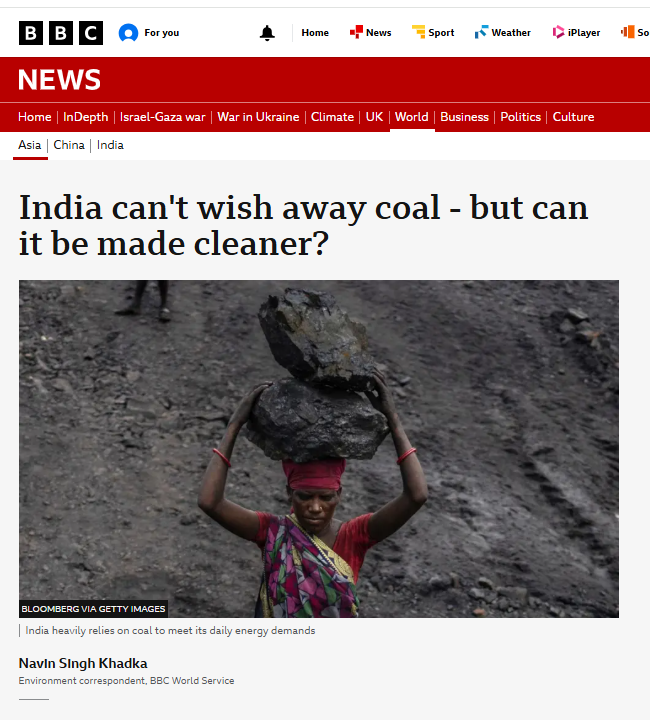
World’s 3rd largest #carbon emitter, #India has seen huge growth in #renewables & yet #coal remains the king.
Why can't it get rid of the dirtiest #fossilfuel & why is it for #decarbonising coal power plants - and is that doable?
I explain it all here:
https://t.co/yIfOynQO8M
India has to displace coal; with growing energy needs we cannot replace. But given the urgency of climate change we need to decarbonise the sector. Our study shows that with this roadmap we can reduce emissions equal to total of iron and steel and cement sectors
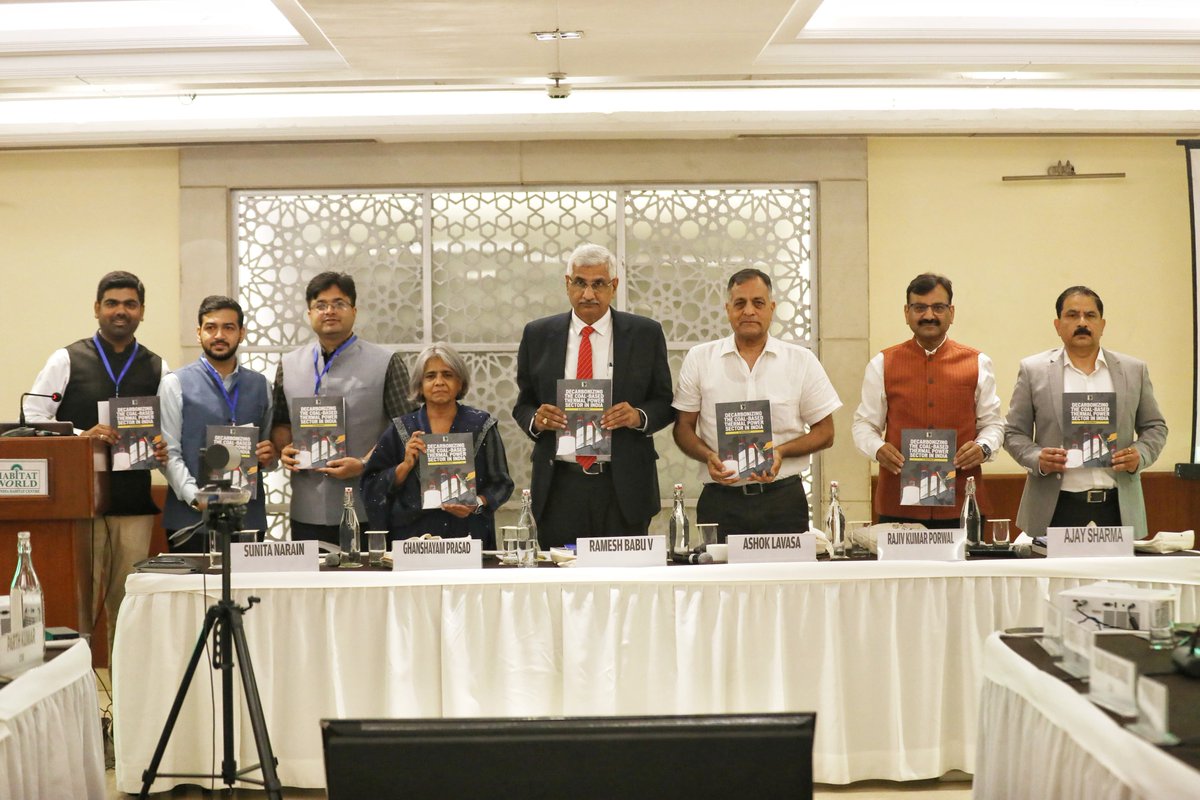
📢 Launching now: CSE's new study "Decarbonizing the Coal based Thermal Power Sector in India: A Roadmap"
Get the copy of the report here👇
https://t.co/0uXIx7NNeT
This report highlights the technical and systematic challenges that influence the emissions of the coal-based power sector. It analyses the emission intensity of the current fleet to contextualize its performance and provide future pathways for emission reduction.
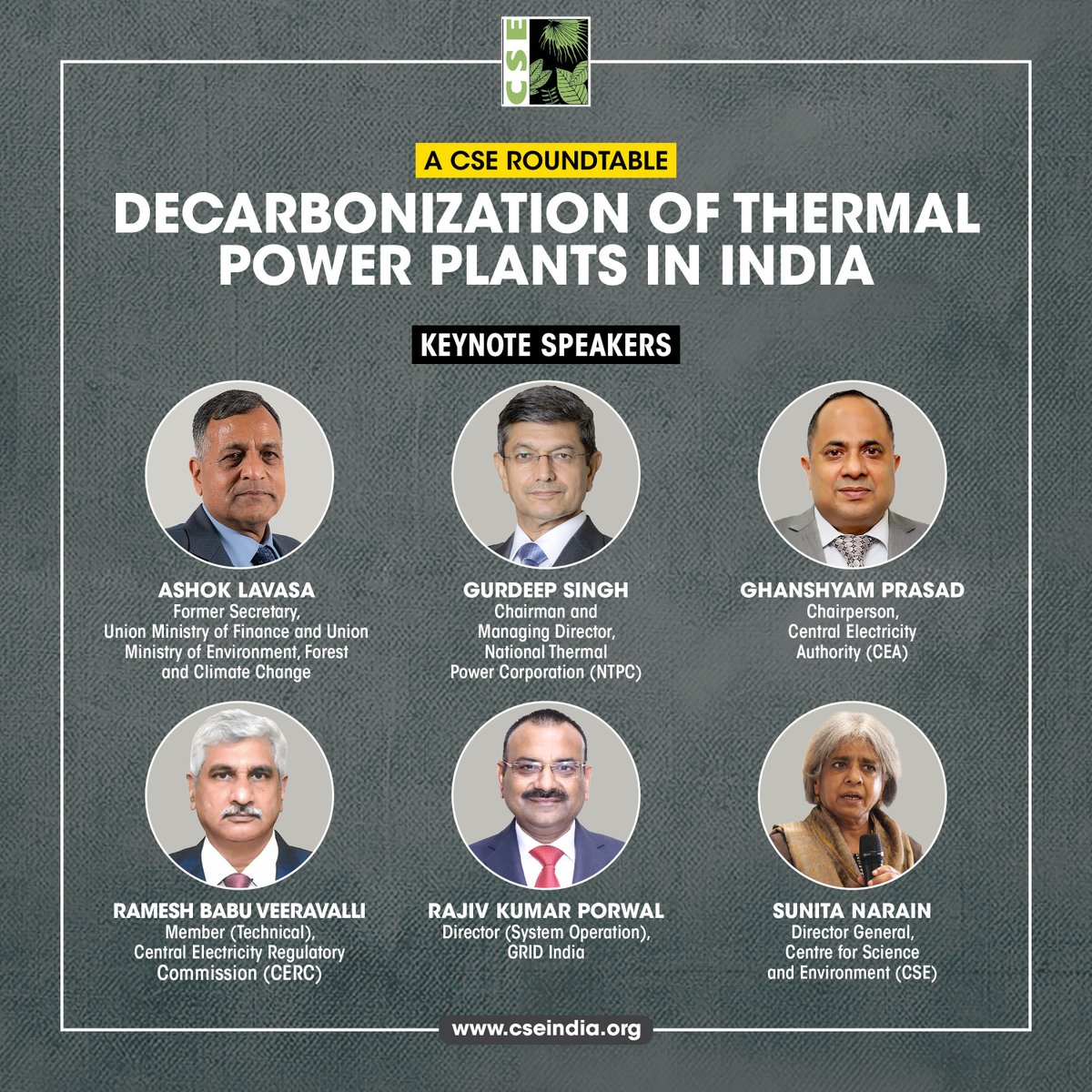
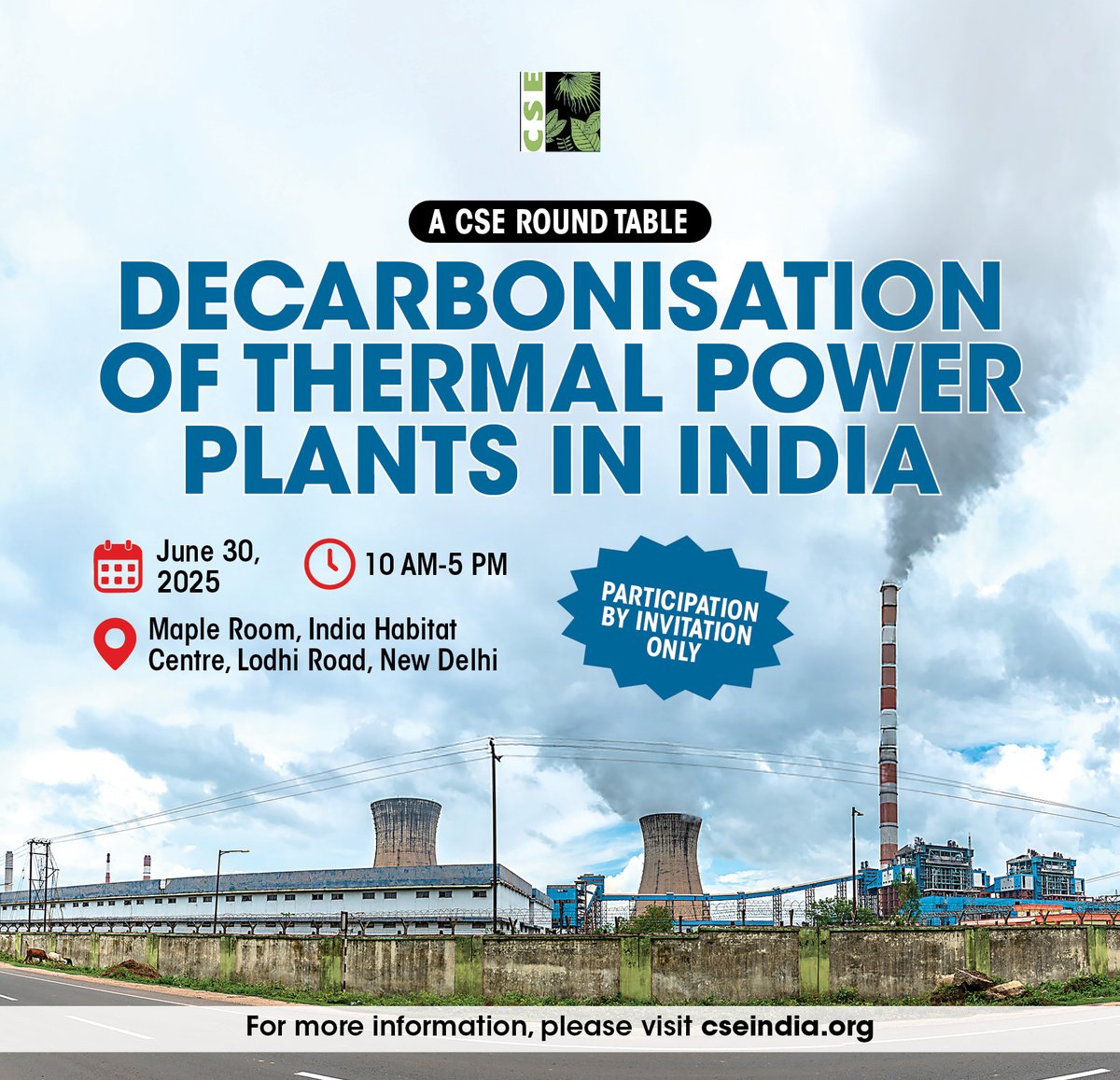
We are convening a crucial day-long round table on Decarbonisation of Thermal Power Plants in India.
This roundtable is bringing together key voices from government, industry and civil society to forge a strategic framework for decarbonising coal-based power, while ensuring energy security.
We will also be releasing our new report "Decarbonizing the coal based thermal power sector in India".
Meet our distinguished panel ⬇️
Ashok Lavasa, @moefcc
Gurdeep Singh, @ntpclimited
GHANSHYAM PRASAD, Central Electricity Authority (@CEA_India)
Ramesh Babu Veeravali (@CERC)
Rajiv Kumar Porwal, @gridindia
Sunita Narain (@sunitanar), DG, @CSEINDIA
India's coal-powered thermal power plant (TPP), the largest contributor to country's emissions portfolio, urgently requires a decarbonisation roadmap.
The sector must modernise to balance rising energy demand with climate goals, and address challenges around demand forecasting, fleet efficiency, alternate fuel co-firing and renewable integration.
@CSEINDIA is convening a day-long Round Table to initiate discussions on "Decarbonisation of Thermal Power Plants in India".
We are also launching a new report at the occasion, “Decarbonizing Coal Based Thermal Power Sector in India: A Roadmap“
To know more about the event, and be part of the conversation, visit: https://t.co/z1pCSVXGDX
We are convening a crucial day-long round table on Decarbonisation of Thermal Power Plants in India.
We are bringing together national experts, government officials, industry leaders and civil society to forge a strategic framework for decarbonising coal-based power, while ensuring energy security. Know more about the round table here: https://t.co/z1pCSVXGDX
We're excited to share our latest updated publication:
Decarbonising India: Energy and Hard-to-Abate Sectors – An Anthology and Summary of Research and Findings
This publication brings together key studies and insights on:
☑️ emissions trajectories
☑️ renewable energy integration
☑️ low-carbon strategies for India’s energy and hard to abate industrial sectors
By compiling key research and findings from 100+ civil societies, academic institutions, grassroots organizations, and experts, this anthology maps existing knowledge, identifies research gaps, and supports informed decision-making for a sustainable, low-carbon future.
The publication also builds on the valuable inputs, findings and discussions from CSE's Climate Week, held on 17th October, 2024, at the Anil Agarwal Environmental Training Institute, where sector experts, policy makers and industry experts convened to assess India's progress and outline strategies for a low carbon future.
Get your copy here: https://t.co/Sn8VRvOsY0
Ready to master Energy Audit & Management? Join our online training and learn how to optimise energy use, understand the fundamentals of energy management, cut costs, and boost sustainability! Perfect for professionals aiming to improve overall environmental performance of the entity. 🌍
📅 March 1–12, 2025
🔗Sign up here:https://t.co/i6Lz9PgD4r