For the longest time, I didn’t know what my own voice sounded like.
Even when I could explain the things I was doing or studying, it always felt like regurgitating someone else's ideas.
Friends would tell me: Just put yourself out there. You’re already good.”
But I kept saying: “Not until I know it’s my own vision.”
And I kept creating just for myself in parallel to client work. More like drifting sideways than moving forward, hoping the dots would eventually connect.
Yet I don’t believe in originality as much as I believe in authenticity—the unique sum of our influences and experiences; the things that make you, you. So after years of tracing that map, I spent the last 2.5 building on it.
My new label, Twilight Fringe, isn’t about "pushing boundaries" (please kill me) or chasing "high culture"—it’s about roots. My creative spark didn’t come from Picasso or Warhol, the Bauhaus or Dieter Rams. It came from Nirvana, Dragon Ball, toys, video games, computers... the so-called "mainstream" of pop culture.
Why a "label" and not a design studio? A studio delivers work; a label produces, represents and distributes. It can hold apps, music, stories, games—anything you want, because creative creatures shouldn't be bound by a single medium.
And here’s the paradox: everything I hate about culture is pop, but everything I love is pop too. Maybe the answer is at the fringes of it.
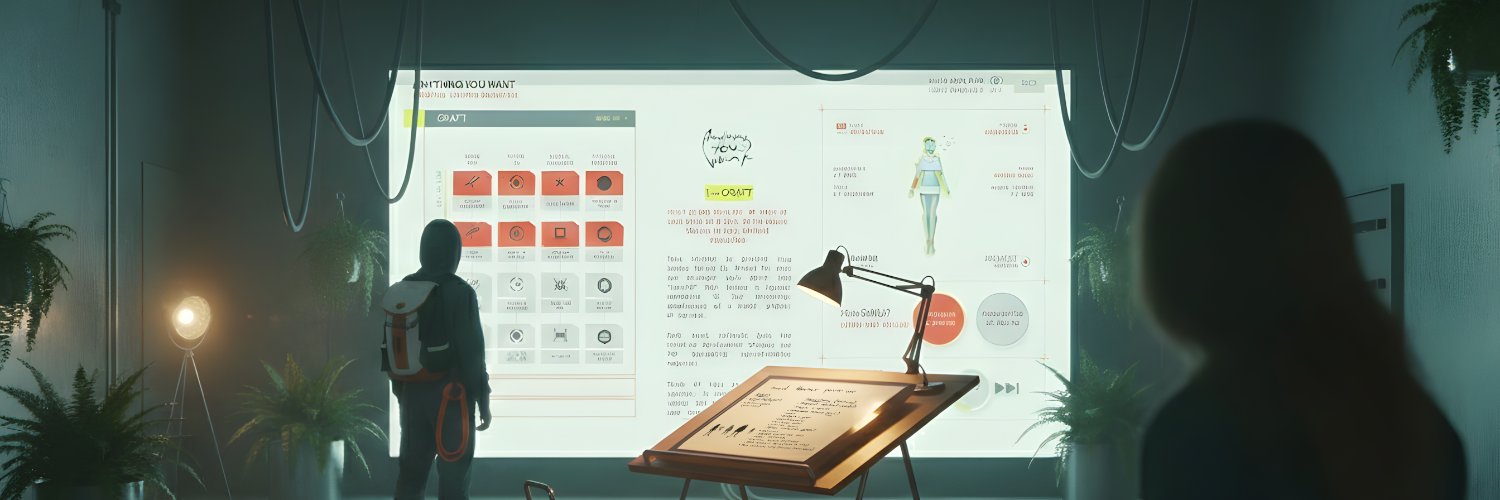
The website itself (desktop first, for now) is the label's first release. Far from being the final shape of Twilight Fringe and more of a foundation to build upon. A playground for myself and a signal for others to come play and make great shit together.
The playground is now open @twilight_fringe
I accidentally broke my brain reading about Nobel Prize winners last month.
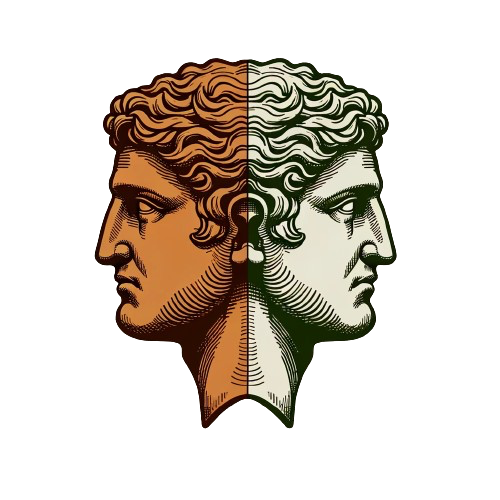
There's this thing called "Janusian thinking."
It's exactly why some people's minds work like magic while the rest of us think in straight lines. Named after Janus, the Roman god with two faces pointing opposite directions.
The psychologist who discovered it, Albert Rothenberg, was trying to figure out what made breakthrough thinkers different. He interviewed dozens of Nobel laureates, major artists, revolutionary scientists. What he found sounds impossible.
These people can hold two different ideas in their mind at the same time. They can explore both without switching back and forth or forcing a quick comparison. They can consider “yes” and “no” to the same question simultaneously and stay clear-headed.
Einstein too talked about this when he described his relativity breakthrough. He was imagining riding alongside a beam of light while also standing perfectly still. Both perspectives at once. Mozart said he could hear an entire symphony "all at once," every note, every contradiction, every resolution happening in a single moment of awareness.
Your average person's mind works like a courtroom. Evidence comes in, you weigh it, you reach a verdict. Case closed. But Janusian minds work more like... I don't know, like a quantum computer that can process multiple realities simultaneously until something new emerges from the overlap.
I've started noticing it in conversations. When someone can genuinely see both sides of something without needing to pick one, it drives people nuts. They want you to land somewhere definite. The ability to live in that tension space reads as wishy-washy or indecisive.
Most creative advice tells you to "think outside the box."
But Janusian thinking is weirder than that.
It's being inside and outside the box at the same time. It's thinking the box exists and doesn't exist simultaneously.
Which explains why truly creative people seem slightly unhinged. They think they're choosing between realities. But, they're inhabiting multiple realities at once, mining the contradictions for insights the rest of us never see.
Sadly, most of us have trained ourselves out of this ability. We've learned that holding contradictions feels unstable, so we rush toward resolution. We've been taught that changing your mind means you were wrong before, so we defend positions instead of exploring them.
But the people changing the world have kept that childlike ability to hold impossible thoughts without needing them to make sense immediately.
We just need to live in the questions everyone else is too scared to ask.
@steveruizok can’t believe you’re fixing the one reason I don’t like free-flow vector drawing tools. Your work on tldraw keeps making me question old assumptions.
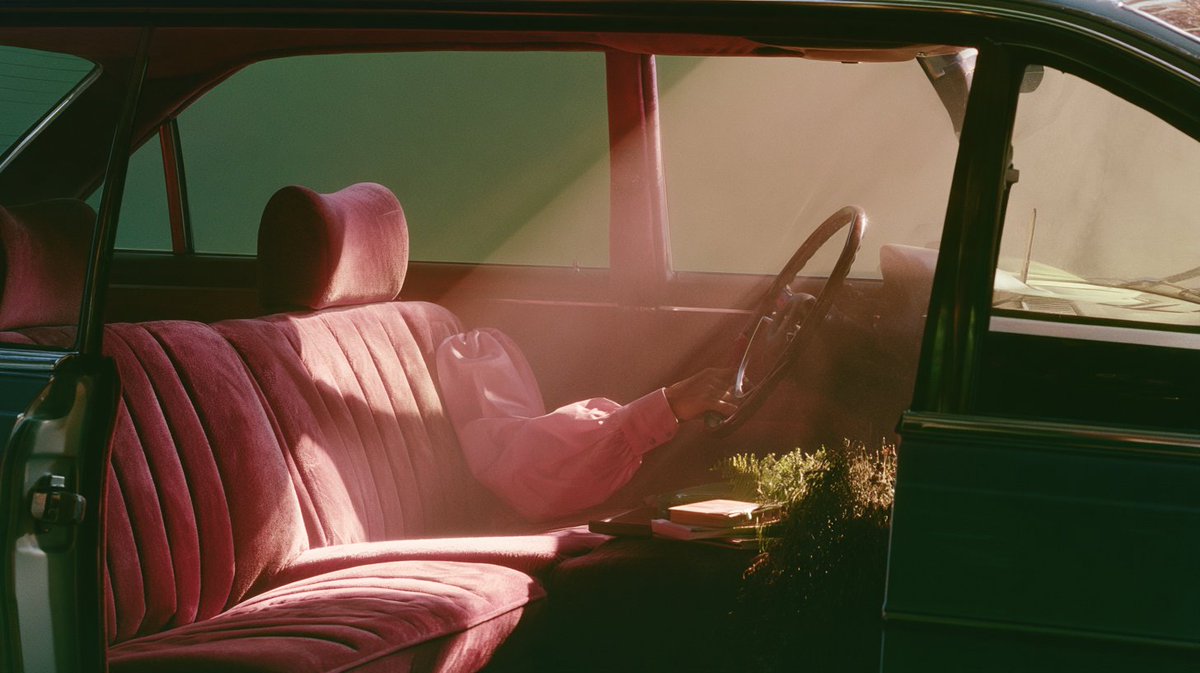
Started using Midjourney for ideating on UI, but not in the way I initially expected.
Searching for moods and vibes rather than for specific flat styles that that could easily translate with CSS.
It's been awesome, a lot of things I would have never thought of.
@BowTiedPassport another unpopular opinion is that we romanticize third-worldly things, mistaking "primitive" things for culture and tradition, sabotaging our own chances of advancing (or at least catching up) as a civilization
@BowTiedPassport My friends don't like it when I say it, but I do think we tend to imitate the style–while completely ignoring the substance of things. We create bubbles of "cool" that cannot sustain themselves because they lack the fundamental understanding of what makes a thing "good"
@BowTiedPassport This makes me think that back in those days people still listened to whatever MTV told them was cool. It might have been the last wave of that, just before it turned into a reality TV channel.
Might that have to do with no one (in MX) digging rock anymore?
@BowTiedPassport Most people who liked the Mexican copies also liked the real deal.
IMO, rock was meant to be sung in English. Only very few languages can get away with it (like Swedish) and even fewer artists can get away with it in Spanish (like Cerati)
@maris_jalil Te vas después de 3 horas de esperar y te hablan molestos "aquí estoy afuera de su casa" ó al día siguiente te dicen "pues si fui ayer y nadie me abriooooo"