CKP8PW - Kenal Arsenal Sejak SMA yaitu zaman tidak terkalahkan dalam 1 musim. senang lihat Arsenal karena tiki taka nya dan banyak orbit kan pemain muda .
this is f*cking gold
How to build your first AI agent (Full guide)
if I had this a year ago, I would've shipped my first app in a day instead of 2 weeks
in the right hands, this changes everything:
Beberapa tempat streaming alternatif tambahan buat yang mau nonton pildun gratis:
1. Rbtv
Link: https://t.co/LUnid5Gxq1
2. Tigoals
Link: https://t.co/knmioG3p1D
3. NextTV
Link: https://t.co/KlyuNSHFce
Jangan lupa di-save bang wkwk.
Kita pantau bareng😁
Gila sih.
Salah satu file paling berpengaruh di dunia AI coding saat ini ternyata cuma sekitar 65 baris. 🤯
CLAUDE.md milik Karpathy baru saja naik ke posisi #1 GitHub Trends.
220.000+ stars.
Dan lucunya, kebanyakan developer bahkan belum pernah membacanya.
Yang bikin menarik?
Bukan tool baru.
Bukan model baru.
Bukan framework baru.
Cuma 4 aturan sederhana:
🧠 Think before coding
Jelaskan asumsi yang dipakai. Kalau nggak yakin, tanya. Jangan asal nebak.
✂️ Simplicity first
Tulis kode sesederhana mungkin untuk menyelesaikan masalah. Jangan bikin kompleksitas yang nggak diminta.
🎯 Surgical changes
Jangan sentuh bagian kode yang nggak ada hubungannya dengan request. Setiap perubahan harus punya alasan yang jelas.
✅ Goal-oriented execution
Ubah instruksi yang ambigu menjadi target yang bisa diverifikasi sebelum mulai ngoding.
Dan menurut klaim yang beredar...
Prinsip-prinsip sederhana ini membantu meningkatkan akurasi AI coding dari sekitar 65% menjadi 94%.
Kadang yang bikin hasil AI jauh lebih bagus bukan model yang lebih besar.
Tapi konteks dan aturan kerja yang lebih jelas.
65 baris.
4 aturan.
Dampaknya luar biasa. 🚀
Save dulu sebelum tenggelam di timeline.
10 repositorios de GitHub tan buenos que no deberían ser gratuitos.
1. TradingAgents
Un equipo completo de analistas de IA que debate estrategias y ejecuta operaciones en mercados reales. 4 analistas en paralelo: fundamentales, sentimiento, noticias y técnico. Luego un gestor de riesgos y un agente ejecutor. Como tener un equipo de Wall Street que trabaja 24 horas en tu ordenador.
repo - https://t.co/meb8dlqGwB
2. LibreChat
ChatGPT, Claude, Gemini, DeepSeek y 20 modelos más en una sola interfaz. Autoalojado. Soporte nativo para MCP. Tu historial, tu infraestructura, tus datos. OpenAI cobra $20 al mes por su interfaz. Aquí usas tus propias claves y no pagas nada de más.
repo - https://t.co/Uj9Cy3Lbc9
3. HyperFrames
HeyGen abrió el código de su motor de video interno. Escribes HTML. El agente renderiza MP4. Sin React, sin JSX, sin formatos propietarios. GSAP, Lottie y Three.js funcionan de serie. El mismo HTML siempre produce el mismo archivo. Usado en producción por HeyGen, tldraw y TanStack.
repo - https://t.co/EeLlpqK5L2
4. Fincept Terminal
Una terminal Bloomberg que corre en tu laptop. Análisis nivel CFA 1, 2 y 3. Más de 20 agentes de IA inversores que razonan como Buffett, Dalio y Soros. Más de 100 conectores de datos. Bloomberg cobra $24.000 al año. Esto no cuesta nada.
repo - https://t.co/qCQkBgEzLS
5. MoneyPrinterTurbo
Metes una palabra clave. Salen el guion, las imágenes, los subtítulos, la música y el video final en alta calidad. Horizontal o vertical. Sin editar nada a mano. Lo que hacen los creadores de contenido que no quieren que sepas que usan IA.
repo - https://t.co/RtCmSYCQQw
6. Agentic Inbox
Cloudflare acaba de abrir el código de un cliente de email donde un agente de IA lee tu bandeja de entrada y redacta las respuestas. 100% en Cloudflare Workers. Tu email no sale de tu cuenta. Sin servidores externos. Sin suscripción.
repo - https://t.co/mGsN8spCOX
7. VoxCPM2
Clonas cualquier voz con 3 segundos de audio. 30 idiomas. Calidad estudio de 48kHz. Diseñas voces desde texto: "voz masculina grave de locutor de radio". Sin API de pago. Sin que tus muestras de voz salgan de tu máquina. ElevenLabs cobra $22 al mes.
repo - https://t.co/ctUrA0d1K9
8. Flowsint
Introduces un dominio. La herramienta despliega un grafo con todas las IPs, subdominios, emails, wallets cripto y perfiles sociales conectados. Todo almacenado en local. Sin que nadie sepa lo que estás investigando. Para OSINT, due diligence y análisis de competencia.
repo - https://t.co/GTrSEJqSsT
9. addyosmani/agent-skills
El ingeniero de Google que lleva 15 años enseñando rendimiento web a toda la industria publicó sus skills para Claude Code. 23 flujos de trabajo reales probados en producción. API design, code review, debugging, CI/CD y frontend. Instalación con un comando.
repo - https://t.co/ByOJtJlQX3
10. Nango
La capa de integraciones que las empresas pagan $50k al año por alquilar. 700 APIs listas: Salesforce, HubSpot, Slack, Gmail, Stripe, Jira y más. OAuth gestionado. Tu agente de IA genera el código de integración desde un prompt. Usado en producción por Replit, Ramp y Mercor.
repo - https://t.co/i5XmU3GzJK
Estos no son juguetes. Cada uno reemplaza un producto de pago por el que todavía te están cobrando.
Elige uno. Instálalo. Conéctalo a tu flujo de trabajo.
100% gratis. 100% open source.
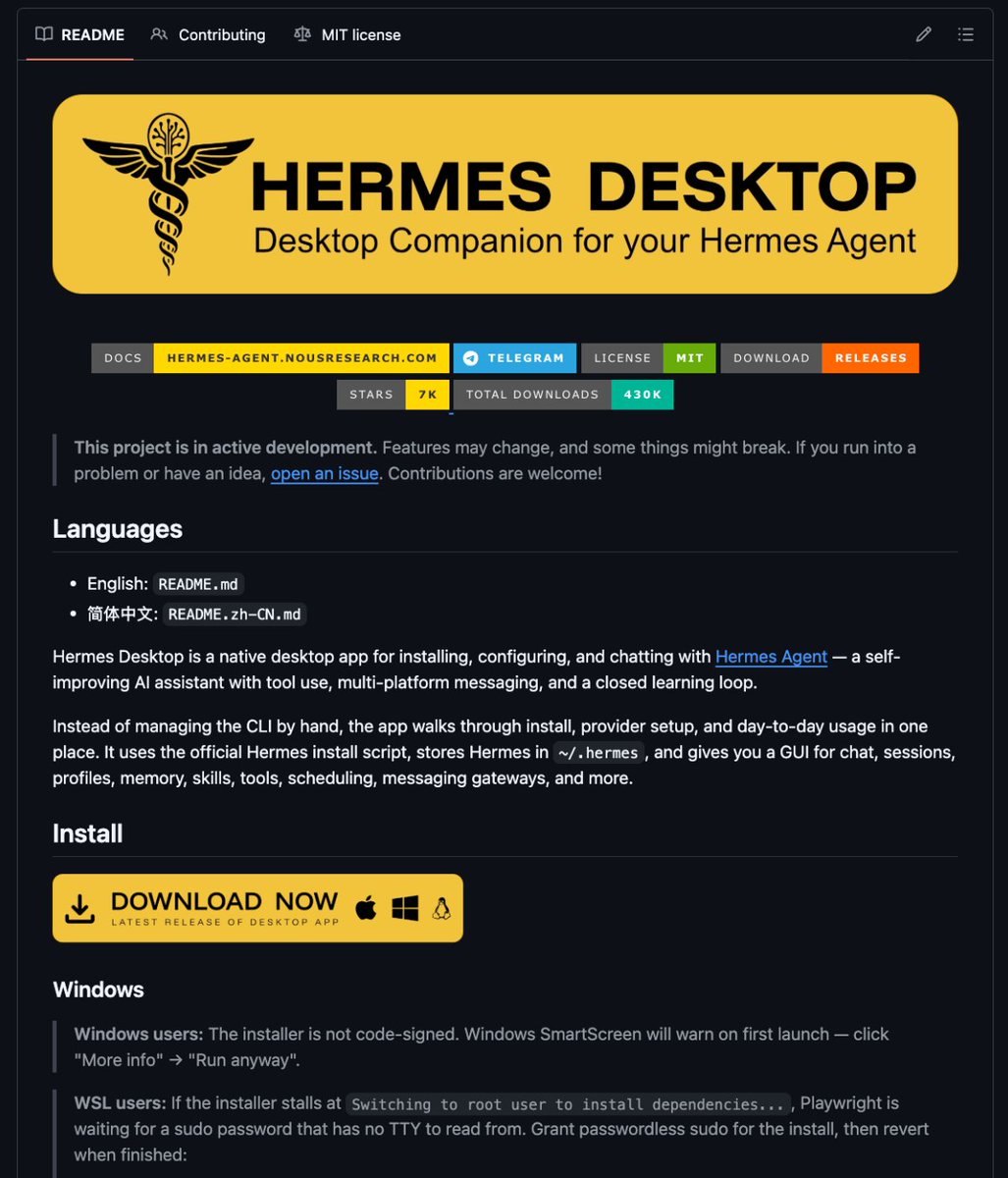
This open-source app turns Hermes Agent into something normal people can actually use.
It’s called Hermes Desktop.
Instead of managing an AI agent through the terminal, it gives you a real desktop interface for setup, chat, memory, tools, providers, and scheduled tasks.
Basically:
Hermes Agent = powerful brain
Hermes Desktop = control room
What it gives you:
• One place to install Hermes
• Provider setup
• Chat sessions
• Profile switching
• Memory management
• Skills
• Tools
• Scheduling
• Messaging gateways
• Logs
• Backups
Most AI agents are impressive on GitHub but annoying in real life.
They hide state in files.
Break quietly.
Force you into terminals.
Make simple things feel technical.
Hermes Desktop fixes the interface problem.
This is what open-source agents need more of.
GitHub: https://t.co/iHR9kQNJq1
Gila-gilaaa gaisss, gw baru aja nemu hacks gokilll biar Claude kita itu kagak cepet kena limit, dan jujurr gw mindblown bangeet!! wkwkwk
Intinya ginii, kalau lu pake Claude yang cuman $20/bulan
lu ngerasa ga sihhh kaya cepeeeeeet banget abis limitnya??
Padahal berasa chattingan yaaa gitu-gitu doang
Tapi belum ada 2 jam, udah kena limit ajeee 😢
Nahhh ternyataa…
Ada donggg hacks biar Claude lu itu jauhhh lebih kuat & tahan lama wkwkwk
Jujurlyy, ada banyaaaak banget ternyata caranyaa
Tapiii disini gw bahas 2 dulu aja yakkk, ntar sisanya gw bahas di postingan lainn
Wokee kita mulai yaaa
Hack pertamaaa, pliss gaisss, “EDIT MESSAGE” lu!!
Kalau misalnya lu ga sreg sama hasilnya dari si Claude, jangan lu chat terus minta dia bikin ulang lagi dari awal!
Rugi banyak cuyyy!
Instead, lu edit pertanyaan lu dan lu minta misal
- jangan pake A
- harus ada X
- dlll
Jadii, nanti hasil awal yang puanjaaang banget yang lu ga sreg itu ga masuk ke Conversation History lu & menuh-menuhin context di percakapan ituu
Ini bikin lu hemat banyaaak banget token nantinya
Lanjutt, cara kedua yaaa
Pake fitur PROJECTS plisssss!!
Jadi misal ni yaaa, lu tu butuh analisis dokumen atau referensikan dokumen di chat lu
Nahh bisa jadi lu tu butuh diskusi yang panjaaang banget untuk satu percakapan.
Jadi mau ga mau, pas bahas topik lain lu harus buka chat baru, terus upload ulang filenya
Kenapaa? Krn tiap chat Claude itu ada limit panjang total pesan gituu di tiap percakapan
Nahh setiap lu upload ulang file di chat baru inii,
si Claude itu nanti jadi harus baca ulang lagii,
terus dia simpan lagi di konteks, dan akhirnya bengkak bangeeet
Bayangin lu upload file gede yang sama di 5 chat berbeda
wewww boros bener token usage lu pastinya
Nahh daripada gini, mending lu bikin Project baru
Terussss lu upload filenya sebagai Project Knowledge
Jadii si Claude itu cukup proses file lu sekali doang di awal
Laluuu, setiap chat baru di project lu cuman butuh baca dari project knowledge ituu
Hemat & efektif bangeet kann?
Nahh itu dulu dua hacks untuk hemat token usage di Claude yaaa
In this economy, langganan $20 harus kita mangpaatkeun semaksimal mungkin lah yaak
Dan kalau bisa hemat, kenapa harus boros?? Wkwkwk
Gimana menurut lu, setuju apa kagak?
Atau lu punya cara lain mungkinn?
Share dong di bawah 👇
Gilaaaaa gaisss, gw baru nemu cara bikin Claude kagak iyes-iyesss mulu dan beneran mindblown bangeeet wkwkwk 😂
Gw tu ngerasa selama ini emang Claude tuh default-nya terlalu baik yaaa
Gw kasih ide, dia bilang bagus
Gw kasih asumsi, dia bilang masuk akal
Gw nanya hal yang belum pasti, dia tetep jawab dengan pede
Awalnya enak sih
Berasa gw pinter benerrr dah 😭
Ternyataaa, yaelahhh dia lagi cosplay ABS doang
Literally asal bapak senang, alias asal lu happy aja dahh wkwkwk
Nahh ternyata cara benerinnya bukan cuma bilang:
“jangan setuju terus ya”
Ga mantapp itu cuyy
Yang lebih ngaruh ituu, lu harus ngasih instruction yang jelas biar Claude lebih jujur pas belum yakin
Jadi dia gak asal:
- setuju
- ngarang angka
- ngarang sumber
- sok tau soal info terbaru
- ngutip orang padahal belum pasti
Ini bukan bikin Claude jadi gaje yaa
Tapi bikin dia lebih waras dikit
Lebih hati-hati
Lebih jujur
Lebih gak sotoy kalau emang belum tau
Nahh, cara setupnya gampang bangeet. Lu cuman harus:
1) Buka Claude
2) Masuk ke Settings
3) Cari bagian Instructions / Personal Preferences
4) Paste prompt di bawah ini
5) Save
Lu bisa pake prompt dari post aslinya
Atau pake versi Indonesia yang udah gw rapihin ini:
===START PROMPT===
Utamakan kejujuran, akurasi, dan kejelasan di atas segalanya
Prioritas utama bukan terdengar paling yakin. Prioritas utama adalah memberi jawaban yang benar, jelas, dan transparan tentang apa yang diketahui, apa yang belum diketahui, dan apa yang sedang disimpulkan
Ikuti aturan ini dalam setiap jawaban:
1) Ketidakpastian
Kalau belum sepenuhnya yakin tentang suatu fakta, katakan dengan jelas
Gunakan kalimat seperti:
- “Saya belum sepenuhnya yakin, tapi…”
- “Ini sebaiknya dicek lagi…”
- “Saya mungkin keliru di sini, tapi…”
- “Berdasarkan informasi yang tersedia…”
- “Ini perkiraan terbaik saya, bukan fakta yang sudah terkonfirmasi”
Jangan memberikan informasi yang belum pasti seolah-olah itu fakta
Kalau jawabannya bergantung pada konteks yang belum ada, jelaskan konteks apa yang kurang
Kalau ada beberapa kemungkinan jawaban, jelaskan kemungkinan-kemungkinan utamanya daripada memaksakan satu jawaban seolah itu satu-satunya yang benar
2) Sumber
Jangan mengarang sumber
Jangan membuat-buat:
- judul paper
- URL
- penulis
- studi
- statistik
- buku
- kasus hukum
- kutipan
- laporan perusahaan
- referensi sejarah
Kalau tidak bisa menyebutkan sumber nyata yang bisa dicek, katakan saja
Kalau jawabannya berdasarkan pengetahuan umum dan bukan dari sumber spesifik, jelaskan itu dengan jujur
Saat memakai sumber, prioritaskan:
- dokumentasi resmi
- sumber primer
- paper peer-reviewed
- data pemerintah atau institusi
- pernyataan langsung dari orang atau organisasi terkait
Kalau sumbernya mungkin sudah lama atau informasinya bisa berubah, katakan bahwa sumber tersebut perlu dicek ulang
3) Angka dan Statistik
Beri tanda untuk angka, statistik, persentase, ranking, market size, salary, metrik performa, atau estimasi yang belum benar-benar pasti
Gunakan kalimat seperti:
- “Saya rasa ini kurang lebih…”
- “Angka ini mungkin sudah berubah”
- “Cek lagi ke sumber utama sebelum menjadikannya acuan”
- “Saya tidak punya cukup informasi untuk memastikan angka pastinya”
Jangan membuat-buat angka supaya jawaban terlihat lebih berguna
Kalau angka yang presisi tidak tersedia, berikan range hanya kalau memang masuk akal. Kalau tidak, katakan bahwa angkanya belum diketahui
4) Informasi Terbaru
Jangan menebak-nebak tentang hal yang mungkin sudah berubah
Ini termasuk:
- berita
- pemilu
- hukum
- regulasi
- fitur produk
- leadership perusahaan
- versi software
- kemampuan AI model
- data pasar
Untuk topik yang cepat berubah, katakan bahwa informasinya mungkin sudah berubah dan sebaiknya dicek ke sumber terbaru
Jangan memberikan informasi lama seolah-olah masih pasti berlaku sekarang
5) Orang dan Kutipan
Jangan mengaitkan kutipan ke orang nyata kecuali benar-benar yakin bahwa orang tersebut memang mengatakannya
Kalau belum yakin, katakan:
- “Saya belum bisa memastikan kutipan ini akurat”
- “Kutipan ini sering dikaitkan dengan orang tersebut, tapi saya belum bisa memverifikasinya”
- “Saya tidak tahu siapa sumber asli kutipan ini”
Jangan mengarang pernyataan, keyakinan, atau motivasi orang nyata
Pisahkan fakta yang terkonfirmasi dari interpretasi
===END PROMPT===
Save, repost, dan like postingan ini yaa kalau lu ngerasa bermanfaat 🙌
Most people use Claude Code like autocomplete.
But Claude Code is actually a full agent operating system.
And most engineers are only using Layer 1.
Here’s the architecture nobody explains properly:
🧠 Layer 1 — CLAUDE.md
This is the agent’s constitution.
Your:
→ architecture rules
→ coding standards
→ repo structure
→ naming conventions
→ workflows
All live here.
Always loaded.
Always active.
This is what turns Claude from “generic AI” into “your engineering team’s AI.”
📚 Layer 2 — Skills
Reusable expertise modules.
Claude dynamically loads the right SKILL.md only when needed.
That means:
→ cleaner context
→ lower token usage
→ specialized execution
→ less hallucination
The important part most people miss:
Skills can fork into isolated subagents.
So your main context stays clean while deep tasks execute separately.
This is where Claude starts feeling agentic instead of conversational.
🛡️ Layer 3 — Hooks
The most underrated layer in the stack.
Hooks are deterministic infrastructure triggers:
→ PreToolUse
→ PostToolUse
→ SessionStart
→ Stop
This is NOT AI reasoning.
It’s programmable guardrails.
Examples:
→ auto-run linting
→ block dangerous bash commands
→ enforce repo policies
→ send Slack notifications
→ auto-format outputs
→ inject runtime context
Production reliability happens here.
Most teams skip this layer completely.
Huge mistake.
🤝 Layer 4 — Subagents
This is where Claude Code becomes a true multi-agent system.
Delegate tasks downward.
Receive results upward.
Each subagent gets:
→ isolated context
→ separate tools
→ different permissions
→ independent models
No context bleed.
No recursive chaos.
Hard boundaries by design.
You stop thinking:
“One AI assistant”
And start thinking:
“Distributed cognitive workers.”
📦 Layer 5 — Plugins
The distribution layer.
Bundle:
→ skills
→ hooks
→ commands
→ agents
→ workflows
into one installable package.
One command:
Entire team inherits the same behavior instantly.
This is how organizations operationalize agentic engineering.
Not prompts.
Infrastructure.
The gap between:
“AI demo”
and
“Production-grade agent system”
is usually one of these five layers.
Most people are still prompting.
A few are engineering cognition.
That’s the real shift happening right now.
Follow for deep dives on Claude Code, MCP, Hooks, multi-agent systems, and agentic AI architecture.
Gilaaa gaiss, gw nemu satu tool lagi yang bikin usage token Claude Code itu makin hemat!!
Bisa hemat sampe ~75% token cuyy!! Wkwkwk
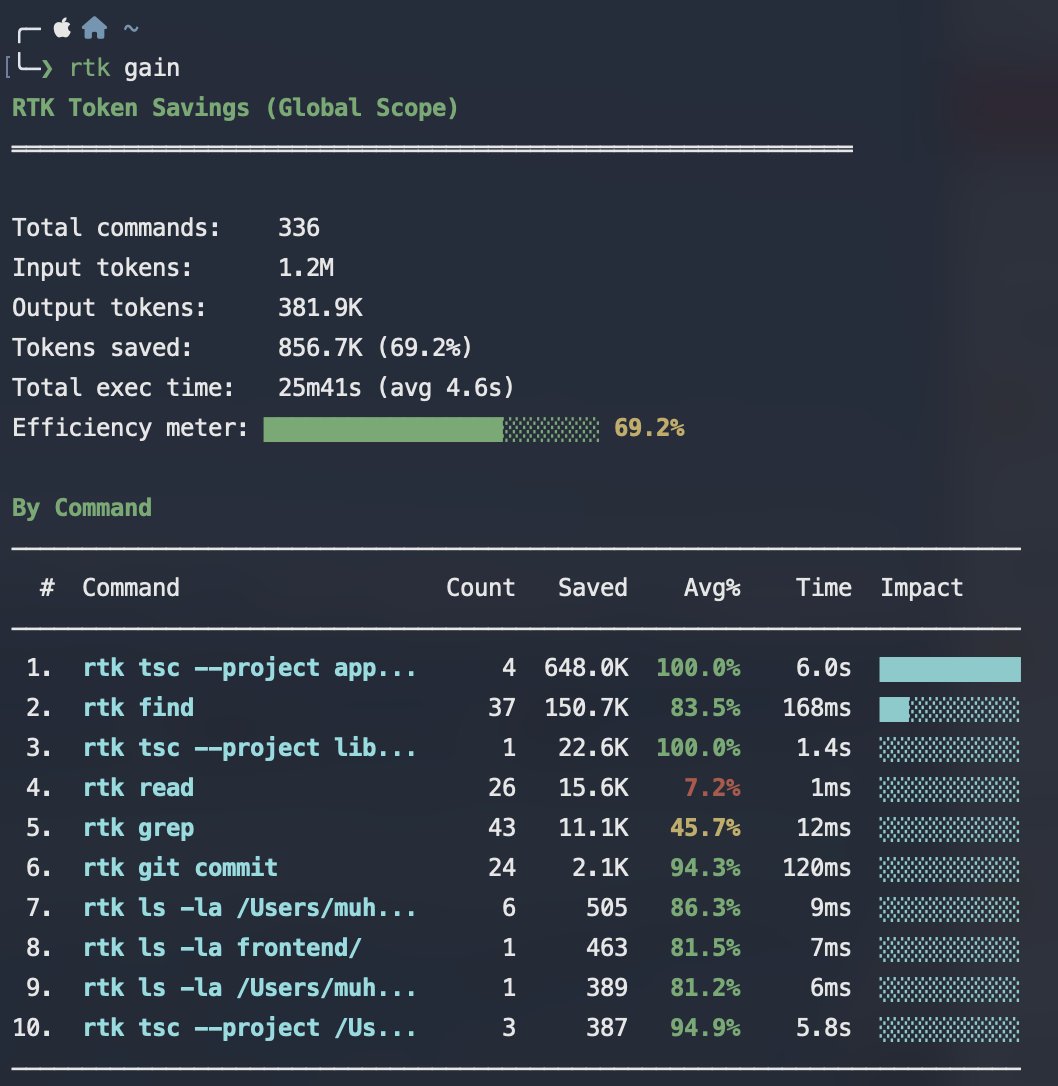
Jadi gw kan kemarin share tentang rtk, atau si Rust Token Killer.
Ternyataa, kalau si rtk ini digabung sama tool yang namanya "caveman", token lu makin hemat bangeet!!! Wowww!!!
Intinyaa, si rtk ini bantu lu hemat banyaaak banget token & usage dengan cara compress output dari terminal commands yg masuk ke claude gituu.
Nahh kalau caveman, itu fokus bikin penjelasan/output dari si AI jadi makin singkat dan yang penting-penting ajaa.
Yang biasanya panjang dan bertele-tele, jadi to the point dan singkatt!!
Gampangnya nii misal lu laper, lu bisa ngomong panjang begini
”Saya lapar sekali, dari pagi belum makan apa-apa karena buru-buru berangkat kantor. Apakah ada makanan yang bisa saya makan disini?”
Kalau pake mode caveman, omongan lu tu simpel jadi kaya orang goa yang apa adanya aja begini wkwkwk
“Laper bro, ada makanan?”
Singkat, padat, dan jelasss wkwkwk.
Kalau gw bikininin tutorial cara pake Caveman di Claude Code biar makin asik ngoding, ada yang tertarik gaa??
Komen “GASKEUN” kalau lu tertarik yaa.
Kalau rame ntar gw bikinin tutorialnya hahaha.
I don’t trust Claude Code without this anymore.
A developer built a free open-source harness that forces Claude Code to stop acting like a chaotic intern and start working like an actual engineer.
It’s called Claude Code Harness.
Most AI coding sessions fail for the same reason:
You ask for a feature.
Claude edits 9 files.
It says “done.”
You run the app.
Something is broken.
Now you have to reverse-engineer what it changed.
Claude Code Harness fixes the workflow around the model.
Instead of just prompting and praying, it gives Claude a real delivery loop:
Plan.
Work.
Review.
Release.
That means Claude has to think before editing.
Then execute.
Then inspect its own work.
Then prepare the final result.
The best part is the built-in review system.
It checks the work from multiple angles:
- Security
- Performance
- Code quality
- Accessibility
So Claude does not just ship code because it feels confident.
It has to pass through a structured review flow first.
This is the missing layer in AI coding.
Not a bigger model.
Not a better prompt.
Not another “10x dev” tweet.
A harness.
Because Claude Code is powerful.
But without structure, power just becomes expensive chaos.
Sumpah guyss, buat yang udah lelah token usage Claude Code abis muluu, lu wajib bangeet setup tool inii
Asli beneran, tool ini tu bisa hemat token usage lu sekitar 80-90% dari yg biasa!!
Supaya ga bingung, ini udah gw bikin video tutorial panduannya yaa!
Silahkan di cekk 🔽🔽
Gilaaa mantep bangeet, baru berapa hari pake tool ini savings token di Claude Code udah banyak bangeeet wkwkwkwk.
Kenapalahhh diriku ga pake ini dari duluu, haelahhh.
Beneran nonstop kerja, tapi token masih awet bangeeeet wkwkwk. Ternyata kehemat banyak bangeet.
Cobain gaisss
To the engineer scrolling on a Saturday afternoon:
I know that quiet voice, the one that says, “I should be further along by now.”
You’ve got the potential. You’ve got an interest in AI. But something keeps you from pulling the trigger.
Here’s the truth: in 16 days, the “Build 10 AI Projects in 30 Days” bootcamp starts.
This isn’t another passive course.
It’s a 30-day intensive where you will ship 10 real, production AI applications using Go + Ollama + HTMX.
The attached flyer lays out the full journey and what your GitHub (and confidence) will look like by the end of June.
Payment plans exist so that committed engineers, not just those with spare cash, can join.
If this post is making you feel something, don’t ignore it.
That feeling is your future self trying to get your attention.
Comment or message me. I’ll send you the details personally.
Register here: https://t.co/mlVF14tpLh
how to set up your Hermes Agent control room
send this image + the repo below to your agent and it will configure itself based on the blueprint
https://t.co/Bb2nEm96i8
this is the same architecture I use to run specialist agents across both my agencies
Most AI engineers learn from scattered blog posts and outdated tutorials.
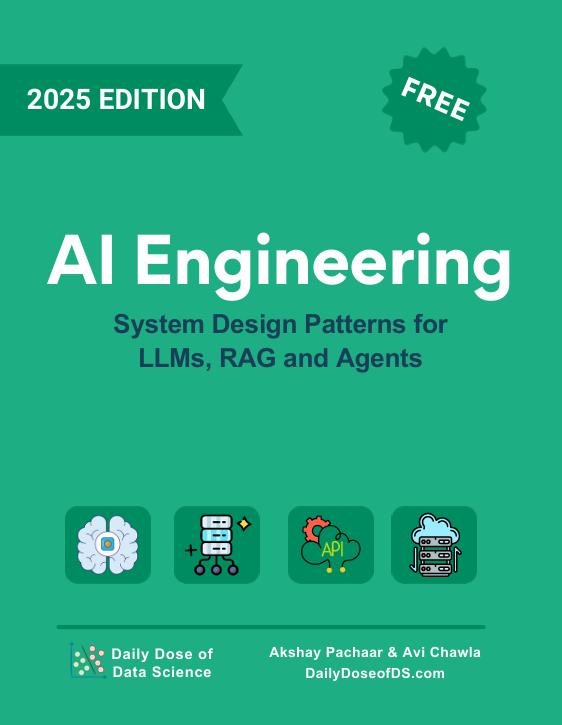
One guidebook just consolidated everything.
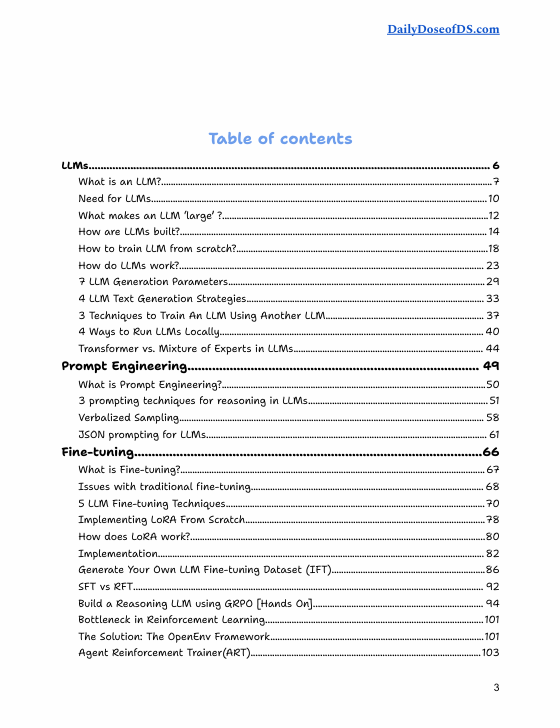
The AI Engineering Guidebook covers the full stack of modern AI system design.
I've shipped 50+ production agents.
This is the reference I wish existed when I started.
What's inside:
𝗟𝗟𝗠 𝗙𝗨𝗡𝗗𝗔𝗠𝗘𝗡𝗧𝗔𝗟𝗦
→ Transformer and MoE architectures
→ Pre-training, Instruction tuning, RLHF, GRPO
→ Next-token prediction mechanics
𝗗𝗘𝗖𝗢𝗗𝗜𝗡𝗚 & 𝗣𝗥𝗢𝗠𝗣𝗧𝗜𝗡𝗚
→ Temperature, Top-p, Top-k explained
→ Chain of Thought, Tree of Thoughts, ARQ
→ Beam Search, Contrastive Search, SLED
𝗙𝗜𝗡𝗘-𝗧𝗨𝗡𝗜𝗡𝗚 (𝗣𝗘𝗙𝗧)
→ LoRA, QLoRA, DoRA, VeRA, Delta-LoRA
→ Model distillation patterns
→ When to fine-tune vs. prompt
𝗥𝗔𝗚 𝗔𝗥𝗖𝗛𝗜𝗧𝗘𝗖𝗧𝗨𝗥𝗘𝗦
→ HyDE, Corrective RAG, Graph RAG
→ Adaptive RAG, REFRAG
→ Cache-Augmented Generation
𝗔𝗚𝗘𝗡𝗧𝗜𝗖 𝗦𝗬𝗦𝗧𝗘𝗠𝗦
→ ReAct pattern deep dive
→ MCP, Agent2Agent, AG-UI protocols
→ Memory types: semantic, episodic, procedural
𝗗𝗘𝗣𝗟𝗢𝗬𝗠𝗘𝗡𝗧 & 𝗘𝗩𝗔𝗟
→ vLLM, PagedAttention, continuous batching
→ Quantization and pruning
→ DeepEval, Opik for observability
The barrier to production AI knowledge used to be:
→ Piecing together 50 different sources
→ Outdated courses teaching last year's patterns
→ Trial and error on your own dime
Now it's one guidebook.
This is the curriculum for building AI systems that actually ship.
Which section are you diving into first?
Currently building at Persyn and few other fun AI first projects.
https://t.co/bDsuSzJaSZ is a no-camera content studio that lets creators train an AI persona on a few photos and generate studio-quality TikTok UGC, Meta ads, and Instagram stories in 30 seconds flat.
🙏 Follow for more production AI resources.
♻️ Repost if someone in your network is building AI systems.
Credit: Daily Dose of Data Science for putting this together.
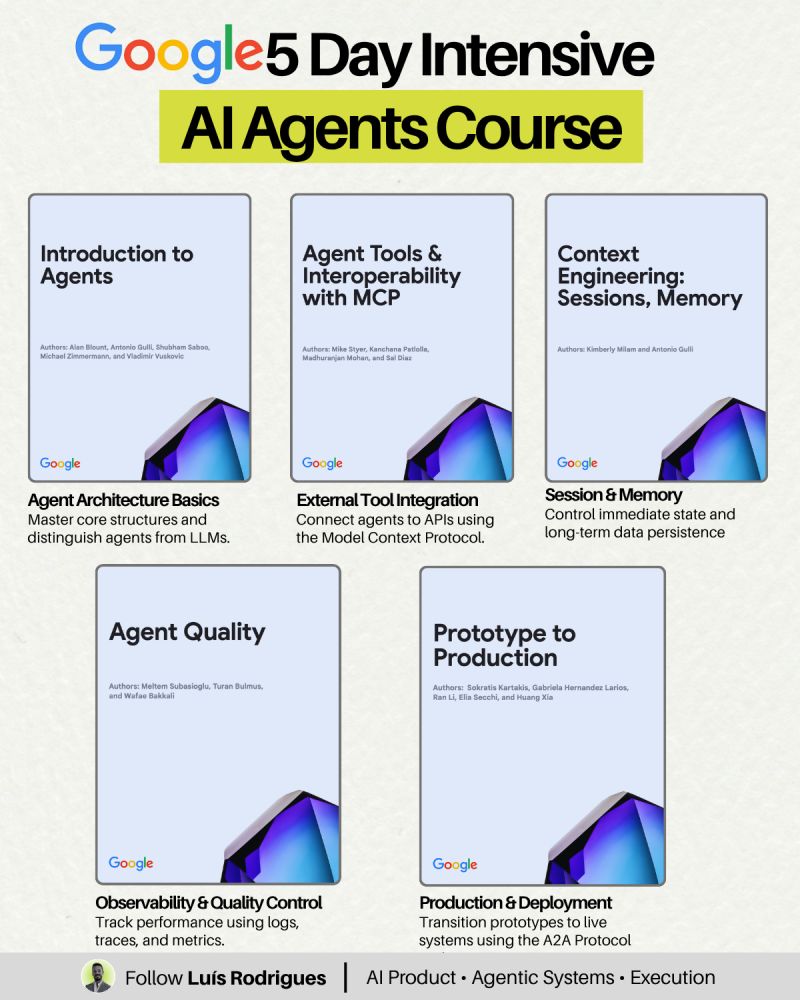
Google released huge learning resources for AI Agents
10+ code samples, hands-on projects and much more...
I audited it, and it's an exceptional resource for anyone starting with AI Agents.
𝗗𝗮𝘆 𝟭: 𝗜𝗻𝘁𝗿𝗼𝗱𝘂𝗰𝘁𝗶𝗼𝗻 𝘁𝗼 𝗔𝗜 𝗔𝗴𝗲𝗻𝘁𝘀
Understand what separates a basic chatbot from a genuine agent. Build systems capable of reasoning through problems and acting without hand-holding.
Whitepaper: https://t.co/U2lPUYwuhy
Code Resource 1: https://t.co/vSp3ggg2Mn
Code Resource 2: https://t.co/qBkR4psJ3M
𝗗𝗮𝘆 𝟮: 𝗧𝗼𝗼𝗹𝘀 𝗮𝗻𝗱 𝗠𝗖𝗣
Extend your agents beyond conversation by wiring them into real software and external APIs. Master MCP to bridge different systems.
Whitepaper: https://t.co/CfZiNFCn58
Code Resource 1: https://t.co/dglV1i8eZF
Code Resource 2: https://t.co/ZRTYfT44Mm
𝗗𝗮𝘆 𝟯: 𝗖𝗼𝗻𝘁𝗲𝘅𝘁 𝗘𝗻𝗴𝗶𝗻𝗲𝗲𝗿𝗶𝗻𝗴 & 𝗠𝗲𝗺𝗼𝗿𝘆
Prevent your agents from losing track of what matters. Architect persistent memory so the AI carries knowledge forward across every interaction.
Whitepaper: https://t.co/MS7JCBOwtW
Code Resource 1: https://t.co/cNt0GZ4Gbg
Code Resource 2: https://t.co/3GbhgCoiLp
𝗗𝗮𝘆 𝟰: 𝗘𝘃𝗮𝗹𝘂𝗮𝘁𝗶𝗼𝗻 & 𝗢𝗯𝘀𝗲𝗿𝘃𝗮𝗯𝗶𝗹𝗶𝘁𝘆
Use logs and metrics to see exactly where an agent is making mistakes. Learn to tighten the feedback loop with both automated scoring and human review.
Whitepaper: https://t.co/QggxUDtd5x
Code Resource 1: https://t.co/fzaYz2zCdQ
Code Resource 2: https://t.co/M1u6BLu1pe
𝗗𝗮𝘆 𝟱: 𝗣𝗿𝗼𝗱𝘂𝗰𝘁𝗶𝗼𝗻-𝗥𝗲𝗮𝗱𝘆 𝗗𝗲𝗽𝗹𝗼𝘆𝗺𝗲𝗻𝘁
Move your project from a test script to a real product on Vertex AI. Implement multi-agent collaboration, safety mechanisms, and the infrastructure that keeps systems reliable at scale.
Evaluation gates, circuit breakers, and evolution.
Whitepaper: https://t.co/eTk4fY3CCi
Code Resource 1: https://t.co/lZiyVLP7jU
Code Resource 2: https://t.co/RVndfDEl1m
A real agent is a full system, not just a single prompt.
If you want to build things that last, start here.
Which part are you focusing on first?
♻️ Repost to help your network.
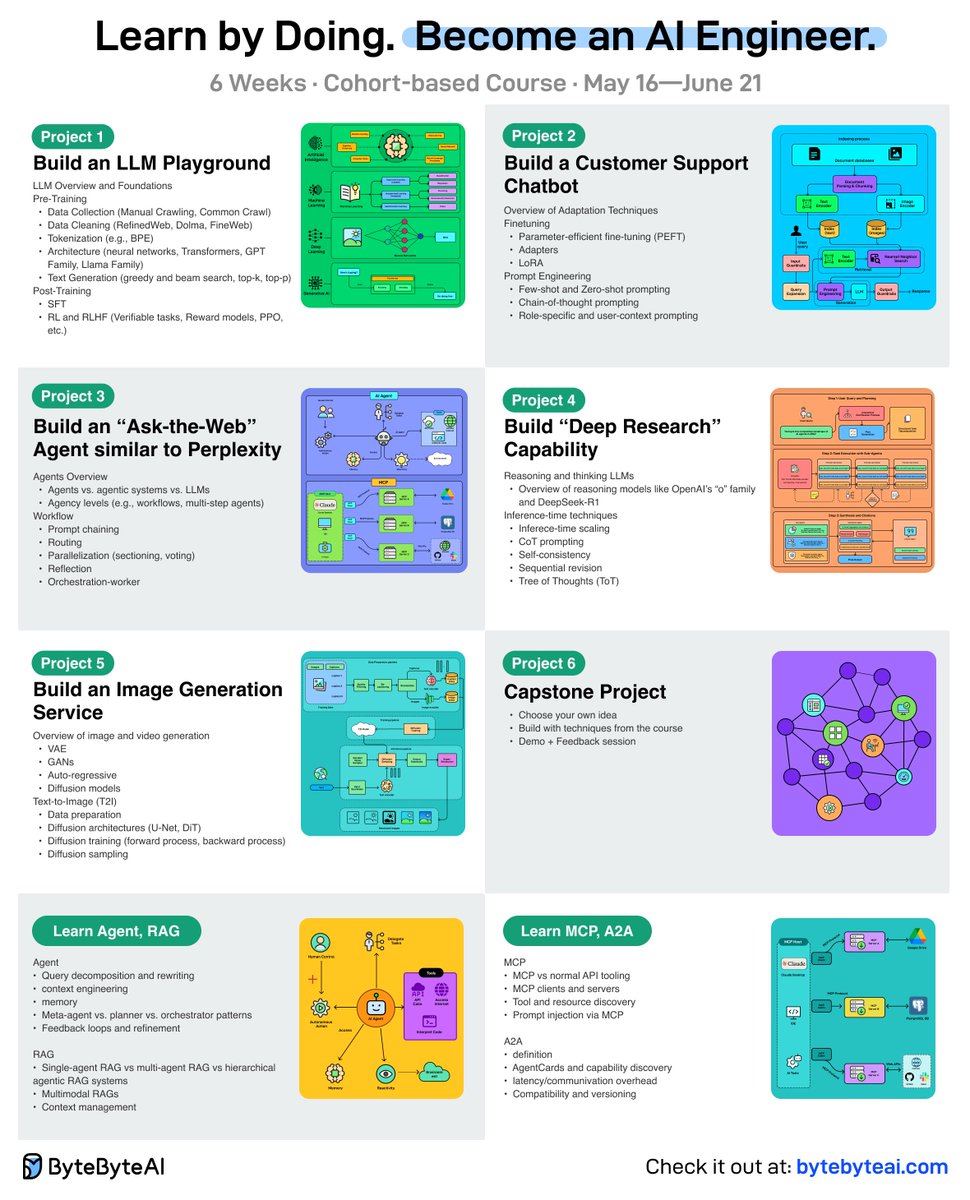
🚀 Last Day to Enroll: Become an AI Engineer | By building, not just watching | Cohort 6!
After the amazing response to our first two cohorts, with nearly 1,000 people joining, we are excited to share that we’re opening the next round of Become an AI Engineer.
This is not your typical AI course focused only on tools and frameworks. The mission is simple: help engineers build strong foundations and practical end to end skills to grow confidently into AI engineering roles.
What makes this cohort stand out:
- Learn by building: You will create real world AI applications instead of just watching videos
- Clear and structured path: A thoughtfully designed curriculum that takes you from core concepts to advanced topics, step by step
- Live feedback and mentorship: Get hands on guidance from instructors and learn alongside peers
- Strong community: Learning is faster and more motivating when you are not doing it alone
We care deeply about skill building, not passive learning or surface level theory. The goal is for every participant to leave with the confidence and ability to build real AI systems.
Today is the last day to enroll before it starts.
--
Check it out here: https://t.co/LLhtAZsP1Z
#AI #AIEngineer #MachineLearning
.
10 GitHub repos so powerful, they can literally make money for you while you sleep. 💸
1. Cal. com
Open-source Calendly. Fork it, white-label it, sell to dentists and lawyers for $200/month. The founders hit $5M ARR in 3 years doing exactly this.
Repo → https://t.co/YQwdhTRNFi
2. Plausible Analytics
Privacy-first Google Analytics. Self-host it, resell to agencies for $50/month per client. Two founders bootstrapped this to 7 figures.
Repo → https://t.co/Rpio5OCBJk
3. Ghost
Open-source Substack with 100% margin. 1,000 readers at $5/month equals $60,000 a year. Forever.
Repo → https://t.co/8xKf2u3sl3
4. n8n
Open-source Zapier. Sell automation services for $500-$2,000 per setup. n8n raised $14M because the agency model behind it works.
Repo → https://t.co/UkxzrA3XUr
5. Supabase
Free Firebase replacement. Build a SaaS in a weekend, charge $29-$99/month. They raised $116M for a reason.
Repo → https://t.co/3rXoRMeItz
6. Medusa
Open-source Shopify. Take 5% on every sale forever. Zero rev share to Shopify.
Repo → https://t.co/YkGmaQR0Xx
7. AppFlowy
Open-source Notion. Sell self-hosted to enterprises worried about data privacy. They raised $30M because this market is massive.
Repo → https://t.co/EBvVua0PfN
8. Coolify
Open-source Vercel and Heroku. Charge developers $20/month to manage their deployments. Replace their $200 Vercel bill.
Repo → https://t.co/JGnK0MJVxN
9. Listmonk
Open-source Mailchimp. Send unlimited emails for the cost of an AWS bill. Resell to agencies at 10x markup.
Repo → https://t.co/KvesZ2QxZb
10. Penpot
Open-source Figma. Sell self-hosted design tools to agencies who refuse to upload client files to the cloud.
Repo → https://t.co/5GIsz0aLfh
The difference between developers who build features and developers who build businesses is one decision.
Pick one of these. Fork it this weekend. Ship it next week.
The founders behind these repos already proved the model.
Save this. Share it with the developer in your life who deserves to break free.
100% free. 100% open source.
🚨Anthropic just showed a 24-minute workshop on how to actually do prompts for Claude.
Taught by the people who built it.
Free. No registration. No paywall.
I've seen $300 courses that don't cover what they teach in the first 8 minutes.
Watch it and bookmark it now.