My main interests are IPv6, FreeBSD, ZFS and jails.
I also enjoy playing around with automation, networking, virtualization, hardware, FOSS, and IT security.
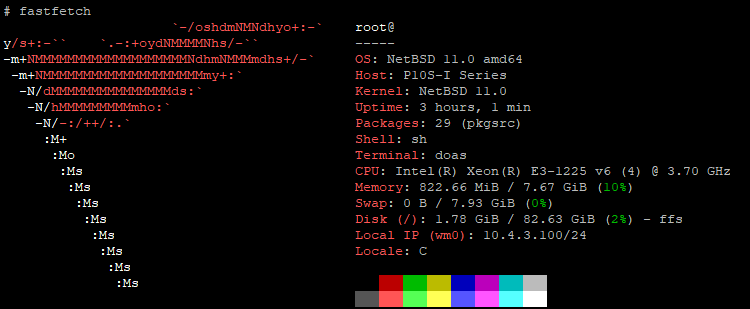
First time I've actually installed #NetBSD on "real" hardware, until now I've only run it in VMs and on a Raspberry Pi 1.
So far configuring it differs a bit from FreeBSD, but commands like ifconfig, route, sockstat, top, and so on are almost identical, which makes it intuitive.
If you want to upgrade your #FreeBSD system, here are two very useful links to ensure a smooth process:
1. https://t.co/M1JthOjssO
2. https://t.co/M4wmYZ1p6u
Also don't forget to create a backup or ZFS boot environment before the upgrade, you will thank yourself later. 😎
@SCOTTHOGG@TomLawrenceTech I love using IPv6, but small or medium businesses only care about internet connectivity. IPv4 already provides this, and IPv6 only increases complexity in their eyes.
As long as IPv6 is not required for them to do business, they won't use it. Period. Unless they are an ISP.
@sheridancompute@NetgateUSA@pfsense The entire project seems to be LLM assisted / generated by one single person. The documentation is a pile of slop. :(
@apixoip From what I understand, OpenZFS does delayed allocation by default, by batching writes together and committing them to disk every 5 seconds by default.
Online resizing is also supported, there even is a "autoexpand" zpool feature.
But defragmentation doesn't exist in ZFS AFAIK.
I always find it funny when someone on the Internet says "ZFS is memory hungry" or "ZFS needs at least 8 GB of ECC RAM to run". Nonsense.
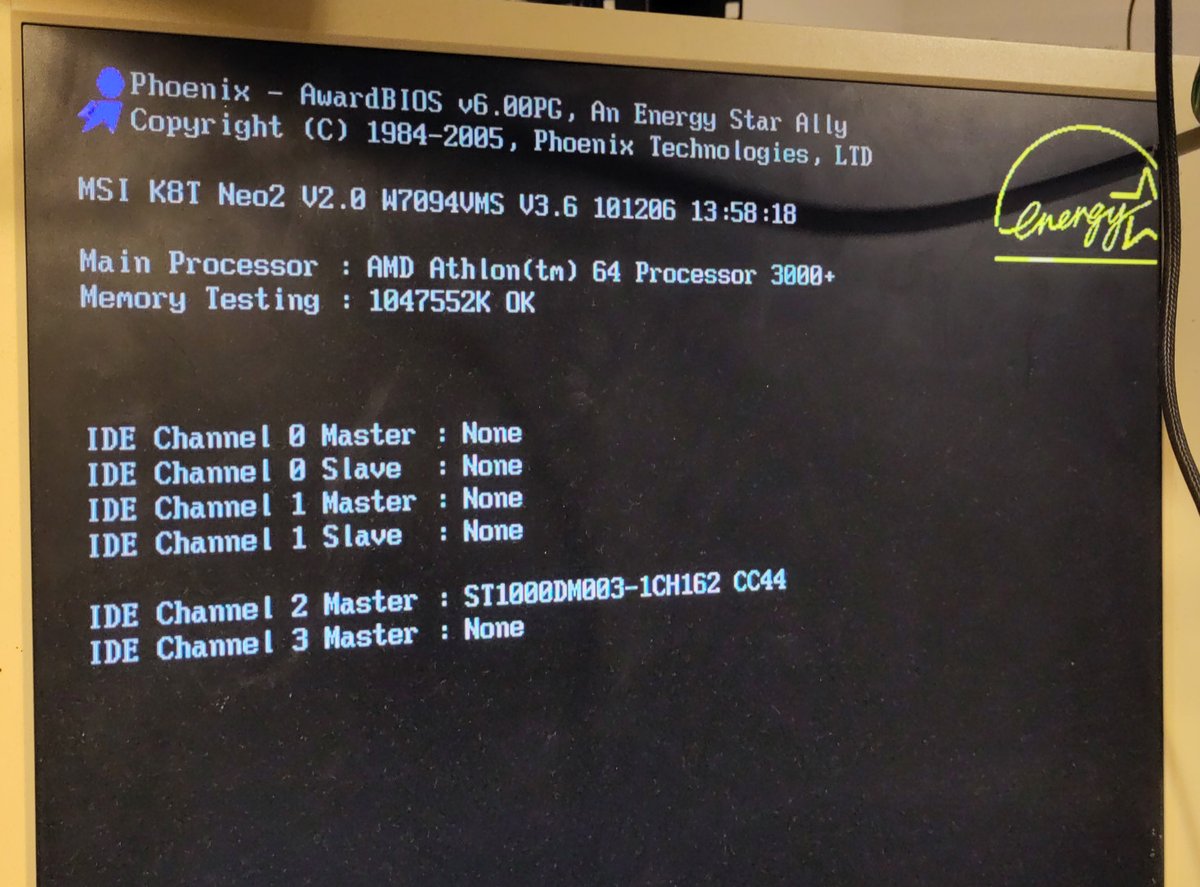
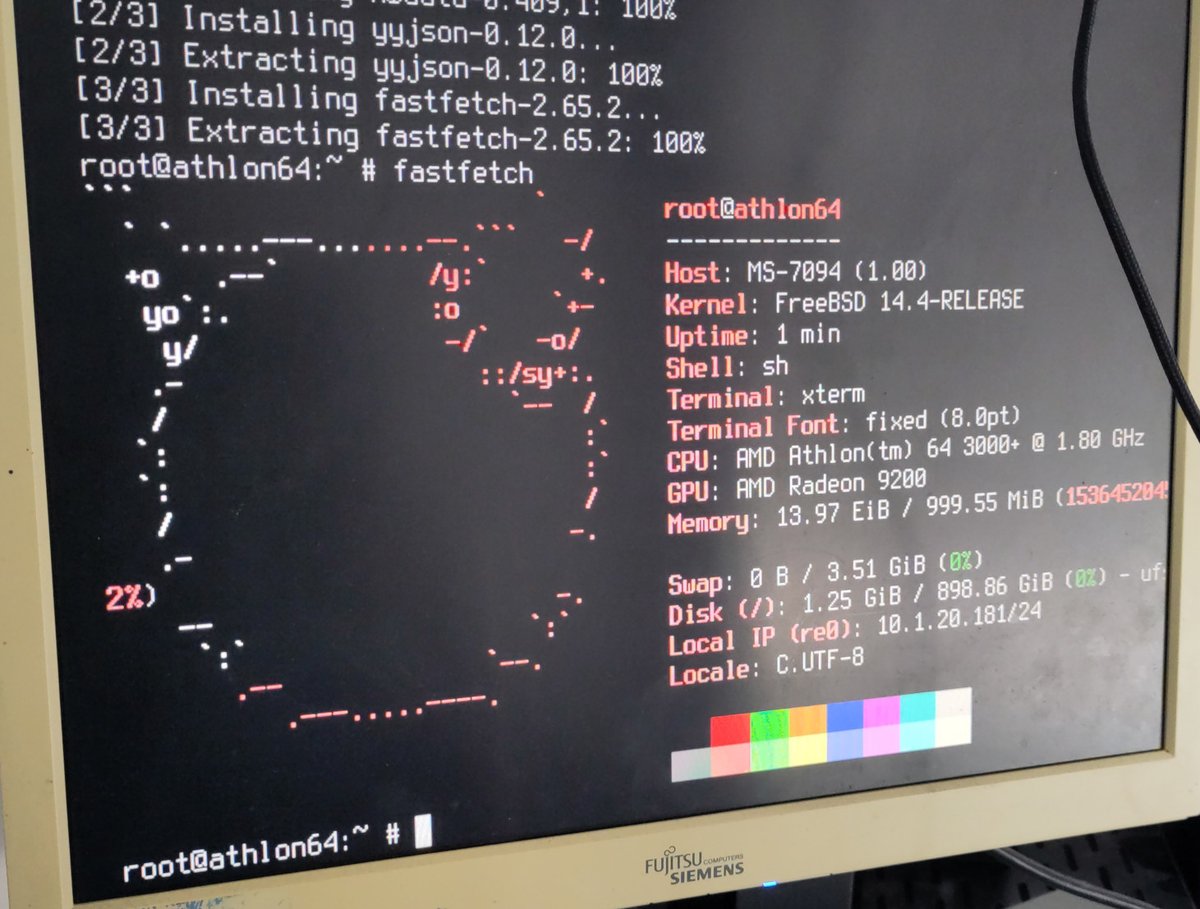
To prove it, I installed #FreeBSD 15.1 (64 bit!) on a 23 year old PC, with ZFS and only 1 GB of RAM, running multiple jails without issue. 😎
@OnyxCrack The ARC is actually a read cache, which caches data with the MRU (Most Recently Used) and MFU (Most Frequently Used) algorithm. 😉
But you are correct about performance, a bigger ARC (Adaptive Replacement Cache) means better cache hit ratio.
@realphilipdias No, 1GB of RAM per 1TB of storage was the recommendation for the old ZFS Deduplication Table, not the ARC cache. The current recommendation forthe DDT is 1.25GB per 1 TB of Data: https://t.co/guihxZrsOB
Fast ZFS Dedup does not have this requirement anymore.
@shiromewo Who is using Linux? (Do you mean OpenZFS which was once called ZFS on Linux?)
I limited the ZFS ARC to 128 MB on this system, and with transparent compression (lz4 in this case), the ARC is compressed and will use less RAM than what is allowed.
@apixoip I could do that, but do you mean in a RAID-Z2 or a "RAID 10" (two striped ZFS mirrors)? It certainly won't be fast, but I suppose it will still work fine.
@npub1nmk2399jaz From the OpenZFS docs:
Computers that have less than 2 GiB of memory run ZFS slowly. 4 GiB of memory is recommended for normal performance in basic workloads. (https://t.co/aGGWkah4L6)
FreeBSD itself requires at least 256 MB of RAM (https://t.co/1rHisrU1iC).
Slow but works.
@vermaden The only ZFS feature which is memory hungry is Deduplication - something basically nobody uses. But the Internet has projected the memory recommendation of 8 GB + 1 GB of RAM per TB of data for the dedup table as a requirement for all ZFS pools.
@sskras Absolutely, which is why my FreeBSD servers with important data on them use ECC memory exclusively. But just to be clear - all systems and file systems need ECC RAM if you want them to be as stable as possible.
The single core AMD Athlon 64 3000+ is a bit slow, but pkgbase really helps with speeding up installing patches. It's still fast enough to reach 604 Mbit/s in iperf3 (and 490 Mbit/s in client mode).
🧵[2/2] This means I would have to wait for an entire week before the replication finishes.
Then I remembered that I can redirect ZFS send into a file on a HDD, and then pipe the file into ZFS receive. As the remote site is only a half hour drive away, which is much faster. 🤦♂️
🧵[1/2] For the last week, I've been thinking about how to best do an initial ZFS replication between two remote ZFS pools, which requires to copy 3+ TB of data, and the upload at the source is only a measly 50 Mbit/s, or 6.25 MB/s, of which I can only use 40 Mbit/s, or 5 MB/s.